
Serums are among the most potent tools in a skincare routine, delivering high concentrations of active ingredients like vitamin C, hyaluronic acid, retinol, and niacinamide directly into the skin. But their potency is time-sensitive. Over time, exposure to light, air, and bacteria degrades these formulas, rendering them ineffective—or worse, harmful. Using an expired serum isn't just a waste of money; it can trigger irritation, breakouts, or even infections. Recognizing the signs of expiration and understanding the risks are essential for maintaining both skin health and product performance.
Understanding Expiration Dates on Skincare Products
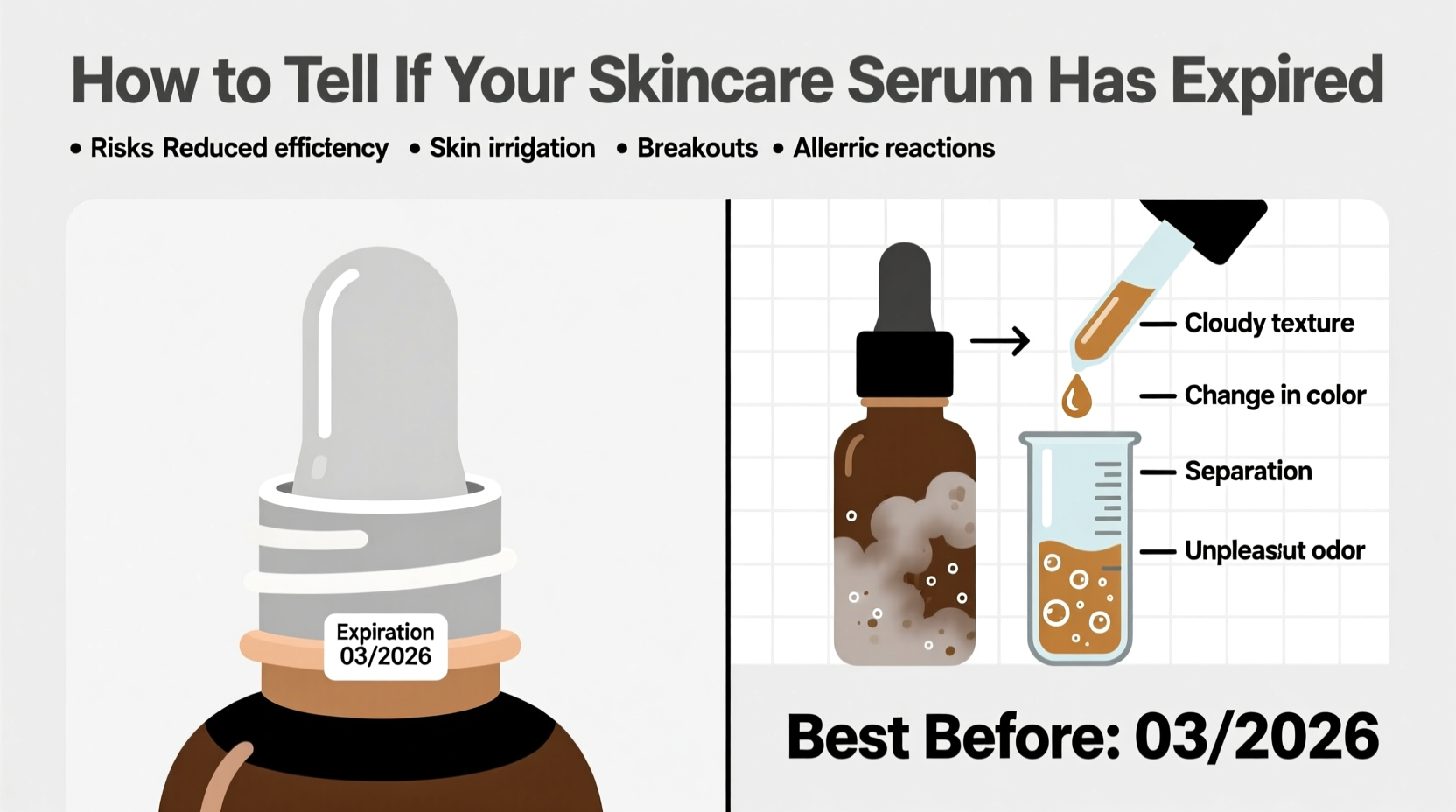
Unlike food or medication, skincare products don’t always come with a clear expiration date printed on the label. Instead, they often feature a “period after opening” (PAO) symbol—a small open jar icon with a number followed by the letter “M,” such as 6M or 12M. This indicates how many months the product remains safe and effective after first use.
For example, a serum labeled with “12M” should be used within one year of opening. Unopened serums typically last 2–3 years when stored correctly, but this varies based on formulation and preservatives used. Water-based serums degrade faster than oil-based ones due to microbial growth risk, while antioxidant-rich formulas like vitamin C oxidize quickly upon air exposure.
Signs Your Skincare Serum Has Expired
Chemical breakdown doesn’t always come with obvious warnings. However, several sensory and visual cues can help you determine whether your serum is past its prime.
1. Change in Color
Fresh vitamin C serums are usually pale yellow or clear. As they oxidize, they turn amber or brown. Similarly, green tea or resveratrol-based serums may darken over time. Any noticeable shift from the original hue suggests degradation.
2. Altered Texture or Consistency
A serum that once flowed smoothly but now feels gritty, clumpy, or separated may have broken down. Emulsions can split when stabilizers fail, especially if exposed to heat or temperature fluctuations.
3. Unusual Odor
Skincare serums are generally odorless or mildly scented. If your serum develops a sour, rancid, or chemical-like smell, bacterial contamination or lipid oxidation is likely occurring—especially in oil-based or peptide-rich formulas.
4. Irritation Upon Application
If your skin suddenly reacts with redness, stinging, itching, or breakouts despite no other changes in your routine, the serum could be compromised. Degraded actives can become irritating or allergenic.
5. Lack of Results
If a previously effective serum stops delivering visible improvements—such as reduced dark spots or improved hydration—it may have lost potency. Active ingredients like retinol and AHAs degrade over time, diminishing efficacy.
“Just because a product looks fine doesn’t mean it’s still effective. Many actives lose function long before visible spoilage occurs.” — Dr. Lena Patel, Board-Certified Dermatologist
What Happens If You Use an Expired Skincare Serum?
The consequences of using expired serums range from mild inefficacy to serious skin damage, depending on the formula and extent of degradation.
- Reduced Efficacy: Oxidized vitamin C won’t brighten skin. Inactivated hyaluronic acid won’t hydrate. You’re applying a placebo at best.
- Increased Skin Sensitivity: Degraded retinol can break down into irritants that cause peeling, redness, and inflammation—even in low concentrations.
- Bacterial Infections: Water-based serums without adequate preservatives can harbor mold, yeast, or harmful bacteria like Pseudomonas aeruginosa, leading to folliculitis or infected cysts.
- Allergic Reactions: Breakdown compounds can act as haptens, triggering immune responses and contact dermatitis.
- Acne Flare-Ups: Rancid oils or contaminated formulas can clog pores and feed acne-causing bacteria.
In extreme cases, ophthalmic infections have been linked to expired eye serums applied near the lash line. The risk increases with dropper bottles, which introduce more contamination with each use.
Step-by-Step Guide to Checking Serum Freshness
Follow this five-step process monthly to ensure your serums remain safe and effective:
- Locate the PAO Symbol: Check the packaging for the open jar icon. Confirm how many months the product lasts post-opening.
- Review the Opening Date: If you wrote the date you opened it, compare it to the PAO window. Discard if past the limit.
- Inspect Visually: Hold the serum up to light. Look for cloudiness, particles, separation, or color changes.
- Smell Test: Gently waft the scent toward your nose. Avoid inhaling deeply. Detect any off or sour odors.
- Do a Patch Test: Apply a small amount behind the ear or on the inner forearm. Wait 24 hours. Watch for redness, swelling, or itching.
Best Practices for Storing Skincare Serums
Proper storage significantly extends a serum’s shelf life and maintains ingredient integrity. Follow these guidelines based on serum type:
| Serum Type | Recommended Storage | To Avoid |
|---|---|---|
| Vitamin C (L-ascorbic acid) | Cool, dark place; ideally refrigerated | Sunlight, heat, daily bathroom humidity |
| Retinol / Retinal | Airtight container away from light | Transparent bottles left on sinks |
| Hyaluronic Acid | Dry cabinet at room temperature | Bathrooms with steam showers |
| Niacinamide | Sealed, cool area | Mixing with acidic formulas unless stabilized |
| Peptide-Based | Refrigeration recommended | Temperature swings and UV exposure |
Dark glass bottles (amber or cobalt) offer better protection than clear plastic. Airless pump dispensers minimize oxidation and contamination compared to droppers.
Real-Life Example: A Cautionary Case
Jessica, a 32-year-old marketing executive, had used a popular vitamin C serum for nearly 16 months—well beyond its 12-month PAO window. Though the bottle was half-full, she noticed her skin looked duller and felt tighter after application. One morning, she developed a rash along her jawline. After ruling out new laundry detergent and diet changes, she consulted a dermatologist.
The doctor examined the serum and noted its deep orange color—clear evidence of oxidation. “This isn’t just inactive,” he explained. “Oxidized vitamin C can generate free radicals, which damage collagen instead of protecting it.” Jessica discontinued the serum, switched to a fresh batch stored in the fridge, and saw improvement within two weeks. Her experience underscores how subtle changes can signal significant product failure.
Checklist: How to Maintain Serum Safety and Efficacy
Use this checklist every time you purchase or assess a serum:
- ☑ Check the PAO symbol before buying
- ☑ Write the opening date on the packaging
- ☑ Store in a cool, dark, dry location (or refrigerator if recommended)
- ☑ Keep caps tightly closed after each use
- ☑ Avoid introducing fingers into the bottle
- ☑ Inspect for changes in color, texture, or smell monthly
- ☑ Discard immediately if any sign of spoilage appears
- ☑ Replace annually for high-risk formulas (vitamin C, retinol, peptides)
Frequently Asked Questions
Can I use a serum after the expiration date if it looks and smells fine?
No. Even if there are no visible signs of spoilage, active ingredients may have degraded below effective levels or formed irritants. Efficacy and safety cannot be guaranteed past the PAO period.
Does refrigerating serums make them last longer?
Yes, especially for unstable ingredients like vitamin C, growth factors, and probiotic serums. Cold temperatures slow oxidation and microbial growth. Just avoid freezing, and allow the product to reach room temperature before applying to prevent shock to sensitive skin.
Is it safe to mix old and new serums to finish the old one?
No. Mixing introduces contaminants and accelerates degradation of the fresh product. Always use a new bottle separately and dispose of expired serums responsibly.
Conclusion: Protect Your Skin by Respecting Shelf Life
Your skin deserves more than guesswork when it comes to product safety. A serum that's past its prime doesn’t just fail to deliver results—it can actively harm your complexion. By learning to identify the warning signs of expiration, storing products correctly, and adhering to usage timelines, you protect your investment and your skin’s health. Make checking serum freshness part of your monthly skincare audit. When in doubt, throw it out. Better to start fresh than risk irritation, infection, or long-term damage.




 浙公网安备
33010002000092号
浙公网安备
33010002000092号 浙B2-20120091-4
Comments
No comments yet. Why don't you start the discussion?