
Authenticating a vintage Gucci bag isn’t just about preserving value—it’s about honoring craftsmanship and avoiding costly mistakes. The market for pre-owned luxury handbags has exploded, and so has the number of convincing fakes. Some dupes are so well-made they fool even experienced resellers. But with the right knowledge, you can spot subtle differences in stitching, hardware, lining, and design details that separate a genuine vintage Gucci from a high-quality counterfeit.
This guide walks you through the key indicators of authenticity, backed by industry standards, collector insights, and real-world examples. Whether you’re buying online, browsing at a consignment store, or inheriting a piece from a relative, these steps will help you make informed decisions.
1. Examine the Logo and Branding Details
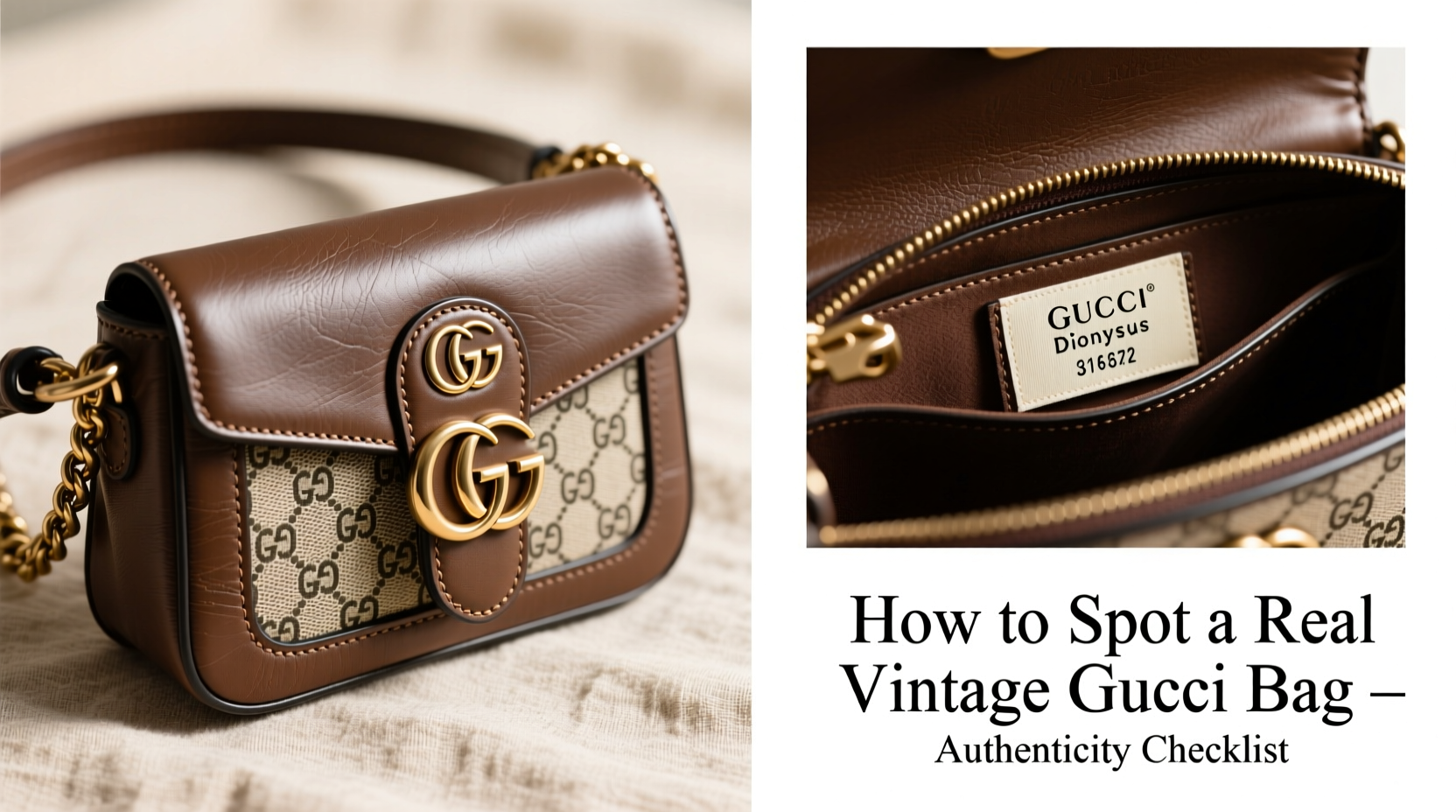
The Gucci logo—particularly the double G motif—is one of the most counterfeited symbols in fashion. While modern versions are tightly regulated, vintage pieces vary by era, making authentication trickier. From the 1960s to the 1990s, Gucci used different font styles, spacing, and orientation of the GG logo depending on the collection and production location.
In the 1970s, the interlocking GG was often slightly asymmetrical, with a more organic, hand-stamped appearance. By the 1980s, it became bolder and more uniform. In the early 2000s, under Tom Ford, the logo was refined with sharper edges and tighter symmetry.
Fake bags often get the proportions wrong: the “G” curves may be too wide, too narrow, or misaligned. On authentic pieces, the two Gs lock together seamlessly—one facing forward, the other backward—with no gaps or overlaps.
Common Logo Red Flags
- Logo appears stamped too deeply or too shallowly into leather
- Misaligned or unevenly spaced letters
- Glossy or overly shiny finish on a logo that should be matte (common in vintage)
- Use of incorrect font—especially rounded or cartoonish versions of the GG
“Vintage Gucci authenticity hinges on era-specific accuracy. A 1970s Jackie bag with a 2000s-style logo is an instant red flag.” — Luca Moretti, Vintage Luxury Authenticator & Consultant
2. Inspect the Stitching and Construction Quality
One of the most reliable ways to distinguish a real vintage Gucci from a dupe is by examining the stitching. Gucci has always prioritized hand-finished details, especially in its higher-end lines. Even mass-produced vintage models from the 1980s and 1990s maintain consistent, tight stitching with minimal deviation.
Authentic vintage Gucci bags typically feature:
- Stitch density of 8–10 stitches per inch
- Even tension across all seams
- Thread color perfectly matched to the leather or fabric
- No loose ends or skipped stitches
Counterfeiters often use machine stitching that’s either too tight (causing puckering) or too loose (leading to gaps). The thread itself may be synthetic or lower quality, showing signs of fraying after minimal use. On high-end fakes, stitching might look perfect at first glance, but closer inspection reveals inconsistencies in alignment or spacing.
Real Example: The eBay Find That Was Too Good to Be True
A collector once purchased a vintage Gucci bamboo-handled bag listed as “1970s, fully authenticated.” The price was 40% below market value. Upon receipt, the stitching along the handle base showed irregular tension—tight in some areas, loose in others. The thread also had a slight sheen inconsistent with cotton-wrapped polyester used in true vintage pieces. After consulting a specialist, the bag was confirmed as a reproduction made in China using original-style hardware but subpar construction. The lesson? If the price seems unusually low, scrutinize the stitching first.
3. Analyze the Hardware and Metal Components
Vintage Gucci hardware varies significantly by decade, but certain characteristics remain consistent across eras. Real Gucci bags use solid brass or gold-plated metal components that develop a natural patina over time—not flaking or chipping.
Look closely at zippers, buckles, and chain links. Original YKK or Lampo zippers were commonly used in the 1980s and 1990s. By the 2000s, Gucci began using its own branded zippers with engraved logos. Fake bags often use generic zippers with rough engravings or misspelled brand names (“Guccj,” “Guci,” etc.).
Weight is another clue. Authentic hardware feels substantial, not lightweight or hollow. Run your finger over engraved logos—they should be crisp, not blurry or smudged.
| Era | Common Hardware Type | Fake Indicator |
|---|---|---|
| 1960s–70s | Brass, brushed gold finish | Overly shiny or chrome-like appearance |
| 1980s | Gold-tone with “YKK” or “Lampo” zippers | Zippers with no branding or incorrect font |
| 1990s–2000s | Gucci-engraved zippers, heavier chains | Hardware that tarnishes within weeks of use |
4. Study the Lining and Interior Markings
The interior of a vintage Gucci bag can reveal more than the exterior. Most genuine pieces from the 1970s onward include a leather tag stitched inside with the Gucci name, often accompanied by a serial number or date code. These tags are made from the same quality leather as the rest of the bag and are securely attached with tight, even stitching.
From the late 1980s to early 2000s, Gucci used green-and-red webbing lining in many models—a signature of the brand. The stripes should be precisely aligned, with no fraying at the edges. Counterfeits often misalign the stripes or use cheaper fabric that lacks stiffness.
Serial numbers on authentic bags follow specific formats:
- 1980s–90s: Two-letter factory code followed by four digits (e.g., AR1234)
- 2000s: Six-digit number with last two digits indicating year of production
If there’s no serial number, or if it’s printed instead of embossed, treat it as suspicious. Also, beware of “authenticity cards” included with secondhand bags—these can be easily forged and are not issued by Gucci for vintage pieces.
Checklist: Quick Interior Authentication
- Is the interior lining fabric tightly woven and colorfast?
- Are green-red stripes (if present) evenly spaced and properly aligned?
- Is there a leather interior tag with correctly formatted text?
- Are stitches around the tag neat and consistent?
- Does the serial number match known Gucci formats for that era?
5. Verify Shape, Proportions, and Materials
Vintage Gucci bags have distinct silhouettes that are difficult to replicate perfectly. The brand used specific molds and cutting patterns, resulting in consistent curvature, flap angles, and handle drop lengths. High-quality dupes may mimic the general look, but often fail in proportion.
For example, the classic Gucci Jackie bag has a soft trapezoidal shape with a gently curved flap. Fakes tend to make the body too rectangular or the flap too stiff. Similarly, the Diana tote (popular in the 1990s) features slouchy sides and a structured base—altering either element changes the entire aesthetic.
Material quality is another giveaway. Vintage Gucci used full-grain calf leather, which develops a rich patina over time. It ages gracefully, showing natural wear rather than cracking or peeling. Fake leather often feels plasticky, smells chemically, and deteriorates quickly.
Canvas pieces, like the iconic GG Marmont, use a tightly woven fabric with a slight texture. Counterfeits use smoother, shinier canvas that doesn’t hold structure well.
“Proportion is everything. I’ve seen $3,000 dupes that passed every test except silhouette. The moment you hold it, you feel it’s off.” — Sophia Lin, Vintage Handbag Curator at Luxe Archive
Step-by-Step Guide: How to Authenticate a Vintage Gucci Bag
Follow this systematic approach when evaluating a potential vintage Gucci piece:
- Research the model and era: Identify the exact style, production years, and known variations.
- Inspect the exterior: Check logo alignment, material texture, and overall shape.
- Examine stitching: Look for consistency, stitch count, and thread quality.
- Analyze hardware: Test weight, check engravings, and verify zipper branding.
- Open the bag: Review lining fabric, interior tags, and serial numbers.
- Compare with authenticated examples: Use trusted databases like The RealReal, Rebag, or Gucci’s own archive resources.
- Consult a professional: If uncertain, send high-resolution photos to a certified authenticator.
This process takes time, but skipping steps increases the risk of purchasing a high-end replica.
Frequently Asked Questions
Can a vintage Gucci bag be authentic without a serial number?
Yes, especially for pieces made before the late 1980s. Early vintage Gucci bags often lack serial numbers. However, absence of a number makes authentication harder and may reduce resale value. Other elements—like craftsmanship, materials, and hardware—must then carry more weight in verification.
Do all vintage Gucci bags have “Made in Italy” stamps?
Most do, but not all. Starting in the 1960s, Gucci began marking items with “Made in Italy” on interior tags or near hardware. However, some early export models or special orders may omit this. Lack of stamping isn’t automatic proof of a fake, but it warrants deeper investigation.
How much does it cost to get a vintage Gucci bag authenticated?
Professional authentication services typically charge between $25 and $75 per item. Companies like Entrupy, LegitGrails, and Real Authentication offer photo-based assessments. For rare or high-value pieces, in-person appraisal by a luxury consignment expert may cost more but provides greater certainty.
Conclusion: Trust Your Instincts—and the Details
Spotting a fake vintage Gucci bag isn’t about memorizing rules—it’s about developing an eye for detail. The best dupes copy the obvious: the logo, the shape, the green-red stripe. But they rarely replicate the subtleties: the rhythm of the stitching, the warmth of aged brass, the drape of genuine leather.
When in doubt, slow down. Take clear photos from multiple angles. Compare with museum-quality examples. Seek second opinions. A single flaw doesn’t always mean a bag is fake—vintage wear is normal—but multiple red flags should stop you from buying.
Preserving the legacy of vintage fashion means protecting its integrity. Whether you’re building a collection or cherishing a family heirloom, knowing how to tell what’s real empowers you to make confident choices.




 浙公网安备
33010002000092号
浙公网安备
33010002000092号 浙B2-20120091-4
Comments
No comments yet. Why don't you start the discussion?