
Wireless earbuds have become essential for daily commutes, workouts, and focused work environments. But no matter how advanced the technology, their performance hinges on one critical factor: fit. A poor fit compromises noise isolation, leading to lower audio quality, increased listening fatigue, and the need to raise volume—potentially damaging your hearing over time. Knowing whether your earbuds are seated correctly isn’t just about comfort; it’s about functionality, safety, and getting the most from your investment.
Unlike over-ear headphones that rely on external seals, in-ear models depend entirely on forming a tight acoustic seal within the ear canal. Without this seal, ambient noise seeps in, bass response drops, and active noise cancellation (ANC) becomes significantly less effective—even if the hardware supports it. The good news is that proper fit is something you can assess and improve with simple, repeatable methods.
Why Fit Matters for Noise Isolation
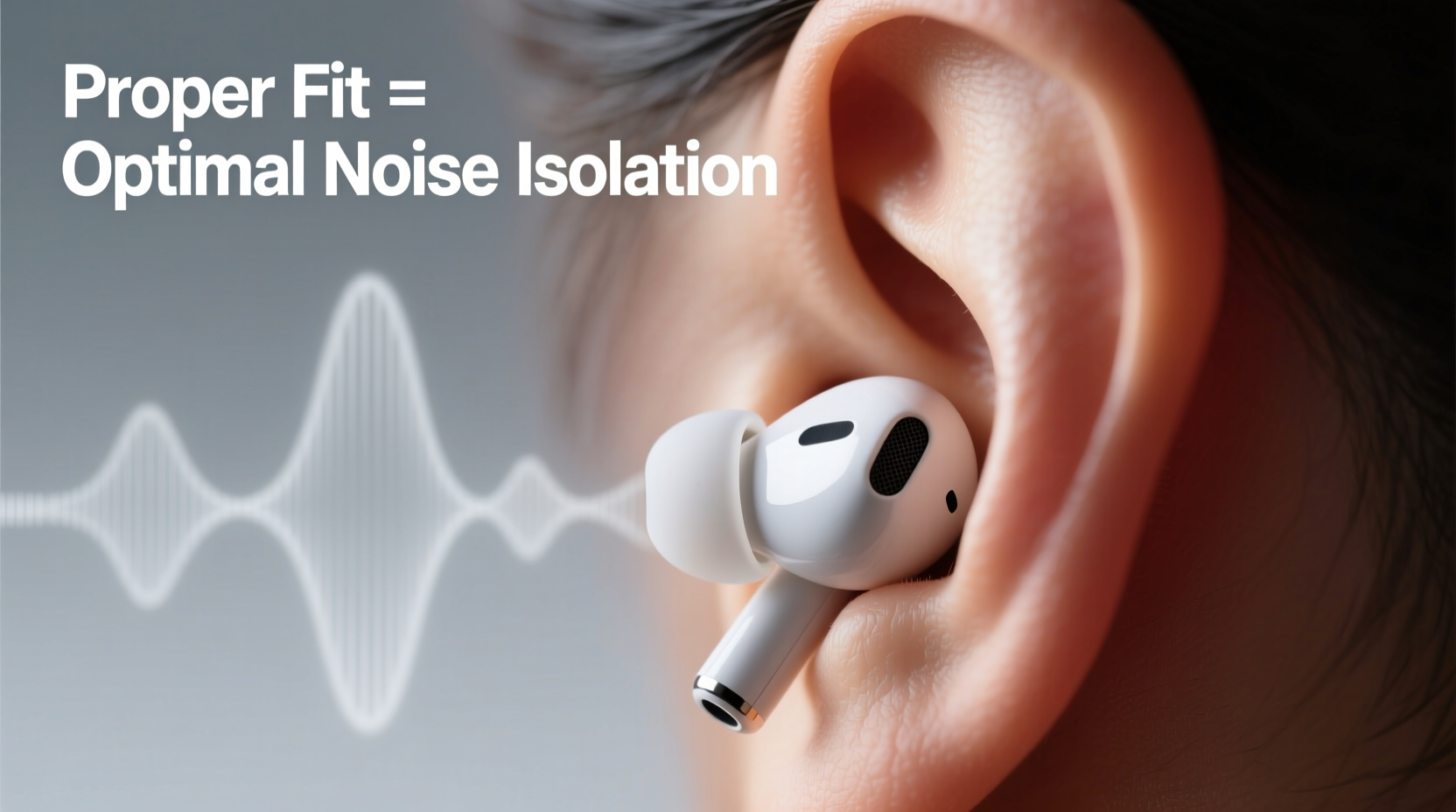
Noise isolation—also known as passive noise reduction—is the physical blocking of outside sound using the earbud’s seal inside the ear canal. This differs from active noise cancellation, which uses microphones and anti-noise signals. Even high-end ANC systems require a solid passive foundation to work efficiently.
Think of it like double-glazed windows: insulation works best when both layers are intact. If air leaks around the edges of a window frame, adding another pane won’t fix the draft. Similarly, if your earbuds don’t form a tight seal, ANC will struggle to cancel mid- and high-frequency sounds effectively.
A well-fitted earbud:
- Blocks 15–30 dB of ambient noise passively
- Preserves low-frequency response for richer bass
- Reduces listener fatigue by eliminating the need to boost volume
- Improves call clarity by stabilizing microphone positioning
- Stays securely in place during movement
Step-by-Step Guide to Testing Earbud Fit
Determining whether your earbuds fit properly doesn’t require special tools—just attention to detail and a few minutes of testing. Follow these steps to evaluate your current setup:
- Insert the earbuds gently but firmly. Pull the top of your ear upward to straighten the ear canal, then insert the earbud at a slight forward angle. Avoid forcing them—discomfort means they’re too large or improperly positioned.
- Wait 30 seconds. Foam tips expand slightly with body heat. Silicone may settle as pressure equalizes. Give them time to conform.
- Perform the “tap test.” Lightly tap the side of your head near the earpiece. A well-sealed earbud will produce a deep, muffled thud. If you hear a sharp, hollow sound, the seal is incomplete.
- Check for sound leakage. Play music at moderate volume in a quiet room. Someone standing nearby should not hear much audio escaping. Significant leakage indicates poor sealing.
- Test bass response. Listen to a track with consistent low-end, such as electronic music or movie soundtracks. Weak or inconsistent bass often points to an incomplete seal.
- Move your head and jaw. Open and close your mouth, chew slightly, or tilt your head. Sound shouldn’t fluctuate dramatically. Changes suggest shifting fit due to poor anatomical match.
- Walk through a noisy environment. Test in a moderately loud space—a café, subway platform, or street. If background chatter remains clearly audible without ANC, passive isolation is inadequate.
This sequence helps identify both immediate fit issues and longer-term stability concerns. Repeat the process with different ear tip sizes and styles to find your optimal combination.
Choosing the Right Ear Tips for Your Anatomy
One-size-fits-all doesn’t exist in earbud design. Human ear canals vary widely in diameter, length, curvature, and even wax production—all influencing how a tip performs. Most manufacturers include multiple silicone tip sizes (small, medium, large), and some offer foam, winged, or dual-flange options.
Silicone tips are the most common. They’re durable and easy to clean, but may slip in sweaty conditions. Foam tips compress upon insertion and expand to fill irregular shapes, offering superior passive isolation—ideal for smaller or oddly shaped canals. However, they degrade faster and aren’t suitable for all models.
| Tips Type | Best For | Lifespan | Isolation Level |
|---|---|---|---|
| Standard Silicone | General use, dry environments | 6–12 months | Moderate |
| Foam (Comply-style) | Small canals, travel, noise-heavy settings | 3–6 months | High |
| Dual-Flange | Deep insertion preference, gym use | 4–8 months | High |
| Winged/Stabilizer | Athletes, active users | 6–12 months | Moderate to High |
Custom-molded ear tips represent the gold standard for fit and isolation, especially among audiophiles and musicians. Though more expensive and requiring professional impressions, they deliver unmatched comfort and acoustic sealing.
“Over 70% of customers who complain about poor noise cancellation actually have a fit issue, not a product defect.” — Daniel Reeves, Senior Audio Technician at SoundLab Diagnostics
Real-World Example: Commuter Struggles with Consistent Fit
Mark, a software developer in Chicago, purchased premium wireless earbuds with hybrid ANC for his daily train commute. Despite positive reviews, he found himself constantly adjusting them and still struggling to hear podcasts over the rumble of the L-train.
After visiting an audio specialty store, a technician observed Mark inserting the earbuds straight in, rather than angling them forward toward the jaw. He was also using the default medium tips, though his narrow ear canals required small silicone or foam alternatives.
The technician guided him through the correct insertion technique and provided sample foam tips. After retesting, Mark noticed an immediate improvement: voices were clearer, bass returned, and ambient train noise dropped noticeably—even before enabling ANC. His previous experience wasn’t due to faulty hardware, but improper fit and technique.
Mark now carries two tip types—one for commuting, one for workouts—and checks fit daily. His battery life has improved too, since he no longer needs maximum volume to overcome environmental noise.
Common Fit Mistakes and How to Avoid Them
Even experienced users make subtle errors that undermine performance. Recognizing these habits can transform your listening experience:
- Using the wrong size tip – Too large causes pain; too small fails to seal. Always start with medium, then adjust based on comfort and sound.
- Incorrect insertion angle – Ear canals slope forward. Inserting straight back prevents full seating.
- Ignoring ear anatomy asymmetry – Left and right ears often differ. It’s normal to use different tip sizes per side.
- Not cleaning earbuds regularly – Wax buildup on speaker mesh or tips disrupts sound and fit. Clean weekly with a dry brush or cloth.
- Assuming ANC replaces fit – ANC enhances isolation but cannot compensate for a major seal leak.
Checklist: Achieving Optimal Earbud Fit
Use this checklist every time you test or switch ear tips:
- ✅ Pulled the outer ear up and back to open the canal
- ✅ Inserted earbuds at a forward angle (toward the jaw)
- ✅ Waited 20–30 seconds for tips to settle
- ✅ Confirmed deep, muffled sound during the tap test
- ✅ Verified strong bass response on familiar tracks
- ✅ Tested minimal sound leakage in quiet room
- ✅ Checked stability during talking, chewing, and head movement
- ✅ Validated reduced ambient noise in real-world setting
- ✅ Ensured no discomfort after 10 minutes of wear
- ✅ Matched tip type to activity (e.g., wings for running, foam for transit)
If three or more items fail, revisit your tip selection or insertion method. Small adjustments yield significant improvements.
Frequently Asked Questions
Can I improve noise isolation without buying new earbuds?
Yes. Most fit-related isolation issues can be resolved by switching to better-suited ear tips—especially foam or dual-flange designs. Also ensure your earbuds are clean and inserted correctly. Sometimes, simply upgrading tips (even third-party ones) dramatically improves performance without replacing the entire device.
Do all earbuds support interchangeable tips?
No. While most mid-to-high-end models allow tip swaps, many budget or ultra-compact earbuds have fixed nozzles. Check manufacturer specifications before purchasing replacement tips. Some brands, like Apple with AirPods, offer limited customization, whereas others like Sony, Sennheiser, and Shure provide extensive compatibility.
Why do my earbuds feel uncomfortable after 15 minutes?
Discomfort usually stems from excessive pressure due to oversized tips or incorrect shape. Try downsizing or switching to memory foam, which conforms gently. Also consider ear fatigue—prolonged use creates pressure buildup. Take regular breaks, especially during long listening sessions. If pain persists, consult an audiologist to rule out anatomical sensitivities.
Final Thoughts: Fit Is Foundational
No amount of marketing hype about drivers, codecs, or AI-powered noise cancellation can override the physics of acoustics. A perfect seal is the foundation of great sound and effective noise isolation. Taking a few minutes to assess and refine your earbud fit pays dividends in audio quality, comfort, and hearing health.
Many people assume their earbuds “just don’t work well,” when in reality, the solution lies in understanding their own ear anatomy and experimenting with fit. Whether you're spending $50 or $300 on earbuds, optimizing the seal ensures you’re getting what you paid for.




 浙公网安备
33010002000092号
浙公网安备
33010002000092号 浙B2-20120091-4
Comments
No comments yet. Why don't you start the discussion?