
In today’s hyperconnected era, thriving isn’t just about surviving the constant flow of emails, notifications, and digital demands—it’s about mastering them. The digital world offers unprecedented opportunities for growth, learning, and connection, but it also brings challenges like information overload, digital fatigue, and blurred work-life boundaries. Success now depends less on technical skill alone and more on adaptability, focus, and intentional habits. The individuals and organizations that flourish are those who treat digital engagement as a discipline, not a distraction.
Cultivate Digital Discipline with Intentional Habits
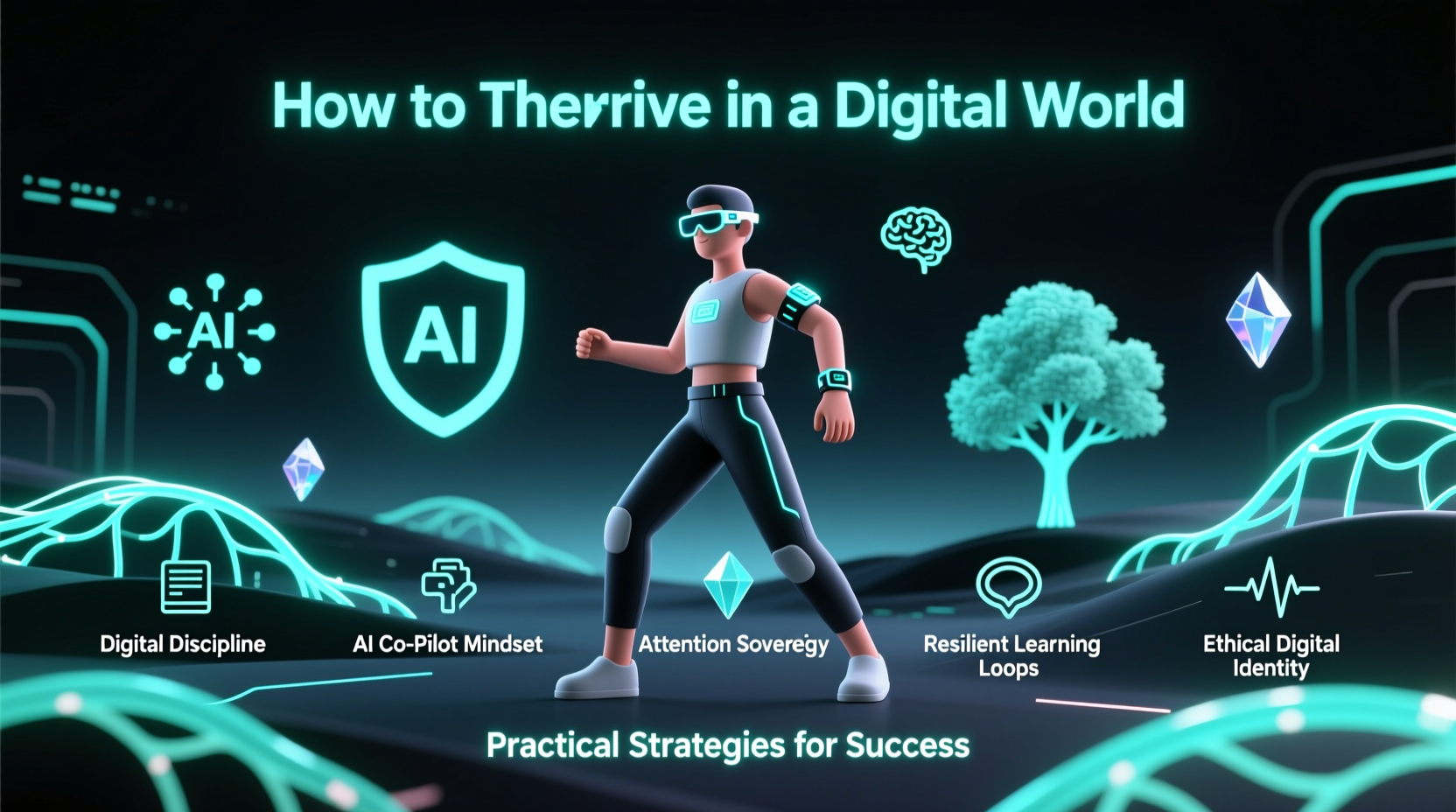
The foundation of digital success is self-regulation. Without clear boundaries, even the most productive people can fall into cycles of reactive behavior—checking messages compulsively, multitasking across apps, or consuming endless content without purpose. Intentionality means deciding in advance how and when you engage with technology, rather than letting it dictate your time.
Start by auditing your digital routines. Track how much time you spend on key platforms over a week. You’ll likely discover patterns: habitual phone checks during downtime, late-night scrolling, or frequent context switching between work tools. Awareness is the first step toward change.
Next, apply the principle of habit stacking: attach new digital behaviors to existing routines. For example, after checking your calendar each morning, review your top three priorities before opening any communication platforms. This ensures purpose drives your activity, not impulse.
Optimize Your Digital Environment for Peak Performance
Your digital workspace should support clarity, not clutter. Just as an organized desk enhances focus, a streamlined digital environment reduces cognitive load and improves decision-making. This includes your devices, software, file systems, and notification settings.
Begin by decluttering your desktop and organizing files into clearly labeled folders with consistent naming conventions. Use cloud storage with version control to avoid confusion across devices. Then, audit your apps and subscriptions. Uninstall unused programs, mute irrelevant group chats, and unsubscribe from newsletters that no longer serve you.
| Area | Do | Avoid |
|---|---|---|
| Use filters, labels, and scheduled check-ins (e.g., 3x/day) | Leaving inbox open; responding immediately to every message | |
| Notifications | Enable only mission-critical alerts (e.g., urgent messages) | Allowing social media, news, or app badges |
| Work Tools | Standardize on 1–2 core platforms per function (e.g., one task manager) | Using multiple overlapping apps for similar tasks |
A clean digital ecosystem minimizes distractions and makes high-value work easier to prioritize.
Build Resilience Against Digital Burnout
Digital burnout manifests as mental fatigue, irritability, reduced motivation, and difficulty concentrating. It often creeps in gradually, fueled by always-on expectations and poor recovery habits. Preventing it requires proactive recovery rituals and boundary enforcement.
One effective strategy is the “digital sunset”—a 60- to 90-minute period before bed where screens are minimized. Replace screen time with reading, journaling, or conversation. This supports better sleep and helps your brain transition out of high-alert mode.
“We’re not wired for constant connectivity. Recovery isn’t optional—it’s biological.” — Dr. Lena Torres, Cognitive Psychologist and Digital Wellness Researcher
Additionally, schedule regular digital detoxes. These don’t need to be extreme; even a Sunday free from work emails or a weekend without social media can reset your mental state. Use these periods to reconnect with offline activities—walking, hobbies, or face-to-face conversations—that restore balance.
Master Continuous Learning in a Fast-Changing Landscape
The digital world evolves at breakneck speed. What’s relevant today—AI tools, platform algorithms, remote collaboration methods—may shift dramatically within months. To stay ahead, adopt a mindset of lifelong learning anchored in curiosity and agility.
Set up a personal learning loop: identify a skill gap, find a high-quality resource (course, podcast, or mentor), practice consistently, and apply what you learn immediately. For instance, if you want to improve data literacy, take a short course on spreadsheet automation, then use those formulas in your next report.
Leverage microlearning: consume bite-sized content during short breaks. Follow thought leaders on professional networks, subscribe to curated newsletters, or join niche communities where knowledge is shared regularly.
Step-by-Step Guide: Building a Personal Learning System
- Assess: List 2–3 skills critical to your digital success (e.g., cybersecurity basics, AI prompt engineering).
- Source: Identify one reputable course, book, or certification for each.
- Schedule: Block 2–3 short sessions per week (25–30 minutes) for focused study.
- Apply: Use new knowledge in a real project or discussion within 48 hours.
- Review: At month-end, evaluate progress and adjust your learning plan.
Real-World Example: How Maria Transformed Her Remote Work Routine
Maria, a marketing consultant, found herself working longer hours despite being remote. She was constantly interrupted by Slack messages, felt overwhelmed by her inbox, and struggled to complete deep work. After three months of declining energy and missed deadlines, she decided to redesign her digital workflow.
She began by turning off non-essential notifications and setting specific times to check messages: 10:00 AM, 1:00 PM, and 4:00 PM. She used calendar blocking to protect two-hour windows for strategic planning and content creation. She also adopted a simple file structure in Google Drive and created templates for recurring client reports.
Within six weeks, Maria reduced her weekly work hours by 8 while improving output quality. Her clients noticed faster turnaround and clearer communication. More importantly, she regained control over her time and energy—proving that small, deliberate changes yield significant results.
Digital Success Checklist
- ✅ Audit your screen time and identify top distractions
- ✅ Set daily focus blocks for uninterrupted work
- ✅ Organize digital files with a logical folder system
- ✅ Disable non-essential notifications on all devices
- ✅ Schedule a weekly 30-minute learning session
- ✅ Implement a digital sunset routine before bedtime
- ✅ Take a quarterly digital detox (minimum 24 hours)
- ✅ Review and update passwords using a secure manager
Frequently Asked Questions
How can I stay productive without feeling overwhelmed by digital tools?
Focus on simplicity. Use fewer tools deliberately. Choose platforms that integrate well and automate repetitive tasks. Prioritize consistency over complexity—master one system before adding another.
Is multitasking online really that harmful?
Yes. Research shows that switching between digital tasks can reduce productivity by up to 40% and increase error rates. Your brain doesn’t truly multitask—it toggles rapidly, depleting mental energy. Single-tasking with full attention yields better results in less time.
What’s the best way to keep up with digital trends without burning out?
Curate your inputs. Follow only a few trusted sources—industry newsletters, expert podcasts, or professional associations. Allocate fixed time for exploration, and don’t feel pressured to adopt every new tool. Focus on relevance, not novelty.
Conclusion: Take Control of Your Digital Life
Thriving in the digital world isn’t about doing more—it’s about doing what matters with clarity and confidence. By designing intentional habits, optimizing your environment, protecting your mental energy, and committing to continuous growth, you transform digital chaos into a powerful engine for achievement. The tools won’t change, but your relationship with them can.




 浙公网安备
33010002000092号
浙公网安备
33010002000092号 浙B2-20120091-4
Comments
No comments yet. Why don't you start the discussion?