
Cats are naturally drawn to objects that move, reflect light, or dangle unpredictably—qualities that make holiday decorations like tinsel, glass baubles, and metallic garlands dangerously appealing. While these shiny ornaments add sparkle to your home, they also pose risks: ingestion of small pieces can lead to intestinal blockages, broken glass can cause injury, and climbing on trees may result in falls. Instead of scolding or punishing your cat—a method that increases anxiety and damages trust—you can use positive reinforcement to teach them to leave decorations alone. This approach aligns with modern animal behavior science and strengthens the bond between you and your pet.
Understanding Why Cats Are Drawn to Shiny Objects
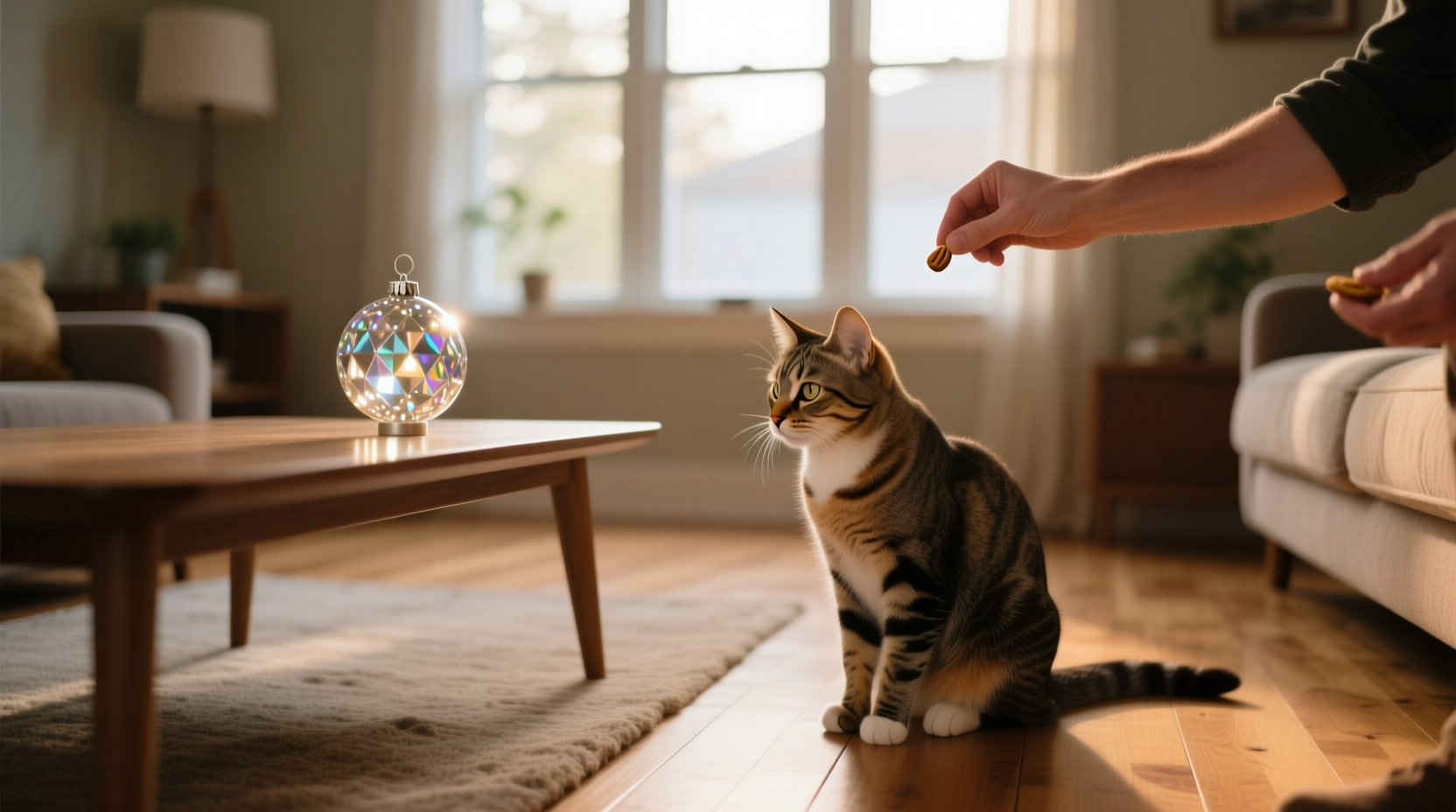
A cat’s fascination with shiny items isn’t mere mischief—it’s rooted in instinct. In the wild, felines hunt prey that glimmers in sunlight: fish scales, insect wings, or dew-covered fur. These reflective surfaces mimic movement, triggering a cat’s predatory drive. When your cat bats at a dangling ornament or chases tinsel across the floor, they’re not being destructive; they’re responding to visual stimuli that resemble potential prey.
Additionally, cats explore their world through touch and motion. A swaying ornament offers unpredictable movement, making it irresistible. Combine this with the novelty factor—decorations appear suddenly during holidays—and you have a perfect storm of feline temptation.
“Cats don’t misbehave out of defiance. They respond to environmental cues. Change the environment and reinforce desired behaviors, and you change the outcome.” — Dr. Sarah Ellis, Certified Feline Behavior Specialist
Step-by-Step Guide: Training Your Cat to Leave Ornaments Alone
Training a cat requires patience, consistency, and timing. The goal is not to eliminate play but to redirect it toward appropriate outlets. Follow this structured plan over 3–6 weeks for best results.
- Remove Temptation Initially
Before training begins, clear all fragile or hazardous decorations. Use this time to observe your cat’s behavior without distractions. This phase builds focus and prevents accidents during learning. - Introduce the “Leave It” Command
Start in a low-distraction area with a non-shiny object (e.g., a spoon). Hold the item in your closed hand. When your cat sniffs or paws at it, wait silently. As soon as they stop and look away—even briefly—say “leave it” and immediately reward with a high-value treat (like freeze-dried chicken). Repeat 5–10 times daily. - Add Visual Stimuli Gradually
Once your cat consistently responds to “leave it” with neutral objects, introduce controlled shiny items. Tape a piece of aluminum foil to a wall or place a mirrored tile under a clear box. Practice the command when your cat shows interest. Reward disengagement instantly. - Simulate Real Conditions
Set up a mock tree or shelf with safe, imitation ornaments (plastic, unbreakable). Allow supervised access. If your cat approaches an ornament, calmly say “leave it,” guide their attention elsewhere (e.g., with a toy), and reward when they comply. Never allow unsupervised access during training. - Increase Duration and Distance
Gradually extend how long your cat must ignore the item before receiving a reward. Start with one second, then build to ten. Increase your distance from them during commands to simulate real-life scenarios where you're not standing right beside the decoration. - Maintain Consistency Year-Round
Even after holidays end, practice the “leave it” command occasionally with other tempting items (jewelry, keys) to reinforce impulse control.
Effective Alternatives: Redirecting Play Instincts
Instead of asking your cat to suppress natural behaviors, provide acceptable alternatives. A bored cat will seek stimulation, often in the form of household hazards. By enriching their environment, you reduce the appeal of forbidden items.
- Interactive Toys: Wand toys with feather attachments mimic erratic prey movement better than static ornaments.
- Shiny-but-Safe Objects: Use crinkle balls, mylar strips tied to poles, or battery-powered laser toys to satisfy their attraction to sparkle.
- Rotation System: Rotate toys weekly to maintain novelty. Store unused ones out of sight to preserve interest.
- Vertical Spaces: Install shelves or cat trees away from decorated areas so your cat can perch and observe without interference.
Environmental enrichment doesn’t replace training—it enhances it. When your cat has engaging options, choosing to ignore ornaments becomes easier and more rewarding.
Do’s and Don’ts When Training Around Decorations
| Do | Don’t |
|---|---|
| Use high-value treats only during training sessions to increase motivation. | Yell, spray water, or clap loudly to scare your cat—they’ll associate fear with you, not the object. |
| Supervise all interactions with ornaments until reliable recall is established. | Leave breakable or toxic items within reach, even if your cat seems disinterested. |
| Practice “leave it” in multiple rooms to generalize the behavior. | Assume one training session is enough—cats need repetition over time. |
| Reward calm behavior near decorations, even if no command was given. | Use physical punishment—this increases stress and can trigger aggression. |
Real-Life Example: Training Luna During Holiday Season
Luna, a two-year-old Siamese mix, lived in a home where Christmas meant a fully decorated 7-foot tree filled with heirloom glass ornaments. Each year, her owners returned to broken baubles and missing tinsel. Determined to change the pattern, they consulted a certified cat behaviorist and implemented a six-week training program.
They began by removing all decorations and teaching Luna the “leave it” command using a spoon covered in foil. After five days of short sessions, she responded reliably. Next, they introduced a cardboard cutout of a tree with plastic ornaments attached. Whenever Luna approached, her owner said “leave it” and tossed a treat behind her. Within two weeks, Luna would turn away from the mock tree on cue.
On week five, they set up a real (but secured) tree with unbreakable ornaments. Supervised visits started at five minutes, gradually increasing. Any sign of pawing triggered an immediate redirection to a wand toy. By December, Luna still watched the tree intently—but she stayed off it, earning treats for sitting nearby without interaction.
The key? Consistent reinforcement and replacing temptation with better rewards. Today, Luna tolerates seasonal decor calmly, and her owners enjoy holidays without cleanup emergencies.
Essential Checklist for Success
- ☐ Remove hazardous decorations before starting training
- ☐ Choose a high-value treat exclusive to training sessions
- ☐ Teach “leave it” with neutral objects first
- ☐ Introduce shiny items gradually under supervision
- ☐ Provide alternative sources of play and enrichment
- ☐ Practice daily for 5–10 minutes per session
- ☐ Secure real trees and hang fragile items out of reach
- ☐ Monitor progress and adjust difficulty as needed
Frequently Asked Questions
Can older cats learn new behaviors like ignoring ornaments?
Yes. While kittens are more adaptable, adult cats can learn throughout life. Older cats may take longer due to established habits, but with consistent positive reinforcement, most can master commands like “leave it.” Keep sessions short and rewarding to maintain engagement.
What if my cat knocks down an ornament despite training?
Stay calm. Clean up without reacting emotionally. Analyze what went wrong—was the cat unsupervised? Was the ornament too low? Reassess your setup and reinforce training with lower-risk simulations. Never punish after the fact; cats don’t connect delayed consequences to past actions.
Are there specific breeds more prone to playing with shiny objects?
Breeds with high prey drive or intelligence—such as Siamese, Bengals, and Abyssinians—tend to be more curious and active. However, individual personality plays a larger role than breed. Any cat, regardless of lineage, can benefit from structured training and environmental management.
Conclusion: Building Trust Through Positive Change
Training a cat to ignore shiny ornaments isn’t about control—it’s about communication. By using positive reinforcement, you teach your cat that self-control leads to better outcomes. Over time, they learn that walking away from temptation earns them something they value more: your attention, affection, and tasty rewards.
This method fosters mutual respect. Rather than living in fear of reprimand, your cat gains confidence navigating a human world full of intriguing but off-limits items. And you gain peace of mind knowing your home—and your pet—are safer during festive seasons.
The process demands consistency, but the payoff extends beyond holiday decor. Skills like impulse control and response to cues improve overall behavior, making future challenges easier to manage. Start today, even if the season hasn’t begun. With patience and positivity, you and your cat can coexist harmoniously—sparkle and all.




 浙公网安备
33010002000092号
浙公网安备
33010002000092号 浙B2-20120091-4
Comments
No comments yet. Why don't you start the discussion?