
Teaching a parrot to speak is one of the most rewarding aspects of bird ownership. Unlike programmed responses, a parrot’s ability to mimic human speech stems from social bonding and environmental enrichment. However, many owners encounter setbacks—silence, inconsistency, or behavioral resistance—not because their bird isn’t capable, but because the training approach lacks patience, structure, or understanding of avian psychology. The key isn’t repetition alone; it’s creating conditions where vocal learning feels safe, meaningful, and enjoyable for the bird. With the right methods, even naturally quiet species can learn clear, context-appropriate phrases in a few weeks to months.
Understanding Parrot Vocalization: Why They Mimic
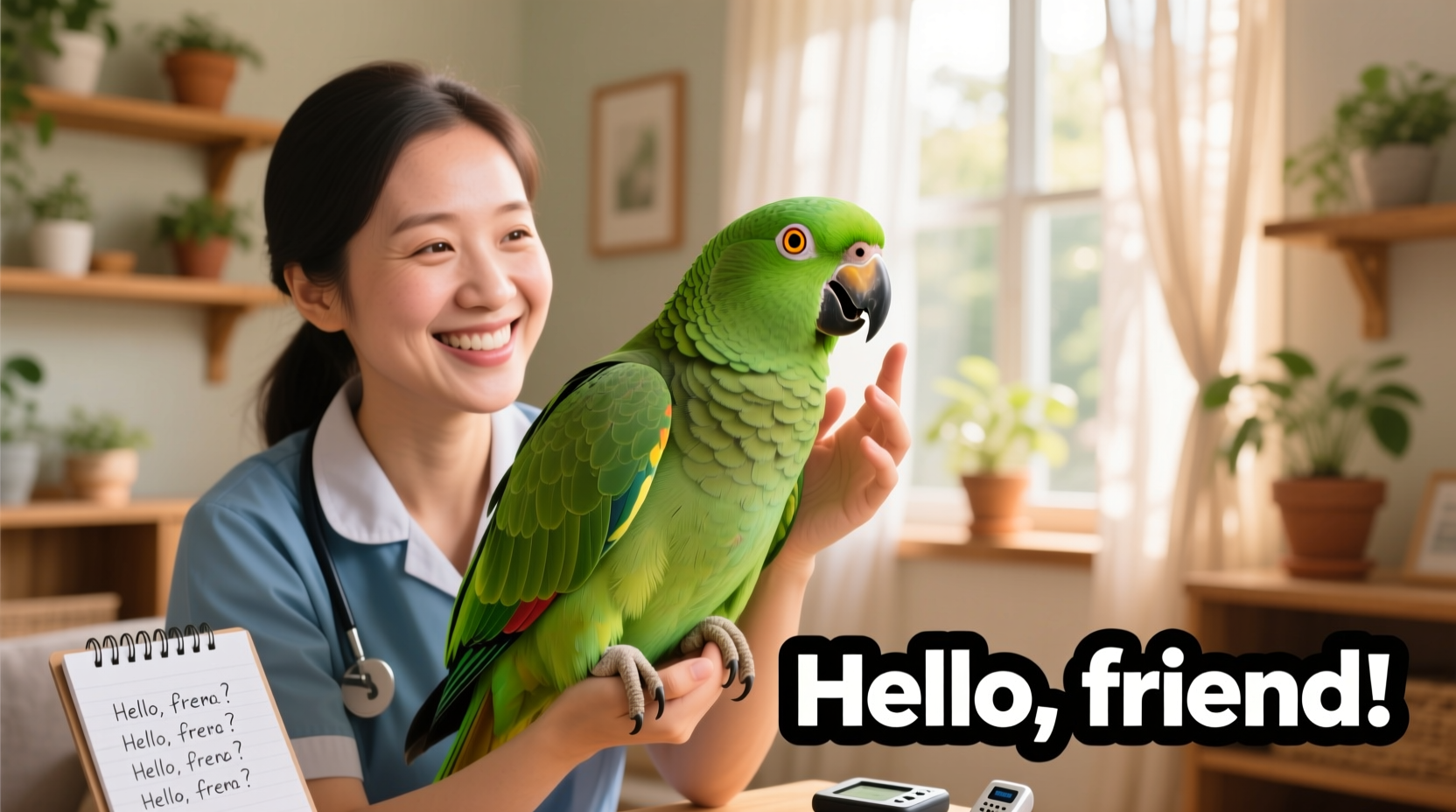
Parrots don’t “talk” in the way humans do—they mimic sounds as part of social integration. In the wild, flocks use calls to maintain cohesion, signal danger, and reinforce pair bonds. A captive parrot sees its human family as its flock. When it imitates speech, it’s attempting to belong, gain attention, or respond to emotional cues. This social motivation is the foundation of successful training.
Not all species are equally inclined to speak. Grey parrots, budgerigars, amazons, and some conures are among the most vocal. Cockatiels and lovebirds may whistle or mimic tones rather than form words clearly. Age also matters: younger birds, especially those under two years old, tend to be more receptive to new sounds. That said, older parrots can still learn with consistent effort.
“Speech in parrots is less about intelligence and more about opportunity and relationship. A bird that feels secure and engaged will naturally explore vocal mimicry.” — Dr. Irene Pepperberg, Avian Cognition Researcher
Creating the Right Environment for Learning
A stressed or overstimulated bird won’t focus on learning. Before introducing phrases, ensure your parrot’s environment supports cognitive engagement. This means balancing safety, routine, and stimulation.
- Quiet Training Zone: Choose a calm area free from loud TVs, sudden noises, or other pets. Background noise makes it harder for the bird to isolate your voice.
- Consistent Daily Routine: Parrots thrive on predictability. Feed, interact, and train at roughly the same times each day to reduce anxiety.
- Minimal Distractions: Turn off music or conversations during training sessions. You want your voice to be the focal point.
- Comfortable Perch Height: Position the bird at eye level. This reduces dominance tension and fosters connection.
Step-by-Step Guide to Teaching Basic Phrases
Effective training hinges on short, positive interactions repeated daily. Follow this timeline to introduce and reinforce simple language:
- Week 1: Bonding and Sound Exposure
Spend 10–15 minutes twice daily near the cage, speaking in a calm, cheerful tone. Use simple greetings like “Hello!” or “Good morning!” Avoid rapid speech. Let the bird observe you without pressure to respond. Reward any vocalization (even squawks) with praise: “Good talking!” - Week 2: Introduce Target Phrase
Choose one phrase—ideally two to three syllables long, such as “Hi, [Bird’s Name]!” or “Pretty bird!” Say it slowly and clearly five times in a row during each session. Immediately follow with a treat or head scratch if the bird shows interest (turns head, leans forward, vocalizes). Repeat twice daily. - Week 3: Reinforce Contextual Use
Say the phrase during relevant moments. For example, say “Hello!” when entering the room or “Bye-bye!” when leaving. This helps the bird associate sound with meaning. If the parrot mimics even a fragment (“H-ello?”), reward enthusiastically. - Week 4: Expand and Repeat
Once the first phrase is consistently attempted, begin a second—but only after the first shows signs of mastery (repeated attempts, clear imitation). Continue reviewing the first phrase daily to prevent regression.
Each session should last no longer than 10 minutes. End on a positive note—even if no progress is made, offer a treat for attention. Never force interaction or repeat phrases excessively; this breeds annoyance, not learning.
Do’s and Don’ts of Parrot Speech Training
| Do | Don’t |
|---|---|
| Use a consistent, cheerful tone when repeating phrases | Shout or exaggerate pronunciation—this scares birds |
| Reward effort, not just accuracy | Punish silence or scold incorrect sounds |
| Train at the same time each day | Train when the bird is tired, molting, or agitated |
| Keep sessions short and fun | Repeat phrases more than 5 times per session without breaks |
| Use treats sparingly—verbal praise often suffices | Overfeed treats, which leads to health issues |
Common Challenges and How to Overcome Them
Frustration often arises when owners expect rapid results. Parrots learn at individual paces. Some may echo words within weeks; others take months. Recognizing common hurdles—and adjusting accordingly—prevents discouragement.
- No Response After Weeks: The bird may not feel secure. Revert to bonding activities—hand feeding, soft singing, gentle eye contact—for a week before resuming training.
- Mimicking Household Noises Instead: Microwaves, phones, or doorbells are often more frequent than human speech. Reduce background noise and increase direct vocal interaction.
- Only Talks for One Person: This indicates a stronger bond with that individual. Encourage others to participate in feeding and play to build trust.
- Vocalizing But Not Clearly: Mumbling or garbled sounds are normal early stages. Continue reinforcing correct attempts with enthusiasm. Clarity improves with practice.
Mini Case Study: Milo the Young African Grey
Sarah adopted Milo, a one-year-old African grey, eager to teach him to speak. She played audio recordings of phrases for hours daily. After six weeks, Milo remained silent and began plucking feathers near his neck. Concerned, she consulted an avian behaviorist, who advised stopping recordings and focusing on live interaction.
Sarah shifted her approach. She spent mornings talking softly while preparing coffee, saying “Good morning, Milo!” each time he looked up. During evening TV time, she’d say “Hello!” whenever the phone rang. Within ten days, Milo responded with a raspy “Eh-lo?” Sarah celebrated with a sunflower seed and gentle praise. By week eight, he greeted her clearly each morning and learned “Wanna nut?” by associating the phrase with treat time. His feather plucking ceased entirely.
The lesson: passive audio doesn’t replace social reinforcement. Real-time, emotionally connected speech is what triggers mimicry.
Checklist: Setting Up for Success
Before starting formal training, verify these foundational elements are in place:
- ☑ The parrot appears healthy (bright eyes, clean feathers, active posture)
- ☑ It willingly interacts with you (steps onto hand, watches you closely)
- ☑ The cage is in a social area of the home, not isolated or noisy
- ☑ You have 10–15 minutes twice daily for undistracted sessions
- ☑ You’ve chosen one simple, meaningful phrase to start with
- ☑ Treats (like millet sprays or small fruit pieces) are ready for positive reinforcement
- ☑ All household members understand not to shout or scare the bird during training
Frequently Asked Questions
Can all parrots learn to talk?
No—not all parrots develop clear speech. Species like budgies and greys are highly verbal, while others like Pionus parrots rarely speak despite being intelligent. Even within talkative species, individual personality plays a role. Some birds simply prefer whistling or non-vocal communication.
Is it better to use recordings or live speech?
Live speech is far more effective. Recordings lack emotional context and real-time feedback. Birds respond to facial expressions, tone shifts, and timing—elements absent in pre-recorded audio. While occasional playback might reinforce a known phrase, initial teaching must be interactive.
My parrot screams when I try to train. What should I do?
Screaming signals stress or overstimulation. Stop the session immediately. Evaluate the environment: Is the room too bright? Are there sudden movements nearby? Return to low-pressure bonding for several days. Train earlier in the day when the bird is calmer, and avoid pushing when the parrot shows closed eyes, fluffed feathers, or pinned pupils.
Conclusion: Patience, Trust, and Progress
Training a parrot to speak isn’t about forcing words—it’s about inviting communication. When approached with empathy, consistency, and respect for the bird’s natural instincts, vocal learning becomes a joyful expression of trust. There will be quiet weeks, mispronounced attempts, and moments of doubt. But every soft chirp, every half-formed syllable, is a step toward connection. Celebrate the process, not just the outcome. The bond you strengthen through patient training is worth far more than any perfectly enunciated phrase.




 浙公网安备
33010002000092号
浙公网安备
33010002000092号 浙B2-20120091-4
Comments
No comments yet. Why don't you start the discussion?