
Parrots are among the most intelligent and socially complex birds in the animal kingdom. Their ability to mimic human speech isn’t just a party trick—it’s a reflection of their deep cognitive capacity and desire for interaction. However, teaching a parrot to talk doesn’t happen overnight. Success lies not in repetition alone, but in consistency, emotional safety, and embedding training into everyday life through positive daily routines. When approached with patience and structure, even a shy or quiet bird can develop a vocabulary that surprises its owner.
The key is to shift from isolated “training sessions” to a lifestyle of gentle, repetitive, and rewarding communication. This method not only increases the likelihood of vocal mimicry but also strengthens the bond between bird and caregiver. Unlike mechanical drills, positive daily routines make learning feel natural, safe, and enjoyable for the parrot.
Understanding Parrot Communication
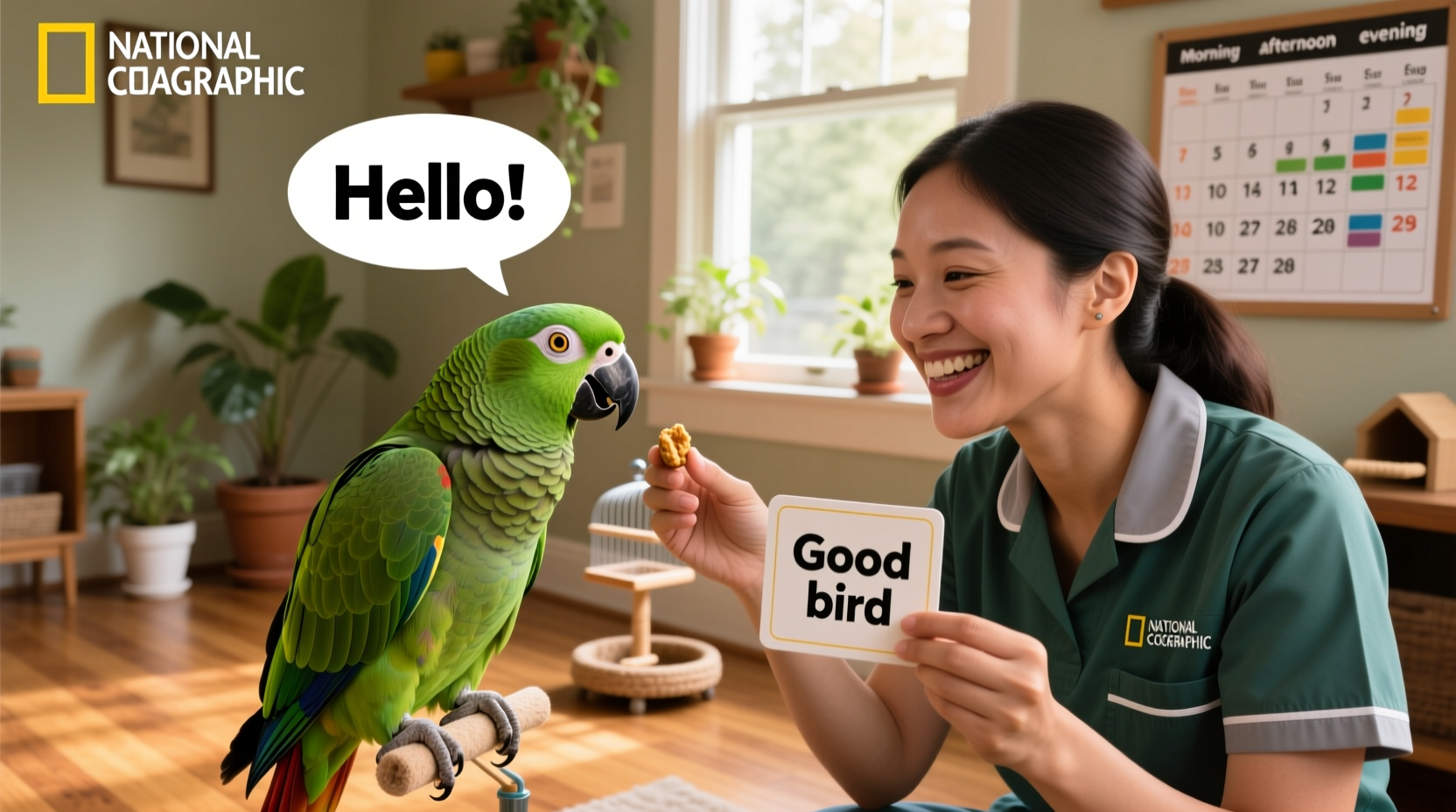
Before attempting to teach words, it’s essential to understand how parrots communicate. In the wild, parrots use vocalizations to maintain flock cohesion, signal danger, and establish territory. Captive parrots view their human families as their flock. When they mimic speech, they’re often trying to integrate, gain attention, or express emotion—not simply repeat sounds on command.
Species vary widely in their talking ability. African Greys, Amazon parrots, and Budgerigars are known for strong vocal mimicry, while Pionus or Quaker parrots may speak less frequently but still develop meaningful phrases. Age also matters: younger birds typically learn faster, though adults can acquire new words with consistent effort.
Crucially, parrots don’t understand language the way humans do—at least not initially. They associate sounds with outcomes. Saying “hello” when you enter a room, paired with affection or treats, teaches the bird that this sound precedes social interaction. Over time, context gives meaning to words, and some parrots begin using them appropriately.
Building a Foundation of Trust and Routine
A parrot won’t engage in vocal learning if it feels anxious or insecure. The first step in any speech-training plan is establishing a predictable, low-stress environment. Parrots thrive on routine—meals, interactions, and sleep schedules should occur at roughly the same time each day.
Begin by spending quiet time near the cage without demanding interaction. Read aloud, hum, or narrate your actions (“Now I’m making coffee”). This exposes the bird to human sounds in a non-threatening way. Gradually increase direct engagement: offering food from your hand, playing soft music, or using a calm voice during cage cleaning.
Trust grows when the parrot learns that your presence equals safety and rewards. Never force interaction. If the bird turns away or fluffs up, give space. Positive reinforcement—such as a sunflower seed, verbal praise, or head scratches—should follow calm behavior and any attempt at vocalization.
“Parrots are emotional learners. They respond not to commands, but to relationships. A bird that trusts you will want to communicate with you.” — Dr. Irene Pepperberg, Avian Cognition Researcher
Daily Training Routines That Work
The most effective speech training happens not in isolated 10-minute drills, but woven into the rhythm of the day. Below is a sample daily schedule that integrates language exposure and reinforcement naturally.
Morning Interaction (7–8 AM)
After uncovering the cage, greet your parrot with a clear, cheerful phrase: “Good morning, [bird’s name]!” Repeat it three times. Offer breakfast while saying, “Here’s your food.” Keep tone upbeat and consistent. This links vocal cues with positive events.
Midday Engagement (12–1 PM)
Bring the parrot to a play stand in a busy household area. Narrate simple actions: “I’m cutting an apple,” or “The phone rang!” Use exaggerated mouth movements so the bird can visually track speech patterns. If the parrot makes sounds, immediately respond: “You talked! Good job!” Even nonsensical noises should be acknowledged—this encourages further attempts.
Evening Wind-Down (7–8 PM)
As bedtime approaches, use calming phrases: “Time to sleep,” or “Night-night.” Pair these with covering the cage or offering a favorite toy. Repetition over weeks conditions the bird to associate the words with the routine.
Step-by-Step Guide to Teaching First Words
Follow this six-week progression to introduce and reinforce basic vocabulary:
- Week 1: Sound Exposure – Choose 1–2 simple words (e.g., “hi,” “birdie”). Say them clearly during greetings or feeding. Do not expect imitation yet—focus on familiarity.
- Week 2: Reinforcement – Each time you say the target word, immediately offer a small treat or praise. The parrot begins linking the sound with reward.
- Week 3: Encouraging Response – After saying the word, pause and look expectantly at the bird. If it makes any similar sound—even a whistle—reward instantly.
- Week 4: Isolation Practice – Practice the word in a quiet setting with minimal distractions. Repeat 5–7 times per session, 2–3 times daily.
- Week 5: Contextual Use – Use the word only in specific situations (e.g., “hi” when entering the room). This helps the bird understand usage.
- Week 6: Expand Vocabulary – Once the first word is consistently repeated, introduce a second word using the same method.
Progress varies. Some parrots say their first word in three weeks; others take months. Patience and consistency matter more than speed.
Do’s and Don’ts of Parrot Speech Training
| Do’s | Don’ts |
|---|---|
| Use a consistent tone and pronunciation | Change words or phrases frequently |
| Reward attempts, not just perfect mimicry | Punish silence or incorrect sounds |
| Keep sessions short and positive (5–10 minutes) | Force the bird to perform or hold it during training |
| Practice words in real-life contexts | Use recordings instead of live human voices |
| Involve all household members in using the same words | Allow yelling or aggressive sounds around the bird |
Real Example: Training Milo the Young Congo African Grey
Milo, a 9-month-old Congo African Grey, showed little interest in vocalizing during his first month at home. His owner, Sarah, implemented a structured daily routine focused on predictability and positive association.
Each morning, she greeted Milo with “Good morning, buddy!” while offering a almond as a treat. During dinner prep, she placed him on a stand nearby and said, “Yummy food!” every time she stirred a pot. She avoided TV noise during training hours and always responded enthusiastically to any vocal attempt.
By week five, Milo began babbling sounds resembling “mornin.” Sarah celebrated each try with clapping and a treat. By week eight, he said “morning” clearly after seeing her enter the kitchen. Within four months, his vocabulary grew to ten words, including “water,” “step up,” and “bye-bye.”
The turning point wasn’t drilling—it was consistency. Milo learned that sounds led to connection, and connection felt good.
Essential Checklist for Success
- ✅ Establish a predictable daily schedule (feeding, interaction, sleep)
- ✅ Choose 1–2 simple, high-frequency words to start
- ✅ Use clear, consistent pronunciation every time
- ✅ Reward any vocal attempt immediately (treat, praise, or touch)
- ✅ Practice in calm, low-distraction environments
- ✅ Involve all family members in using the same words
- ✅ Monitor stress signs (biting, feather plucking) and adjust approach
- ✅ Track progress in a journal (first sounds, dates, triggers)
Frequently Asked Questions
Can all parrots learn to talk?
No, not all parrots will talk, even with excellent training. Genetics, species, early socialization, and individual personality play major roles. Some birds prefer whistling or remain mostly silent, which is normal. Focus on overall well-being rather than vocal performance.
Why does my parrot scream instead of speaking?
Screaming is often a sign of unmet needs—boredom, loneliness, or excess energy. A parrot that screams excessively may not be ready for speech training. Address environmental enrichment first: provide toys, out-of-cage time, and mental stimulation. Reduce attention given to screaming (to avoid reinforcing it) and redirect with calm interaction.
Is it okay to use audio recordings to teach words?
Generally, no. Parrots learn best through social interaction. Recordings lack emotional context and responsiveness. A bird may mimic a recording, but it won’t understand the word’s use. Live, face-to-face repetition is far more effective and bonding.
Conclusion: Make Talking Part of Your Shared Life
Teaching a parrot to talk isn’t about forcing words from a reluctant bird. It’s about creating a shared language through trust, repetition, and emotional safety. When training becomes part of your daily rhythm—woven into greetings, meals, and playtime—it stops feeling like work and starts feeling like conversation.
The most successful parrot owners aren’t those with the loudest or most talkative birds, but those who listen closely, respond kindly, and celebrate small steps. Over time, those tiny imitations grow into meaningful exchanges. A softly spoken “hello” from across the room, a whispered “good night”—these moments reflect a deep, cross-species connection built on patience and care.




 浙公网安备
33010002000092号
浙公网安备
33010002000092号 浙B2-20120091-4
Comments
No comments yet. Why don't you start the discussion?