
Puppies explore the world with their mouths. Biting is natural for them—it’s how they play, teethe, and learn boundaries. However, allowing this behavior to continue unchecked can lead to serious problems as your dog matures. The key is not to punish or suppress biting through fear, but to guide your puppy toward appropriate behavior using patience, consistency, and positive reinforcement. Training a puppy to stop biting doesn’t require dominance or force; it requires understanding canine development and responding with empathy and structure.
When done right, bite inhibition training strengthens the bond between you and your puppy while setting the foundation for lifelong obedience and social confidence. This guide walks you through proven, non-aggressive methods that align with modern animal behavior science, helping your puppy grow into a well-mannered companion.
Understanding Why Puppies Bite
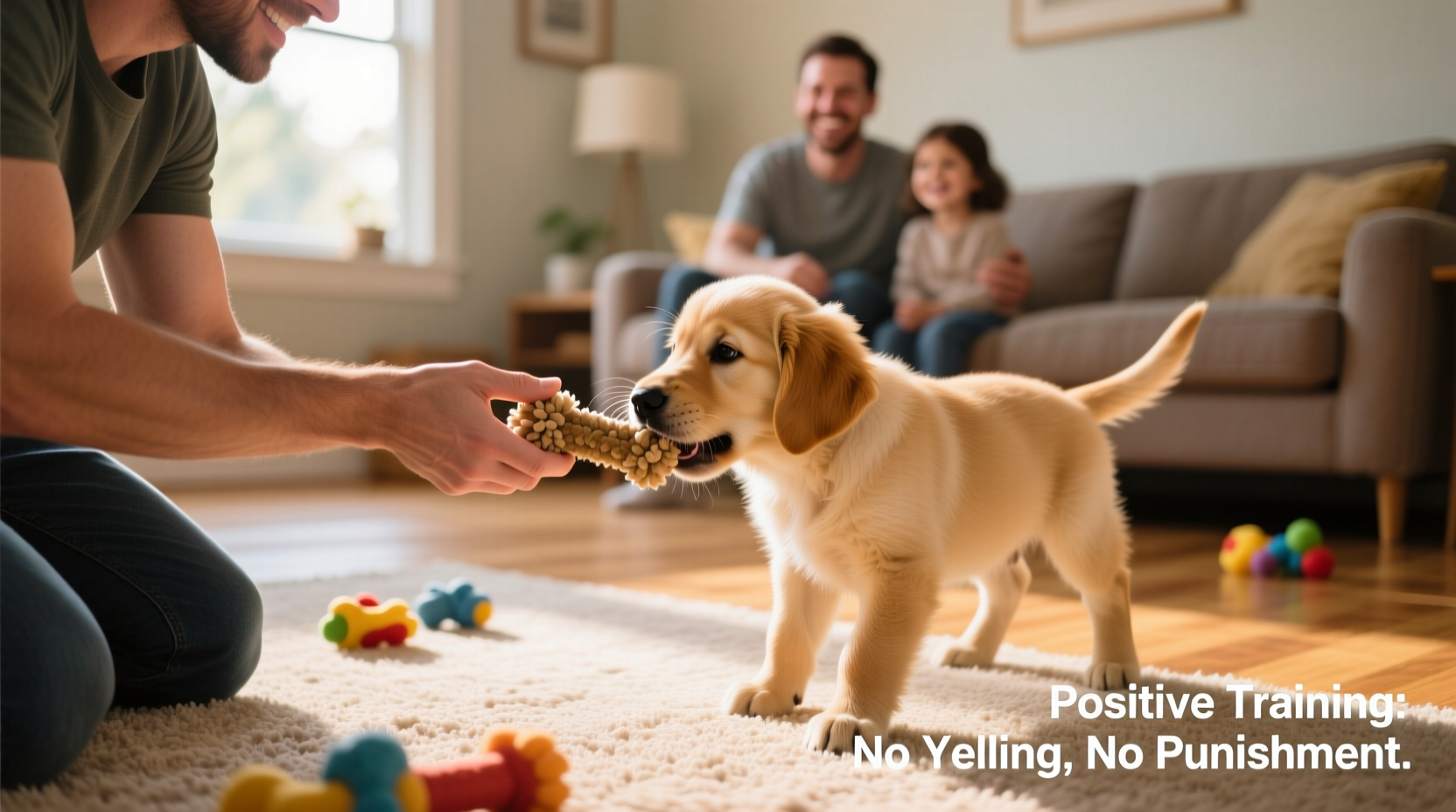
Biting in puppies isn't malicious—it's developmental. From three weeks old onward, puppies use their mouths during play with littermates. Through these interactions, they begin learning bite inhibition: the ability to control the force of their jaws. When one pup bites too hard, the other yelps and stops playing. This feedback teaches the biter to soften their mouthing over time.
When a puppy joins your home, they bring this instinct with them—but now, humans become part of their play environment. Without proper guidance, a puppy may not understand that human skin is more sensitive than fur, or that people don’t respond the same way littermates do. That’s why early intervention is crucial. You’re not just stopping unwanted behavior—you’re teaching emotional regulation and communication.
“Puppies aren’t born knowing how to interact gently with humans. They learn it through consistent, kind feedback.” — Dr. Sophia Yin, Veterinarian and Animal Behaviorist
Step-by-Step Guide to Stopping Puppy Biting
Effective bite training follows a predictable sequence of actions that reinforce self-control. The goal is to redirect biting behavior, teach consequences, and reward calmness—all without scaring or intimidating your puppy. Follow this five-step process daily for best results:
- Recognize the triggers. Most biting occurs during high-energy moments—playtime, greetings, or when the puppy is overtired. Keep a mental note of when biting spikes so you can anticipate and prevent it.
- Use the “Yelp and Withdraw” method. When your puppy bites your skin, let out a short, sharp yelp (like a hurt puppy would) and immediately stop interacting. Turn away, cross your arms, and avoid eye contact for 10–20 seconds. This mimics how littermates respond to rough play.
- Redirect to an appropriate chew toy. After the pause, offer a chew toy. If the puppy bites the toy, praise them calmly. This reinforces acceptable alternatives.
- End play sessions before overstimulation. Puppies often escalate mouthing when overexcited. Watch for signs like rapid breathing, stiff posture, or intense focus on hands/feet. End play calmly by walking away or placing the puppy in a safe space with a chew toy.
- Practice daily with structured exercises. Short, frequent training sessions (3–5 minutes, 3–4 times a day) are more effective than long ones. Use treats and toys to simulate real-life scenarios where biting might occur.
Do’s and Don’ts of Puppy Bite Training
Avoid common mistakes that undermine progress. The table below outlines key practices to embrace—and those to eliminate—for successful, stress-free training.
| Do’s | Don’ts |
|---|---|
| Use high-value treats (e.g., freeze-dried liver) to reward gentle behavior | Wave hands or feet around like prey—this encourages chasing and biting |
| Provide plenty of appropriate chew toys (rubber, nylon, rope) | Use your hands during play—even “wrestling” games teach biting is okay |
| Stay calm and consistent in responses | Pinch the puppy’s mouth, slap, or hold them down (“alpha roll”) |
| Manage the environment with baby gates or leashes indoors | Let children roughhouse with the puppy unsupervised |
| Enroll in a positive-reinforcement puppy class | Ignore persistent biting hoping it will “grow out” |
Real Example: Turning Around a Persistent Biter
Sophia adopted Luna, a 12-week-old Australian Shepherd, excited to start her new life with a smart, energetic pup. Within days, she noticed Luna was constantly nipping at her ankles, sleeves, and even her face during cuddles. Frustrated, Sophia initially tried saying “No!” firmly and pulling her hand away, but Luna only became more excited.
After consulting a certified dog trainer, Sophia shifted her approach. She stopped all hand-play, replaced her shoes with durable chew toys near the couch, and began using the “yelp and withdraw” technique consistently. Whenever Luna bit, Sophia yelped, stood up, and turned away for 15 seconds. Then, she offered a frozen Kong toy. At first, Luna would lunge again, but within a week, she started pausing after biting—looking confused, then turning to her toy.
Sophia also enrolled Luna in a puppy socialization class focused on positive reinforcement. By 16 weeks, Luna still mouthed occasionally when overstimulated, but she no longer broke skin. By six months, the biting had nearly disappeared. Today, Luna greets guests calmly and plays gently with other dogs—a testament to early, compassionate training.
Essential Tools and Environment Setup
Your puppy’s surroundings play a major role in shaping behavior. A well-managed environment reduces opportunities for inappropriate biting and supports learning. Consider these tools and strategies:
- Chew toys: Have multiple types available—soft rubber (Kong), textured nylon (Nylabone), and rope toys for variety. Rotate them weekly to maintain interest.
- Leash indoors: Attach a lightweight leash to your puppy’s harness inside the house. If they start nipping, gently guide them to a timeout area instead of chasing or grabbing.
- Timeout zone: Designate a quiet space (a puppy-proofed bathroom or exercise pen) with a bed and chew toy. Use it briefly (30–60 seconds) after biting incidents to allow cooling down.
- Taste deterrents: For persistent chewing on furniture or shoes, apply pet-safe bitter spray. Pair this with redirection to a toy.
- Feeding enrichment: Use food puzzles and slow feeders to satisfy oral needs in constructive ways.
Building Bite Inhibition Through Socialization
Bite inhibition isn’t learned in isolation. Puppies benefit immensely from controlled social experiences with other vaccinated, friendly dogs. During supervised playdates, puppies receive immediate feedback when they bite too hard—an essential part of natural learning.
If your puppy doesn’t have littermates, peer interaction becomes even more valuable. Look for puppy classes that allow off-leash play in clean, safe environments. Trainers should monitor play closely and intervene if it becomes too rough. These experiences help puppies calibrate jaw pressure and recognize body language cues—skills they’ll transfer to interactions with humans.
However, avoid chaotic dog parks or unstructured group settings for young puppies. Overstimulation can lead to hyperarousal, making biting worse. Quality matters more than quantity in socialization.
Checklist: How to Train a Puppy to Stop Biting (Without Aggression)
Use this actionable checklist to stay on track during the first few months:
- ✅ Eliminate hand-playing and replace it with toy-based games
- ✅ Respond to biting with a sharp yelp followed by a 10–20 second withdrawal
- ✅ Always redirect to an appropriate chew toy after a bite incident
- ✅ Provide multiple chew options and rotate them regularly
- ✅ End play sessions before your puppy becomes overexcited
- ✅ Use indoor leashing to manage movement and prevent chasing
- ✅ Enroll in a positive-reinforcement puppy training class
- ✅ Supervise all interactions with children and guests
- ✅ Be consistent across all family members—everyone must follow the same rules
- ✅ Track progress weekly and celebrate small improvements
Frequently Asked Questions
Will my puppy grow out of biting on its own?
Some reduction may occur as your puppy matures, but without training, biting often persists into adolescence and adulthood. Early intervention ensures your dog learns appropriate boundaries. Dogs that weren’t taught bite inhibition are more likely to cause injury during stressful situations later in life.
Is it normal for my puppy to bite during teething?
Yes. Puppies teethe between 3 and 7 months, and chewing helps relieve gum discomfort. However, this doesn’t excuse biting people. Instead, provide cold chew toys (frozen damp washcloth, chilled rubber toy) and increase access to safe chewing outlets during this phase.
What if my puppy bites harder when I yelp?
In some cases, high-pitched sounds excite rather than deter certain puppies. If yelping increases arousal, switch to a calm “Uh-uh” or “Oops” and immediately disengage. The goal is to remove attention, not escalate stimulation. Some puppies respond better to silence and stillness than vocal reactions.
Conclusion: Patience, Consistency, and Compassion
Training a puppy to stop biting isn’t about winning a battle of wills—it’s about guiding a young animal through a confusing transition into human society. Every nip is a chance to teach, not a personal attack. With clear boundaries, consistent responses, and abundant alternatives, your puppy can learn to interact gently and confidently.
The methods outlined here don’t rely on fear or force. They build trust, enhance communication, and foster emotional maturity. Most importantly, they respect your puppy as a sentient being learning how to behave in a complex world.




 浙公网安备
33010002000092号
浙公网安备
33010002000092号 浙B2-20120091-4
Comments
No comments yet. Why don't you start the discussion?