
Training a puppy is one of the most rewarding experiences for any dog owner. However, relying solely on food rewards can create dependency and limit long-term behavioral flexibility. Many modern trainers and behaviorists advocate for a broader approach to positive reinforcement—one that uses play, praise, touch, and real-life rewards instead of just treats. This method fosters deeper communication, strengthens the human-dog bond, and produces more reliable obedience in everyday situations.
Using non-food-based positive reinforcement doesn’t mean compromising effectiveness. In fact, when applied consistently, it often leads to more natural, lasting behaviors because the puppy learns to enjoy cooperation itself—not just the edible payoff. With patience, timing, and emotional attunement, you can shape your puppy’s behavior effectively while building trust and confidence.
Understanding Positive Reinforcement Beyond Treats
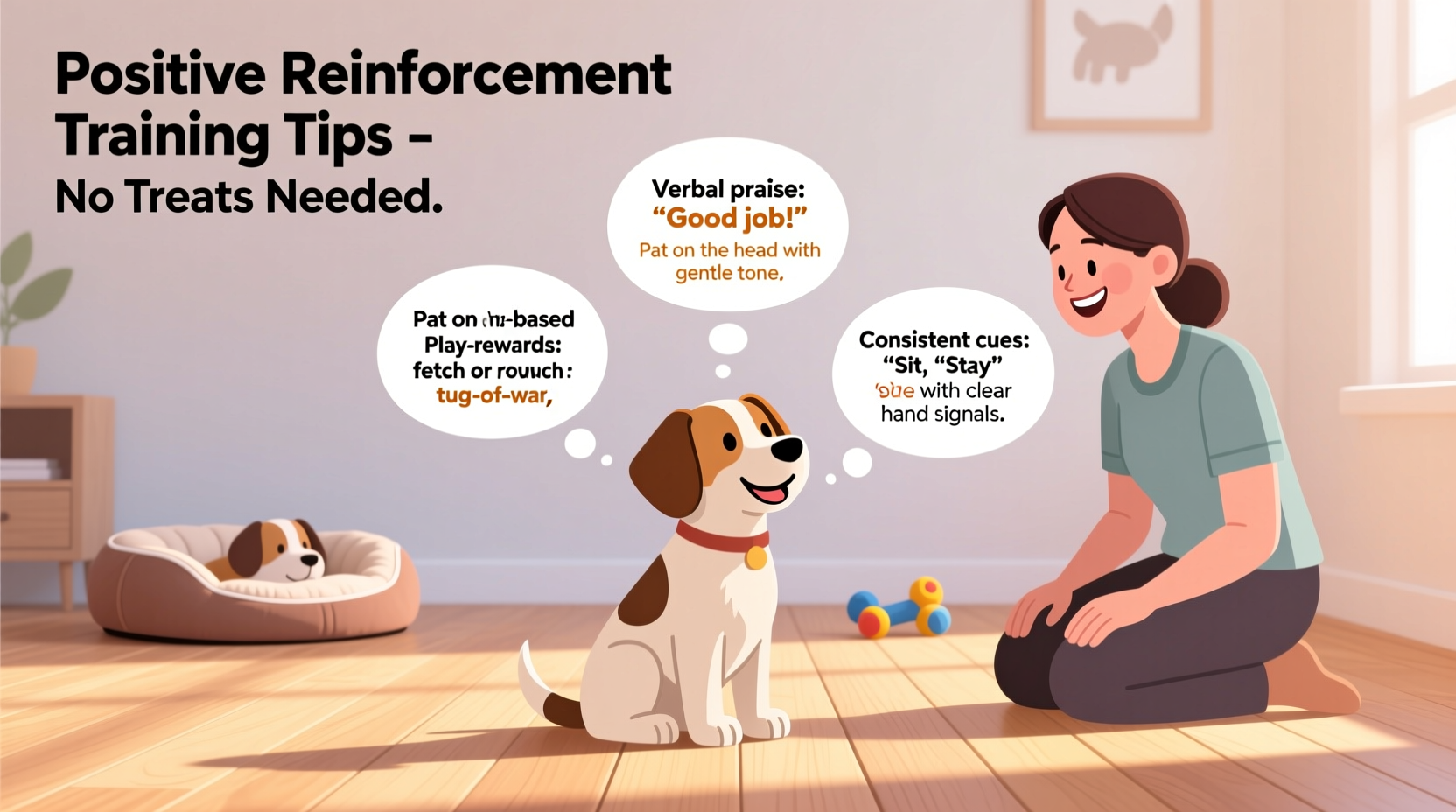
Positive reinforcement means adding something pleasant immediately after a desired behavior to increase the likelihood it will happen again. While treats are convenient, they’re only one tool in a much larger behavioral toolkit. Puppies respond strongly to social rewards—such as verbal praise, physical affection, access to toys, or opportunities to engage in fun activities.
The key is identifying what motivates your individual puppy. Some puppies thrive on belly rubs; others light up at the sound of a squeaky toy or the chance to chase a ball. These intrinsic motivators can be just as powerful—if not more so—than kibble or liver snacks.
“Dogs don’t need food every time they do something right. They need connection, clarity, and consistency.” — Dr. Sophia Yin, Veterinary Behaviorist
By observing your puppy closely during play, walks, and downtime, you’ll begin to recognize their unique preferences. Once identified, these become your primary reinforcers—tools you use to reward good choices without reaching into a treat pouch.
Effective Non-Food Rewards You Can Use
Here are several alternative forms of positive reinforcement that work exceptionally well in puppy training:
- Verbal praise: Use an upbeat tone (“Yes! Good sit!”) paired with facial expressions and body language.
- Physical affection: Gentle petting, ear scratches, or chin rubs (if your puppy enjoys them).
- Playtime rewards: Tossing a ball, initiating tug-of-war, or starting a chase game.
- Life rewards: Allowing your puppy to move forward on a walk, go through a door, or greet another dog after performing a command.
- Toys and novelty: Introducing a new chew toy or puzzle after successful engagement.
For example, if your puppy sits before crossing the threshold, mark the behavior with a “Yes!” and immediately allow them to walk outside. Over time, this teaches self-control and reinforces that polite behavior leads to desired outcomes.
Step-by-Step Guide: Teaching “Sit” Without Treats
Let’s walk through a practical, treat-free training sequence using environmental and social rewards.
- Choose a low-distraction environment—like your living room—and have a favorite toy nearby.
- Wait for the behavior. Stand quietly and observe. Most puppies naturally sit after a burst of energy.
- Mark the moment they sit with a clear cue like “Yes!” or a clicker if you're using one.
- Immediately follow with a reward: Offer enthusiastic praise and a quick game of tug or throw the ball once.
- Repeat 3–5 times per session, keeping sessions under 3 minutes to maintain focus.
- Add the verbal cue (“Sit”) only after your puppy begins to associate sitting with rewards.
- Gradually phase in distractions by practicing near doors, sidewalks, or parks—using real-life rewards like walking forward or meeting people.
This method relies on capturing behavior rather than luring, which builds attentiveness and decision-making skills. It also avoids creating a reliance on hand signals or food prompts that may fail in high-stimulus environments.
Building a Reward-Based Training Mindset
Successful non-treat training requires a shift in perspective: instead of viewing obedience as something to be paid for, see it as part of a cooperative relationship. Every interaction becomes a potential teaching moment.
Start by integrating training into daily routines. For instance:
- Ask your puppy to sit before putting on their leash.
- Require a brief pause before exiting the car.
- Use mealtime as a training opportunity—ask for a “sit” before placing the bowl down.
In each case, the reward isn’t a treat—it’s access to something the puppy wants. This technique, known as differential reinforcement of incompatible behavior (DRI), makes good manners necessary for gaining access to desirable outcomes.
| Behavior | Treat-Based Reward | Treat-Free Alternative |
|---|---|---|
| Sit at the door | Small piece of chicken | Permission to go outside |
| Come when called | Treat upon arrival | Game of fetch or tug |
| Drop the toy | Food exchange | Praise + immediate return of toy |
| Stay during grooming | Snack every 10 seconds | Short scratch session after completion |
| Leave-it command | High-value treat | Walk forward toward a fun destination |
Notice how each alternative maintains motivation without introducing food. The puppy learns that cooperation unlocks freedom, fun, and exploration—far more sustainable drivers than temporary gustatory pleasure.
Avoiding Common Mistakes in Treat-Free Training
While eliminating treats simplifies logistics and prevents overfeeding, it introduces new challenges. Here are common pitfalls and how to avoid them:
- Inconsistent timing: Delayed rewards confuse puppies. If your puppy sits and you wait five seconds to praise, they may think they’re being rewarded for standing back up.
- Overusing verbal praise: Saying “Good boy!” repeatedly without meaning dilutes its value. Reserve high-energy praise for correct responses only.
- Ignoring individual preferences: Not all puppies like being hugged. Forced affection can undermine trust. Observe what truly excites your dog.
- Skipping the marker signal: A consistent marker (“Yes!” or click) bridges the gap between action and reward. Without it, learning slows significantly.
Real-Life Example: Training Luna the Border Collie Mix
Luna, a 14-week-old Border Collie mix, was highly energetic and food-motivated—but prone to jumping and pulling on the leash. Her owner, Mark, wanted to reduce dependence on treats due to Luna’s sensitive stomach and tendency to beg.
Instead of using food, Mark began using play as reinforcement. During backyard sessions, he waited for Luna to sit spontaneously, marked it with “Yes!”, and threw her favorite frisbee. Within a week, she started offering sits regularly to initiate games.
On walks, Mark practiced loose-leash walking by stopping whenever Luna pulled and resuming only when she returned to his side. He didn’t use treats—instead, moving forward became the reward. After two weeks, Luna walked calmly beside him 80% of the time, eager to keep progressing.
By focusing on life rewards and structured play, Mark built impulse control and attention without a single treat. More importantly, Luna began to view obedience as a pathway to fun, not a transaction.
Checklist: How to Transition from Treat-Based to Treat-Free Training
If you’ve already started training with treats but want to phase them out, follow this checklist:
- Identify 3–5 non-food rewards your puppy loves (e.g., ball toss, ear rub, going through doors).
- Begin pairing treats with social rewards—give a treat AND praise simultaneously.
- Gradually reduce treat frequency: every other success, then every third, until fading completely.
- Use real-life privileges (walks, meals, play) as primary reinforcers.
- Maintain unpredictability—mix up rewards so your puppy stays engaged.
- Monitor enthusiasm—if interest drops, reintroduce variety or reassess motivators.
This gradual transition preserves learned behaviors while expanding the reinforcement repertoire. The goal isn’t to never use treats again, but to ensure they aren’t the only currency in your training economy.
Frequently Asked Questions
Can I still use treats occasionally?
Absolutely. Even treat-free training programs can include occasional food rewards, especially in high-distraction settings or when teaching complex new behaviors. The goal is balance—not elimination.
What if my puppy doesn’t seem motivated by anything except food?
Some puppies are initially indifferent to toys or praise. Start by associating those rewards with food—play with a toy, then offer a treat. Over time, the activity itself gains value. Also, consider breed tendencies: herding dogs may prefer movement, terriers enjoy chasing, retrievers love fetching.
How long does it take to train a puppy without treats?
Timeline varies by breed, age, and consistency. Basic cues like “sit” or “come” can be reliably taught in 2–6 weeks using non-food methods. Advanced skills may take months. Patience and repetition are essential.
Final Thoughts: Raising a Confident, Responsive Companion
Training a puppy without treats isn’t about deprivation—it’s about enrichment. When you tap into your puppy’s natural desires for play, exploration, and connection, you build a foundation of mutual respect that lasts a lifetime. Obedience becomes less about compliance and more about collaboration.
Every time your puppy chooses to sit, come, or stay—not for a morsel, but for your approval or the joy of shared activity—you’re witnessing true partnership. That kind of relationship transcends commands. It grows into instinctive understanding, where your puppy looks to you not because there’s something in it for them, but because they trust you.




 浙公网安备
33010002000092号
浙公网安备
33010002000092号 浙B2-20120091-4
Comments
No comments yet. Why don't you start the discussion?