
For many pet owners, the arrival of a rescue dog brings immense joy — but also unexpected challenges. One of the most common behavioral issues reported by adopters is excessive barking at delivery personnel. Whether it's the mail carrier, food courier, or package deliverer, these brief visits can trigger intense reactions in dogs who may already be dealing with anxiety, past trauma, or territorial instincts. The good news: this behavior is not permanent. With patience, consistency, and the right training approach, you can help your rescue dog remain calm when visitors arrive.
Barking at strangers isn't inherently bad — it's a natural canine response rooted in alertness and protection. However, when it becomes compulsive or disruptive, it affects both your peace of mind and your dog’s emotional well-being. Training a rescue dog requires extra sensitivity, as their history often includes unpredictable environments, lack of socialization, or even abuse. A thoughtful, reward-based strategy focused on building trust and confidence is essential.
Understanding Why Rescue Dogs Bark at Delivery People
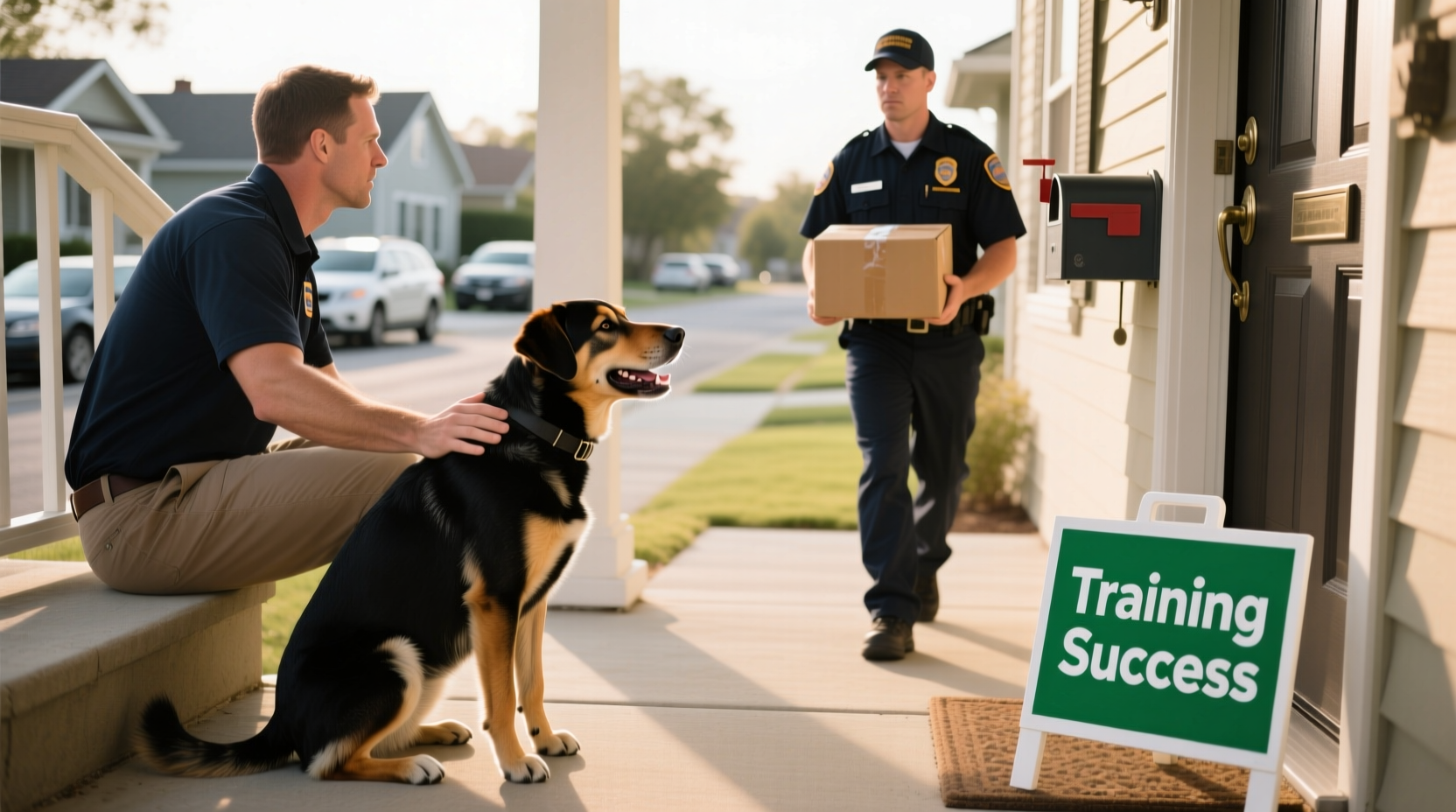
Before implementing training techniques, it's crucial to understand the root causes behind the barking. Unlike dogs raised in stable homes, rescue dogs may react strongly due to:
- Fear or anxiety: Unfamiliar uniforms, sudden movements, or repeated knocking can trigger fear responses.
- Territorial instinct: Dogs naturally guard their space; someone approaching the front door may be perceived as an intruder.
- Lack of socialization: Many rescue dogs weren’t exposed to diverse people, sounds, or routines during critical developmental periods.
- Past negative experiences: A dog previously punished for noise or chased by strangers may associate uniforms with danger.
- Reinforcement through repetition: If barking consistently makes the person leave (e.g., they drop off a package and walk away), the dog learns that barking works.
“Rescue dogs aren’t broken — they’re just trying to survive based on what they’ve learned. Our job is to teach them new rules in a safe environment.” — Dr. Karen Overall, Veterinary Behaviorist
Recognizing these underlying motivations allows you to shift from punishment-based corrections to empathy-driven training. The goal isn’t silence at all costs, but rather helping your dog feel secure enough not to feel the need to bark excessively.
A Step-by-Step Guide to Reduce Barking
Changing deeply ingrained behavior takes time, especially with dogs who may have spent months or years reacting one way to stimuli. Below is a structured, science-backed method to gradually reduce reactivity toward delivery personnel.
- Assess your dog’s baseline reaction. Observe how your dog behaves when someone approaches the door. Note distance triggers, body language (stiff posture, raised hackles), and intensity of barking.
- Create a safe retreat zone. Designate a quiet room or area away from the front door where your dog can go during deliveries. Equip it with a bed, water, and calming chews or toys.
- Begin desensitization training indoors. Use recorded doorbell sounds or videos of delivery people. Play them at low volume while giving treats. Gradually increase volume only if your dog remains relaxed.
- Introduce controlled exposure. Ask a friend to mimic a delivery scenario — walking up the path, knocking lightly, then leaving without interacting. Reward calm behavior with high-value treats like boiled chicken or cheese.
- Practice the “Look at That” (LAT) protocol. When your dog notices a trigger (e.g., someone at the gate), say “Look at that,” then immediately mark and reward. This builds positive associations.
- Incorporate alternative behaviors. Teach commands like “go to mat” or “sit and stay” near the door. Reinforce heavily when your dog chooses the behavior over barking.
- Gradually decrease distance. Over weeks, allow closer exposures — always under threshold (your dog stays calm). Never force interaction.
- Maintain consistency across household members. Everyone must respond the same way — no yelling, no reinforcing barking with attention.
Do’s and Don’ts When Training Your Rescue Dog
| Do’s | Don’ts |
|---|---|
| Use high-value treats during training sessions | Yell at or punish your dog for barking |
| Keep sessions short (5–10 minutes) and frequent | Force your dog to confront fears too quickly |
| Redirect attention with a command or toy | Allow barking to continue unchecked, even if it seems harmless |
| Use white noise or curtains to reduce visual/auditory triggers | Ignore signs of stress like panting, pacing, or whale eye |
| Consult a certified dog behaviorist if progress stalls | Compare your dog’s progress to others — every rescue is different |
Real-Life Example: Transforming Luna’s Reaction
Luna, a three-year-old mixed breed adopted from a rural shelter, had an extreme reaction to anyone near her owner’s front porch. She’d lunge, bark nonstop, and sometimes growl when the mail arrived. Her owner, Sarah, initially tried scolding and closing blinds, but the behavior worsened.
Working with a positive reinforcement trainer, Sarah began by moving Luna’s bed to a back bedroom. She played recorded doorbell sounds at low volume while feeding meals. After two weeks of daily sessions, Luna stopped reacting to the audio cues. Next, Sarah enlisted a neighbor to stand at the end of the driveway while she rewarded Luna for looking calmly in that direction.
Over six weeks, the neighbor moved progressively closer — always paired with treat delivery. Eventually, Luna learned to sit and focus on Sarah instead of barking. Today, when delivery people arrive, Luna goes to her mat and waits for her treat. The transformation wasn’t overnight, but it was sustainable because it respected Luna’s pace and emotional needs.
Essential Tools and Environment Adjustments
While training is the foundation, modifying your home environment supports long-term success. Consider these practical adjustments:
- Install motion-activated indoor cameras: Monitor deliveries remotely so you can manage your dog’s access to windows.
- Use opaque window film: Prevent your dog from seeing movement outside while still allowing light in.
- Invest in a “quiet zone” crate or pen: Stock it with puzzle toys or frozen Kongs to keep your dog occupied during peak delivery hours.
- Set up a delivery instruction note: Request carriers place packages at the side gate or around back to minimize doorstep interaction.
- Play calming music or white noise: Apps like Through a Dog’s Ear offer soundtracks designed to reduce canine anxiety.
Checklist: How to Train a Rescue Dog to Stop Barking at Delivery People
Follow this actionable checklist to stay organized and consistent in your training journey:
- ✅ Identify your dog’s trigger distance and stress signals
- ✅ Create a quiet retreat space away from the front door
- ✅ Gather high-value treats and favorite toys
- ✅ Start desensitization with recorded sounds at low volume
- ✅ Practice “Look at That” and “Go to Mat” commands daily
- ✅ Arrange controlled exposure exercises with a helper
- ✅ Gradually decrease the distance between your dog and the trigger
- ✅ Block visual access to the door with curtains or barriers
- ✅ Communicate with delivery services to adjust drop-off locations
- ✅ Track progress weekly and celebrate small wins
- ✅ Consult a certified professional if aggression or panic occurs
Frequently Asked Questions
How long does it take to stop a rescue dog from barking at delivery people?
Results vary widely depending on the dog’s background and temperament. Some show improvement within 2–3 weeks of consistent training, while others may take several months. The key is maintaining a predictable routine and avoiding setbacks by staying below the dog’s stress threshold.
Should I use a bark collar or spray deterrent?
No. These tools suppress symptoms without addressing the underlying cause and can increase fear or anxiety in rescue dogs. Positive reinforcement is more effective and humane. Devices like citronella collars may startle your dog and damage trust.
What if my apartment doesn’t allow a retreat space?
Even in small spaces, you can create a sense of separation. Use a covered crate, position it facing a wall, and play ambient noise to mask outdoor sounds. Focus on teaching your dog to lie quietly on a mat while rewarding calm behavior. Portable partitions or bookshelves can also help block sightlines.
Conclusion: Patience, Consistency, and Compassion
Training a rescue dog to stop barking at delivery people isn’t about silencing them — it’s about helping them feel safe. Every dog deserves the chance to learn new ways of responding to the world, especially those who’ve known instability. By combining structured training, environmental management, and deep empathy, you’re not just reducing noise; you’re rebuilding confidence.
The journey may have setbacks. There will be days when a loud knock undoes weeks of progress. But each moment you respond with calm guidance instead of frustration strengthens your bond. Your dog is watching, learning, and slowly rewriting their story — and you’re the author of their next chapter.




 浙公网安备
33010002000092号
浙公网安备
33010002000092号 浙B2-20120091-4
Comments
No comments yet. Why don't you start the discussion?