
Kittens are naturally playful, curious, and full of energy. Their sharp little teeth and claws aren’t meant to harm—they’re tools for exploration, hunting practice, and social learning. When a kitten bites your hand during play, it’s not out of aggression but instinct. The problem arises when that instinct is misdirected toward human skin instead of appropriate targets. For owners of particularly persistent or “stubborn” kittens, this behavior can become frustrating and even painful. The good news: with consistency, understanding, and the right techniques, you can teach your kitten to redirect their biting impulses appropriately—without punishment or fear.
The key lies in recognizing that biting isn’t defiance—it’s communication. A kitten biting hands is saying, “I’m excited,” “I want to hunt,” or “I don’t know what else to do.” Your role is to guide them toward better outlets and reinforce boundaries through positive reinforcement, timing, and environmental management.
Understanding Why Kittens Bite Hands
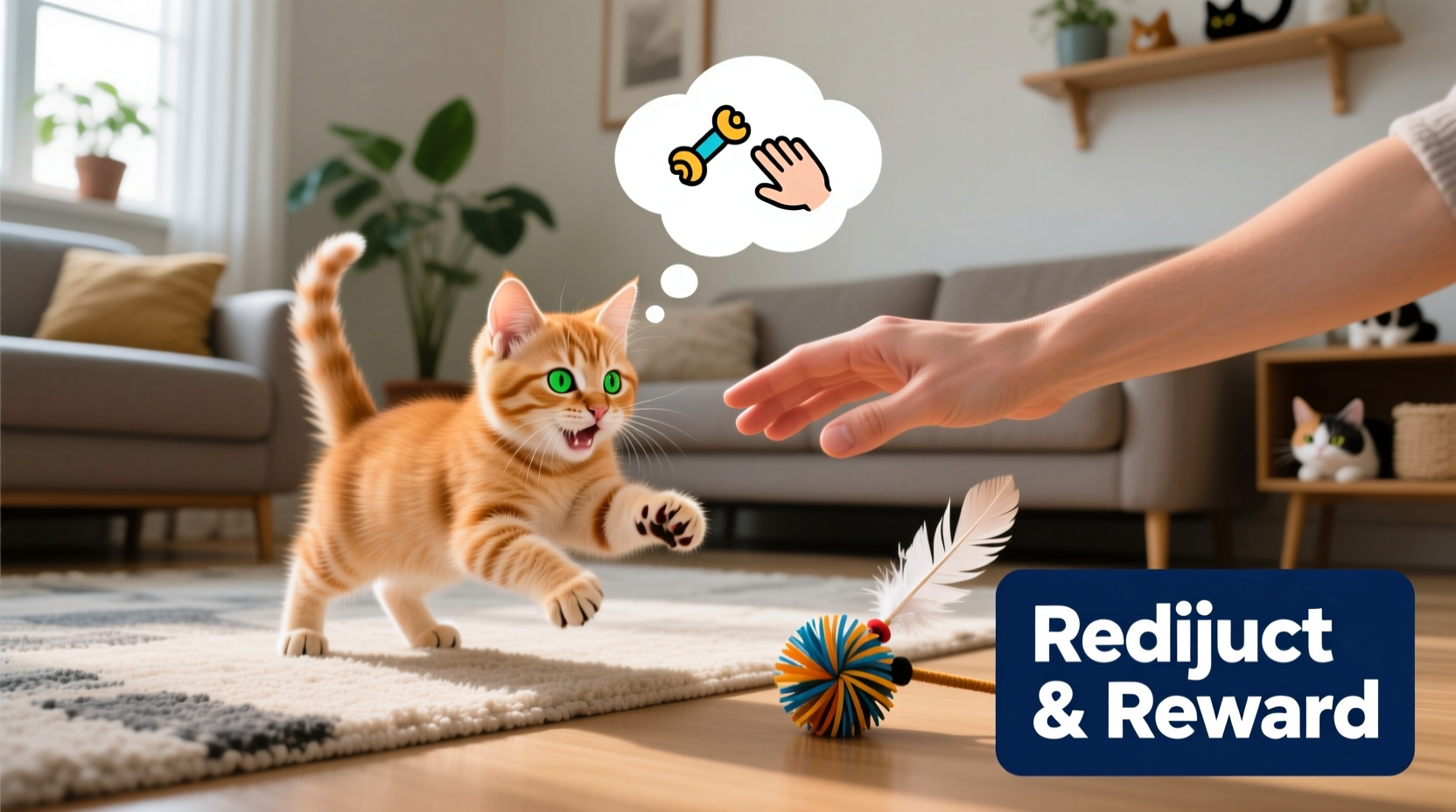
Kittens begin practicing bite inhibition from as early as three weeks old, typically during interactions with their mother and littermates. When they play-bite too hard, their siblings squeal and disengage, teaching them that excessive force ends fun. However, kittens separated early from their litters may miss these crucial lessons. When humans use their hands during play, they inadvertently mimic prey—wiggling fingers resemble insects or rodents, triggering the kitten’s predatory instincts.
Additionally, overstimulation plays a major role. Kittens have short attention spans and limited self-regulation. What starts as gentle mouthing can escalate quickly if arousal levels rise. Without proper outlets, biting becomes a default response to excitement.
“Play aggression in kittens is normal, but it must be redirected early. Allowing hand-biting past 14 weeks significantly increases the risk of adult aggression issues.” — Dr. Sarah Ellis, Feline Behavior Scientist, University of Lincoln
Step-by-Step Guide to Redirection and Training
Training a stubborn kitten requires patience and repetition. Unlike dogs, cats don’t respond well to verbal commands alone. Instead, focus on shaping behavior through consistent consequences and rewards. Follow this six-step process:
- Stop Using Hands as Toys
Immediately cease wiggling fingers, toes, or any body part during play. Even if the kitten seems to enjoy it, you’re reinforcing dangerous behavior. Replace hand movements with wand toys or crinkle balls. - Introduce Appropriate Play Objects
Provide a variety of interactive toys that simulate prey: feather wands, motorized mice, or string toys. Rotate them weekly to maintain novelty and prevent boredom. - Initiate Structured Play Sessions
Schedule two to three 10–15 minute play sessions daily. Use a wand toy to mimic erratic prey movements—zigzag, pause, then dart. This satisfies the kitten’s hunting sequence: stalk, chase, pounce, bite, kill. - React to Biting with Immediate Disengagement
If the kitten bites your hand, say “Ouch!” in a firm but calm tone, then stand up and walk away. Do not push, yell, or punish. The goal is to teach that biting = end of playtime. - Redirect Mid-Bite
When the kitten lunges at your hand, flick a soft toy nearby. If they switch to the toy, praise and continue playing. This reinforces the correct target. - Reward Gentle Behavior
After a play session without biting, offer treats or affection. Positive reinforcement strengthens the association between good behavior and rewards.
Do’s and Don’ts: Managing Kitten Biting
Mistakes in handling biting behavior can worsen the problem. Below is a comparison of effective versus counterproductive responses.
| Do’s | Don’ts |
|---|---|
| Use wand toys to engage hunting instincts | Dangle fingers or toes near the kitten |
| End play immediately after a bite | Punish, shout, or scruff the kitten |
| Offer chew-safe alternatives like knotted cotton ropes | Use rubber bands or strings the kitten can ingest |
| Provide scratching posts and climbing structures | Allow free access to household items like shoelaces |
| Rotate toys weekly to prevent boredom | Leave the same toys out constantly |
Real Example: Turning Around a Persistent Biter
Meet Luna, a 10-week-old Bengal mix adopted by a first-time owner. From day one, she chased fingers, attacked ankles, and bit during petting. Her owner initially thought it was cute but soon developed small scabs on her hands. After consulting a feline behaviorist, she implemented structured changes:
- Replaced all hand-play with a feather wand and crinkle tunnel
- Set alarms for three daily play sessions at consistent times
- Introduced a “bite interrupter”—a soft plush mouse kept in her pocket. When Luna lunged, she tossed it sideways to redirect focus.
- Stopped all petting sessions that ended in biting, instead offering a treat after calm interaction.
Within three weeks, hand-biting dropped by 90%. By 16 weeks, Luna no longer targeted hands unless overtired. The owner noted that consistency was the biggest factor: “I had to stop reacting emotionally and start responding mechanically. Every time I walked away, it felt like giving up—but it worked.”
Essential Tools and Environment Setup
A well-managed environment prevents biting before it starts. Consider these adjustments:
- Toys: At least five interactive toys rotated weekly. Include at least one wand, one motorized toy, and one tossable plush.
- Rest Zones: Provide elevated perches and hideaways so the kitten can retreat when overstimulated.
- Scratching Surfaces: Place cardboard scratchers near play areas. Scratching relieves jaw tension and redirects biting urges.
- Feeding Enrichment: Use puzzle feeders or food-dispensing balls to simulate hunting and prolong mental engagement.
Checklist: Daily Routine to Prevent Hand Biting
Follow this checklist each day to reinforce proper behavior:
- ✅ Conduct at least two 10-minute structured play sessions using wand toys
- ✅ Never use hands or feet as toys—even during casual interaction
- ✅ Immediately disengage and leave the room if bitten
- ✅ Offer a toy or treat after calm interaction (no biting)
- ✅ Rotate one or two toys to maintain novelty
- ✅ Monitor body language: flattened ears, tail thrashing, and dilated pupils signal overstimulation
- ✅ Provide a quiet space for downtime after play
FAQ: Common Concerns About Kitten Biting
Is it normal for a kitten to bite aggressively during play?
Yes, within limits. Kittens practice hunting behaviors, which include stalking, pouncing, and gentle biting. However, drawing blood or repeated attacks on still hands indicate poor bite inhibition and require intervention. Early training prevents escalation into adulthood.
Can I train an older kitten who already has the habit?
Absolutely. While kittens under 16 weeks are most receptive, cats of any age can learn new behaviors with consistency. Older kittens may take longer—up to eight weeks of daily reinforcement—but success is achievable. Focus on replacing the habit, not suppressing it.
Should I use a spray bottle or clap to stop biting?
No. These methods create fear-based associations and damage trust. Startlement may stop the behavior temporarily, but it doesn’t teach the kitten what to do instead. Positive redirection is more effective and preserves the human-animal bond.
Conclusion: Building a Bite-Free Relationship
Training a stubborn kitten to stop biting hands isn’t about dominance—it’s about guidance. Cats thrive on clear boundaries and predictable outcomes. When you consistently replace hand-play with appropriate toys, end games after biting, and reward gentle behavior, you’re not just stopping a bad habit—you’re building a foundation of mutual respect.
Remember, every kitten is different. Some catch on in days; others need weeks of repetition. What matters is persistence without punishment. With the right tools, timing, and empathy, your kitten will learn that hands are for petting, not prey.




 浙公网安备
33010002000092号
浙公网安备
33010002000092号 浙B2-20120091-4
Comments
No comments yet. Why don't you start the discussion?