
Training a kitten can be one of the most rewarding experiences for a pet owner. But when your kitten seems uninterested, defiant, or simply too playful to focus, it’s easy to feel frustrated. Many people resort to scolding or punishment, but these methods damage trust and often worsen behavior. The truth is, even the most stubborn kittens respond beautifully to positive reinforcement—when applied consistently and correctly.
Positive reinforcement means rewarding desired behaviors immediately so the kitten associates those actions with something pleasurable. Over time, this builds reliable habits without fear or confusion. This approach aligns with modern feline behavioral science and fosters a stronger human-animal bond. Whether your kitten refuses to use the litter box, scratches furniture, or ignores commands, you can guide their behavior effectively using rewards, patience, and understanding.
Understanding Kitten Behavior and Stubbornness
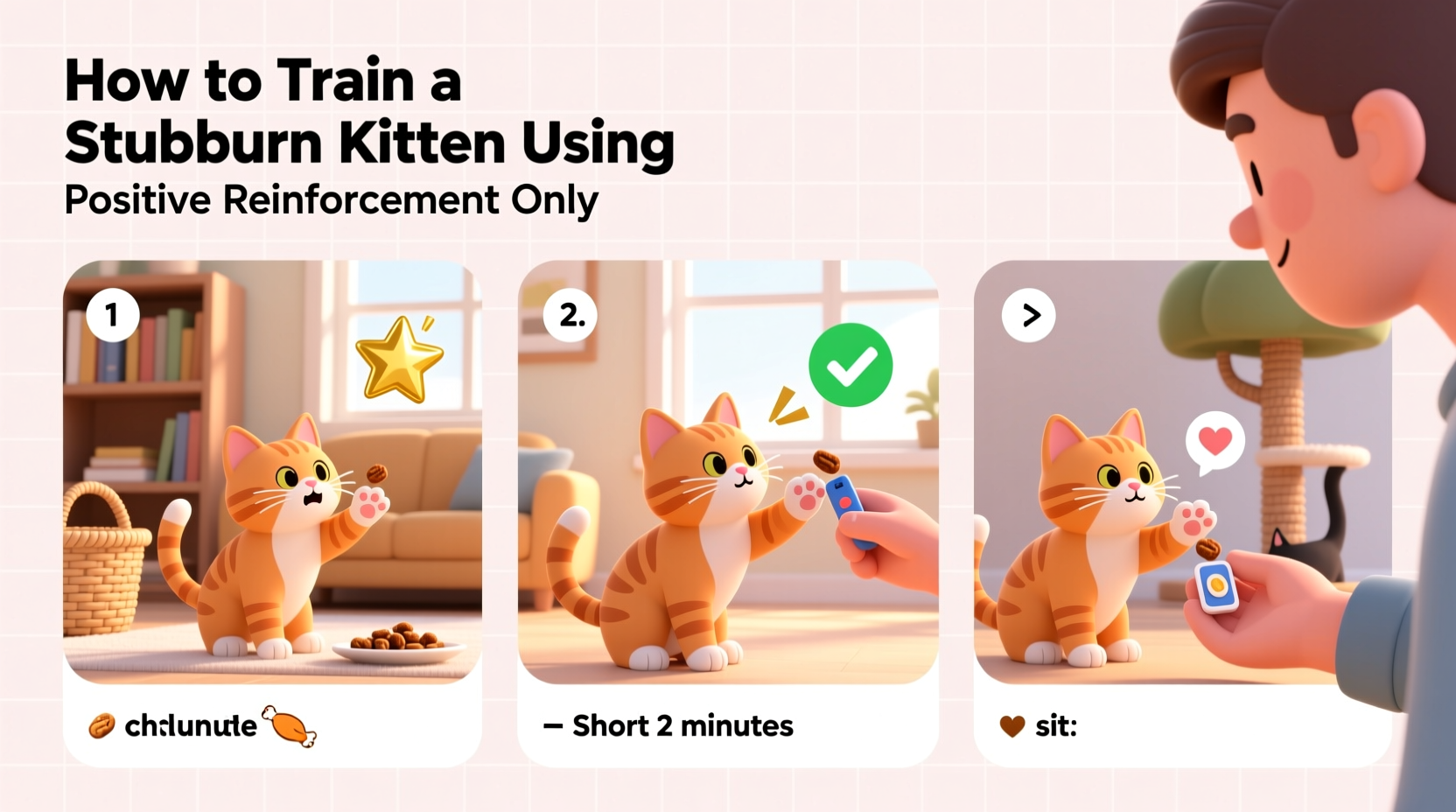
Before diving into training techniques, it's essential to recognize that what appears as \"stubbornness\" is usually normal kitten development. Kittens are naturally curious, energetic, and easily distracted. Their brains are still maturing, and impulse control hasn't fully developed. A kitten who runs away when called isn’t being defiant—they’re responding to instinct and excitement.
True resistance often stems from fear, lack of clarity, or inconsistent feedback. For example, if a kitten jumps on the counter and sometimes gets shooed away but other times is ignored (or worse, given attention), they learn that the behavior occasionally pays off. This inconsistency makes training harder, not because the kitten is stubborn, but because the rules keep changing.
“Cats don’t misbehave out of malice. They act based on consequences. If a behavior results in something desirable—even once—it will likely be repeated.” — Dr. Sarah Ellis, Feline Behavior Scientist, University of Lincoln
The key is to make desired behaviors more rewarding than unwanted ones. Instead of focusing on stopping bad habits, redirect energy toward good ones through treats, play, praise, and environmental enrichment.
Core Principles of Positive Reinforcement Training
Effective training relies on four foundational principles:
- Timing: Rewards must follow the desired behavior within seconds. Delayed treats confuse kittens.
- Consistency: Everyone in the household must respond the same way to behaviors.
- Motivation: Use high-value rewards your kitten truly loves—tuna paste, freeze-dried chicken, or a favorite toy.
- Shaping: Break complex behaviors into small steps and reward progress gradually.
For instance, teaching “come when called” starts with rewarding your kitten just for looking at you when you say their name. Next, reward them for taking a step toward you. Then two steps. Eventually, full recall becomes a habit tied to positive outcomes.
Step-by-Step Guide to Training Common Behaviors
Below is a practical timeline for training three common challenges in stubborn kittens: litter box avoidance, inappropriate scratching, and ignoring recall.
Week 1–2: Build Trust and Identify Rewards
- Spend quiet time near your kitten offering treats without demanding interaction.
- Test different treats and toys to determine what motivates them most.
- Begin pairing a clicker (or verbal marker like “yes”) with a treat to mark correct behavior instantly.
Week 3–4: Target Training and Recall
- Hold a target stick (or pen) near your kitten. Click and treat when they sniff or touch it.
- Gradually move the target a few inches away, clicking each time they follow it.
- Introduce their name in a cheerful tone. Click and treat when they look up.
- Increase distance slowly. Practice in low-distraction areas first.
Week 5–6: Litter Box Consistency and Scratching Redirection
- If your kitten avoids the litter box, ensure it’s clean, accessible, and in a quiet location.
- Place treats near the box after meals to build positive association.
- Provide multiple scratching posts near preferred furniture. Sprinkle catnip or hang toys on them.
- When you catch your kitten scratching the sofa, gently interrupt with a toy distraction, then guide them to the post. Reward immediately if they scratch it.
Week 7–8: Generalization and Maintenance
- Practice trained behaviors in new rooms and with mild distractions.
- Phase out treats gradually, replacing them with praise and play—but continue occasional surprise rewards.
- Monitor for regression during changes (new pets, moving, illness) and retrain as needed.
Do’s and Don’ts of Positive Reinforcement Training
| Behavior | Do | Don’t |
|---|---|---|
| Litter Training | Keep box clean; reward immediately after use | Yell or rub nose in mess—this causes fear and avoidance |
| Scratching | Place posts near furniture; reward use | Claw declawing or spraying water—these create anxiety |
| Biting/Play Aggression | Redirect to toys; end play if biting occurs | Wrestle with hands—this teaches biting is acceptable |
| Recall Training | Use high-value treats; call in happy tone | Call only to end fun (e.g., bath time)—this teaches “come” = punishment |
| General Training | Train daily in short sessions; celebrate small wins | Expect perfection; repeat commands aggressively |
Mini Case Study: Turning Around a Resistant Kitten
Milo, a 12-week-old tabby, was adopted from a shelter. He avoided the litter box, scratched door frames, and ran under the bed when approached. His owners were ready to give up, believing he was “too wild” to train.
A behavior consultant recommended a strict positive reinforcement plan. First, they identified Milo’s favorite treat: salmon baby food on a spoon. They placed a litter box in his safe zone (the bathroom) and gave him a lick every time he entered it—even if he didn’t go. Within three days, he started using it regularly.
To address scratching, they placed a sisal post beside the door he targeted. Each time he approached the door, they’d smear a bit of salmon on the post. After a week, he began using it independently. They also started calling his name before mealtimes, followed by an immediate treat. Within ten days, Milo came running.
After six weeks of consistent effort, Milo used the litter box reliably, scratched only appropriate surfaces, and responded to his name. His confidence grew, and he initiated contact more often. The transformation wasn’t due to discipline—it was built on trust and predictable rewards.
Essential Checklist for Success
Follow this checklist to ensure your positive reinforcement efforts succeed:
- ✅ Choose a high-value treat your kitten doesn’t get otherwise
- ✅ Use a clicker or verbal marker (“yes!”) to pinpoint the exact moment of good behavior
- ✅ Train in a quiet space with minimal distractions
- ✅ Limit sessions to 3–5 minutes, 2–3 times per day
- ✅ Reward immediately—within 1–2 seconds of the behavior
- ✅ Avoid repeating commands; instead, reset and try again
- ✅ Keep a training journal to track progress and setbacks
- ✅ Involve all family members in using the same cues and rewards
- ✅ Neuter early (around 4–6 months) to reduce territorial behaviors
- ✅ Rule out medical issues if sudden behavior changes occur
“Cats trained with kindness are not only better behaved—they’re more confident and emotionally secure.” — Jackson Galaxy, Animal Behaviorist and Host of *My Cat from Hell*
Frequently Asked Questions
Can you really train a kitten without any punishment?
Yes. Punishment suppresses behavior temporarily but doesn’t teach what to do instead. It also damages trust and can increase fear-based aggression. Positive reinforcement builds lasting habits by guiding kittens toward better choices. Ignoring unwanted behavior while rewarding alternatives is far more effective long-term.
What if my kitten ignores treats altogether?
Some kittens aren’t food-motivated at first. Try using play as a reward—launch a wand toy after a successful sit or recall. Gradually introduce treats during calm moments. You can also warm up wet food slightly to enhance aroma. Patience is key; motivation often increases with trust and routine.
How long does it take to train a stubborn kitten?
Most kittens show improvement within 2–3 weeks with consistent daily training. Full reliability may take 2–3 months. Setbacks are normal, especially during growth spurts or environmental changes. The goal isn’t perfection—it’s steady progress. Celebrate small victories, like making eye contact or approaching when called, even if they don’t stay.
Final Thoughts: Patience, Persistence, and Positivity
Training a stubborn kitten isn’t about breaking their will—it’s about guiding their instincts with compassion and clarity. Positive reinforcement works because it respects the kitten’s nature while shaping their behavior in a healthy, sustainable way. There will be days when progress feels slow, when your kitten knocks over a plant five minutes after a training session, or ignores you completely. These moments are not failures. They are part of the process.
Every interaction is an opportunity to reinforce trust. When you choose kindness over correction, you’re not just teaching commands—you’re building a relationship. And that bond becomes the foundation for a well-adjusted, confident cat.




 浙公网安备
33010002000092号
浙公网安备
33010002000092号 浙B2-20120091-4
Comments
No comments yet. Why don't you start the discussion?