
Cats are naturally drawn to objects that move, reflect light, or make noise. This instinctual curiosity served their wild ancestors well when hunting prey, but in a modern home, it often leads them straight to shiny holiday decorations, dangling earrings, or glittering household knick-knacks. While you can’t eliminate this instinct, you can redirect it. The good news is that with consistency, timing, and the right approach, you can teach your cat to leave shiny ornaments alone—without ever resorting to scolding, sprays, or other aversive methods.
Positive reinforcement training works by rewarding desired behaviors, making them more likely to recur. When applied correctly, it strengthens the bond between you and your cat while teaching self-control around tempting stimuli. This method is not only humane but also highly effective for feline learners who respond best to rewards rather than corrections.
Understanding Why Cats Are Drawn to Shiny Objects
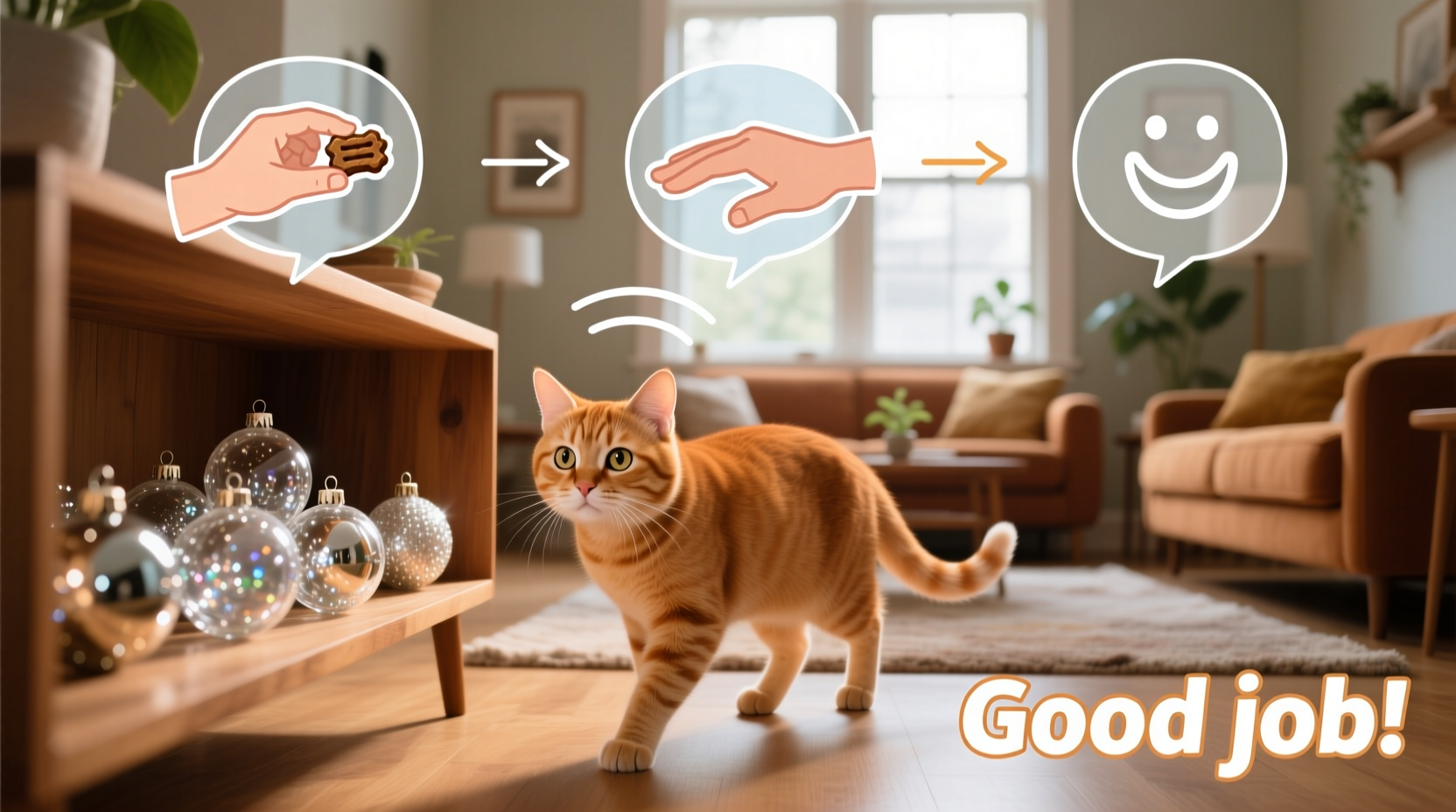
The shimmer of a metallic ornament or the glint of reflected light mimics the movement of small animals like insects or rodents. A cat’s vision is particularly sensitive to motion and contrast, which makes anything that sparkles or dangles irresistible. This isn’t mischief—it’s biology.
In addition, many cats enjoy batting objects around because it simulates hunting behavior. Pouncing, swatting, and chasing are all part of a healthy play repertoire. The problem arises when these instincts target fragile or hazardous items like glass baubles, tinsel, or electrical cords.
Rather than trying to suppress natural behavior, the goal is to guide it appropriately. You won’t stop your cat from being curious, but you can teach them where—and how—to express that curiosity safely.
“Cats don’t misbehave out of defiance. They act based on instinct and reinforcement history. Redirecting those instincts with kindness yields better long-term results.” — Dr. Sarah Ellis, Feline Behavior Scientist, University of Lincoln
Step-by-Step Guide: Training Your Cat to Ignore Shiny Ornaments
Training a cat requires patience and precision. Unlike dogs, cats choose when to engage, so sessions should be short, rewarding, and free of pressure. Follow this timeline-based approach over 4–6 weeks to build lasting habits.
- Week 1: Control Access & Introduce Alternative Rewards
Keep shiny ornaments out of reach initially. Use this week to identify what your cat finds most motivating—usually food treats, interactive toys, or affection. Begin short (2–3 minute) training sessions in a quiet room using high-value treats like freeze-dried chicken or tuna flakes. - Week 2: Teach a Foundation Behavior (e.g., “Look at Me” or “Touch”)
Train a simple cue such as “look” (making eye contact) or “touch” (nudging your hand with their nose). These create mental breaks when your cat feels tempted. Practice multiple times daily, always ending on success. - Week 3: Controlled Exposure with Distraction
Place a shiny object (like a wrapped gift or fake ornament) on a low table. Sit nearby with treats. When your cat looks at the object but doesn’t approach, mark the moment with a clicker or verbal “yes!” and offer a treat. Gradually decrease the distance. - Week 4: Increase Difficulty with Realistic Scenarios
Hang an ornament slightly off the ground. If your cat approaches, quietly call their name or use the trained cue (“look”). Reward immediately for compliance. Never punish near-misses—only reinforce correct choices. - Weeks 5–6: Generalize and Maintain
Introduce multiple shiny items in different rooms. Practice during actual holiday setups if possible. Continue random reinforcement even after success to prevent regression.
Essential Tools and Techniques for Success
You don’t need expensive gear, but having the right tools increases effectiveness. Here’s what to prepare:
- Treat pouch: Keeps rewards accessible during training.
- Clicker or marker word: A consistent sound (like “yes”) marks the exact moment of desired behavior.
- Interactive toys: Wand toys or puzzle feeders redirect attention away from ornaments.
- Barriers: Baby gates or closed doors help manage access during early training.
- Safe alternatives: Provide shiny-but-cat-safe toys like crinkle balls or reflective fabric mice.
Timing is critical. Deliver the treat within one second of the desired behavior. Delayed rewards confuse cats, who may associate the treat with something else entirely.
Do’s and Don’ts During Training
| Do | Don't |
|---|---|
| Reward calm behavior near shiny objects | Yell, clap, or spray water to stop unwanted actions |
| Use high-value treats only during training | Leave tempting items unattended during early stages |
| Keep sessions under 5 minutes | Force your cat to stay in a training area |
| Practice multiple times per day | Repeat cues excessively; wait and reset instead |
| Gradually increase challenge level | Expect instant results—cats learn at their own pace |
Real-Life Example: Training Luna Around Holiday Decor
Luna, a 3-year-old tabby, had a history of knocking down Christmas trees and unraveling tinsel every December. Her owner, Mark, decided to try positive reinforcement after years of failed deterrents. He started in November by teaching Luna the “look” command using small pieces of salmon. Within a week, she reliably made eye contact when prompted.
He then placed a single ornament inside a clear acrylic box on the floor. Each time Luna glanced at it and then looked back at him, he clicked and treated. After five days, he removed the box and hung the ornament on a stand secured to the wall. Whenever Luna approached, he quietly said “look”—and she turned toward him 8 out of 10 times.
By the time the full tree was assembled, Luna had learned to walk past it without incident. On evenings when temptation peaked, Mark engaged her with a feather toy routine to burn energy. By January, the tree came down undamaged—for the first time in four years.
Luna wasn’t “trained to hate” shiny things. She was taught a better choice—and rewarded generously for making it.
Checklist: How to Prepare for Ornament Training
Use this checklist to ensure you're set up for success before introducing shiny objects into your environment.
- ✅ Choose 1–2 high-value treats your cat rarely gets
- ✅ Purchase a clicker or decide on a consistent marker word
- ✅ Identify a quiet, distraction-free room for initial training
- ✅ Secure fragile or dangerous ornaments during early phases
- ✅ Introduce 1–2 cat-safe shiny toys as acceptable alternatives
- ✅ Schedule three 3-minute training sessions per day
- ✅ Practice foundation cues until response rate is 90%+
- ✅ Monitor your cat’s stress level—end session if agitated
Frequently Asked Questions
Can older cats learn this kind of training?
Yes. While kittens are more impressionable, adult and senior cats can learn new behaviors at any age. Older cats may take longer due to established habits, but their focus and impulse control can actually make training easier. Consistency and patience are key.
What if my cat knocks over an ornament before I can intervene?
Stay calm. Do not scold or show frustration. Simply remove the pieces safely and reset the environment. Later, practice the same scenario at a lower difficulty—perhaps with the ornament farther away or behind a barrier. The goal is to set your cat up for success, not test their limits prematurely.
Is it okay to use a laser pointer during training?
Laser pointers can be useful for redirection but should always end with a tangible reward. Let your cat “catch” a physical toy after chasing the dot so they don’t experience frustration. Never use lasers as the sole form of play or reinforcement.
Creating a Cat-Safe Environment Long-Term
Even the best-trained cat may slip up when overstimulated or bored. To support lasting success, design your space with both safety and enrichment in mind.
Place real ornaments higher than 4 feet off the ground—beyond typical jumping range unless motivated. Use stable bases for trees and secure shelves to walls. Consider rotating seasonal decor with cat-friendly versions: wooden ornaments, felt stars, or paper chains.
Enrichment is just as important as training. A mentally stimulated cat is less likely to seek entertainment in forbidden objects. Rotate toys weekly, provide vertical spaces like cat trees, and schedule daily interactive play sessions using wand toys to simulate hunting sequences.
“Environmental enrichment reduces problem behaviors more effectively than correction ever could.” — International Association of Animal Behavior Consultants (IAABC)
Conclusion: Patience, Positivity, and Progress
Teaching your cat to ignore shiny ornaments isn’t about perfection—it’s about progress. Some days will go better than others, and that’s normal. What matters is consistency in your approach and commitment to kindness. Positive reinforcement doesn’t just change behavior; it builds trust.
Every time you reward your cat for choosing calmly to look away from a glittering bauble, you’re reinforcing more than a trick. You’re shaping a relationship rooted in mutual understanding. Over time, those small moments accumulate into reliable, peaceful coexistence—even during the most decorated seasons.




 浙公网安备
33010002000092号
浙公网安备
33010002000092号 浙B2-20120091-4
Comments
No comments yet. Why don't you start the discussion?