
Cats are naturally curious, agile, and intelligent animals. Their instinct to paw at objects, test balance, and explore height is deeply rooted in their evolutionary behavior. While this curiosity makes them engaging companions, it often leads to a frustrating habit: knocking items off shelves, tables, and counters. Vases, remotes, coffee mugs—nothing is safe when a cat decides to investigate. This behavior isn’t malicious, but it can damage belongings and create safety hazards. The good news is that with patience, consistency, and the right approach, you can effectively train your cat to stop this destructive habit.
Understanding Why Cats Knock Things Over
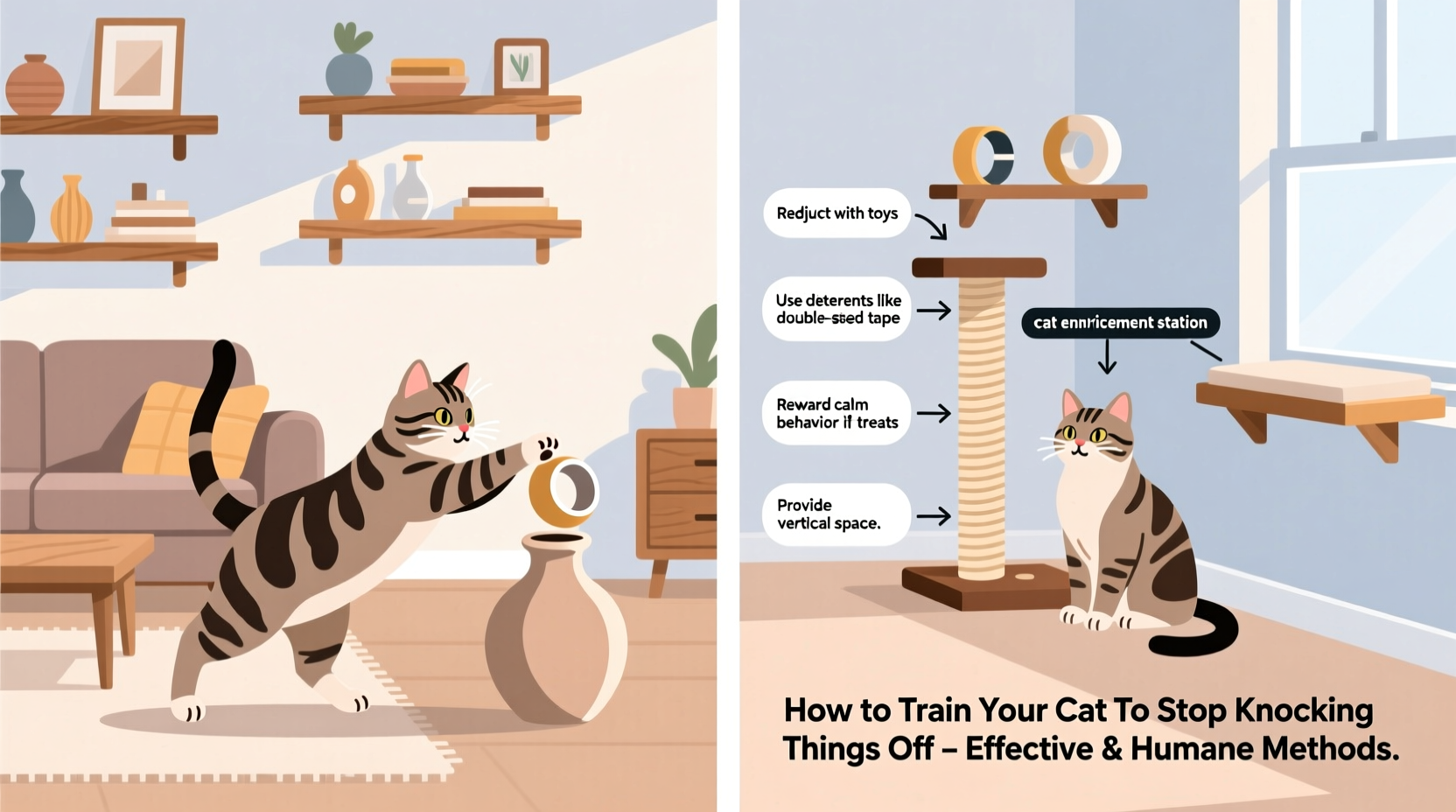
Before addressing the behavior, it’s essential to understand the motivation behind it. Cats don’t knock things down simply to annoy their owners. Several psychological and physical factors contribute to this common feline trait:
- Hunting Instincts: Swatting at objects mimics the motion of catching prey. A dangling cord or an unstable knickknack triggers their predatory reflexes.
- Sensory Exploration: Cats use their paws to gather information. Touching and moving objects helps them understand texture, weight, and movement.
- Attention-Seeking: If knocking something over results in a reaction—positive or negative—the cat learns that this action gets attention.
- Boredom or Understimulation: Indoor cats without sufficient mental or physical stimulation may resort to playful destruction.
- Testing Physics: Some cats appear fascinated by cause and effect—pushing an object to see what happens when it falls.
“Cats are problem solvers by nature. When they interact with objects on shelves, they’re not being mischievous—they’re conducting experiments.” — Dr. Sarah Thompson, Feline Behavior Specialist
Step-by-Step Guide to Reducing Shelf-Knocking Behavior
Training a cat requires more than just removing temptations—it involves modifying the environment, redirecting energy, and reinforcing desired behaviors. Follow this structured timeline to gradually reduce and eliminate shelf-knocking incidents.
- Week 1: Assess and Secure the Environment
Begin by identifying high-risk areas. Shelves near windows, entertainment centers, or side tables where your cat jumps frequently should be prioritized. Remove fragile or valuable items. Use museum putty or non-slip shelf liners to secure remaining decor. - Week 2: Introduce Alternative Outlets
Provide acceptable alternatives such as interactive toys, puzzle feeders, or a catio setup. Place a cat tree or climbing tower nearby to satisfy vertical exploration needs. - Week 3: Redirect with Positive Reinforcement
When you catch your cat approaching a shelf, gently guide them toward an appropriate activity (e.g., batting a toy). Reward immediately with treats or praise if they engage. - Week 4: Establish Consistent Boundaries
Use passive deterrents like double-sided tape or aluminum foil on surfaces you want to protect. These textures are unpleasant but harmless. Pair this with increased play sessions to burn excess energy. - Ongoing: Monitor and Adjust
Track progress weekly. Note reductions in incidents and adjust strategies as needed. Celebrate small wins—like your cat choosing a toy over a shelf decoration.
Effective Training Techniques and Tools
Unlike dogs, cats respond best to positive reinforcement and environmental management rather than obedience commands. Here are the most effective methods backed by animal behaviorists:
Clicker Training for Object Interaction
Clicker training can teach your cat to interact with specific toys instead of household items. Charge the clicker by clicking and treating until your cat associates the sound with reward. Then, click when they touch a designated toy. Over time, they’ll learn which objects are “allowed” to be batted.
Environmental Enrichment
A well-stimulated cat is less likely to seek entertainment in destructive ways. Rotate toys weekly, use treat-dispensing balls, and install window perches for bird watching. Consider food puzzles to make mealtime mentally engaging.
Passive Deterrents
These tools discourage access without direct confrontation:
- Double-sided sticky tape on shelf edges
- Aluminum foil barriers (cats dislike the texture and sound)
- Plastic carpet runners (nubby side up) placed on furniture
- Automatic motion-activated air sprayers (safe and startling, not harmful)
Do’s and Don’ts: Managing Shelf-Knocking Behavior
| Do’s | Don’ts |
|---|---|
| Provide multiple climbing structures and scratching posts | Yell at or physically punish your cat |
| Engage in daily interactive play (10–15 minutes, twice a day) | Leave tempting objects unsecured on accessible surfaces |
| Use puzzle toys to stimulate problem-solving | Ignore signs of stress or overstimulation |
| Secure shelves to the wall to prevent tipping | Assume the behavior will disappear on its own |
| Rotate toys to maintain novelty | Use spray bottles as a primary correction method |
Real Example: How Mia Stopped Her Cat from Knocking Over Candles
Mia, a graphic designer living in Portland, struggled with her 3-year-old tabby, Jasper, who had a habit of swiping candles off her mantel every evening. After replacing three sets and nearly causing a fire hazard, she consulted a certified cat behavior consultant.
The solution involved a multi-pronged strategy. First, Mia removed all flammable items and secured the remaining decor with adhesive putty. She installed a tall cat tree directly across from the fireplace, placing Jasper’s favorite feather wand toy on the highest platform. Each evening before lighting any candles, she engaged Jasper in a 10-minute play session using the wand, ending with a treat.
Within two weeks, Jasper stopped approaching the mantel. Instead, he climbed his tower and watched the play session from above. After a month, the behavior ceased entirely. “It wasn’t about stopping him,” Mia said. “It was about giving him a better option.”
Essential Checklist for Preventing Shelf-Knocking
Use this actionable checklist to systematically address the issue in your home:
- ✅ Remove fragile or hazardous items from accessible shelves
- ✅ Secure remaining objects with museum putty or non-slip mats
- ✅ Install cat trees or wall-mounted shelves to redirect climbing instincts
- ✅ Schedule two 10–15 minute interactive play sessions daily
- ✅ Introduce at least three new toys on rotation every two weeks
- ✅ Apply double-sided tape or aluminum foil on off-limits surfaces
- ✅ Reward calm behavior near shelves with treats or affection
- ✅ Anchor tall furniture to walls to prevent tipping if knocked
Frequently Asked Questions
Why does my cat only knock things over when I’m watching?
This is often a sign of attention-seeking behavior. If your cat has learned that knocking something down results in a reaction—even scolding—they may repeat it for interaction. Focus on rewarding quiet, independent play instead.
Is this behavior a sign of anxiety or stress?
Occasionally. While most cats do this out of curiosity or boredom, sudden increases in destructive pawing could signal underlying stress. Look for other signs like over-grooming, hiding, or litter box avoidance. If present, consult a veterinarian or behaviorist.
Can older cats be trained to stop this behavior?
Yes. While kittens are more prone to exploratory swatting, adult and senior cats can also learn new habits through consistent reinforcement and environmental adjustments. Progress may be slower, but it’s absolutely achievable.
Conclusion: Building a Harmonious Living Space
Training your cat to stop knocking things off shelves isn’t about suppressing natural instincts—it’s about guiding those instincts toward appropriate outlets. By understanding your cat’s motivations, enriching their environment, and responding with patience and positivity, you create a home where both you and your feline companion thrive.
Every cat is different, and what works for one may need adjustment for another. The key is consistency, observation, and compassion. Small changes add up over time, leading to fewer shattered vases and more peaceful coexistence.




 浙公网安备
33010002000092号
浙公网安备
33010002000092号 浙B2-20120091-4
Comments
No comments yet. Why don't you start the discussion?