
Cats are creatures of habit, comfort, and control. For many, the appearance of a carrier signals an impending trip to the vet, loud noises, unfamiliar environments, and loss of autonomy—none of which are appealing. As a result, coaxing a cat into a carrier often becomes a battle of wills, complete with hissing, hiding, and resistance. But what if you could teach your cat to enter the carrier willingly, calmly, and without relying on food rewards? This approach not only reduces stress for both pet and owner but also fosters trust and long-term cooperation. The key lies not in persuasion, but in redefining the carrier’s role in your cat’s world—from threat to sanctuary.
Understanding Feline Behavior Around Carriers
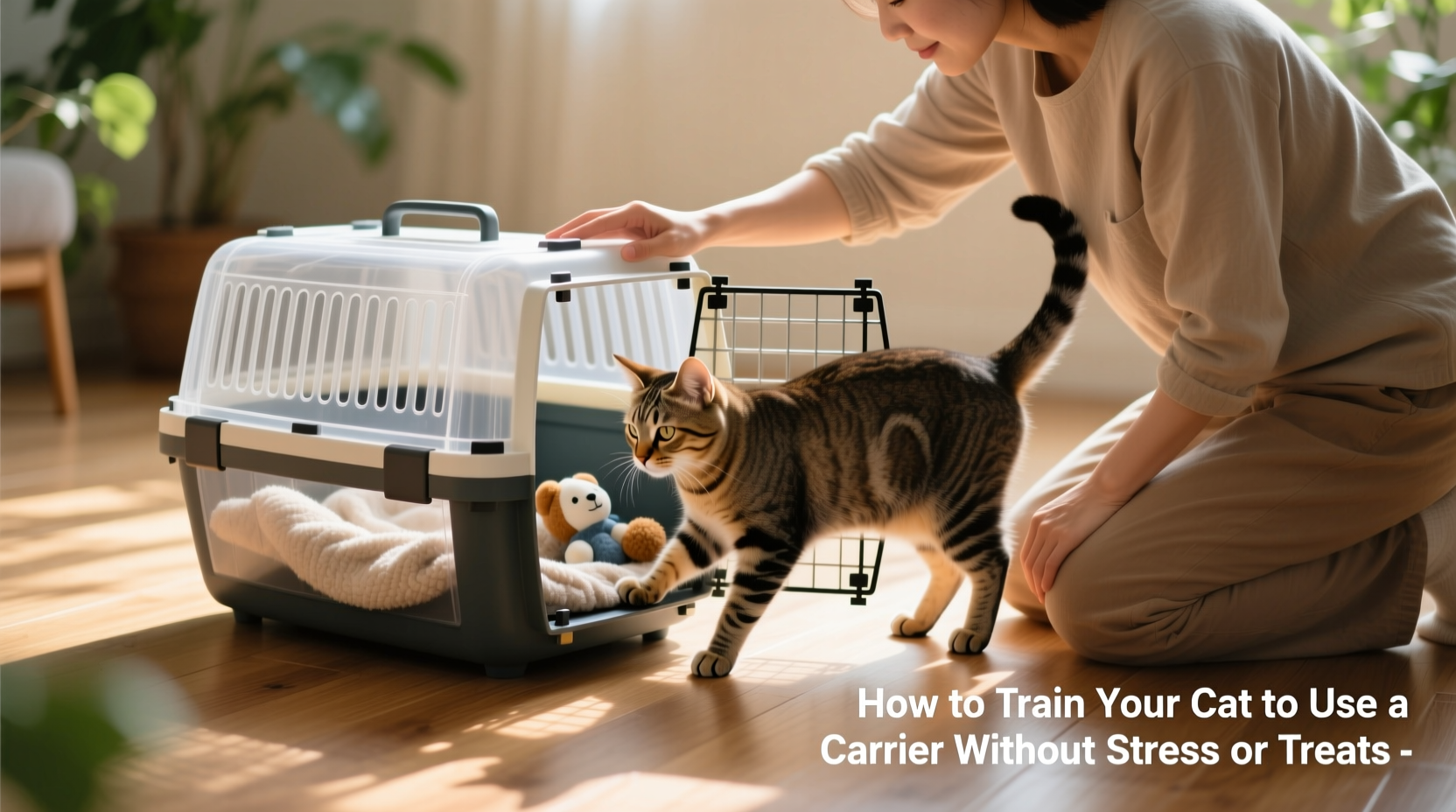
Cats assess safety through scent, visibility, and predictability. A closed carrier disrupts all three: it’s confined, smells foreign, and is rarely associated with positive experiences. Most owners introduce carriers only when preparing for stressful events, reinforcing negative associations. To reverse this, you must decouple the carrier from travel and instead integrate it into daily life as a neutral or even desirable space.
Feline psychologist Dr. Sarah Wilson explains: “Cats don’t respond well to coercion. Their compliance comes from confidence, not command. When we force interaction with a carrier, we damage trust. But when we let them explore it on their own terms, we build security.”
“Cats don’t respond well to coercion. Their compliance comes from confidence, not command.” — Dr. Sarah Wilson, Feline Behavior Specialist
The goal isn’t obedience—it’s voluntary participation. This requires time, consistency, and a shift in mindset: the carrier isn’t a tool for transport; it’s part of your cat’s environment.
Step-by-Step: Building Positive Association Without Treats
Training without treats demands heightened attention to subtle behavioral cues and environmental design. The following timeline outlines a gradual, pressure-free method that respects your cat’s natural instincts.
- Introduce the carrier as furniture (Days 1–7): Place the carrier in a quiet but frequently used room—near a favorite napping spot or beside your reading chair. Remove the door if possible, or leave it fully open. Let the carrier absorb household scents. Do not guide, point, or react if your cat sniffs or walks by. Indifference from you encourages curiosity in them.
- Add familiar bedding (Days 8–14): Line the carrier with a piece of your unwashed clothing, a worn sweater, or a blanket your cat regularly sleeps on. Scent is central to feline comfort. Avoid new materials or strong detergents. The aim is to make the interior smell like safety.
- Encourage passive entry (Days 15–21): Position the carrier near areas where your cat naturally lounges. If they begin to sit near or inside it during rest periods, do not interact. No praise, no petting—any response may startle or alter their behavior. Let them claim the space autonomously.
- Simulate short closures (Days 22–28): Once your cat enters routinely, gently place the door nearby without attaching it. After a few days, briefly secure the door while your cat is outside. Then, during a moment when they’re inside resting, quietly click the door shut for 10 seconds. Open it immediately without fanfare. Repeat over several days, gradually increasing duration to 2–3 minutes.
- Practice indoor “trips” (Day 29 onward): Carry the closed carrier a few feet across the room while your cat is inside. Keep movements smooth and slow. Place it down and release them after 30 seconds. Never shake or tilt the carrier. These micro-experiences normalize motion without travel stress.
Environmental Conditioning: Turning the Carrier Into a Safe Zone
The most effective training happens when the cat initiates contact. To encourage this, embed the carrier into their routine territory. Cats prefer elevated, enclosed spaces that offer visibility and protection—exactly what a well-placed carrier can provide.
- Position the carrier on a sturdy shelf or next to a window perch.
- Use it as a permanent sleeping nook—never move it abruptly.
- Avoid using it for anything other than rest or training. No storing items inside.
- Rotate bedding weekly to maintain fresh, comforting scents.
In multi-cat households, ensure each cat has equal access to similar spaces. Competition can prevent one cat from approaching the carrier if another dominates it. In such cases, consider placing two identical carriers in different zones to reduce social tension.
Common Mistakes That Reinforce Fear
Even with good intentions, certain behaviors unintentionally teach cats to fear the carrier. Recognizing these pitfalls is critical to long-term success.
| Mistake | Why It’s Harmful | Better Alternative |
|---|---|---|
| Only bringing out the carrier before vet visits | Creates direct association between carrier and stress | Keep the carrier accessible year-round |
| Forcing the cat inside | Triggers fight-or-flight; erodes trust | Wait patiently; allow self-entry |
| Using strong cleaners on the carrier | Overpowers natural scents; introduces chemical odors | Clean minimally with water and mild soap |
| Reacting excitedly when the cat enters | Startles the cat; turns calm behavior into a high-stimulus event | Maintain neutrality; avoid eye contact or sudden movement |
| Changing carrier location frequently | Disrupts territorial familiarity | Choose one consistent spot |
Real-Life Example: Re-training Luna, the Shelter Cat
Luna, a 3-year-old domestic shorthair adopted from a rural shelter, had never seen a carrier. Her new owner, Mark, noticed she hid under the bed whenever he brought one into the living room. Attempts to lure her with tuna failed, and picking her up caused prolonged trembling.
Instead of repeating failed tactics, Mark placed the carrier in his bedroom—where Luna spent most nights—with a soft fleece blanket inside. He left the door off and ignored it completely. After five days, Luna began sniffing around the edges. By day ten, she slept against the side. On day seventeen, she climbed inside and napped for two hours.
Mark then reattached the door loosely, letting it swing freely. Over the next week, he secured it briefly while Luna was outside. When she finally entered voluntarily, he closed it for 20 seconds, then released her. Within six weeks, Luna walked into the carrier when prompted by a gentle hand gesture—no treats, no pressure. She now tolerates short car rides with minimal vocalization.
This transformation wasn’t due to rewards, but to time, predictability, and respect for Luna’s pace.
Checklist: Training Your Cat Without Treats
Follow this checklist to ensure consistent, low-stress progress:
- ✅ Choose a carrier with front and top access for flexibility
- ✅ Leave the carrier open and available at all times
- ✅ Use familiar-smelling fabric inside (e.g., your clothing)
- ✅ Place the carrier in a safe, frequented area of the home
- ✅ Never force your cat inside
- ✅ Gradually reintroduce the door, starting with partial placement
- ✅ Practice brief closures only after voluntary entry is established
- ✅ Simulate short carries indoors before actual travel
- ✅ Maintain a neutral demeanor during all interactions
- ✅ Be patient—training may take 4–10 weeks depending on temperament
Frequently Asked Questions
Can this method work for older or anxious cats?
Yes. Older and shy cats often respond better to non-food-based training because it avoids overstimulation. The slower, scent-driven approach aligns with their cautious nature. However, timelines may extend beyond 10 weeks. Patience is essential.
What if my cat refuses to go near the carrier even after weeks?
Consider whether the carrier itself is the issue. Some cats dislike plastic carriers due to noise or static. Try a soft-sided or cardboard version as a temporary alternative. Also, assess placement—avoid high-traffic or loud areas. Sometimes relocating the carrier closer to their favorite spot reignites interest.
Do I need to repeat the training before every trip?
No, if the carrier remains a permanent fixture in the home. However, performing a quick “refresher” session—such as closing the door for a minute or carrying it across the room—once a month helps maintain positive associations, especially if travel is infrequent.
Conclusion: Building Trust Over Time
Training a cat to use a carrier without stress or treats isn’t about shortcuts—it’s about understanding their world. Cats don’t need bribes to cooperate; they need certainty. When the carrier becomes a predictable, scent-rich, and safe extension of their territory, entering it becomes a choice, not a confrontation.
This method doesn’t just prepare your cat for vet visits—it strengthens your bond. You’re not teaching obedience; you’re fostering confidence. And once that trust is built, even the most journey-averse feline can learn to accept travel as just another part of life, not a crisis.




 浙公网安备
33010002000092号
浙公网安备
33010002000092号 浙B2-20120091-4
Comments
No comments yet. Why don't you start the discussion?