
Imagine never scooping a litter box again. No more tracking litter across the floor, no odors seeping into your bathroom, and no refilling clumping crystals every week. That’s the promise of training your cat to use a human toilet—a practice that sounds like something out of a surreal sitcom but has actually been attempted by thousands of cat owners worldwide. Is it a genius life hack or an impractical gimmick destined to fail? The truth lies somewhere in between.
Toilet-training cats isn’t new. Products like the Litter Kwitter and CitiKitty have been on the market for over a decade, offering staged systems designed to transition felines from litter boxes to porcelain bowls. But while the concept is technically feasible, success depends heavily on the cat’s temperament, the owner’s patience, and a realistic understanding of what the process entails.
This article breaks down the science, psychology, and practicality behind toilet training cats. Whether you're intrigued by the idea or simply want to understand if it's safe, we’ll explore everything from step-by-step methods to expert insights and real-life experiences.
The Science Behind Feline Toilet Behavior
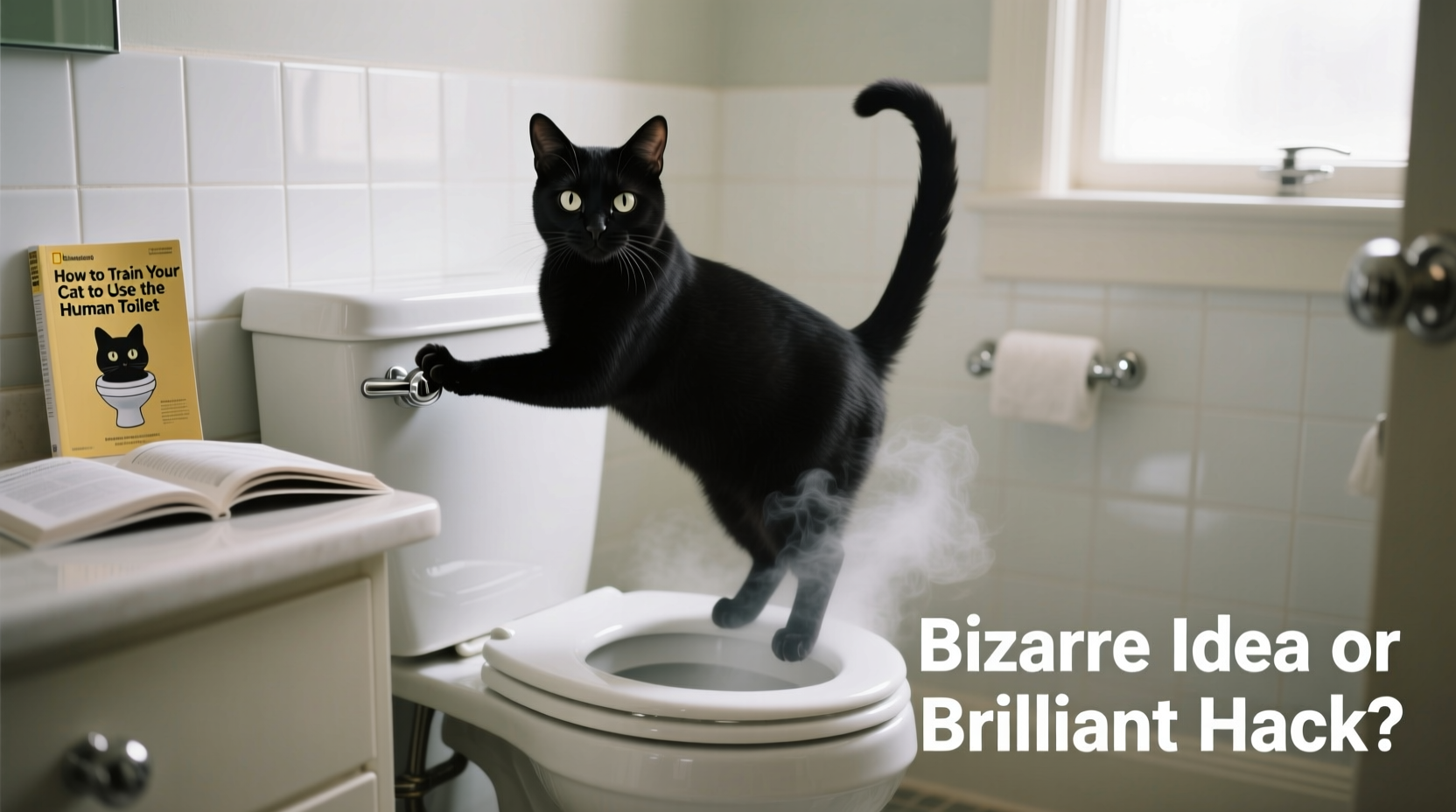
Cats are naturally fastidious animals. In the wild, they bury their waste to avoid attracting predators. This instinct translates indoors, making most cats eager to use a clean, accessible litter box. The challenge with toilet training isn’t teaching them *where* to eliminate—it’s retraining deeply ingrained behaviors related to posture, balance, and surface preference.
Unlike humans, cats squat low to the ground when eliminating. A toilet seat forces them into an unnatural standing position over a large, unstable opening. For many cats, this is physically uncomfortable and psychologically stressful. Dr. Sarah Ellis, a feline behavior researcher at the University of Lincoln, explains:
“Cats rely heavily on environmental predictability. Sudden changes in elimination surfaces can lead to anxiety, avoidance, or inappropriate toileting elsewhere.” — Dr. Sarah Ellis, Feline Behavior Specialist
Moreover, the sound of flushing water can be terrifying for some cats. The abrupt noise mimics predator-like threats in nature, triggering flight responses. Even if a cat learns to use the toilet, one accidental flush could undo weeks of progress.
Step-by-Step Guide to Toilet Training Your Cat
Success requires gradual adaptation. Rushing the process leads to stress and failure. Below is a proven 7-phase timeline based on widely used commercial kits and veterinary recommendations.
- Relocate the litter box: Move the litter box directly next to the toilet. Allow your cat to adjust for 3–5 days.
- Elevate the box: Place the litter box on a sturdy platform so it sits level with the toilet seat. Continue until your cat uses it confidently.
- Transition to the toilet: Remove the box and place a training device (e.g., Litter Kwitter) on the toilet seat. Fill it with litter. Supervise closely.
- Reduce litter gradually: Each week, remove a small portion of litter from the device. Replace with a perforated insert to encourage stepping closer to the hole.
- Enlarge the opening: Progressively increase the size of the hole in the insert, forcing your cat to balance over the center.
- Remove inserts entirely: Once your cat stands comfortably over the full toilet bowl, remove all accessories. Use minimal litter or none.
- Maintain consistency: Never flush while the cat is on or near the toilet. Wait until they’ve left the room.
This entire process typically takes 4–8 weeks, though some cats take longer. Patience is non-negotiable. If your cat resists at any stage, revert to the previous step.
Pros and Cons: Is It Worth the Effort?
Before committing to months of training, consider the tangible benefits and serious drawbacks.
| Advantages | Disadvantages |
|---|---|
| No litter costs or disposal | High risk of failure—especially with multi-cat households |
| Eliminates litter box odors | Stressful for cats; may cause urinary issues |
| Reduces tracking of litter | Not possible in homes with multiple floors unless toilets are always accessible |
| Potentially cleaner bathroom environment | Training time ranges from weeks to months |
| Satisfies curiosity and bonding for some owners | Limits monitoring of health through urine/feces consistency |
Veterinarians often caution against toilet training because it removes a critical diagnostic tool. Changes in litter box habits—such as straining, frequent visits, or blood in urine—are early indicators of conditions like UTIs, diabetes, or kidney disease. When waste disappears down the drain, these red flags go unnoticed.
Real-Life Case: The Johnson Family Experiment
The Johnsons, a family in Portland, Oregon, decided to try toilet training their 3-year-old tabby, Milo, after growing tired of daily scooping. They followed the Litter Kwitter system meticulously, documenting each phase.
Weeks 1–2 went smoothly. Milo adapted to the elevated box and showed interest in the toilet-mounted trainer. By week 4, he was using the device with a small hole. But during phase 5, when the hole expanded, Milo began hesitating. He’d approach, sniff, then retreat.
One evening, the youngest child flushed the toilet while Milo was still in the bathroom. The loud noise startled him, and he urinated on the bath mat instead. Over the next three days, Milo avoided the bathroom entirely, opting for a closet instead.
After consulting their vet, the Johnsons reintroduced a litter box. Milo returned to normal within 24 hours. “We thought we were being innovative,” said Lisa Johnson, “but we underestimated how much security the litter box gave him.”
Their experience highlights a common pitfall: underestimating environmental stressors and overestimating a cat’s adaptability.
Expert Checklist: Is Your Cat a Good Candidate?
Not all cats are suited for toilet training. Use this checklist to assess feasibility before beginning.
- ✅ Single-cat household (reduces competition and confusion)
- ✅ Cat is healthy, with no history of urinary or mobility issues
- ✅ Lives on a single floor with constant toilet access
- ✅ Confident, curious, and adaptable personality
- ✅ Owner can commit 5–10 minutes daily for supervision and reinforcement
- ❌ Avoid if the cat is senior, anxious, or has had past litter box issues
- ❌ Do not attempt during major life changes (moving, new pets, etc.)
Even among ideal candidates, success rates are estimated at only 20–30%. Most experts agree that convenience should never override animal welfare.
Frequently Asked Questions
Can all cats be trained to use the toilet?
No. While some cats adapt well, others find the experience stressful due to balance issues, fear of heights, or aversion to noise. Breeds with shorter legs or joint problems (like Munchkins or older Persians) are particularly unsuited.
What if my cat falls into the toilet?
This is rare but possible, especially during early stages. Always ensure the toilet lid is closed when not in use, and never leave unsupervised training sessions. Use a smaller training ring initially to minimize fall risk.
Are there alternatives to full toilet training?
Yes. Some owners use hybrid systems where a small litter box sits atop the toilet tank—eliminating odor and floor mess without requiring behavioral overhaul. Others switch to ultra-low-dust, high-efficiency litters that reduce maintenance and tracking.
Why Veterinarians Are Skeptical
Dr. Angela Hughes, a veterinary behaviorist, warns: “While toilet training might seem like a win for human convenience, it can compromise feline well-being. Cats need control over their environment. Removing the litter box eliminates their ability to signal discomfort through location or frequency of use.”
She adds that inappropriate elimination post-training is common and often misinterpreted as defiance. In reality, it’s usually a cry for help—cats reverting to natural instincts when stressed.
Additionally, communal living spaces pose logistical issues. If you have guests or children who leave seats up or flush unexpectedly, the cat’s routine is disrupted. Unlike dogs, cats don’t respond well to inconsistent cues.
Conclusion: Innovation or Illusion?
Training a cat to use a human toilet sits at the intersection of curiosity, convenience, and controversy. For a select few highly adaptable cats and exceptionally patient owners, it can work. But for most, the risks outweigh the rewards.
The allure of skipping litter duty is understandable. Yet, the litter box serves more than just sanitation—it’s a window into your cat’s health and emotional state. Replacing it with a flush-and-forget system may save time, but it also removes a vital line of communication.
If you’re determined to try, proceed slowly, prioritize your cat’s comfort, and never force progress. And above all, listen—not just to advice, but to your cat’s body language. Hesitation, avoidance, or accidents aren’t failures; they’re messages.




 浙公网安备
33010002000092号
浙公网安备
33010002000092号 浙B2-20120091-4
Comments
No comments yet. Why don't you start the discussion?