
Dogs bark for many reasons—territorial defense, excitement, fear, or attention-seeking. When a dog barks excessively at strangers, it can create stress for the owner, discomfort for guests, and tension in public spaces. The good news is that with patience, consistency, and the right training approach, you can teach your dog to remain calm and composed around unfamiliar people. This isn’t about suppressing natural behavior but guiding it toward more appropriate responses.
The goal isn't silence at all costs; it's polite, controlled behavior. A well-trained dog doesn’t need to lunge or vocalize aggressively when someone new walks by. Instead, they learn to look to their owner for cues, stay relaxed, and respond to commands even in stimulating situations.
Understanding Why Dogs Bark at Strangers
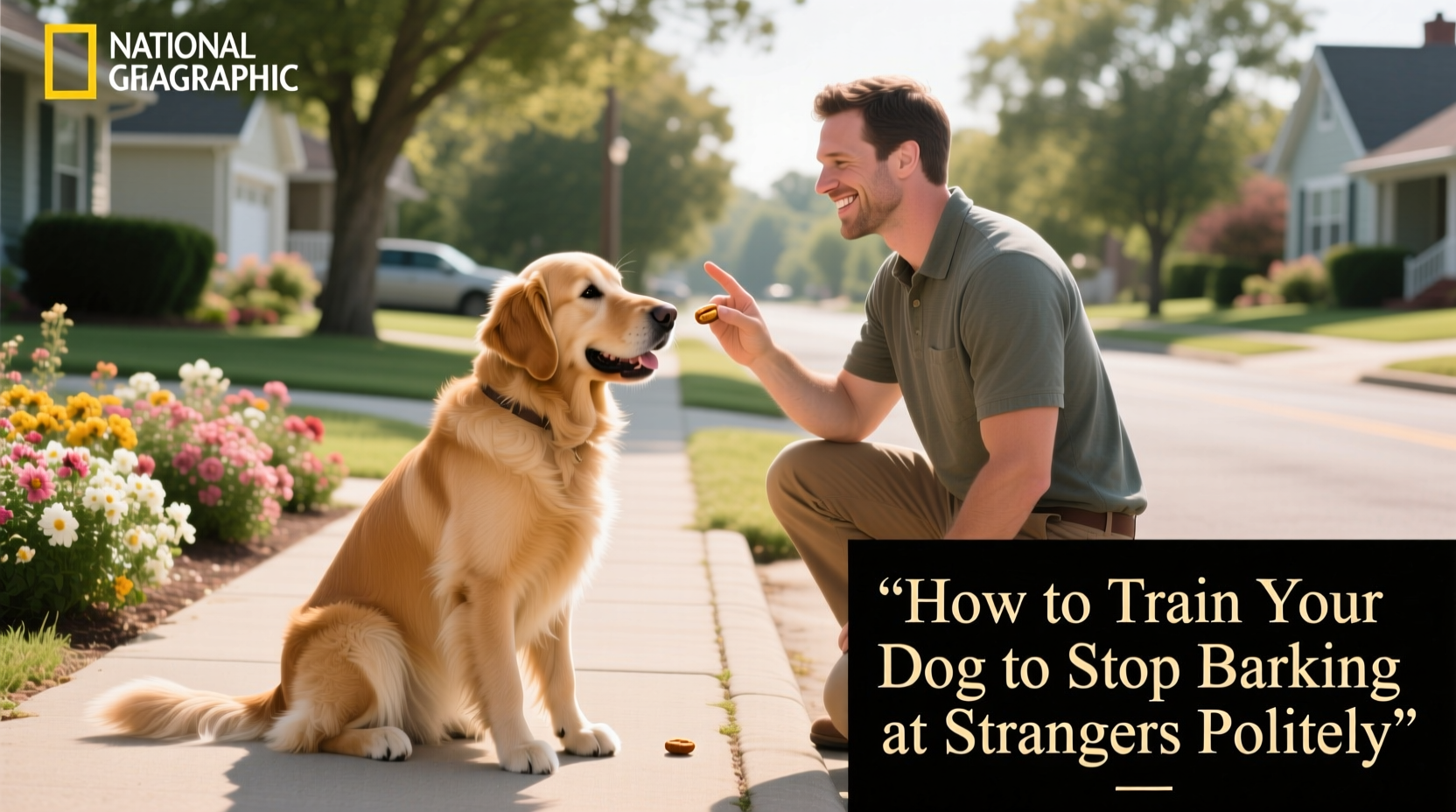
Barking is a form of communication. For dogs, seeing an unfamiliar person can trigger a range of emotional responses:
- Fear or anxiety: Some dogs perceive strangers as threats, especially if they lack early socialization.
- Protective instinct: Guarding their home or family can prompt alert barking.
- Excitement: Overstimulation from movement or new faces may lead to enthusiastic barking.
- Attention-seeking: If barking has been unintentionally rewarded in the past (e.g., owner reacts), it becomes a learned behavior.
Identifying the root cause is essential. A fearful dog needs reassurance and gradual exposure, while an overexcited one benefits from impulse control training. Mislabeling fear as aggression—or vice versa—can derail progress.
“Dogs don’t misbehave out of defiance. They react based on how they feel. Training starts with empathy.” — Dr. Sophia Yin, Veterinary Behaviorist
A Step-by-Step Guide to Polite Stranger Responses
Training should be incremental, reinforcing calmness rather than reacting to barking. Follow this structured timeline over several weeks:
- Build focus on you: Begin indoors with minimal distractions. Use high-value treats to reward your dog for making eye contact when you say their name or “look.” Practice until they consistently turn to you on cue.
- Introduce low-level stimuli: Sit near a window where people walk by at a distance. When your dog notices someone but hasn’t barked, immediately praise and treat. If they bark, calmly say “oops” and step backward—removing opportunity for reinforcement.
- Add a cue for calmness: Introduce a phrase like “easy” or “quiet” when your dog pauses barking. Reward any moment of stillness or disengagement from the stranger.
- Increase proximity gradually: Work with a helper who walks slowly into view. Start 50 feet away. Only proceed closer once your dog remains relaxed and focused on you at each stage.
- Practice real-world greetings: Once your dog stays calm at close range, allow brief, controlled interactions. Ask the stranger to ignore the dog unless invited. Reinforce calm sitting before any petting occurs.
- Maintain consistency: Repeat sessions daily for at least 4–6 weeks. Generalization across environments (park, sidewalk, doorway) takes time.
Effective Techniques and Tools
Success hinges on using humane, science-backed methods. Avoid punishment-based corrections, which increase anxiety and damage trust. Instead, rely on these proven strategies:
Positive Reinforcement
Reward desired behaviors the instant they occur. Clicker training can help mark precise moments of calmness. Over time, your dog learns that ignoring strangers or checking in with you leads to better outcomes than barking.
Desensitization and Counterconditioning
This two-part process reduces reactivity by changing your dog’s emotional response:
- Desensitize: Expose your dog to strangers at a level too low to trigger barking (e.g., far away, behind glass).
- Countercondition: Pair the sight of a stranger with something positive—like chicken or playtime—so they begin to associate new people with good things.
Management Tools
While training, manage the environment to prevent rehearsal of unwanted behavior:
- Use curtains or opaque film on lower windows to block sudden views of passersby.
- Walk your dog during quieter hours if sidewalks are overwhelming.
- Use a front-clip harness to reduce pulling and improve focus during outdoor practice.
Do’s and Don’ts: Common Pitfalls in Training
| Do | Don’t |
|---|---|
| Stay calm and predictable. Your energy influences your dog’s state. | Yell “quiet!” or pull on the leash aggressively—this escalates tension. |
| Use high-value treats (chicken, cheese) during high-distraction training. | Rely only on kibble or low-interest rewards when competing with excitement. |
| Practice short sessions (5–10 minutes) multiple times a day. | Force prolonged exposure that overwhelms your dog. |
| Ask strangers to avoid direct eye contact or fast movements initially. | Allow uncontrolled greetings that reinforce jumping or barking. |
| Reinforce alternative behaviors like sitting or focusing on you. | Punish after the fact—dogs don’t connect delayed correction with barking. |
Real Example: Training Luna, the Reactive Beagle
Luna, a 2-year-old beagle, barked wildly at anyone approaching her apartment building. Her owner, Mark, felt embarrassed and helpless. After consulting a certified trainer, he began a structured plan:
- Week 1–2: Trained “look at me” indoors using small pieces of roast turkey. Luna mastered eye contact within 10 days.
- Week 3: Sat by the window with Luna. Each time someone passed outside, Mark clicked and treated if Luna glanced at him first.
- Week 4: Partnered with a neighbor who stood 40 feet away. When Luna noticed but didn’t bark, she got a treat. If she barked, Mark gently turned and walked away.
- Week 6: Neighbor approached slowly while tossing treats near Luna (without engaging). Luna began to associate strangers with food rain.
- Week 8: Luna sat calmly as a visitor rang the doorbell. She received treats for staying seated and was allowed a polite sniff afterward.
Today, Luna still watches newcomers carefully—but she waits for permission before reacting. Mark no longer dreads deliveries or visitors.
Essential Checklist for Success
Follow this checklist to ensure you're covering all bases in your training journey:
- ✅ Identify your dog’s trigger distance—the point at which they notice but don’t react.
- ✅ Choose high-value treats reserved only for training sessions.
- ✅ Teach a reliable attention cue (“look” or “watch me”) in a quiet setting.
- ✅ Practice daily, keeping sessions short and positive.
- ✅ Gradually decrease distance to strangers only when your dog stays calm.
- ✅ Use management tools (window blockers, leashes) to prevent rehearsal of barking.
- ✅ Involve friends or neighbors as neutral helpers in controlled exposures.
- ✅ Track progress with notes or video to spot subtle improvements.
- ✅ Consult a certified professional if fear or aggression persists beyond 6 weeks.
“Behavior change isn’t linear. Some days will feel like setbacks. But consistency beats perfection every time.” — Karen Pryor, Animal Trainer & Author
Frequently Asked Questions
What if my dog only barks at certain types of people?
It’s common for dogs to react to specific triggers—men with hats, cyclists, or children running. This often stems from limited exposure during critical socialization periods (before 16 weeks of age). Address each category separately using desensitization. For example, if your dog fears men with beards, start with photos, then videos, then distant live exposure, pairing each with treats.
How long does it take to stop barking at strangers?
Most dogs show improvement within 4–8 weeks of consistent daily training. Full reliability in varied environments may take 3–6 months. Factors like age, past experiences, breed tendencies, and handler consistency influence speed. Older or trauma-affected dogs may require longer timelines and professional support.
Can I train an older dog to stop barking at strangers?
Absolutely. While puppies are more malleable, adult dogs can learn new behaviors at any age. The key is patience and recognizing that old habits take time to replace. Older dogs may have deeply ingrained responses, so shorter, more frequent sessions work better than intense drills. Celebrate small wins—they add up.
Conclusion: Building a Calmer, More Confident Companion
Teaching your dog to stop barking at strangers isn’t just about peace and quiet—it’s about building trust, confidence, and mutual understanding. Every time your dog chooses to look at you instead of charging the window, they’re demonstrating self-control and faith in your guidance. This kind of training strengthens your bond and opens up more opportunities for shared experiences, from café visits to friendly meetups.
Progress may be slow, and setbacks are normal. What matters is showing up consistently, responding with kindness, and celebrating the quiet moments as victories. With time, your dog won’t just bark less—they’ll feel safer, more secure, and better equipped to navigate a world full of new faces.




 浙公网安备
33010002000092号
浙公网安备
33010002000092号 浙B2-20120091-4
Comments
No comments yet. Why don't you start the discussion?