
Parrots are intelligent, social creatures capable of forming deep bonds with their human companions. However, their natural vocalizations—often mistaken for misbehavior—can become excessive and disruptive, especially in household environments. One of the most common concerns among parrot owners is persistent screaming. While it’s instinctive for parrots to call out to their flock (you), uncontrolled screaming can strain relationships and impact quality of life for both bird and owner. The solution lies not in suppression, but in understanding and redirecting behavior through effective use of behavioral cues.
Unlike punishment-based methods, which damage trust and increase anxiety, training with behavioral cues leverages a parrot’s cognitive strengths. By identifying triggers, reinforcing quiet behavior, and teaching alternative responses, you can significantly reduce or even eliminate unwanted screaming. This approach fosters communication, strengthens your bond, and supports your parrot’s emotional well-being.
Understanding Why Parrots Scream
Screaming is not inherently bad behavior—it’s a normal part of parrot communication. In the wild, parrots use loud calls to maintain contact with their flock across distances, signal danger, or establish territory. When kept as pets, these instincts don’t disappear. What changes is the context: a scream that once echoed through a rainforest now reverberates through a living room, often at inconvenient times.
The key to reducing problematic screaming is recognizing what motivates it. Common triggers include:
- Attention-seeking: Many parrots learn that screaming results in a reaction—positive or negative—from their owner.
- Fear or stress: Loud noises, unfamiliar people, or environmental changes can trigger alarm calls.
- Boredom or lack of stimulation: Parrots are highly intelligent and require mental engagement.
- Dawn and dusk calling: Natural flock-check-in times when parrots vocalize en masse.
- Pain or illness: Persistent, unusual screaming may indicate discomfort.
Before beginning any training, rule out medical causes by consulting an avian veterinarian. Once health is confirmed, focus shifts to behavioral modification using cues and reinforcement.
The Role of Behavioral Cues in Training
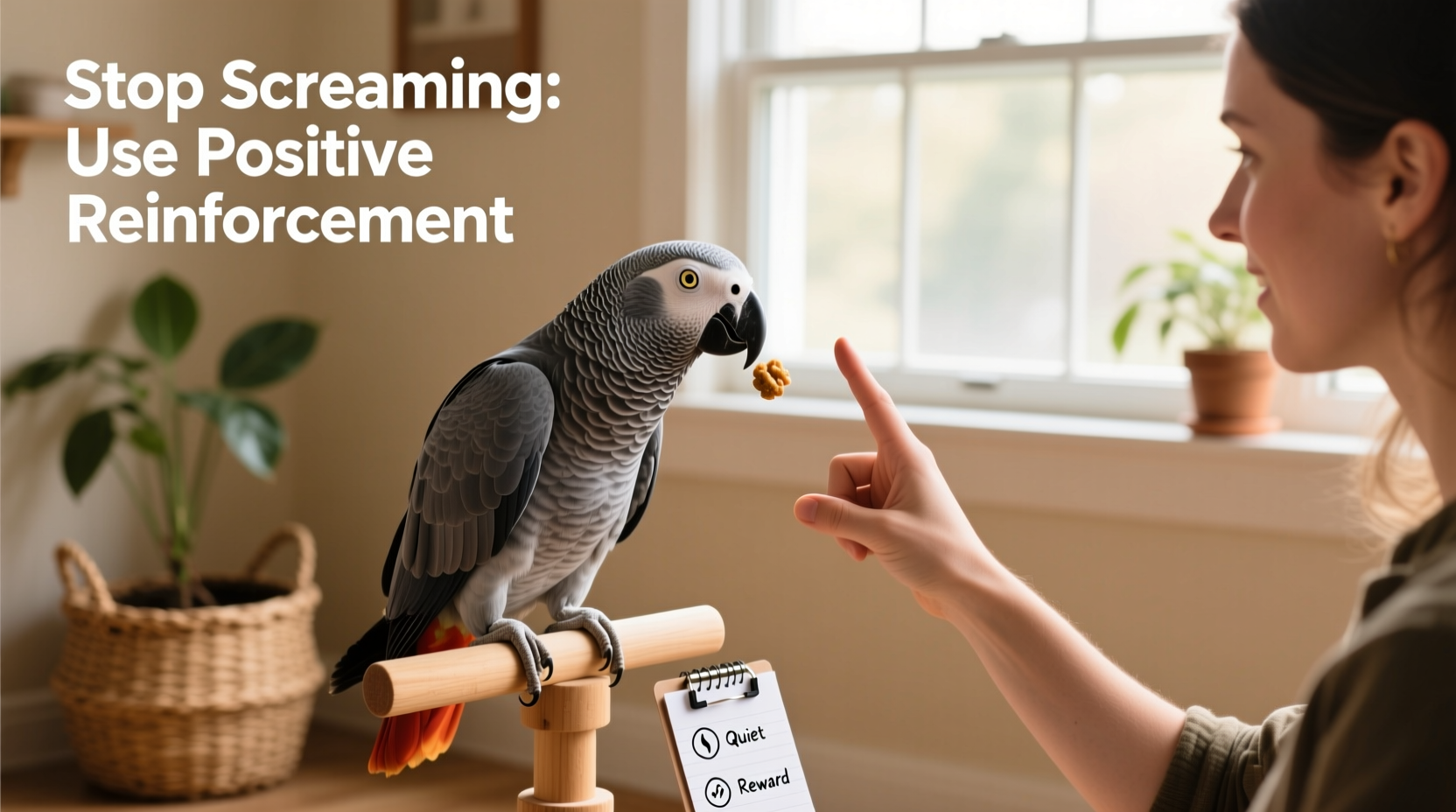
Behavioral cues are signals—verbal, visual, or environmental—that prompt a specific response from an animal. In parrot training, they act as bridges between intention and action. For example, saying “Step up” while offering your hand teaches the bird to step onto it. The same principle applies to reducing screaming: you can teach your parrot to associate silence with positive outcomes using consistent cues.
The foundation of this method is operant conditioning, particularly positive reinforcement. When a parrot remains quiet during a potential trigger moment and receives praise or a treat, it learns that silence is rewarding. Over time, the cue for calmness becomes internalized.
Effective cues must be:
- Consistent: Use the same word or gesture every time.
- Clear: Avoid overlapping commands or ambiguous signals.
- Timely: Deliver the cue just before or during the desired behavior.
- Paired with reward: Reinforce immediately after compliance.
For instance, if your parrot typically screams when left alone, introduce a cue like “Quiet time” just before stepping out of the room. Pair this with a favorite toy or treat placed in the cage. Over repetition, the parrot begins to associate the phrase with solitude and rewards, reducing the need to call out.
“Parrots thrive on predictability. When we give them clear cues and consistent consequences, we reduce anxiety and create a more harmonious environment.” — Dr. Irene Pepperberg, Avian Cognition Researcher
Step-by-Step Guide to Reducing Screaming with Behavioral Cues
Training a parrot to stop screaming requires patience, consistency, and observation. Follow this structured timeline to implement behavioral cues effectively.
- Observe and identify triggers (Days 1–3): Keep a log of when and where screaming occurs. Note time of day, presence of people, activity level, and what happens immediately before and after the scream.
- Establish a baseline of quiet behavior (Days 4–7): Reward any moment of calm with verbal praise (“Good quiet”) or a small treat. Do this frequently throughout the day to reinforce stillness.
- Introduce a cue for silence (Day 8 onward): Choose a short phrase like “Easy,” “Calm,” or “Quiet.” Say it softly when your parrot is already silent, then immediately offer a reward. Repeat 5–10 times daily.
- Pair the cue with high-risk moments (Weeks 2–3): Use the cue just before a known trigger—for example, as you pick up your keys to leave. Follow with a distraction (toy, treat) and reward compliance.
- Phase out treats, maintain praise (Week 4+): Gradually reduce food rewards, relying more on verbal affirmation and affection. This prevents dependency and maintains motivation.
- Generalize the behavior (Ongoing): Practice the cue in different rooms, with guests present, and during varying levels of household activity.
Progress may be slow—some parrots take weeks or months to adapt. Consistency is more important than speed. If the bird screams, avoid reacting. Wait for a pause, then mark the silence with your cue and reward.
Do’s and Don’ts: A Quick Reference Table
| Do’s | Don’ts |
|---|---|
| Use a calm, consistent voice when giving cues | Yell or shout to drown out screaming |
| Reward even brief moments of silence | Give attention during screaming episodes |
| Maintain a predictable daily routine | Ignore signs of fear or illness |
| Provide mental enrichment (toys, puzzles) | Use spray bottles or startling noises as punishment |
| Practice cue training in low-stress settings first | Expect immediate results |
Real Example: Turning Around a Chronic Screamer
Sophia, a 5-year-old green-winged macaw, had developed a habit of screaming for up to two hours each morning. Her owner, Mark, initially responded by talking back or covering the cage, which only reinforced the behavior. After consulting a bird behaviorist, he began tracking patterns and discovered Sophia screamed most intensely between 7:30 and 8:00 AM—coinciding with his coffee-making routine, which involved clattering cups and turning on the radio.
The plan was simple: adjust the routine and introduce a new cue. Mark started preparing coffee earlier, before Sophia was fully awake. He then introduced the phrase “Morning calm” while offering a foraging toy filled with nuts. At first, Sophia ignored it and screamed. Mark waited silently until she paused—even for a second—then said “Morning calm” and gave a sunflower seed. Over ten days, the screaming window shortened from two hours to under thirty minutes. By week four, Sophia would climb into her foraging toy upon hearing “Morning calm,” even before the treat was inserted.
This case illustrates how combining environmental management with behavioral cues leads to lasting change without conflict.
Essential Checklist for Success
To ensure your training efforts yield results, follow this actionable checklist:
- ✅ Rule out medical issues with an avian vet
- ✅ Identify and document screaming triggers
- ✅ Choose a consistent cue word for calm behavior
- ✅ Stock up on high-value treats (e.g., almonds, dried fruit)
- ✅ Begin training during low-stress times of day
- ✅ Reward silence immediately and consistently
- ✅ Avoid eye contact, speech, or movement during screaming
- ✅ Introduce enrichment activities to reduce boredom
- ✅ Practice daily for at least 10–15 minutes
- ✅ Track progress in a journal or app
Success isn’t measured by total silence—parrots should be allowed to vocalize naturally—but by a reduction in *problematic* screaming and increased responsiveness to cues.
Frequently Asked Questions
How long does it take to stop a parrot from screaming?
Results vary by species, age, and history. Some parrots show improvement within two weeks; others may take several months. Consistency is the biggest factor. Older birds with established habits require more time, but change is always possible with patience.
Can I train an older parrot to respond to behavioral cues?
Absolutely. Parrots remain cognitively flexible throughout their lives. While younger birds may learn faster, older parrots often have better focus and longer attention spans. Start with short sessions and build trust gradually.
What if my parrot screams when I leave the house?
This is often separation-related. Prepare a “departure routine”: say your cue word, place a favored toy or treat in the cage, and leave calmly without fanfare. Return quietly, too—don’t reward screaming with enthusiastic greetings. Over time, the parrot learns that your absence is temporary and safe.
Conclusion: Building a Quieter, Happier Relationship
Teaching your parrot to stop screaming using behavioral cues is not about control—it’s about communication. When you replace confusion with clarity and fear with predictability, you give your bird the tools to feel secure. Screaming diminishes not because it’s punished, but because it’s no longer necessary.
The journey requires commitment, but the rewards are profound: a deeper bond, a more peaceful home, and a parrot that feels understood. Every quiet moment earned through positive training is a step toward mutual respect. Start today—not with force, but with a single word, a pause, and a treat. Your parrot is listening.




 浙公网安备
33010002000092号
浙公网安备
33010002000092号 浙B2-20120091-4
Comments
No comments yet. Why don't you start the discussion?