
Parrots are among the most intelligent birds in the animal kingdom, capable of mimicking human speech with remarkable clarity when trained properly. While some may pick up words spontaneously, achieving clear, consistent speech requires structured training, patience, and daily engagement. Unlike simple mimicry, teaching a parrot to speak clearly involves building auditory recognition, reinforcing correct pronunciation, and creating a language-rich environment. This guide outlines a practical, science-informed approach to help you develop your parrot’s vocal skills through consistent, effective daily practice.
Understanding Parrot Vocal Learning
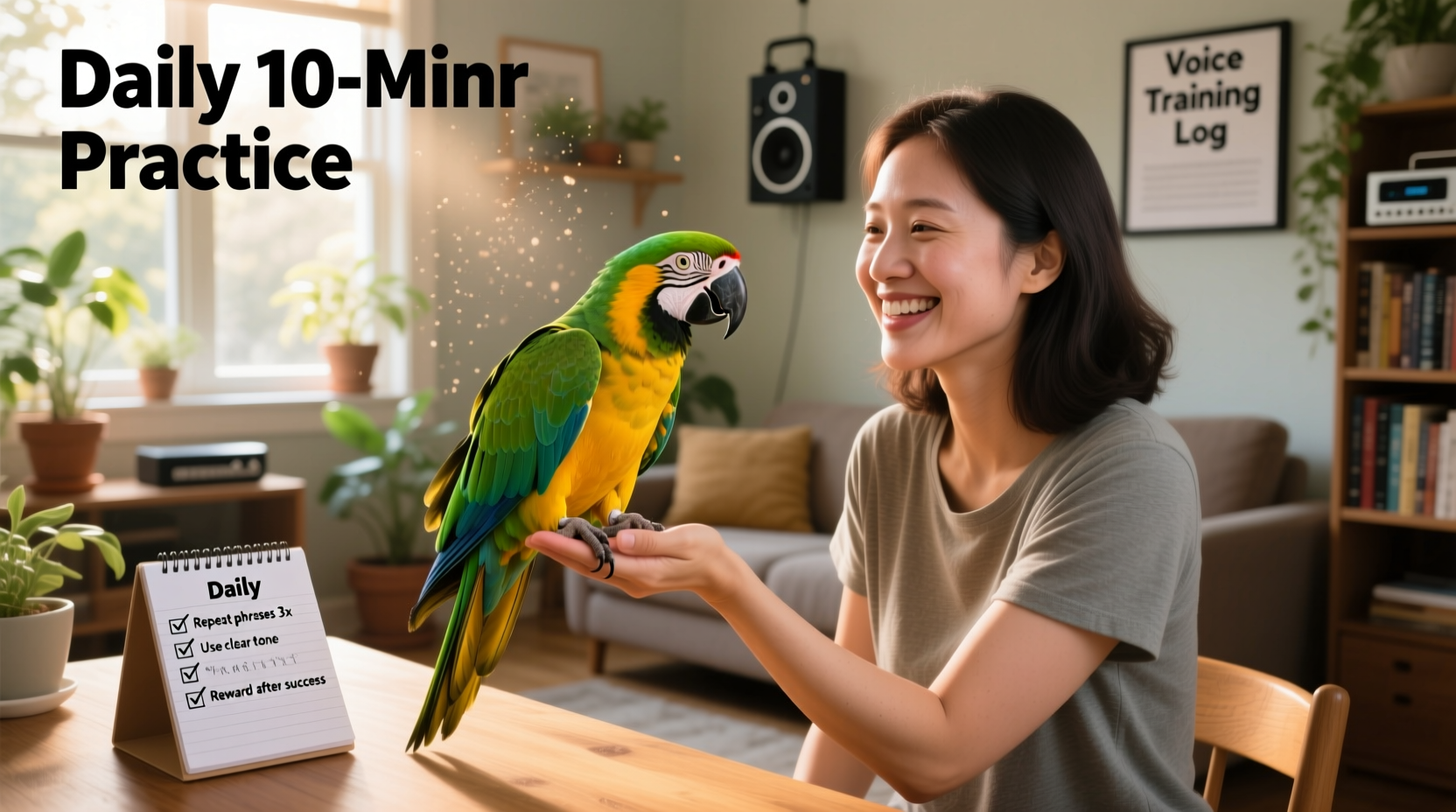
Not all parrots speak, and not all speaking parrots do so clearly. Species such as African Greys, Amazon parrots, and Budgerigars are especially adept at vocal mimicry due to their advanced neural pathways for sound processing. These birds don’t just repeat noises—they learn them through repetition, social bonding, and contextual association.
In the wild, parrots use calls to maintain flock cohesion, signal danger, or establish territory. In captivity, they transfer this instinct to human interaction, treating their owners as part of their social group. When a parrot begins to imitate speech, it’s often an attempt to bond or gain attention. The key to clarity lies in shaping that imitation into precise, intelligible words.
“Parrots aren’t just repeating sounds—they’re learning them like children. Consistency, tone, and context are critical.” — Dr. Irene Pepperberg, Avian Cognition Researcher, Harvard University
Daily Training Framework: A 6-Step Routine
Clear speech doesn’t emerge overnight. It develops over weeks and months of structured exposure and reinforcement. The following six-step routine has been refined by avian trainers and behaviorists to maximize vocal clarity and retention.
- Choose 1–2 Target Words Daily: Start simple. Use high-frequency, meaningful words like “hello,” “good,” or the bird’s name. Avoid complex phrases early on.
- Set Fixed Practice Times: Train at the same times each day—morning and evening—for 10–15 minutes. Parrots thrive on predictability.
- Use Clear, Exaggerated Pronunciation: Speak slowly and distinctly. Emphasize syllables. For example, say “HEL-lo” instead of “hello.”
- Pair Words with Actions: Say “hello” when entering the room, “bye-bye” when leaving. Context helps the bird associate meaning with sound.
- Reinforce Immediately: When the parrot attempts the word—even vaguely—reward instantly with praise, a treat, or head scratches.
- End on a Positive Note: Always conclude sessions while the bird is engaged and responsive. Never end in frustration.
Creating the Ideal Learning Environment
A parrot’s ability to speak clearly depends heavily on its surroundings. A noisy, chaotic home can hinder focus, while an isolated cage limits exposure. Optimize the environment to support vocal development.
- Place the cage in a frequently used room (e.g., living room or kitchen) where natural conversation occurs.
- Maintain moderate background noise—complete silence can be unnerving, but constant loud TV disrupts concentration.
- Minimize sudden loud sounds or aggressive music that may startle the bird.
- Ensure the parrot gets daily out-of-cage time to reduce stress and increase confidence.
Stress inhibits vocal learning. A parrot that feels safe and socially integrated is far more likely to experiment with speech. Monitor body language: fluffed feathers, pinned eyes, or tail flicking may indicate discomfort. Adjust interactions accordingly.
Do’s and Don’ts of Parrot Speech Training
| Do’s | Don’ts |
|---|---|
| Speak face-to-face at eye level to build trust. | Yell or raise your voice—the bird will mimic tone, not clarity. |
| Use short, consistent phrases repeated multiple times. | Introduce too many words at once—focus is key. |
| Reward effort, not just perfection. | Punish incorrect attempts—this creates fear and shuts down communication. |
| Practice in quiet moments when distractions are minimal. | Train when the bird is tired, hungry, or preening. |
| Incorporate words into daily routines (e.g., “Want food?” at mealtime). | Expect immediate results—progress may take weeks. |
Case Study: Training Charlie, a 3-Year-Old African Grey
Charlie, an African Grey parrot adopted from a rescue center, had only ever muttered indistinct sounds. His owner, Maria, began a structured training program after consulting an avian behaviorist. She started with two words: “Hi” and “Charlie.” Each morning and evening, she sat near his cage, made eye contact, and said “Hi, Charlie!” five times in a calm, upbeat tone. If he chirped or made any sound resembling “hi,” she responded with clapping and a sunflower seed.
After two weeks, Charlie produced a faint “hee.” Maria celebrated enthusiastically. By week four, he said “hi” clearly on command. Over the next three months, she gradually introduced new words using the same method. Today, Charlie has a vocabulary of 47 words and uses “Good morning,” “Wanna nut?”, and “Bye-bye” in appropriate contexts. His speech is articulate enough that visitors often mistake him for a child speaking from another room.
The success stemmed not from innate talent, but from consistency, emotional safety, and positive reinforcement. Maria never skipped a session, even when progress seemed stalled.
Advanced Techniques for Improving Clarity
Once your parrot masters basic words, refine pronunciation with targeted exercises:
1. Shadowing Method
Say a word slowly, then pause and wait for the bird to repeat. If the attempt is close, repeat the word clearly and reward. This builds auditory feedback loops.
2. Word Layering
After mastering “hello,” teach “hello there” by adding one word at a time. Wait until the first phrase is fluent before expanding.
3. Voice Modulation Training
Some parrots mumble or rasp. To improve clarity, speak in a higher pitch with crisp consonants. Parrots often match pitch and enunciation when highly motivated.
4. Mirror Practice
Place a small, safe mirror near the cage. Some parrots vocalize more when “talking” to their reflection, giving you more opportunities to reinforce correct sounds.
Common Challenges and How to Overcome Them
Even with daily practice, setbacks occur. Understanding common issues helps maintain momentum.
- Lack of Interest: Rotate target words every 10–14 days to prevent boredom. Use treats the parrot truly values—not just seeds, but small pieces of almond or banana.
- Mumbling or Slurring: Slow down your own speech. Over-enunciate vowels. Reward only the clearest attempts to shape better articulation.
- Random Vocalizations: Ignore irrelevant sounds. Only respond to attempts at target words. Attention reinforces behavior—be selective.
- Regression: Stress, illness, or environmental changes can cause relapse. Return to earlier, mastered words to rebuild confidence before advancing.
Checklist: Daily Training Essentials
Follow this checklist every day to ensure effective, consistent practice:
- ✅ Choose 1–2 target words for the day
- ✅ Schedule two 10–15 minute sessions (morning and evening)
- ✅ Use a calm, clear voice with exaggerated pronunciation
- ✅ Pair words with actions or objects (e.g., “water” near the water bowl)
- ✅ Reward immediately with praise, touch, or a treat
- ✅ Record a short audio clip of the session (weekly)
- ✅ Observe body language—stop if the bird seems stressed
- ✅ End with a positive interaction, even if no progress was made
Frequently Asked Questions
How long does it take for a parrot to start talking clearly?
Most parrots begin making recognizable attempts within 4–8 weeks of consistent daily training. Full clarity can take 3–6 months or longer, depending on species, age, and individual temperament. Younger birds typically learn faster than older ones.
Can all parrots be taught to talk clearly?
No. While many species can mimic sounds, not all have the cognitive capacity or inclination for clear speech. African Greys, Eclectus, and some Amazons excel, while Quakers and Budgies may speak less clearly but still communicate effectively. Even non-speaking parrots can learn whistles, tones, or gestures.
Should I use recordings or videos to train my parrot?
Supplemental audio can help, but live interaction is far more effective. Parrots learn best through social engagement, facial expressions, and immediate feedback. Avoid leaving videos playing all day—it can confuse the bird and lead to inappropriate vocalizations.
Conclusion: Building a Lifelong Communication Bond
Training your parrot to talk clearly isn’t just about entertainment—it’s about deepening mutual understanding. Through consistent daily practice, you’re not only teaching words; you’re building trust, stimulating intelligence, and enriching your bird’s life. The process demands patience, but the rewards are profound: a companion who doesn’t just mimic, but communicates.
Start today. Pick one word. Say it clearly. Reward the effort. Repeat tomorrow. Progress compounds over time. Before long, you’ll hear your parrot call your name, greet you in the morning, or ask for a treat in a voice that surprises everyone who hears it. That moment—when sound becomes meaning—is worth every minute invested.




 浙公网安备
33010002000092号
浙公网安备
33010002000092号 浙B2-20120091-4
Comments
No comments yet. Why don't you start the discussion?