
Parrots are among the most intelligent birds in the animal kingdom, capable of mimicking human speech with remarkable clarity. However, teaching a parrot to talk is not about repetition alone—it’s about building trust, creating a safe environment, and fostering communication through mutual respect. Many well-meaning owners unintentionally cause stress by pushing too hard, using loud tones, or expecting rapid results. The key lies in understanding that vocal training is as much about emotional wellness as it is about technique.
When approached correctly, teaching your parrot to speak can deepen your bond and provide mental stimulation essential for their well-being. Done poorly, it can lead to anxiety, feather plucking, or even aggression. This guide outlines humane, science-backed methods to encourage natural vocalization while protecting your bird’s psychological health.
Understanding Parrot Communication
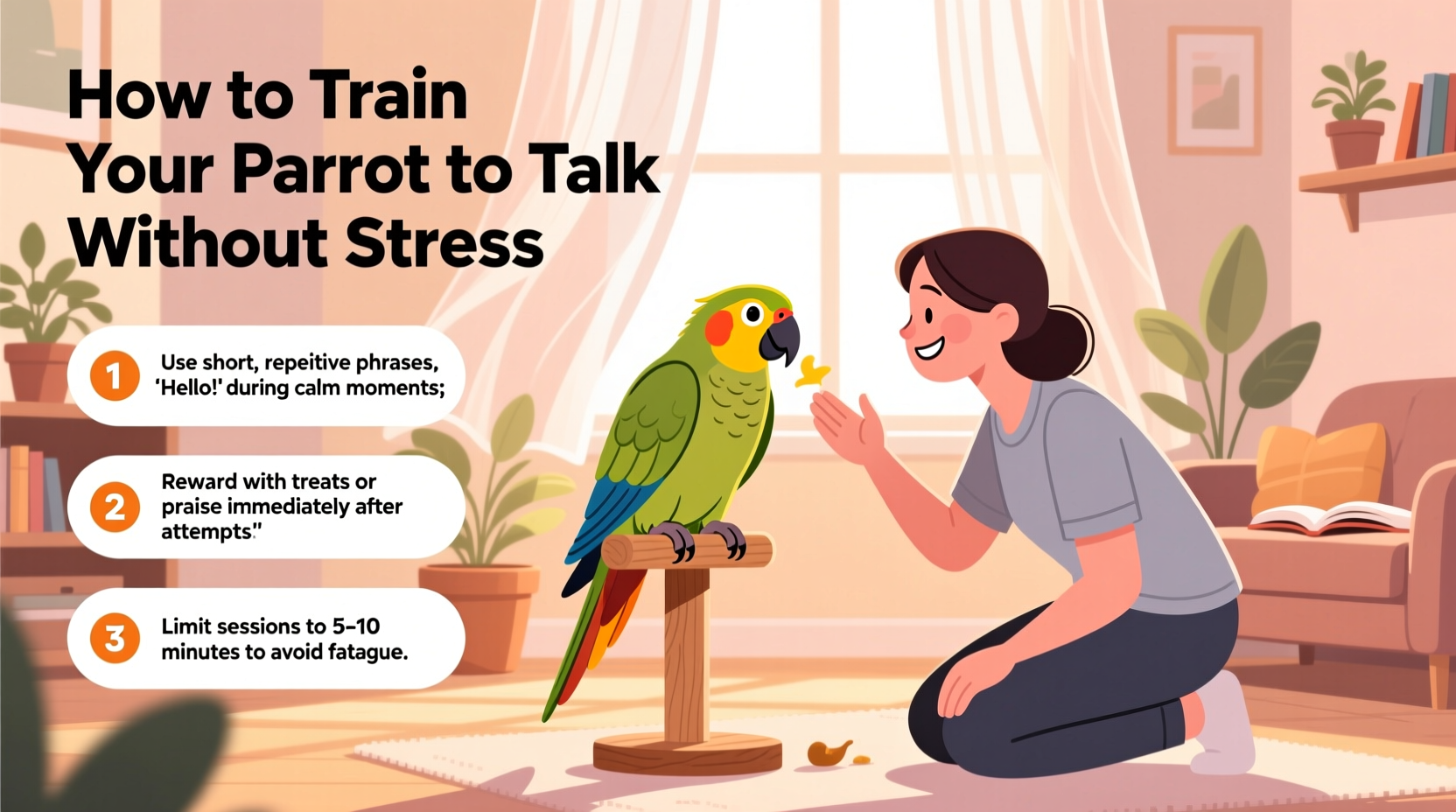
Before attempting to teach words, it’s crucial to understand why parrots mimic sounds in the first place. In the wild, parrots use vocalizations to maintain flock cohesion, signal danger, locate mates, and establish territory. Captive parrots often view their human caregivers as part of their social group, so mimicking speech becomes a way to integrate into the “flock.”
Not all species are equally inclined to speak. African Greys, Amazon parrots, Budgerigars, and some Cockatoos are known for strong vocal abilities. Lovebirds and Pionus parrots may learn a few words but typically focus more on whistles and environmental sounds. Recognizing your bird’s natural tendencies prevents unrealistic expectations.
“Parrots don’t speak because they understand language—they speak because they want to belong. Training should reinforce connection, not performance.” — Dr. Irene Pepperberg, Avian Cognition Researcher
Forcing a parrot to repeat phrases under pressure disrupts this social dynamic. Instead, successful training begins by observing your bird’s existing vocal behaviors: Does it whistle when excited? Call out when you enter the room? These spontaneous sounds are early signs of communicative intent—and ideal starting points for structured learning.
Creating a Stress-Free Learning Environment
A calm, predictable environment is foundational to effective training. Parrots are highly sensitive to noise, routine changes, and perceived threats. A stressed bird will retreat into silence or exhibit defensive behaviors, making vocal learning nearly impossible.
Maintain consistent daily rhythms. Feed, interact, and allow out-of-cage time at roughly the same hours each day. Predictability reduces anxiety and increases attentiveness. Avoid training during molting, breeding season, or after major household changes (e.g., moving or new pets), as these periods heighten sensitivity.
Ensure your parrot has access to enrichment: foraging toys, puzzles, and safe chewables. Mental fatigue from inadequate stimulation often manifests as irritability, which can be mistaken for disinterest in training. A mentally engaged parrot is more likely to participate willingly in vocal exercises.
Step-by-Step Guide to Gentle Vocal Training
Teaching speech requires patience and incremental progress. Follow this timeline-based approach to build confidence in both you and your bird:
- Week 1–2: Observation & Bonding
Spend 15–20 minutes daily near the cage, speaking softly. Use simple, clear phrases like “Hello, [Bird’s Name]” or “Good morning.” Observe reactions—does your parrot turn its head? Lean forward? These are signs of engagement. - Week 3–4: Introduce Target Words
Choose one short word (“hi,” “name,” “bye”) and say it clearly during positive interactions—like offering a treat or opening the cage. Repeat 3–5 times per session, no more. Always pair the word with a rewarding context. - Week 5–8: Reinforce Spontaneous Attempts
If your parrot makes a sound resembling the target word, respond immediately with praise and a small reward (a sunflower seed, verbal affection). Do not correct or repeat excessively—celebrate effort, not perfection. - Week 9–12: Expand Vocabulary Gradually
Only introduce a new word once the first is consistently recognized or imitated. Use contextual cues: say “bye-bye” only when leaving the room, reinforcing meaning through action. - Ongoing: Encourage Two-Way Interaction
Respond to your parrot’s calls as if in conversation. If it squawks, wait, then say “What?” calmly. Some birds learn to “initiate” dialogue this way, treating speech as reciprocal exchange.
Sessions should never exceed 10 minutes and must end on a positive note. If your parrot looks away, fluffs up, or bites the bars, stop immediately—these are stress signals. Resume when the bird appears relaxed.
Do’s and Don’ts of Parrot Speech Training
| Do’s | Don’ts |
|---|---|
| Use a calm, upbeat tone when speaking | Shout, exaggerate pronunciation, or force attention |
| Train during naturally active times (morning/evening) | Attempt lessons when the bird is sleeping or eating |
| Reward attempts, not just perfect mimicry | Punish silence or incorrect sounds |
| Keep vocabulary simple and meaningful | Overload with complex phrases or rapid-fire repetition |
| Involve multiple family members with consistent words | Allow conflicting commands or teasing noises |
Consistency across caregivers is vital. If one person says “step up” and another says “come here,” confusion arises. Choose standard phrases and stick to them. Children should be supervised to ensure gentle interaction and avoid startling the bird.
Real Example: Training Milo the Young African Grey
Milo, a six-month-old African Grey, was initially silent in his new home. His owner, Sarah, noticed he would tilt his head whenever she greeted him with “Good morning, sweet boy.” She began saying the phrase slowly every morning while offering a piece of apple. After two weeks, Milo made a soft “goo” sound. Sarah celebrated quietly with a treat and gentle praise. Over the next month, she repeated the process, always keeping sessions brief and ending before Milo showed any signs of fatigue.
By week ten, Milo said “good” clearly when offered breakfast. Sarah didn’t push for more. Instead, she waited for Milo to initiate contact. Eventually, he began calling “good!” when she entered the room—even without food present. Today, Milo uses three words meaningfully: “good,” “bye,” and “apple,” each tied to real-life moments. There was no pressure, no repetition drills—just patience and responsiveness.
This case illustrates a core principle: success isn’t measured by how many words a parrot knows, but by how willingly it chooses to communicate.
Expert Tips for Long-Term Success
- Focus on clarity over volume. Speak slowly and distinctly, but naturally. Exaggerated enunciation can confuse birds.
- Leverage mirror play. Some parrots enjoy talking to their reflection. Placing a safe acrylic mirror nearby during training may boost vocal experimentation.
- Record and playback sparingly. While audio recordings can reinforce words, overuse creates dependency and reduces live interaction. Limit playback to 2–3 minutes once a day, only after your bird shows interest.
- Monitor body language closely. Signs of stress include pinned eyes, flattened crest feathers (in species that have them), tail fanning, or avoidance. Adjust your approach if these appear.
- Never isolate for training. Parrots thrive on social contact. Isolating a bird to “focus” on talking damages trust and increases fear-based behaviors.
Checklist: Humane Parrot Speech Training
Use this checklist to ensure your approach remains respectful and effective:
- ✅ Assess your parrot’s species and individual personality
- ✅ Establish a calm, consistent daily routine
- ✅ Begin with short, positive interactions (5–10 minutes)
- ✅ Choose one simple word tied to a daily event
- ✅ Use a gentle, clear voice—no shouting or repetition drills
- ✅ Reward any attempt to vocalize, even if unclear
- ✅ End sessions before signs of fatigue or stress appear
- ✅ Involve household members with consistent language
- ✅ Wait weeks or months between introducing new words
- ✅ Prioritize your bird’s comfort over speed of progress
Frequently Asked Questions
How long does it take for a parrot to start talking?
There is no fixed timeline. Some parrots begin mimicking within a few weeks; others take several months or even years. Juvenile birds typically learn faster than adults. Progress depends on species, temperament, environment, and the strength of the human-bird bond.
Can I train an older parrot to talk?
Yes, though it may take longer. Older parrots can still learn new words if introduced gently and consistently. Focus on building trust first—many older birds arrive from stressful situations and need time to feel secure before engaging in vocal play.
My parrot screams instead of speaking. What should I do?
Screaming is often a sign of unmet needs—boredom, loneliness, or frustration. Do not reward screaming with attention, even negative. Instead, address the root cause: increase enrichment, ensure adequate sleep (10–12 hours nightly), and provide regular social interaction. Train desired vocalizations during calm moments, not in response to screaming.
Final Thoughts: Patience Over Performance
Training a parrot to talk is not a race. It’s a journey of mutual understanding that unfolds over time. The most successful outcomes arise not from rigid schedules or forced repetition, but from attentive, compassionate interaction. When you honor your parrot’s pace, listen to its cues, and celebrate small milestones, you create a foundation for genuine communication—not just mimicry.
Every parrot has its own voice, both literally and figuratively. Some will become chatterboxes; others may prefer whistling or remain mostly silent. That doesn’t diminish their intelligence or affection. What matters most is that your bird feels safe, valued, and connected. In that space, true communication—verbal or otherwise—naturally flourishes.




 浙公网安备
33010002000092号
浙公网安备
33010002000092号 浙B2-20120091-4
Comments
No comments yet. Why don't you start the discussion?