
Every year, millions of households bring a Christmas tree into their homes, transforming living rooms into festive spaces filled with lights, ornaments, and warmth. But for pet owners, this joyous tradition often comes with a hidden hazard: exposed electrical cords. Dogs, cats, and even small animals like rabbits or ferrets are naturally curious—and those blinking lights and dangling wires can look like irresistible toys. Chewing on Christmas tree wires isn’t just messy; it’s dangerous. The risk of electric shock, burns, or fire is real and potentially life-threatening.
The good news? With patience, consistency, and the right approach, you can train your pet to leave those wires alone. This guide offers practical, science-backed methods to keep your pet safe while preserving the magic of the season. From prevention to training techniques, we’ll cover everything you need to protect both your pet and your peace of mind.
Why Pets Chew on Wires
Understanding the root cause of chewing behavior is essential before correcting it. Pets don’t chew wires out of malice—they’re driven by instinct, curiosity, boredom, or developmental needs.
- Dogs: Puppies explore the world through their mouths. Adult dogs may chew due to anxiety, lack of stimulation, or teething in younger ones.
- Cats: Feline curiosity is legendary. The movement of light reflections on cords, combined with their natural hunting instincts, makes wires appealing targets.
- Other pets: Small mammals such as guinea pigs or rabbits have continuously growing teeth and require constant chewing to wear them down.
In all cases, the combination of novelty, texture, and visual stimulation makes Christmas tree wires particularly enticing during the holidays. Without intervention, this behavior can become habitual.
Step-by-Step Guide to Prevent and Train
Training your pet to avoid Christmas tree wires involves more than saying “no.” It requires environmental management, positive reinforcement, and consistent redirection. Follow these steps in order for the best results.
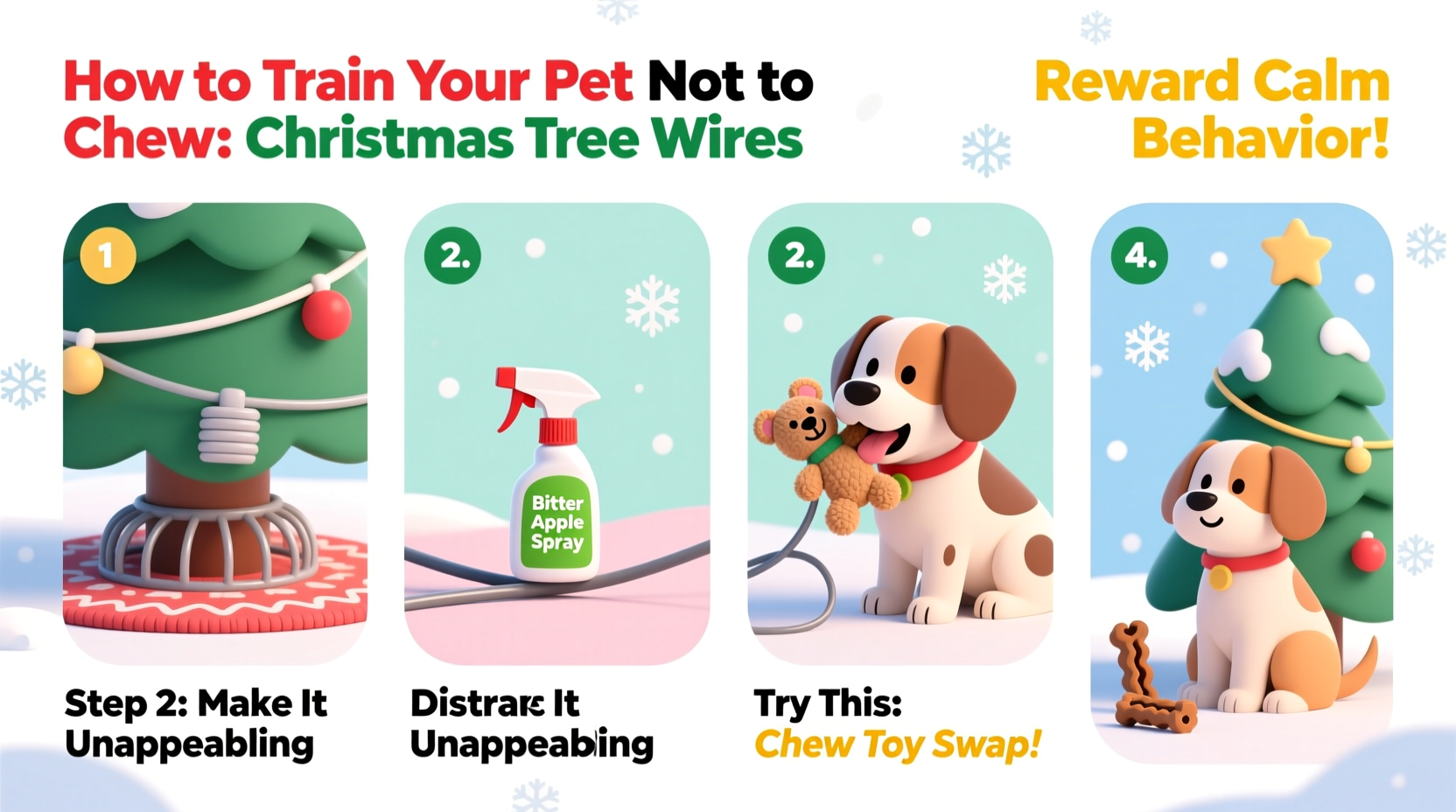
- Secure or Hide the Wires
Start by making the wires inaccessible. Use cord covers, conduit tubing, or cable management sleeves to encase the cords. Run them along baseboards or behind furniture. If possible, plug the tree into an outlet behind the tree stand so cords aren’t visible. - Use Bitter-Tasting Deterrents
Spray pet-safe bitter apple or citrus-based deterrents on and around the wires. Most animals dislike the taste, which creates a negative association. Reapply every few days or after cleaning. - Supervise During Initial Exposure
When you first set up the tree, keep your pet leashed or confined nearby while you're present. Watch for signs of interest—sniffing, pawing, or mouthing. Interrupt gently with a verbal cue like “leave it.” - Teach the “Leave It” Command
This foundational command is invaluable. Start in a low-distraction area:- Hold a treat in your closed hand and let your pet sniff.
- When they stop trying to get it, say “leave it” and reward with a different treat from your other hand.
- Gradually increase difficulty by placing treats on the floor and covering them with your hand when your pet approaches.
- Once mastered, apply it to wires during supervised sessions.
- Redirect to Appropriate Chews
Have acceptable alternatives ready—chew toys, puzzle feeders, or catnip mice. When your pet shows interest in the wires, immediately offer a preferred toy. Reward engagement with praise or treats. - Gradually Increase Freedom
Only allow unsupervised access to the room once your pet consistently ignores the wires over several days. If setbacks occur, return to closer supervision.
Effective Tools and Products
While training is essential, using the right tools enhances success. Below is a comparison of common solutions to deter wire chewing.
| Product Type | Effectiveness | Safety | Best For |
|---|---|---|---|
| Bitter Apple Spray | High (if reapplied) | Pet-safe when labeled | Dogs, cats |
| Rigid Cord Protectors | Very High | Safe if secured | All pets |
| Wireless LED Trees | Maximum | No cords = no risk | High-risk households |
| Ultrasonic Deterrents | Moderate | Harmless but may stress some pets | Large dogs, persistent chewers |
| Aluminum Foil Barriers | Moderate (texture aversion) | Non-toxic | Cats, texture-sensitive pets |
Combining multiple methods—such as covering wires *and* using a deterrent spray—creates layered protection that’s far more effective than any single solution.
Checklist: Pet-Safe Christmas Tree Setup
Before turning on the lights, go through this checklist to minimize risks:
- ✅ Secure all electrical cords with rigid covers or raceways
- ✅ Plug tree lights into a GFCI (ground-fault circuit interrupter) outlet
- ✅ Spray bitter deterrent on visible cords and reapply weekly
- ✅ Position the tree away from furniture pets could jump from
- ✅ Install a baby gate to restrict access when unsupervised
- ✅ Provide alternative enrichment: chew toys, food puzzles, scratching posts
- ✅ Test the “leave it” command near the tree with supervision
- ✅ Keep emergency vet number and ASPCA Poison Control on hand
Real Example: How the Thompsons Protected Their Puppy
The Thompson family brought home a six-month-old Labrador mix named Scout just two weeks before Christmas. Excited to include him in holiday traditions, they set up their tree—but within hours, Scout was tugging at the lights.
Instead of scolding, they consulted their veterinarian, who recommended a three-pronged strategy: concealment, training, and enrichment. They used white plastic cord channels to hide the wires along the wall, applied bitter apple spray, and taught Scout the “leave it” command using high-value chicken treats.
They also placed a stuffed Kong and a plush deer toy near the tree zone. Whenever Scout approached the lights, they said “leave it,” redirected him to a toy, and rewarded disengagement. After five days of consistent practice, Scout stopped showing interest altogether. By Christmas Eve, he could lounge in the same room—unleashed and calm—while the tree sparkled safely nearby.
“It wasn’t about stopping one behavior,” said owner Lisa Thompson. “It was about teaching Scout what *to do* instead. That made all the difference.”
“Prevention is always better than reaction when it comes to pet safety. A chewed cord can lead to cardiac arrest in under a minute. Proactive training saves lives.” — Dr. Alan Pierce, DVM, Veterinary Behavior Specialist
Frequently Asked Questions
Can I use vinegar or lemon juice as a natural deterrent?
Yes, many pets dislike the sour smell and taste of citrus or vinegar. Mix equal parts water and white vinegar or lemon juice and lightly spray on a cloth—then wipe around (not directly on) the wires. Avoid soaking cords, as moisture can damage insulation. Reapply frequently, as the scent fades quickly.
What should I do if my pet gets shocked?
Do not touch your pet while they’re in contact with a live wire. Turn off power at the breaker if possible. Once safe, check for breathing and responsiveness. Look for burns on the mouth or paws. Seek emergency veterinary care immediately—even pets that seem fine can develop heart arrhythmias hours later.
Are wireless or battery-operated trees worth the investment?
For homes with persistent chewers or highly curious pets, yes. Battery-powered LED trees eliminate electrical hazards entirely. While they may have fewer lights or require frequent battery changes, the safety benefit is significant. Some models now offer USB rechargeability and remote control, making them both safe and convenient.
Long-Term Training and Habit Formation
One holiday season of training can lead to lifelong habits—if reinforced properly. Animals learn through repetition and consequence. Every time your pet chooses a toy over a wire and receives a reward, the correct behavior becomes stronger.
To ensure lasting change:
- Continue practicing the “leave it” command beyond the holidays.
- Randomly reinforce good behavior—don’t always reward, but do so often enough to maintain motivation.
- Keep cords managed year-round, especially if you use decorative lighting.
- Revisit training if you introduce new pets or move to a new home.
Consistency across all household members is critical. Everyone should use the same cues and responses. Mixed signals confuse pets and delay learning.
Conclusion
Training your pet not to chew Christmas tree wires isn’t just about protecting your decorations—it’s about safeguarding your companion’s life. With thoughtful preparation, humane training, and consistent reinforcement, you can enjoy a joyful, stress-free holiday season. The key lies in combining physical prevention with behavioral guidance, turning temptation into indifference.
Start today: inspect your setup, gather supplies, and begin teaching “leave it.” Your efforts now will pay off in safety, harmony, and memories free of emergencies. And remember, a well-trained pet isn’t just safer during the holidays—they’re better equipped for life in a human world all year long.




 浙公网安备
33010002000092号
浙公网安备
33010002000092号 浙B2-20120091-4
Comments
No comments yet. Why don't you start the discussion?