
Walking your puppy should be a joyful experience—a chance to bond, explore the world, and practice good behavior. But when your puppy turns into a tiny, enthusiastic sled dog every time you clip on the leash, it quickly becomes frustrating and even dangerous. Pulling isn’t just unpleasant; it can lead to injuries, poor socialization, and long-term behavioral issues. The good news is that with patience, consistency, and the right approach, any puppy can learn to walk calmly by your side.
This guide breaks down the science-backed methods for teaching loose-leash walking from day one. You’ll learn not only what to do but why it works—so you can adapt the training to your puppy’s personality and progress.
Understanding Why Puppies Pull
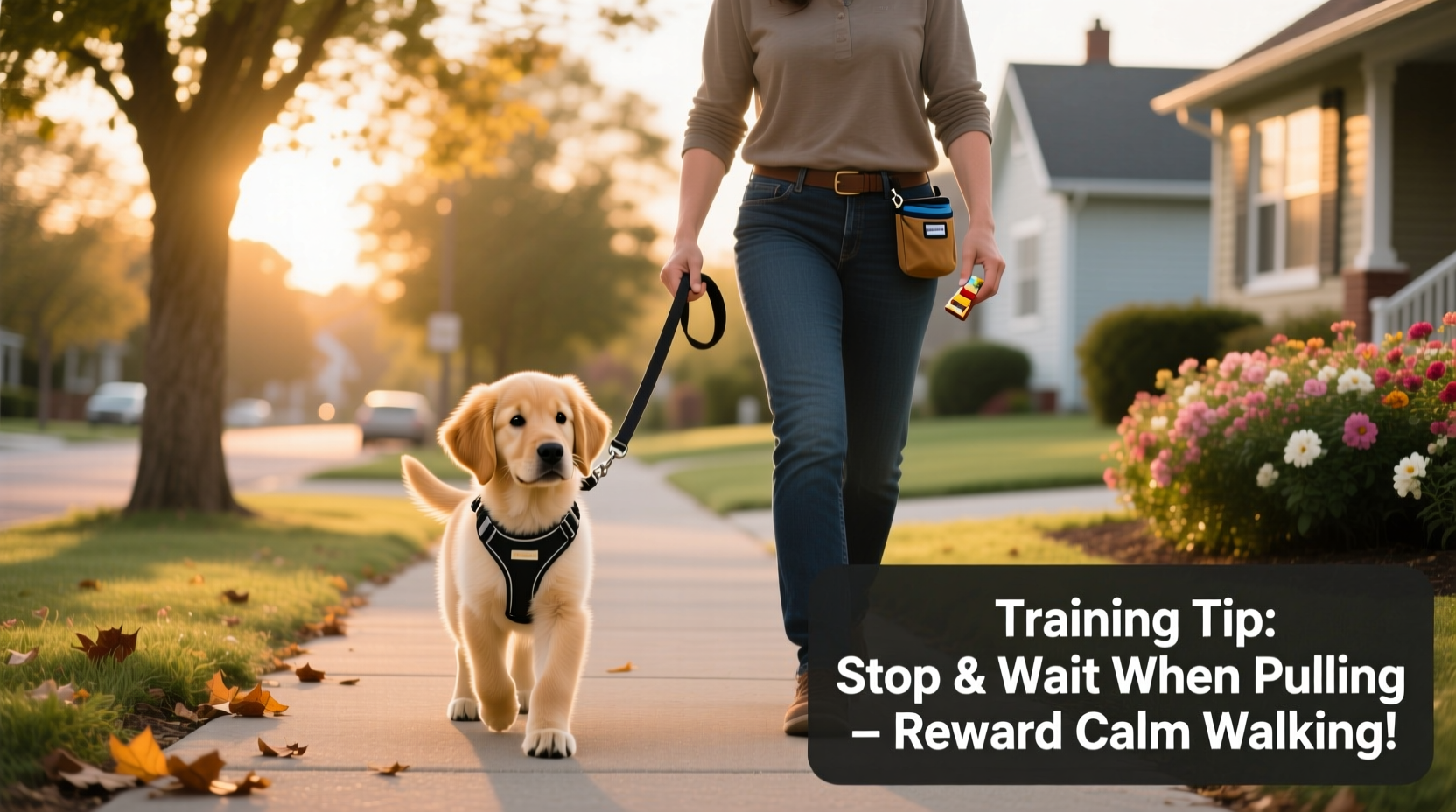
Pulling on the leash is natural for puppies. In their early weeks, they learn through movement and exploration. When something catches their attention—a squirrel, another dog, or a leaf blowing across the sidewalk—they move toward it instinctively. If the leash restricts that motion, they pull harder, believing that tension means they need to push forward.
Unfortunately, many owners unknowingly reinforce this behavior. Leaning into the pull, tugging back, or continuing to walk while the leash is taut teaches the puppy that pulling gets results. Even if the outcome is just moving forward, that’s enough motivation for them to repeat the behavior.
“Dogs don’t pull because they’re stubborn—they pull because they’ve learned that pulling works.” — Dr. Ian Dunbar, Veterinarian and Animal Behaviorist
The key to stopping leash pulling lies in teaching your puppy an alternative: walking beside you earns rewards, while pulling stops progress entirely.
Essential Tools for Success
Before beginning training, ensure you have the right equipment. Not all gear supports loose-leash learning, and some may even hinder progress or cause discomfort.
| Tool | Recommended? | Why / Why Not |
|---|---|---|
| Front-Clip Harness | Yes | Gently redirects the puppy when they turn to pull, reducing strain on the neck and discouraging forward momentum. |
| Head Halter (e.g., Gentle Leader) | Yes (with proper introduction) | Offers more control for strong pullers, but must be introduced slowly to avoid fear. |
| Standard Back-Clip Harness | No | Can encourage pulling due to the “opposition reflex”—dogs pull harder when pressure is applied to the chest. |
| Retractable Leash | No | Teaches inconsistent boundaries and reinforces pulling by allowing freedom when tugged. |
| 6-Foot Nylon or Webbing Leash | Yes | Provides consistent length and control; ideal for training focus and proximity. |
A Step-by-Step Guide to Loose-Leash Walking
Training should begin in a low-distraction environment—like your living room or quiet backyard—and gradually progress to busier areas. Follow this timeline over 2–6 weeks, depending on your puppy’s age, breed, and temperament.
- Step 1: Teach “Name + Treat” Focus (Days 1–3)
Stand still with your puppy on a short leash. Say their name. When they look at you, immediately mark the behavior with a clicker or verbal cue like “Yes!” and give a treat. Repeat 10–15 times per session, 2–3 times daily. This builds attention on you, not the environment.
- Step 2: Reward Proximity (Days 4–7)
Walk slowly in a straight line. Every time your puppy stays within 1–2 feet of your leg (especially on your left side), say “Yes!” and reward. If they surge ahead, stop immediately. Wait for them to notice the halt, then call their name or step back slightly to regain attention. Reward when they return to your side.
- Step 3: Introduce the “Turnaround” Method (Days 8–14)
When your puppy pulls ahead, silently turn and walk in the opposite direction. Do not yank the leash. The goal is to teach that pulling leads away from the desired destination. As soon as they catch up and walk beside you, praise and treat. This method leverages natural curiosity—puppies want to know where you’re going.
- Step 4: Add Verbal Cues (Week 3)
Introduce a cue like “Let’s go” or “This way” just before you start walking or change direction. Pair it consistently with movement and rewards. Over time, your puppy will associate the phrase with walking politely beside you.
- Step 5: Increase Distractions Gradually (Week 4+)
Move training to sidewalks, parks, or quiet streets. Start near home and keep sessions short (5–10 minutes). Use higher-value treats (like boiled chicken or cheese) in distracting environments. If your puppy struggles, return to a calmer space and rebuild confidence.
Common Mistakes That Undermine Training
Even well-meaning owners make errors that prolong the pulling phase. Avoid these pitfalls to maintain steady progress.
- Allowing intermittent pulling: If your puppy learns that sometimes pulling works (e.g., during excitement or fatigue), the behavior becomes harder to extinguish.
- Using punishment or force: Yanking, shouting, or jerking the leash damages trust and can trigger fear or reactivity.
- Expecting perfection too soon: Puppies have short attention spans. Realistic goals—like three steps without pulling—are better than demanding flawless walks from day one.
- Skipping equipment setup: Using the wrong harness or leash can make training significantly harder, especially for strong or excitable breeds.
Real Example: Training Max, the Energetic Labrador
Max, a 12-week-old Labrador Retriever, pulled so hard on walks that his owner, Sarah, often arrived home with sore shoulders. She tried retractable leashes and stern commands, but Max only pulled more.
After switching to a front-clip harness and starting indoor training, Sarah began rewarding Max for looking at her or staying close. At first, he only managed two steps before lunging toward the door. But by using the turnaround method and ending each session with a game of tug after a good walk, Max began to anticipate turns and check in with her.
Within four weeks, Max walked calmly past squirrels and other dogs. Sarah now enjoys morning strolls instead of wrestling matches—all because she focused on teaching what to do, not just correcting what not to do.
“Rewards shape behavior faster than corrections ever can. A dog who learns that good things happen when they stay close will choose to stay close.” — Victoria Stilwell, Dog Trainer and TV Host
Checklist: Your 7-Day Leash Training Plan
Use this checklist to stay consistent and track progress:
- ☐ Choose a front-clip harness and 6-foot leash
- ☐ Gather high-value treats (soft, pea-sized)
- ☐ Practice name recognition indoors (5 min, 3x/day)
- ☐ Train loose-leash walking in the house or yard (5–10 min sessions)
- ☐ Use the “stop and wait” technique when pulling occurs
- ☐ Implement the “turnaround” method consistently
- ☐ End each session with a reward and praise
- ☐ Gradually increase distractions weekly
- ☐ Keep training logs: note successes and setbacks
- ☐ Stay patient—celebrate small improvements
Frequently Asked Questions
How long does it take to stop a puppy from pulling?
Most puppies show improvement within 2–3 weeks of consistent daily training. Full reliability in all environments may take 2–6 months. Younger puppies (under 16 weeks) often learn faster due to high receptivity to training.
Should I use a clicker for leash training?
A clicker can be highly effective for marking precise moments of good behavior, such as when your puppy glances at you or aligns beside you. If used, pair it with a treat within half a second for best results. However, a verbal marker like “Yes!” works just as well if you’re consistent.
What if my puppy refuses to walk at all?
If your puppy freezes or resists walking, they may feel scared or overwhelmed. Back up to an earlier training stage—practice indoors or in a familiar area. Use treats to lure them forward and never force movement. Some puppies need more time to adjust to the sensation of a collar and leash.
Building a Lifelong Habit
Loose-leash walking isn’t a one-time lesson—it’s a skill that deepens with practice. Once your puppy masters the basics, continue reinforcing good behavior on every walk. Mix in occasional treats, praise, and play to keep engagement high.
As your dog matures, you can phase out constant treats and transition to intermittent rewards, which are actually more effective for maintaining behavior long-term. Think of it like a slot machine: your dog keeps playing because they never know when the next win will come.
Also, consider enrolling in a positive-reinforcement puppy class. Group settings provide real-world distractions and professional guidance, accelerating progress and boosting confidence for both you and your pup.
Conclusion
Teaching your puppy to walk on a leash without pulling is one of the most valuable skills you can instill. It protects their physical health, strengthens your bond, and transforms stressful outings into peaceful, enjoyable experiences. Success doesn’t require special talent—just consistency, the right tools, and a willingness to see the world from your puppy’s perspective.




 浙公网安备
33010002000092号
浙公网安备
33010002000092号 浙B2-20120091-4
Comments
No comments yet. Why don't you start the discussion?