
A tabletop Christmas tree is often seen as a modest alternative to the towering floor model. Compact, convenient, and space-saving—yes—but it doesn’t have to be underwhelming. With thoughtful styling, especially through the strategic use of mirrored trays and reflective decor, even the most unassuming artificial tree can become the centerpiece of your holiday display. The secret lies in amplifying light, creating depth, and drawing the eye upward and outward, all while maintaining balance and elegance.
Reflective surfaces are powerful tools in interior design. They catch ambient light, bounce it around a room, and visually expand small spaces. When applied to holiday décor, particularly around a tabletop tree, they elevate simplicity into sophistication. This guide walks you through how to harness that power deliberately and tastefully, turning your miniature tree into a luminous focal point that commands attention without overwhelming your space.
Why Mirrored Trays Are the Secret Weapon for Tabletop Trees
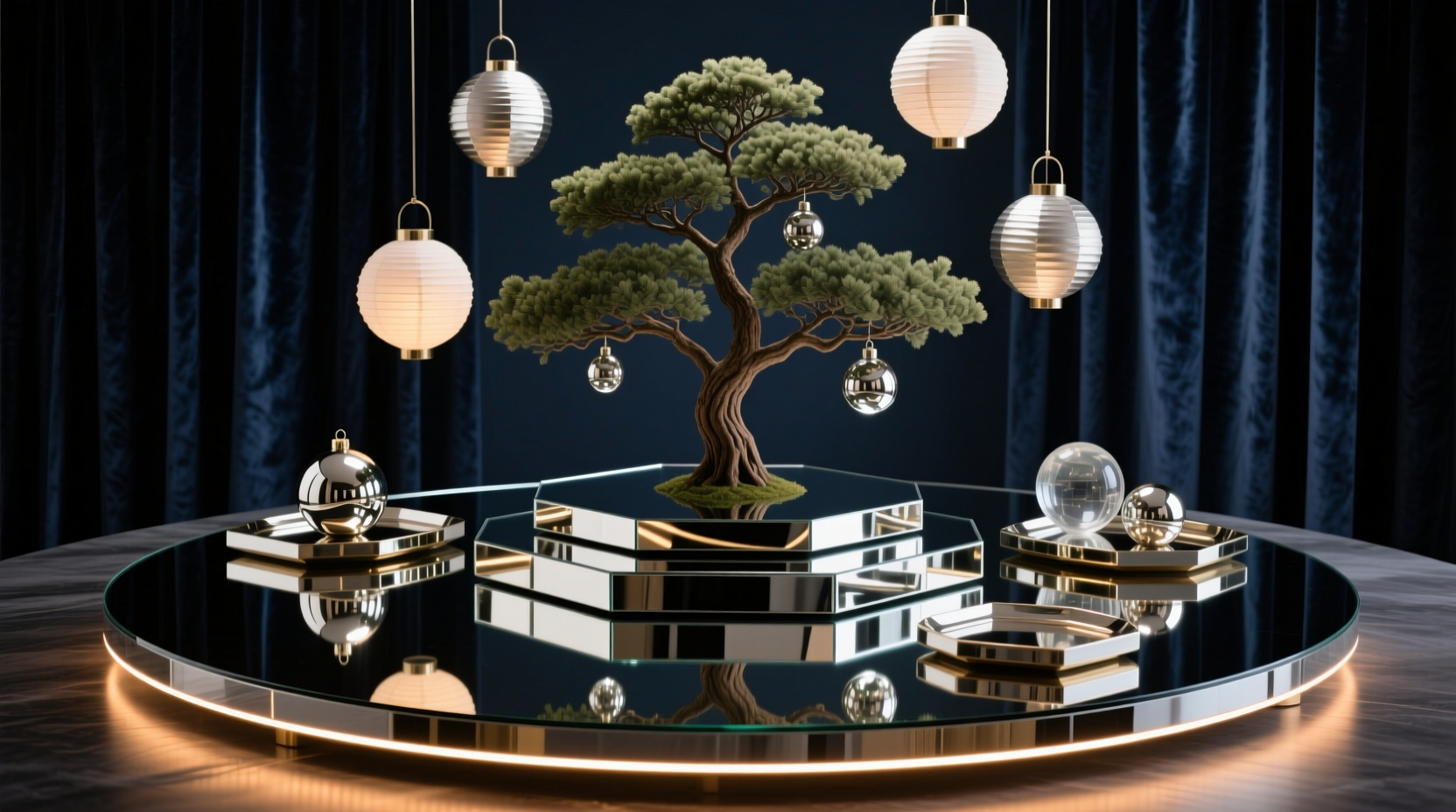
A mirrored tray does more than just hold your tree—it transforms its entire presence. Placing a tree on a flat mirror or glass surface with silver backing creates an instant illusion of doubled volume. The reflection beneath mimics roots extending downward, giving the impression of greater height and fullness. This optical trick works especially well in dimly lit rooms or apartments with limited natural light, where sparkle and shine are needed most.
Beyond illusion, a mirrored tray anchors the display. It provides a clean, polished base that separates the tree from surrounding clutter—books, remotes, coffee cups—while simultaneously elevating the aesthetic. Unlike wooden or fabric-covered stands, which absorb light, mirrored surfaces reflect it, making ornaments, lights, and tinsel appear brighter and more dynamic.
Not all mirrored trays are created equal. Tempered glass with a silvered backing offers superior clarity and durability compared to plastic or acrylic versions, which may yellow over time or scratch easily. Round trays work best for traditional trees, while rectangular or oval ones suit modern, minimalist designs. Consider edge detailing—a beveled rim adds dimension and catches light at multiple angles, enhancing the overall shimmer.
Design Principles for Using Reflective Decor Effectively
While a mirrored tray sets the foundation, layering in additional reflective elements multiplies the visual impact. However, overuse can lead to chaos—glitter fatigue, if you will. The goal is curated brilliance, not sensory overload. To achieve this, follow three core principles: balance, hierarchy, and cohesion.
Balance means distributing shiny items evenly throughout the tree. Cluster too many metallic balls on one side, and the eye is pulled unnaturally, breaking symmetry. Instead, intersperse reflective ornaments among matte or textured ones—think velvet bows, wood slices, or ceramic figures—to create rhythm and contrast.
Hierarchy ensures that the most striking pieces stand out. Reserve your largest mirrored baubles or faceted crystal drops for mid-to-upper levels of the tree, where they’ll catch both overhead lighting and passing glances. Smaller, subtler reflectives—like silver-dusted pinecones or foil-wrapped picks—can fill gaps without dominating.
Cohesion ties everything together through color and theme. A monochromatic silver-and-white scheme maximizes reflectivity and feels luxe. For warmth, pair champagne-gold mirrors with cream ornaments and soft ivory lights. Avoid mixing warm and cool metallics (e.g., gold and silver) unless intentionally done for eclectic effect—and even then, limit the combination to no more than 70/30 dominance.
“Reflection isn’t just about shine—it’s about depth. A well-placed mirror doubles your décor effort with zero added bulk.” — Lena Torres, Interior Stylist & Holiday Design Consultant
Step-by-Step Guide: Building Your Reflective Display
Follow this sequence to build a cohesive, eye-catching arrangement that turns heads and sparks conversation.
- Select your tree and location. Choose a full-bodied artificial tree between 24” and 36” tall. Place it in a spot with access to ambient light—near a window, lamp, or chandelier—for optimal reflection.
- Choose a mirrored tray. Opt for tempered glass with a silvered backing. Size should extend at least 2–3 inches beyond the tree’s widest branch at the base.
- Add a hidden riser (optional). For extra drama, place a low, discreet box or cake stand under the tray to elevate the entire display. Cover with silver fabric or foil paper to maintain continuity.
- String lights first. Use warm white or clear mini lights. Begin at the trunk and spiral outward, ensuring even distribution. Test them before adding other decor.
- Incorporate reflective ornaments. Start with larger pieces near the top and center, then fill in with smaller ones. Alternate shapes—balls, stars, teardrops—for visual interest.
- Add layered ground reflections. Surround the base of the tray with loose mirrored tiles, silver beads, or crumpled foil balls to extend the reflective field beyond the tray’s edge.
- Top with a statement finial. A mirrored star, crystal angel, or geometric silver topper completes the look and draws the eye upward.
- Enhance with surrounding mirrors. Position a wall mirror or decorative standing mirror nearby to reflect the tree from the side, further amplifying its presence.
Do’s and Don’ts: Navigating Common Pitfalls
To refine your approach, consult this practical comparison table outlining best practices versus common missteps.
| Do | Don’t |
|---|---|
| Use a single dominant reflective tone (e.g., all silver or all gold) | Mix multiple metallic finishes haphazardly |
| Layer reflections at different heights (tree, tray, floor) | Rely solely on the tree’s ornaments for shine |
| Clean the mirrored tray weekly to maintain clarity | Allow dust or fingerprints to dull the surface |
| Use LED lights to avoid heat damage to mirrors | Place hot incandescent bulbs directly against reflective surfaces |
| Anchor loose reflective fillers with clear adhesive dots | Let small pieces scatter across the table, creating clutter |
Real Example: From Dorm Room Tree to Holiday Showstopper
Sophie, a graduate student in Chicago, had a 28-inch pre-lit tree she used for three years with minimal decoration—just a few colored balls and a red ribbon. Her studio apartment lacked storage and natural light, so she assumed “small tree = small impact.” Last November, inspired by a design blog, she invested in a 16-inch round mirrored tray and a set of mercury-glass ornaments in varying sizes.
She kept her existing warm-white lights but rewired them to pulse slowly, creating gentle movement. Around the base of the tray, she arranged silver-flecked river rocks purchased from a craft store, securing them with double-sided tape. She added a vintage-style mirrored star topper with dangling prisms that caught the morning sun.
The transformation stunned her friends during a holiday gathering. “I didn’t recognize it,” one said. “It looked like it belonged in a boutique hotel lobby.” Sophie noted that even with fewer total decorations, the tree felt richer and more intentional. The mirror made it appear nearly twice as large, and the reflective elements ensured it remained visible—and glowing—even when viewed from her kitchenette across the room.
Checklist: Creating Your Reflective Tabletop Masterpiece
- ☐ Select a full, well-proportioned tabletop tree (24–36 inches)
- ☐ Acquire a high-quality mirrored tray (tempered glass preferred)
- ☐ Use warm-white or clear LED string lights
- ☐ Choose a cohesive color scheme (e.g., silver/white, gold/cream)
- ☐ Purchase a mix of reflective ornaments in various sizes and shapes
- ☐ Add a statement topper (mirrored star, crystal finial, etc.)
- ☐ Layer reflective elements at the base (beads, tiles, foil)
- ☐ Position near a light source or secondary mirror for added reflection
- ☐ Clean and polish all reflective surfaces weekly
- ☐ Step back and view from multiple angles to assess balance
Frequently Asked Questions
Can I use a mirrored tray with a real tabletop tree?
Yes, but with caution. Real trees release sap and moisture, which can damage mirrored surfaces over time. Place a waterproof barrier—such as a clear plastic sheet or glass plate—between the tree stand and the tray. Monitor daily for leaks and wipe immediately if dampness appears.
Are there alternatives to mirrored trays for achieving similar effects?
Absolutely. Shallow silver platters, lucite bases with metallic inlays, or even a large decorative mirror tile can serve the same purpose. Some designers use black glass trays with chrome edging for a dramatic, modern twist—the dark background makes silver ornaments pop even more.
How do I prevent reflective decor from looking cheap or garish?
Focus on quality over quantity. Invest in a few well-made mirrored ornaments rather than filling the tree with inexpensive glitter balls. Combine reflectives with tactile, non-shiny elements—like burlap bows, dried citrus slices, or cinnamon sticks—to add warmth and texture. Editing is key: step away, return later, and remove anything that feels excessive.
Conclusion: Let Light Do the Work
A tabletop tree doesn’t need scale to make a statement. What it needs is intention. By incorporating a mirrored tray and thoughtfully layering reflective decor, you harness one of nature’s most captivating forces—light—to create depth, drama, and delight. This approach is not about extravagance; it’s about amplification. It proves that with smart design choices, even the smallest traditions can radiate the biggest joy.
This holiday season, don’t settle for “cute” or “cozy” when you can achieve “captivating.” Reimagine your tabletop tree not as a compromise, but as a canvas for creativity. Let every glint and gleam tell a story of care, elegance, and festive spirit.




 浙公网安备
33010002000092号
浙公网安备
33010002000092号 浙B2-20120091-4
Comments
No comments yet. Why don't you start the discussion?