
Who you believe yourself to be shapes every decision, habit, and outcome in your life. Identity isn't fixed—it's fluid, malleable, and constantly shaped by your thoughts, behaviors, and environment. Transforming your identity doesn't require a dramatic event or overnight change; it begins with small, deliberate choices that compound over time. This guide outlines actionable strategies to help you consciously evolve into the person you want to become.
1. Understand the Role of Identity in Behavior
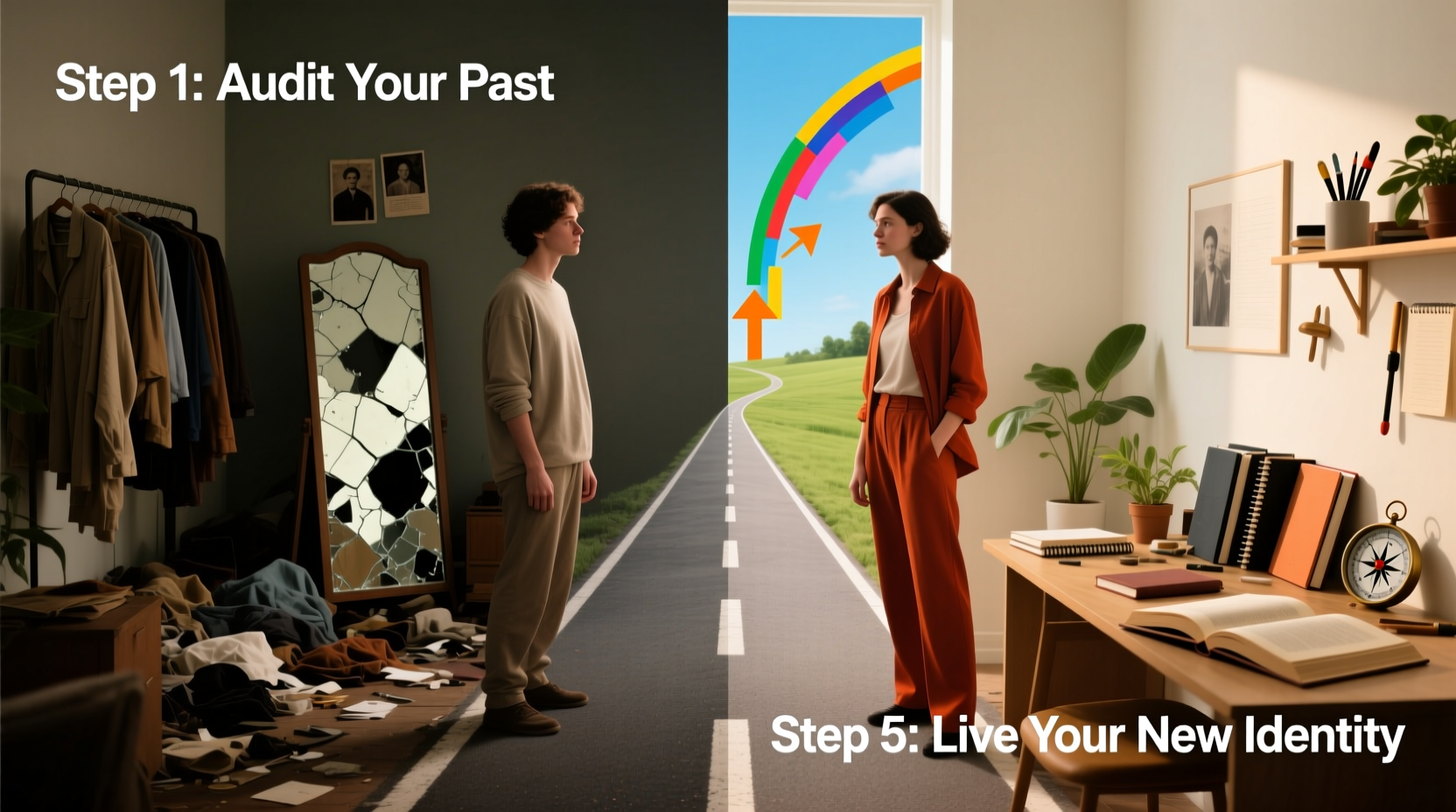
Most people try to change their lives by focusing on goals: lose weight, earn more, build better relationships. But lasting transformation starts not with what you do, but with who you believe you are. When your actions align with a desired self-image—such as \"I am someone who prioritizes health\" rather than \"I'm trying to lose weight\"—behavior becomes automatic and sustainable.
Psychologist Dr. Carol Dweck’s research on mindset shows that individuals who view traits as malleable (growth mindset) are more likely to embrace challenges and persist through setbacks. Your identity is not a static label; it's a story you tell yourself daily through your choices.
“We don’t rise to the level of our goals. We fall to the level of our systems—and our self-perception.” — James Clear, author of *Atomic Habits*
2. Clarify Your Desired Identity
Before you can become someone new, you must define who that person is. Ask yourself: Who do I want to be? What values guide this version of me? How would they think, speak, and act under pressure?
Write down three core attributes of your ideal self—for example: disciplined, compassionate, curious. Then, identify specific behaviors associated with each trait:
- Disciplined: Wakes up at 6 a.m., plans the day the night before, avoids distractions during work hours.
- Compassionate: Listens without judgment, checks in on friends, volunteers monthly.
- Curious: Reads daily, asks questions in conversations, tries new experiences regularly.
This exercise creates a blueprint for your transformation. You’re not waiting to feel like that person—you start acting like them now.
Mini Case Study: From Procrastinator to Producer
Sarah, a freelance designer, always saw herself as creative but disorganized. Deadlines loomed, stress spiked, and she missed opportunities. After reading about identity-based habits, she reframed her self-concept: “I am an organized professional who delivers quality work early.” She began scheduling tasks the night before, using time-blocking, and celebrating small completions. Within six weeks, clients noticed her reliability. The shift wasn’t just in behavior—it was in identity. She no longer fought against procrastination because that version of herself didn’t exist anymore.
3. Build New Identity Through Small Actions
You don’t need massive effort to change who you are. You need consistency. Each time you act in alignment with your desired identity, you reinforce it neurologically. Over time, these repetitions wire new beliefs into your subconscious.
For example, if you want to become “someone who is confident,” don’t wait until you feel bold to speak up. Raise your hand in a meeting even when nervous. Introduce yourself to a stranger. Practice power poses before challenging situations. These micro-actions signal to your brain: This is who I am now.
| Desired Identity | Supporting Micro-Habits | Frequency |
|---|---|---|
| I am financially responsible | Track daily expenses, automate savings | Daily / Weekly |
| I am physically strong | Do 5 push-ups upon waking, walk 10 minutes after meals | Daily |
| I am a lifelong learner | Read 10 pages, listen to a podcast during commute | Daily |
| I am emotionally resilient | Journal one thing I handled well, practice deep breathing | Daily |
4. Rewire Your Environment and Inputs
Your surroundings shape your identity more than willpower ever will. If you want to become a writer, surround yourself with books, notebooks, and writers—not endless social media feeds. Choose environments that make your desired identity easier to live.
Consider the people you spend time with. As Jim Rohn famously said, “You are the average of the five people you spend the most time with.” Are they growth-oriented? Supportive? Ambitious? If not, gradually expand your circle to include those who reflect the version of you you're becoming.
Likewise, audit your inputs: What podcasts do you listen to? Which social media accounts do you follow? Replace passive consumption with content that inspires action and clarity.
5. Track Progress and Reinforce New Beliefs
Transformation requires feedback. Without reflection, it’s easy to slip back into old patterns. Use a simple tracking system—like a habit tracker or weekly review—to assess how consistently you’re living as your new self.
Ask yourself every Sunday:
- When did I act like the person I want to become?
- When did I fall back into old identity patterns?
- What triggered the setback, and how can I adjust?
Each acknowledgment strengthens your commitment. Celebrate evidence of your evolving identity, no matter how small.
Step-by-Step Guide: 90-Day Identity Reset
- Week 1–2: Define your desired identity and write it down. Identify 3 key traits and supporting behaviors.
- Week 3–4: Choose 1–2 micro-habits per trait. Start practicing them daily.
- Month 2: Optimize your environment—remove distractions, add cues for good habits, connect with aligned communities.
- Month 3: Reflect weekly. Adjust habits based on what’s working. Share your journey with one trusted person for accountability.
Checklist: Daily Identity Alignment
- ✅ Start the day with an affirmation tied to your new identity (e.g., “I am focused and calm”)
- ✅ Perform at least one action that reflects your desired self
- ✅ Avoid one behavior that belongs to your old identity
- ✅ End the day reviewing: “Did my actions match who I want to be?”
FAQ
How long does it take to transform your identity?
There’s no fixed timeline, but meaningful shifts typically begin within 30–60 days of consistent action. Real transformation is gradual and ongoing. Focus on progress, not perfection.
What if I don’t feel like the new version of myself?
Feelings follow action. You don’t need to “feel” confident to act confidently. Every time you behave in alignment with your desired identity, you train your brain to accept it as truth. Trust the process.
Can past mistakes prevent me from changing who I am?
No. Your past does not define your future. Identity transformation is about direction, not perfection. Acknowledge the past, learn from it, then choose differently moving forward.
Conclusion: Become Who You Are Meant to Be
You are not stuck. You are not limited by your history, job title, or current circumstances. Every thought, choice, and action is a vote for the person you’re becoming. Transformation begins not with grand declarations, but with quiet, consistent decisions to show up differently—day after day.
The new version of you isn’t waiting for permission. It’s being built right now, in the small moments most people overlook. Decide who you want to be. Act as if it’s already true. And keep going, even when doubt creeps in.




 浙公网安备
33010002000092号
浙公网安备
33010002000092号 浙B2-20120091-4
Comments
No comments yet. Why don't you start the discussion?