
Switching to cold showers is often praised for its benefits—increased alertness, improved circulation, enhanced mood, and even better skin and hair health. But for most people, jumping straight into a frigid stream of water can be jarring, uncomfortable, or even dangerous if done improperly. The key isn’t willpower; it’s strategy. A thoughtful, gradual approach allows your body and mind to adapt without triggering stress responses that could derail your efforts.
This guide outlines a science-backed, sustainable method for transitioning to cold showers. Whether you're aiming for daily cold exposure for mental resilience, physical recovery, or general wellness, the process should support your nervous system—not overwhelm it.
Why Cold Showers Are Worth the Effort
Cold water immersion has been studied for decades, with research linking it to reduced muscle soreness, increased dopamine levels, and improved immune function. A 2008 study published in Medical Hypotheses found that regular cold showers significantly reduced self-reported sickness absence from work. Other studies suggest cold exposure may help regulate mood by stimulating the sympathetic nervous system in a controlled way.
But despite these benefits, many people fail at adopting cold showers because they start too aggressively. The shock of sudden cold triggers a fight-or-flight response: rapid breathing, elevated heart rate, and an instinct to escape. This negative association makes consistency nearly impossible.
The goal isn't to endure pain—it's to condition your body to respond calmly to cold stress, turning discomfort into empowerment.
A Gradual Transition Timeline (Step-by-Step Guide)
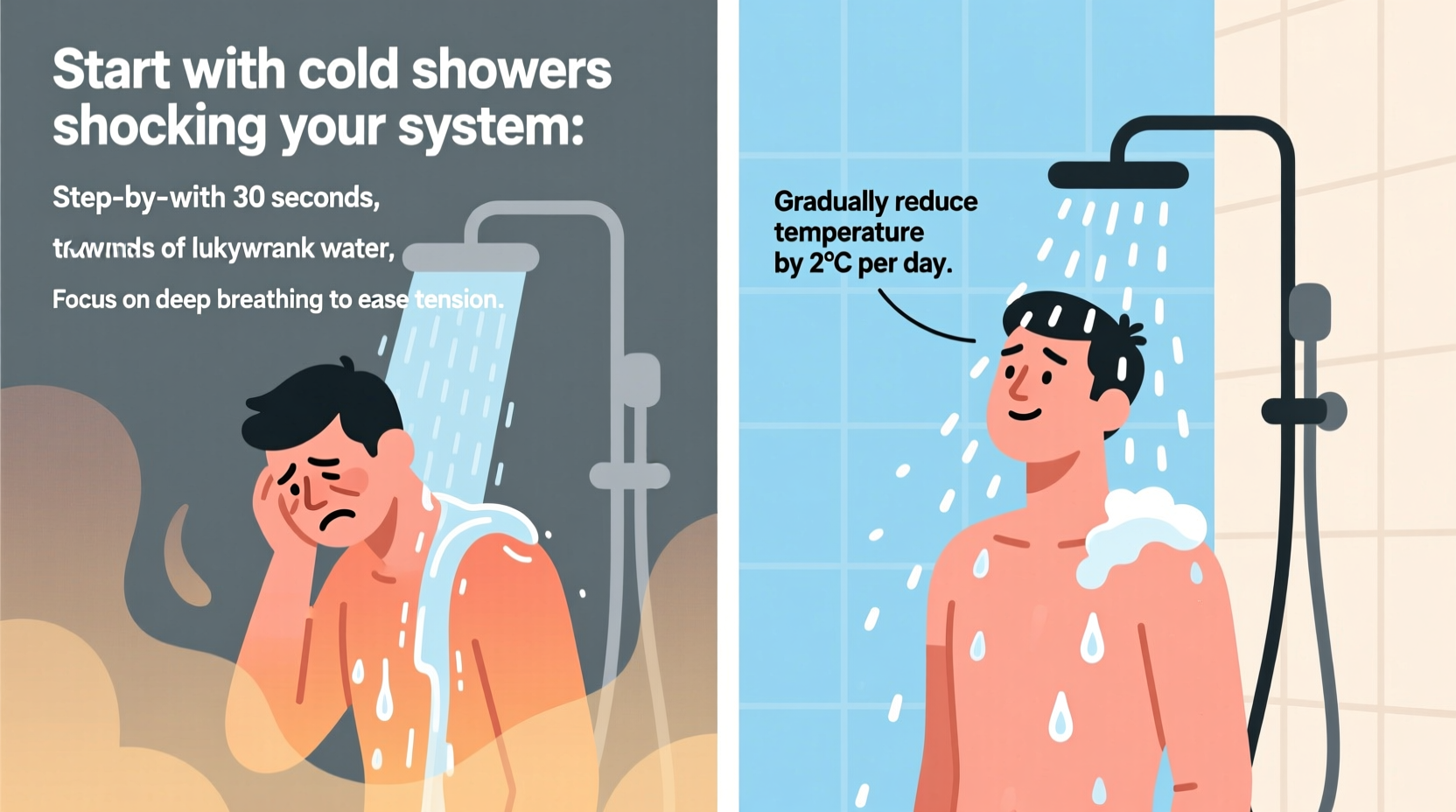
Rushing into cold showers increases the risk of hyperventilation, dizziness, or even cardiac strain in susceptible individuals. Instead, follow this six-phase timeline over 3–6 weeks to build tolerance naturally.
- Week 1: End with Cool – Not Cold
Begin each shower with warm water as usual. In the final 30 seconds, lower the temperature to cool (not icy). Aim for a sensation of mild invigoration, not gasping. Focus on steady breathing. - Week 2: Extend the Cool Phase
Increase the cool-down period to 1 minute. Practice diaphragmatic breathing: inhale deeply through the nose for 4 counts, hold for 2, exhale slowly for 6. This calms the vagus nerve and reduces panic response. - Week 3: Introduce Cold Rinses
After washing, turn the water fully cold for 15 seconds. Target one area first—your legs or back—to minimize full-body shock. Step out quickly if overwhelmed. - Week 4: Build Duration Gradually
Extend cold exposure to 30–60 seconds. Stay present: notice sensations without judgment. If shivering begins, that’s normal—but don’t push beyond mild discomfort. - Week 5: Full Cold Exposure (Partial Body)
Wash under warm water, then switch to cold only when rinsing off soap. Keep hands and feet under the stream last, as extremities are most sensitive. - Week 6: Full Cold Shower
Start the entire shower with cold water. Begin with 1–2 minutes and increase weekly. Many find 2–3 minutes optimal for benefits without excessive stress.
Best Practices and Common Mistakes
How you approach cold showers matters as much as the act itself. Below is a comparison of recommended strategies versus pitfalls to avoid.
| Do’s | Don’ts |
|---|---|
| Start at the end of your shower — Warm up first, then introduce cold gradually. | Jump straight into freezing water — This shocks the system and may spike blood pressure. |
| Breathe deeply and slowly — Activate the parasympathetic nervous system to stay calm. | Hold your breath or gasp — This amplifies stress signals and increases anxiety. |
| Focus on consistency, not duration — 30 seconds daily beats 3 minutes once a week. | Force yourself past severe discomfort — Pain teaches avoidance, not resilience. |
| Use cold exposure strategically — Mornings boost alertness; post-workout aids recovery. | Take cold showers when already cold or fatigued — Risk of overstimulation or illness increases. |
Expert Insight: What Science Says About Adaptation
Dr. Craig Heller, a biology professor at Stanford University and co-developer of thermal therapy for performance enhancement, emphasizes the importance of adaptation:
“Cold exposure can enhance metabolic rate and mental clarity, but only if introduced progressively. The body adapts best when stressors are repeated, predictable, and within tolerable limits.” — Dr. Craig Heller, Thermal Physiology Researcher
Heller’s work shows that brown adipose tissue (BAT), which generates heat in response to cold, becomes more active with regular exposure. However, this adaptation takes time—typically several weeks of consistent practice. Rushing the process doesn’t accelerate results; it delays them by increasing dropout rates.
Real-Life Example: Sarah’s 30-Day Transition
Sarah, a 34-year-old software developer from Portland, struggled with afternoon fatigue and low motivation. Inspired by podcasts on biohacking, she decided to try cold showers—but gave up after two attempts due to shaking and shortness of breath.
She restarted using a gradual method: ending her usual 10-minute warm shower with 20 seconds of cool water. Each week, she added 10 seconds and practiced box breathing. By day 21, she was comfortable with 90 seconds of cold water at the end. On day 30, she completed her first full 2-minute cold shower.
“It wasn’t about being tough,” she said. “It was about showing up every day, even when I didn’t feel like it. Now I look forward to that morning jolt. My energy feels steadier throughout the day.”
Sarah’s experience reflects a common truth: success lies not in intensity, but in sustainability.
Essential Tips for Comfort and Safety
Transitioning to cold showers isn’t just physical—it’s psychological. These actionable tips help maintain momentum and reduce resistance.
- Shower at the same time daily—morning works best for most people.
- Avoid cold showers within an hour of bedtime if they disrupt sleep.
- People with cardiovascular conditions should consult a physician before starting.
- Listen to your body: occasional skipped days are fine. Perfection isn’t required.
Checklist: Your Cold Shower Transition Plan
Use this checklist to track progress and ensure a smooth transition:
- ✅ Choose a consistent time of day for your shower
- ✅ Begin with ending warm showers with 30 seconds of cool water
- ✅ Practice slow, deep breathing during cold exposure
- ✅ Increase cold duration by 10–15 seconds per week
- ✅ Monitor how you feel—alertness, mood, recovery—not just duration
- ✅ Celebrate small wins (e.g., completing five consecutive days)
- ✅ Adjust based on feedback—too much shivering? Pause and reassess
- ✅ Aim for 2–3 minutes of full cold exposure by week 6
Frequently Asked Questions
Can cold showers make you sick?
No, cold showers do not cause illness. Colds and flu are caused by viruses, not temperature. In fact, some studies suggest regular cold exposure may improve immune response. However, if you’re already ill or running a fever, avoid cold showers as they may add stress to your system.
What if I start shivering uncontrollably?
Mild shivering is normal and indicates your body is generating heat. However, violent or prolonged shivering means you’ve exceeded your current tolerance. Shorten exposure time and return to a gentler phase. Over time, shivering decreases as your body adapts.
Do I need to take a cold shower every day?
Daily exposure yields the best adaptation, but consistency matters more than frequency. Three to five times per week can still produce noticeable benefits. The key is regularity, not perfection.
Conclusion: Embrace the Process, Not Just the Outcome
Transitioning to cold showers isn’t about proving toughness—it’s about cultivating resilience through intelligent habit design. When approached with patience and structure, cold exposure becomes less of a punishment and more of a ritual: a daily reset that sharpens focus, boosts energy, and strengthens mental discipline.
The most successful practitioners aren’t those who suffer the coldest temperatures, but those who show up consistently, respect their limits, and trust the process. Whether you start with 10 seconds or a full minute, every step forward conditions not just your body, but your mindset.




 浙公网安备
33010002000092号
浙公网安备
33010002000092号 浙B2-20120091-4
Comments
No comments yet. Why don't you start the discussion?