
As the golden light of late summer fades into the crisp air of autumn, your skin begins to send subtle signals. The humidity drops, winds grow cooler, and that post-sun glow may give way to tightness, flakiness, or dullness. These changes aren’t just environmental—they’re biological. Your skin’s needs shift as dramatically as the leaves on the trees. Continuing with a lightweight gel moisturizer and heavy-duty sunscreen designed for July won’t serve you in October. Transitioning your skincare routine naturally—from ingredients to application—ensures resilience, radiance, and comfort through the changing season.
Natural skincare during this shift isn’t about adding ten new products. It’s about mindful adaptation: listening to your skin, simplifying where possible, and choosing clean, nourishing formulations that support your skin’s barrier without synthetic overload. This guide walks you through the science-backed, holistic approach to moving from sun-drenched summer regimens to grounded, restorative fall routines—all while honoring your skin’s natural rhythm.
Understand Why Skin Changes with the Seasons
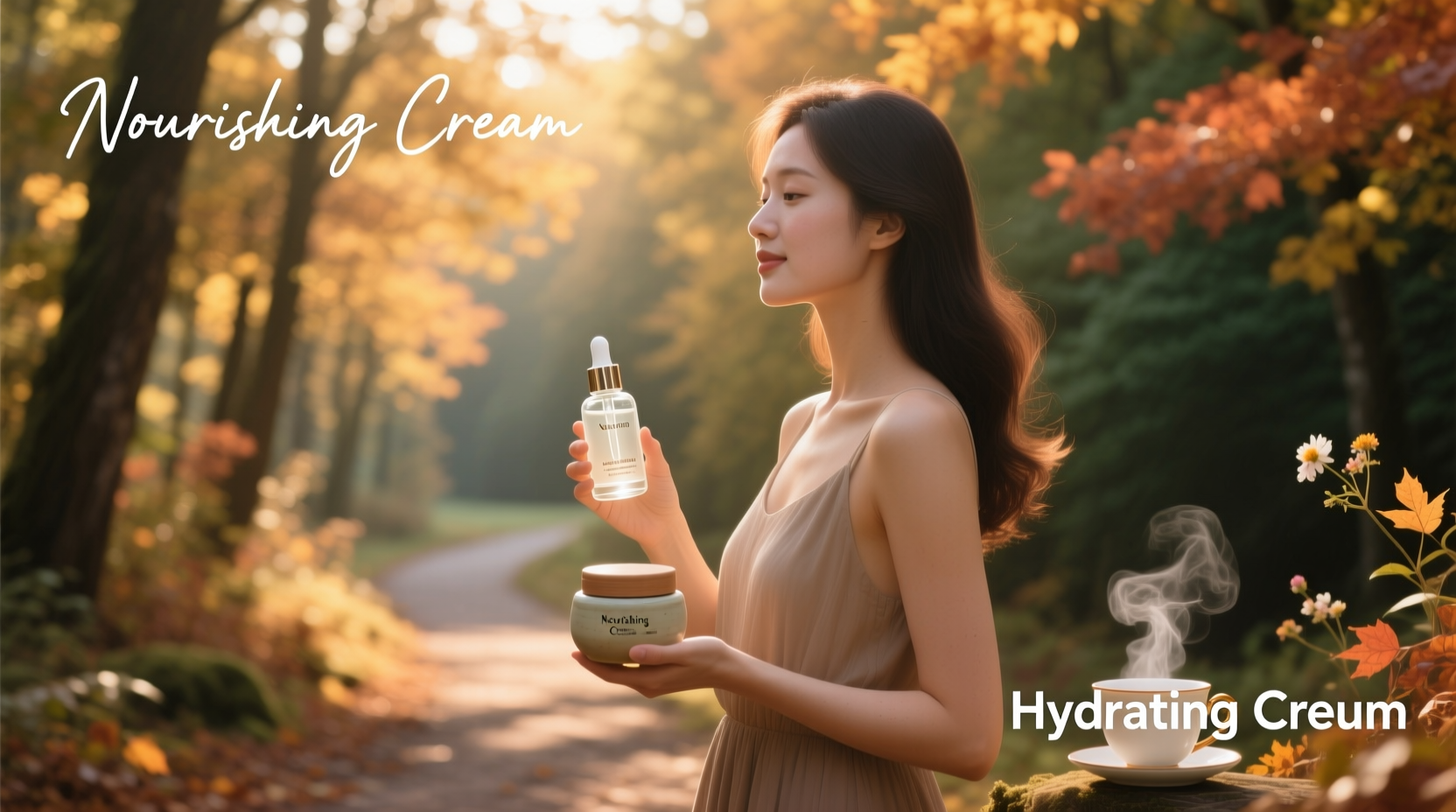
Your skin is an intelligent organ that responds dynamically to external conditions. During summer, high temperatures and UV exposure increase sebum production, leading many to use oil-free, mattifying products. Humidity helps retain moisture, so lightweight hydrators often suffice. But when fall arrives, two major shifts occur: decreased humidity and lower temperatures. Indoor heating further strips moisture from the air, accelerating transepidermal water loss (TEWL)—the process by which your skin loses hydration to the environment.
Dermatologists note that the stratum corneum—the outermost layer of the skin—can lose up to 30% more moisture in autumn than in summer if not properly protected. This leads to compromised barrier function, increased sensitivity, and a higher risk of irritation. As one clinical esthetician explains:
“Seasonal transitions are among the most disruptive times for skin. The cumulative sun damage from summer can surface now, and the lack of proactive adjustment sets people up for dryness, redness, and breakouts.” — Dr. Lena Torres, Board-Certified Dermatologist
This makes fall the ideal time to rebuild, restore, and recalibrate—not overhaul, but evolve.
Key Skincare Shifts: From Summer to Fall
The goal isn’t to abandon your summer routine entirely but to modify it intelligently. Here are five foundational changes to make as temperatures drop:
- Switch from water-based to lipid-rich moisturizers: Replace gels and lotions with creams containing ceramides, squalane, shea butter, or jojoba oil.
- Reduce exfoliation frequency: Lower your chemical or physical exfoliant use from 2–3 times weekly to once every 7–10 days to prevent over-stripping.
- Incorporate barrier-repair ingredients: Add products with niacinamide, colloidal oatmeal, or panthenol to strengthen the skin’s defense against dry air.
- Adjust SPF usage: Continue daily sunscreen use, but consider switching to a moisturizer with built-in SPF rather than layering multiple products.
- Hydrate from within: Increase water intake and consume omega-3-rich foods like flaxseeds, walnuts, and fatty fish to support skin elasticity.
A Step-by-Step Guide to Transitioning Your Routine
Transitioning doesn’t happen overnight. A gradual, phased approach prevents irritation and allows your skin to adapt smoothly. Follow this four-week timeline to ease into your fall regimen naturally.
- Week 1: Assess & Simplify
Take inventory of your current products. Remove any that feel drying or cause tightness. Focus on gentle cleansing and hydration. Begin tracking how your skin feels morning and night—note texture, redness, oiliness. - Week 2: Swap Cleansers & Toners
Replace foaming or clarifying cleansers with milky, cream-based, or balm formulas that preserve natural oils. Switch to alcohol-free toners with humectants like glycerin or hyaluronic acid. - Week 3: Upgrade Moisturization
Introduce a richer moisturizer in the evening. Apply it to damp skin to lock in hydration. If using actives like retinoids, reduce frequency to twice a week to avoid barrier disruption. - Week 4: Reinforce Protection & Repair
Add a facial oil or overnight mask once or twice weekly. Continue daily SPF, even on cloudy days. Observe improvements in smoothness and resilience.
This methodical progression supports your skin microbiome and prevents reactive flare-ups common when switching too quickly.
Product Swaps: Do’s and Don’ts
Making the right substitutions matters more than buying new items. Use this comparison table to guide your choices:
| Category | Summer Product | Fall Alternative | Avoid |
|---|---|---|---|
| Cleanser | Gel or foaming cleanser | Cream, milk, or balm cleanser | Products with sulfates or alcohol |
| Moisturizer | Lightweight gel or lotion | Rich cream with ceramides or plant oils | Mineral oil-heavy formulas (comedogenic) |
| Sunscreen | Matte-finish, high SPF spray | Tinted moisturizer with SPF 30+ | Aerosol sprays with propellants |
| Exfoliant | Salicylic acid pads or gritty scrubs | Lactic acid or enzyme-based exfoliator | Physical scrubs with walnut shells or plastic beads |
| Face Oil | None or very light (e.g., grapeseed) | Evening primrose, rosehip, or marula oil | Synthetic fragrance-laden oils |
Natural doesn’t mean ineffective. In fact, plant-derived oils like rosehip are rich in linoleic acid and antioxidants, making them ideal for repairing photodamaged skin common after summer sun exposure.
Natural Ingredients to Embrace in Fall
Autumn is harvest season—not just for food, but for botanical skincare. Certain ingredients thrive in cooler months due to their emollient, anti-inflammatory, and regenerative properties.
- Oat Extract: Soothes itching and strengthens the skin barrier. Ideal for sensitive or eczema-prone skin.
- Hyaluronic Acid (Plant-Derived): Binds moisture even in dry environments. Opt for fermented versions for better stability.
- Pumpkin Enzyme: A gentle, natural exfoliant rich in alpha-hydroxy acids (AHAs) that brightens without irritation.
- Shea Butter: Deeply nourishing and protective, perfect for cheeks, elbows, and cuticles.
- Chamomile & Calendula: Anti-redness botanicals that calm micro-inflammation caused by wind and temperature swings.
When selecting natural products, check labels for certifications like USDA Organic, Ecocert, or COSMOS. These ensure ingredient integrity and limit synthetic additives.
Mini Case Study: Sarah’s Seasonal Skin Reset
Sarah, a 34-year-old teacher from Portland, Oregon, had struggled each fall with flaky patches around her nose and chin. She attributed it to “just dry weather” and layered on drugstore moisturizers with temporary relief. After consulting a holistic esthetician, she realized her summer routine—a charcoal clay cleanser and glycolic toner used four times a week—was still in rotation come September.
Following a tailored transition plan, Sarah made these changes:
- Replaced her foaming cleanser with a chamomile-infused balm.
- Switched to a ceramide-rich cream at night.
- Reduced exfoliation to once weekly using a pumpkin enzyme mask.
- Started drinking herbal teas with licorice root and nettle to support internal hydration.
Within three weeks, her skin felt supple, and the flakiness disappeared. More importantly, she reported fewer midday touch-ups and less reliance on makeup to mask texture. Her experience underscores a key truth: seasonal skin issues are often preventable with timely, thoughtful adjustments.
Essential Checklist for a Natural Fall Transition
Use this actionable checklist to ensure a seamless shift:
- ✔ Evaluate current routine for drying or irritating ingredients.
- ✔ Replace lightweight moisturizers with thicker, lipid-based alternatives.
- ✔ Switch to a gentler, non-foaming cleanser.
- ✔ Reduce exfoliation frequency and opt for enzymatic or lactic acid options.
- ✔ Continue daily broad-spectrum SPF, even with less sun exposure.
- ✔ Add a facial oil or overnight mask 1–2 times per week.
- ✔ Hydrate internally with warm herbal infusions and healthy fats.
- ✔ Monitor skin response and adjust based on climate changes.
This checklist serves as both a starting point and a maintenance tool throughout the season.
Frequently Asked Questions
Do I still need sunscreen in the fall?
Yes. Up to 80% of UV rays penetrate clouds, and UVA rays—which cause aging and contribute to skin cancer—are present year-round. Daily SPF 30+ remains essential, especially if you spend time driving or near windows.
Can natural oils clog pores in cooler weather?
Not necessarily. While heavier oils like coconut can be comedogenic for acne-prone skin, non-comedogenic options such as squalane, jojoba, and rosehip absorb well and actually help regulate sebum production. Always patch-test and introduce slowly.
How do I know if my skin barrier is damaged?
Signs include persistent tightness, stinging when applying products, visible flaking, increased reactivity, or redness. If you notice these, pause actives and focus on barrier-repair ingredients like ceramides, oats, and panthenol for 2–3 weeks.
Final Thoughts: Honor Your Skin’s Rhythm
Transitioning your skincare routine from summer to fall naturally isn’t about chasing trends or accumulating products. It’s an act of attunement—aligning your self-care with the earth’s cycles. Just as trees shed leaves to conserve energy, your skin benefits from a slower, more nurturing approach as daylight wanes.
By prioritizing hydration, protection, and simplicity, you build resilience that lasts beyond autumn. You also cultivate a deeper relationship with your body, learning its cues and responding with intention. This season, let your skincare reflect the quiet wisdom of nature: steady, cyclical, and deeply restorative.




 浙公网安备
33010002000092号
浙公网安备
33010002000092号 浙B2-20120091-4
Comments
No comments yet. Why don't you start the discussion?