
Happiness is often misunderstood as a destination—something we achieve after landing the perfect job, finding love, or reaching a financial goal. But true happiness isn’t found in external milestones; it’s cultivated from within. It emerges from a deep sense of self-awareness, alignment with personal values, and the ability to navigate life’s ups and downs with resilience. Understanding your happiness requires introspection, honesty, and consistent practice. This guide offers a structured, actionable approach to uncovering what genuinely fulfills you—and how to build a life that reflects it.
The Myth of Constant Happiness
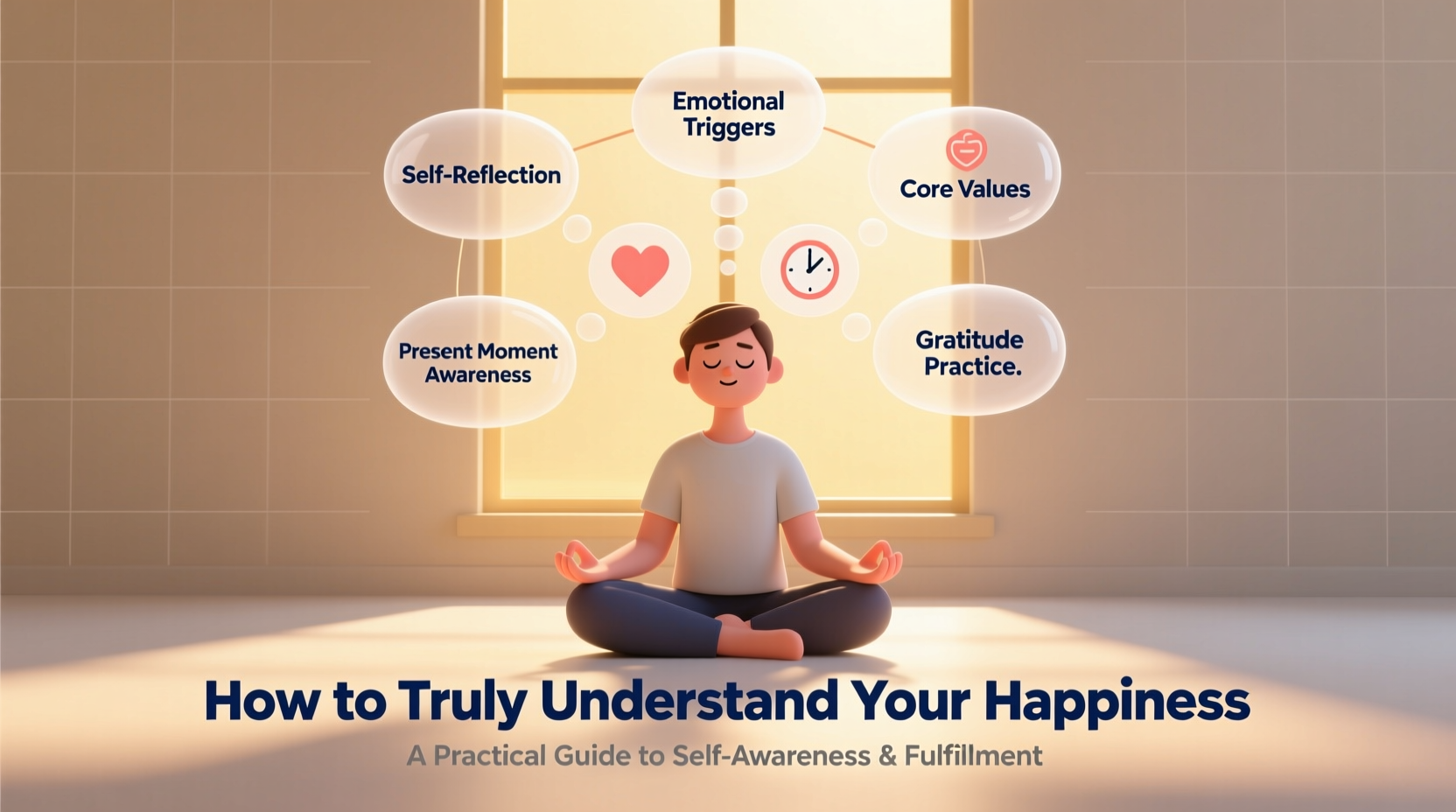
Society often sells happiness as a perpetual state of joy, laughter, and success. In reality, happiness is not the absence of pain but the presence of meaning. Emotions fluctuate, and expecting to feel joyful all the time sets an unrealistic standard that leads to disappointment. Psychologist Dr. Sonja Lyubomirsky, a leading researcher in positive psychology, notes:
“Happiness is not just about feeling good. It’s about having a satisfying life that reflects who you are and what you value.” — Dr. Sonja Lyubomirsky
True fulfillment comes not from avoiding discomfort but from understanding your emotional landscape and making choices that align with your authentic self.
Step-by-Step Guide to Self-Awareness
Self-awareness is the foundation of understanding your happiness. Without knowing what drives you, what drains you, and what gives your life meaning, it’s easy to drift through years chasing goals that don’t resonate. Follow this six-step process to deepen your self-understanding:
- Track Your Emotional Triggers (Week 1–2): Keep a daily journal noting moments of strong emotion—positive or negative. What caused them? Who was involved? Where were you?
- Identify Core Values (Week 3): Reflect on times you felt proud or deeply satisfied. What values were present? Freedom? Creativity? Connection? Integrity?
- Assess Life Domains (Week 4): Rate your satisfaction (1–10) in key areas: career, relationships, health, personal growth, leisure, and contribution.
- Recognize Patterns (Week 5): Review your journal entries. Are there recurring themes? Do certain people or environments consistently uplift or deplete you?
- Define Your Ideal Day (Week 6): Describe a typical day in your most fulfilling life. Not fantasy—what feels realistic and meaningful.
- Create a Personal Compass (Week 7): Summarize your top three values and two non-negotiable needs. Use this as a decision-making filter.
What Fuels You vs. What Drains You: A Comparison
Understanding your energy dynamics is crucial. Some activities energize you even when they’re challenging; others leave you exhausted despite being “productive.” Use this table to reflect on your personal balance.
| Fuels Happiness | Drains Happiness |
|---|---|
| Engaging in creative work | Mindless scrolling or passive entertainment |
| Deep conversations with trusted friends | Obligatory socializing without connection |
| Physical activity in nature | Sedentary routines with no breaks |
| Learning something new | Tasks misaligned with your strengths |
| Acts of kindness or contribution | Chronic complaining or negativity |
Regularly auditing these categories helps you make intentional choices about where to invest your time and energy.
A Real Example: From Burnout to Balance
Meet Alex, a 34-year-old marketing director. On paper, Alex had it all: a high salary, a promotion, and a vibrant social circle. Yet, they felt increasingly empty and anxious. After starting the self-awareness process, Alex discovered their core values were creativity, autonomy, and meaningful impact. Their corporate role offered status but little creative freedom or purpose.
Through journaling, Alex realized that weekends spent painting brought more joy than any work achievement. Over six months, they transitioned into freelance branding for mission-driven startups. The income dropped initially, but fulfillment soared. Alex now reports higher energy, better sleep, and a renewed sense of direction. The shift wasn’t about changing careers overnight—it was about aligning actions with internal truth.
Checklist: Building Sustainable Fulfillment
Use this checklist monthly to stay aligned with your happiness framework:
- ✅ Reviewed my journal for emotional patterns
- ✅ Spent time on at least one activity that fuels me
- ✅ Said no to one obligation that doesn’t align with my values
- ✅ Had one meaningful conversation (not transactional)
- ✅ Practiced self-compassion during setbacks
- ✅ Reassessed my ideal day and adjusted small habits accordingly
- ✅ Expressed gratitude for three non-material things
Common Misconceptions About Happiness
Several myths distort our pursuit of happiness:
- Myth: “I’ll be happy when I achieve X.”
Reality: Achievement provides temporary pleasure, not lasting fulfillment. - Myth: “Happy people don’t experience sadness.”
Reality: Emotional range is healthy. Suppressing sadness diminishes joy. - Myth: “Happiness is selfish.”
Reality: When you’re fulfilled, you show up better for others. - Myth: “I should already know what makes me happy.”
Reality: Self-discovery is lifelong. It’s never too late to begin.
Frequently Asked Questions
Can happiness be learned, or is it innate?
While genetics influence baseline mood, research shows up to 40% of happiness is within our control through intentional practices like gratitude, mindfulness, and values-based living. Like a muscle, happiness can be strengthened with consistent effort.
What if my values conflict with my current lifestyle?
Start small. Identify one area where you can introduce more alignment—perhaps reducing time on draining tasks or adding a weekly activity that reflects a core value. Change compounds over time.
How do I stay motivated when progress feels slow?
Focus on insight, not outcomes. Each journal entry, each moment of reflection, builds self-knowledge. Track subtle shifts—better sleep, fewer irritations, increased calm—as signs of progress.
Conclusion: Your Journey to Authentic Fulfillment
Understanding your happiness isn’t about quick fixes or fleeting highs. It’s a commitment to knowing yourself deeply—your values, triggers, strengths, and unmet needs. This awareness transforms decision-making, relationships, and your relationship with yourself. You don’t need to overhaul your life overnight. Begin with one journal entry, one honest conversation, one choice that honors your truth.




 浙公网安备
33010002000092号
浙公网安备
33010002000092号 浙B2-20120091-4
Comments
No comments yet. Why don't you start the discussion?