
Essential oil diffusers are a staple in many homes for promoting relaxation, improving air quality, and enhancing mood through aromatherapy. Over time, however, mineral buildup from tap water and residue from essential oils can clog the internal mechanisms of a diffuser, reducing or even stopping mist output entirely. While replacement is an option, most clogs can be resolved at home using simple, natural ingredients. Vinegar and gentle heat form a powerful combination for dissolving deposits without damaging sensitive components. This guide walks you through the science-backed process of safely unclogging your diffuser, restoring performance, and extending its lifespan.
Why Diffusers Get Clogged
Diffusers operate by using ultrasonic vibrations or nebulizing technology to break down water and essential oils into fine mist. The core mechanism—especially in ultrasonic models—relies on a small diaphragm and water chamber that must remain unobstructed. Two primary culprits cause clogs:
- Mineral deposits: Tap water contains calcium, magnesium, and other minerals that accumulate over time, especially in hard water areas.
- Oil residue: Essential oils leave behind sticky residues that coat internal parts, particularly when used frequently or in high concentrations.
These substances build up around the nebulizer plate, water inlet, and tubing (in reed or fan-based models), restricting airflow or disrupting vibration frequency. The result? Weak mist, inconsistent diffusion, or complete failure.
“Regular maintenance prevents 90% of diffuser failures. Vinegar is one of the safest descaling agents for home use.” — Dr. Linda Park, Environmental Health Specialist
Why Vinegar and Gentle Heat Work
Vinegar, specifically white distilled vinegar, is a mild acetic acid solution (typically 5%). It effectively dissolves alkaline mineral deposits like calcium carbonate while breaking down organic residues such as terpenes found in essential oils. Unlike harsh chemical cleaners, vinegar is non-toxic, readily available, and safe for most diffuser materials when used correctly.
Gentle heat amplifies vinegar’s cleaning power. Warming the solution increases molecular activity, allowing it to penetrate deeper into narrow channels and dissolve stubborn buildup faster. However, excessive heat can warp plastic components or damage electronic sensors. That’s why “gentle” is key—ideally between 100°F and 120°F (38°C–49°C).
Step-by-Step Guide to Unclogging Your Diffuser
Follow this detailed process to restore full functionality to your clogged diffuser using only white vinegar and controlled warmth.
- Unplug and disassemble: Turn off and disconnect the diffuser. Remove the cover, water tank, and any detachable parts. If your model has a reed system or tubing, take those out carefully.
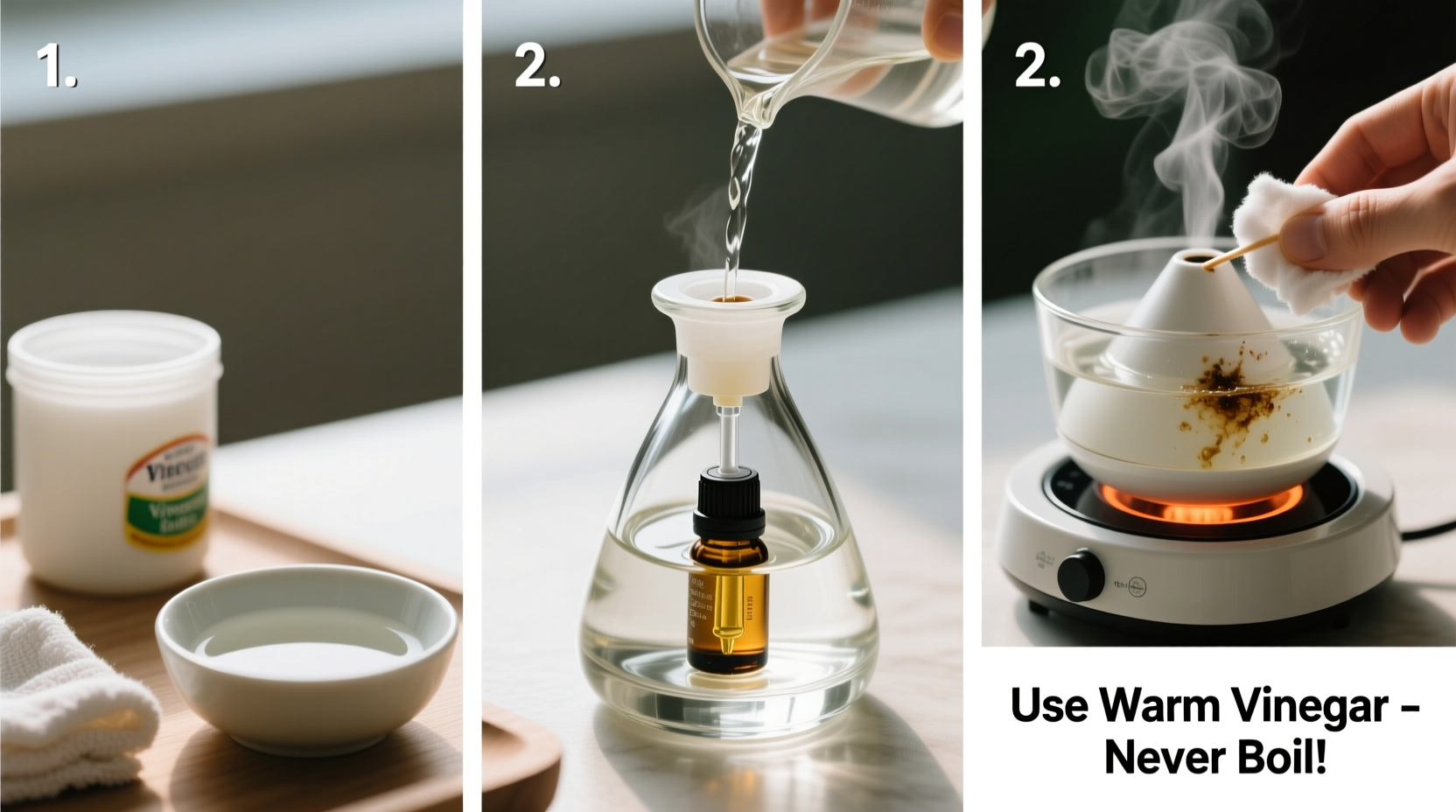
- Prepare the cleaning solution: Mix equal parts white distilled vinegar and warm water (not hot). Use about 1 cup total, enough to fill the reservoir halfway.
- Warm the solution slightly: Place the mixture in a heat-safe container and warm it in a water bath or microwave for 20–30 seconds until lukewarm (do not boil).
- Fill and soak: Pour the warm vinegar solution into the diffuser’s water chamber. Let it sit for 15–30 minutes. For severe clogs, extend to 60 minutes—but never overnight, as prolonged exposure may degrade seals.
- Scrub gently: Use a soft-bristled toothbrush or cotton swab to clean visible areas—the nebulizer disc, sides of the tank, and around the mouth of the outlet. Avoid metal tools or abrasive pads.
- Rinse thoroughly: Empty the vinegar solution and rinse the chamber 3–4 times with clean water to remove all traces of vinegar and loosened debris.
- Dry completely: Wipe all parts with a lint-free cloth and allow them to air-dry for at least one hour before reassembling.
- Test performance: Reassemble the diffuser, fill with plain water, and run it for 5–10 minutes. Observe mist output. If still weak, repeat the process once more.
When to Apply Gentle Heat Directly
If soaking alone doesn’t resolve the blockage, apply external warmth to enhance dissolution:
- After filling with vinegar solution, place the diffuser base on a heating pad set to low for 15–20 minutes.
- Alternatively, wrap a warm (not scalding) towel around the unit during the soak.
- Never use a hairdryer directly on electronics, and avoid placing the unit near open flames.
This method helps loosen compacted deposits in hidden crevices, especially in older or heavily used units.
Do’s and Don’ts of Diffuser Maintenance
| Do’s | Don’ts |
|---|---|
| Use distilled or filtered water to minimize mineral buildup | Use tap water regularly without cleaning |
| Clean your diffuser every 1–2 weeks with vinegar | Soak plastic parts in undiluted vinegar for over an hour |
| Run plain water for 5 minutes after each essential oil session | Use alcohol, bleach, or abrasive cleaners |
| Store the diffuser dry and upright when not in use | Leave water sitting in the tank for days |
| Replace worn reeds or filters as needed | Submerge the electronic base in any liquid |
Real Example: Reviving a 2-Year-Old Ultrasonic Diffuser
Sarah from Portland had a popular brand-name ultrasonic diffuser she’d used daily for nearly two years. Recently, the mist became faint, then stopped altogether. She tried rinsing with water and wiping the surface, but saw no improvement. Following the vinegar-and-heat method outlined here, she filled the reservoir with warm vinegar-water (1:1 ratio) and placed the unit on a low-setting heating pad for 20 minutes. After scrubbing the ceramic disc gently with a toothbrush, she rinsed and tested it. To her surprise, the diffuser produced a strong, steady mist again—performing almost like new. Sarah now cleans her diffuser biweekly and reports consistent results.
This case illustrates how routine neglect leads to clogs, but also how effective natural cleaning methods can be—even for long-term buildup.
Preventative Tips to Avoid Future Clogs
Once your diffuser is restored, maintaining it prevents recurrence. Integrate these habits into your routine:
- Dilute oils properly: Stick to recommended ratios—usually 3–10 drops per 100ml of water.
- Use distilled water: Eliminates 90% of mineral deposits from the start.
- Flush after use: After each session, add clean water and run for 5 minutes to rinse internal pathways.
- Avoid thick oils: Oils like patchouli, vetiver, or blends with resins clog faster. Clean immediately after using them.
- Keep it dry: Never store the diffuser assembled with leftover water inside.
Frequently Asked Questions
Can I use apple cider vinegar instead of white vinegar?
No. Apple cider vinegar contains sugars, pigments, and additional organic compounds that may leave behind residue or stain internal parts. Stick to clear, distilled white vinegar for best results.
How often should I clean my diffuser?
For daily users: clean every 7–10 days. Occasional users: clean every 3–4 weeks. After using dense or resinous oils, clean immediately. Monthly vinegar soaks are ideal for prevention.
What if my diffuser still doesn’t work after cleaning?
If mist output remains weak after two cleaning cycles, the issue may be electronic—a failed pump, damaged transducer, or circuit problem. In such cases, contact the manufacturer or consider replacement. However, most “dead” diffusers are simply clogged and respond well to proper cleaning.
Checklist: How to Unclog a Diffuser with Vinegar and Gentle Heat
- Unplug and disassemble the diffuser
- Mix equal parts white vinegar and warm water
- Pour solution into the water chamber
- Let it soak for 15–60 minutes
- Apply gentle external heat (optional)
- Scrub interior with soft brush or swab
- Rinse thoroughly with clean water
- Dry all components completely
- Reassemble and test with plain water
- Repeat if necessary or switch to preventative schedule
Conclusion: Keep Your Diffuser Running Smoothly
Your essential oil diffuser is more than a decorative item—it’s a tool for wellness and ambiance. When clogs occur, reaching for vinegar and applying gentle heat offers a smart, sustainable fix that avoids waste and expense. With minimal effort and household supplies, you can revive performance, prolong device life, and enjoy uninterrupted aromatherapy benefits. Regular maintenance isn’t just convenient; it ensures safety, efficiency, and purity in every breath of mist.




 浙公网安备
33010002000092号
浙公网安备
33010002000092号 浙B2-20120091-4
Comments
No comments yet. Why don't you start the discussion?