
A clogged kitchen sink is more than an inconvenience—it disrupts meal prep, slows cleanup, and can lead to unpleasant odors or even water damage if ignored. While many turn to chemical drain cleaners for a quick fix, these products often contain corrosive ingredients that can damage pipes, harm septic systems, and pose health risks. There’s a safer, natural alternative: the baking soda hack. This method uses common household items to dissolve buildup, break down grease, and restore flow—all without toxic fumes or environmental harm.
Baking soda, combined with vinegar and hot water, creates a natural effervescent reaction that helps dislodge debris from pipe walls. It’s gentle on plumbing, safe around children and pets, and costs pennies per use. Whether you're dealing with a slow drain or a fully blocked sink, this guide walks through the science, step-by-step application, preventive tips, and real-world insights to keep your kitchen flowing smoothly.
The Science Behind the Baking Soda and Vinegar Reaction
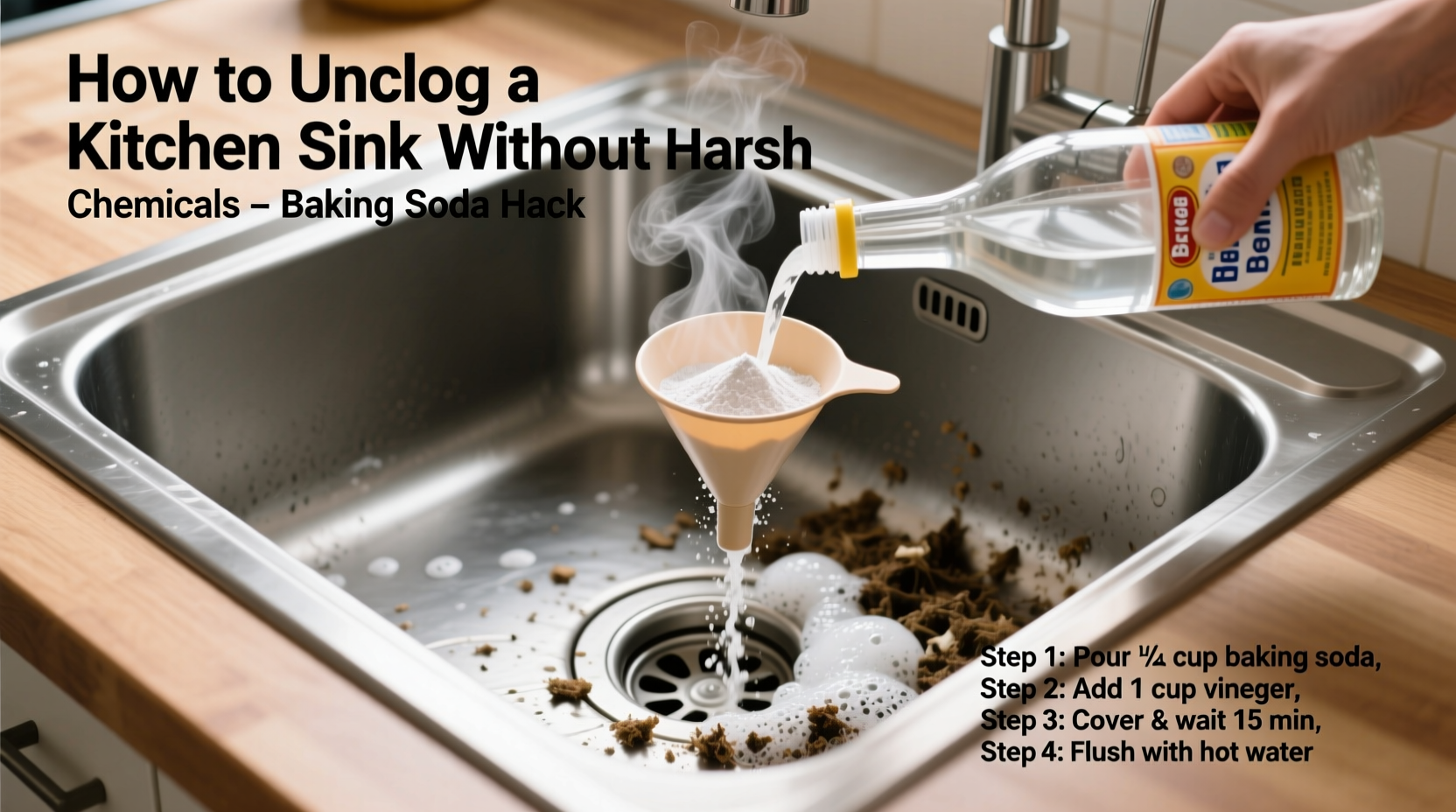
Baking soda (sodium bicarbonate) and white vinegar (acetic acid) undergo a classic acid-base chemical reaction when combined. The result is carbon dioxide gas, water, and sodium acetate. This fizzing action isn’t just a fun science experiment—it has practical cleaning power.
When poured into a drain, the bubbling effect agitates trapped debris such as food particles, soap scum, and grease. Unlike chemical drain openers that rely on heat and corrosion, this method mechanically loosens clogs while also deodorizing the pipe. Because it doesn't generate extreme heat or pressure, it's safe for most plumbing materials, including PVC, copper, and cast iron.
“Natural solutions like baking soda and vinegar are excellent first-line treatments for minor clogs. They’re non-toxic, cost-effective, and reduce long-term wear on pipes.” — Dr. Linda Tran, Environmental Health Specialist
It’s important to note that while this method works well for organic blockages, it may not resolve severe obstructions caused by foreign objects or tree root intrusion. For those cases, mechanical tools or professional service may be necessary. But for everyday kitchen sink issues, the baking soda hack is both effective and sustainable.
Step-by-Step Guide: Unclogging Your Sink Naturally
Follow this proven process to clear a clogged kitchen sink using only baking soda, vinegar, and hot water. The entire procedure takes about 30 minutes and requires no special tools.
- Clear the sink surface: Remove any standing water with a cup or sponge. A dry drain ensures better contact between the solution and the clog.
- Pour ½ cup of baking soda directly into the drain. Use a funnel if needed to avoid spillage.
- Add 1 cup of white vinegar: Immediately pour vinegar over the baking soda. You’ll see fizzing begin within seconds.
- Cover the drain: Place a plug or wet cloth over the opening to contain the reaction and increase pressure in the pipe. Let sit for 15–30 minutes.
- Flush with boiling water: Slowly pour 2–4 cups of near-boiling water down the drain to rinse away loosened debris.
- Test the flow: Run cold water to check drainage speed. Repeat once if flow remains sluggish.
If the clog persists after two rounds, consider plunging afterward to help push through any remaining obstruction. The combination of chemical agitation and physical force often delivers the best results.
Do’s and Don’ts When Using Natural Drain Cleaners
To get the most out of the baking soda hack—and protect your plumbing—follow these guidelines.
| Do’s | Don’ts |
|---|---|
| Use distilled white vinegar (5% acidity) | Mix baking soda with commercial drain cleaners (can create dangerous gases) |
| Flush with hot water after treatment | Use metal brushes or rods that can scratch or damage pipes |
| Repeat weekly for maintenance | Ignore persistent clogs—underlying issues may require inspection |
| Cover the drain during reaction | Use excessive amounts of baking soda, which can clump and worsen clogs |
| Combine with a sink strainer to prevent future blockages | Apply to garbage disposals without checking manufacturer guidelines |
This simple table highlights key behaviors that enhance effectiveness and safety. Following these rules minimizes risk and maximizes the lifespan of your plumbing system.
Preventive Maintenance Checklist
Prevention is far easier than repair. Incorporating a few habits into your routine can eliminate most clogs before they start.
- Install a fine-mesh sink strainer to catch food scraps
- Run cold water for 10–15 seconds after each use to flush grease
- Once a week, pour ¼ cup baking soda followed by ½ cup vinegar down the drain, then flush with hot water
- Avoid pouring oils, coffee grounds, or starchy foods (like pasta water) down the drain
- Monthly, disassemble the P-trap under the sink to remove accumulated gunk (place a bucket underneath first)
Real-World Example: Resolving a Stubborn Grease Clog
Sarah, a home cook in Portland, noticed her kitchen sink was draining slower each day. Despite regular rinsing, a thick film of olive oil and butter residue had built up over months. She tried a chemical cleaner but saw only temporary improvement and disliked the fumes.
She decided to try the baking soda method. On Friday evening, she poured half a cup of baking soda down the drain, followed by one cup of vinegar. She covered the drain with a damp cloth and waited 25 minutes. Then, she flushed with four cups of boiling water from her kettle.
The next morning, the sink drained freely. Encouraged, Sarah repeated the process weekly and installed a mesh strainer. Six months later, she hasn’t had a single clog. “I wish I’d known this worked so well,” she said. “It’s cheaper, safer, and just as effective as the harsh stuff.”
This case illustrates how consistent, gentle maintenance can outperform occasional aggressive treatments—especially when dealing with organic, grease-based clogs common in kitchens.
When the Baking Soda Hack Isn’t Enough
While highly effective for minor to moderate clogs, the baking soda and vinegar method has limitations. It won’t break through solid objects, dense hairballs, or deep-rooted blockages in older plumbing. In such cases, escalate carefully.
First, try plunging. Use a flat-bottomed plunger (not a toilet plunger) for kitchen sinks. Ensure there’s enough water to cover the rubber cup, create a tight seal, and pump firmly 10–15 times. If plunging fails, consider a manual drain snake—a flexible auger that reaches deeper into pipes. These tools are inexpensive and available at hardware stores.
If multiple fixtures back up simultaneously, or if you notice gurgling sounds, the issue may lie in the main sewer line. This requires professional diagnosis. Persistent use of home remedies on serious blockages can lead to overflow or pipe stress.
“Home remedies are great for prevention and light clogs, but knowing when to call a plumber saves thousands in potential water damage.” — Marcus Reed, Master Plumber with 18 years of experience
Frequently Asked Questions
Can I use apple cider vinegar instead of white vinegar?
Yes, but white vinegar is more effective due to its higher acetic acid concentration and lack of color or sediment. Apple cider vinegar may leave residues or stains over time, especially in visible fixtures.
Is it safe to use this method with a garbage disposal?
Generally yes. Pour the baking soda and vinegar down the disposal while it’s off, let the reaction occur, then flush with water and run the disposal briefly. Avoid using large quantities that could interfere with internal mechanisms.
How often should I perform this cleaning?
For active kitchens, once a week prevents buildup. For lighter use, once every two weeks is sufficient. Regular maintenance keeps drains clear and odor-free without needing intensive treatments.
Final Thoughts and Call to Action
Unclogging a kitchen sink doesn’t require hazardous chemicals or expensive services. With a simple baking soda hack, you can maintain clean, functional drains using safe, affordable ingredients already in your pantry. The method leverages natural chemistry to dissolve grime, eliminate odors, and support long-term pipe health.
By adopting a few preventive habits—like straining food waste, avoiding grease disposal, and scheduling weekly maintenance—you can avoid most clogs altogether. When problems do arise, this approach offers a reliable first response that protects your home and environment.
Start tonight: grab the baking soda and vinegar, treat your sink, and feel the satisfaction of a job done right—naturally. Share your experience, tweak the method for your setup, and encourage others to ditch the toxins. Small changes lead to cleaner kitchens, healthier homes, and smarter living.




 浙公网安备
33010002000092号
浙公网安备
33010002000092号 浙B2-20120091-4
Comments
No comments yet. Why don't you start the discussion?