
A slow-draining or completely clogged shower is a common household issue that can quickly become a daily frustration. While many reach for chemical drain cleaners, these products often contain harsh ingredients that damage pipes, harm the environment, and pose health risks. Fortunately, most clogs—especially those caused by hair, soap scum, and mild debris buildup—can be cleared effectively using only simple tools found in your home. This guide walks you through proven, non-toxic methods to restore proper drainage without risking your plumbing or well-being.
Understanding the Cause of Shower Drain Clogs
Before attempting any fix, it helps to understand what’s causing the blockage. In showers, clogs typically form from a combination of hair, body oils, soap residue, and mineral deposits from hard water. These materials accumulate over time, creating a sticky mass that traps more debris and gradually restricts water flow.
Unlike kitchen sinks, which often deal with grease and food waste, shower drains are prone to fibrous obstructions—especially long hair—that bind together and resist dissolution by conventional liquid drain openers. This makes mechanical removal or physical dislodging far more effective than chemical breakdown.
Knowing this, the goal isn’t to dissolve the clog but to extract or break it apart using manual force and pressure. The good news? You don’t need specialized equipment or expensive services for most cases.
Essential Tools You Already Own
The beauty of clearing a shower drain without chemicals lies in simplicity. Most of the tools required are likely already in your cleaning cabinet or toolbox. Here’s what you’ll commonly need:
- Plunger – A standard cup plunger (preferably one with a flange) creates suction to dislodge soft clogs.
- Wire hanger or drain snake – Straightened wire hangers or small hand augers retrieve hair and gunk manually.
- Screwdriver or wrench – For removing the drain cover or strainer.
- Baking soda and vinegar – Though not a chemical cleaner per se, this natural duo helps loosen grime and deodorize.
- Boiling water – Useful for flushing out minor accumulations of soap scum.
- Rubber gloves – Protect your hands during direct contact with debris.
Using these items in strategic combinations allows you to tackle clogs at various depths within the P-trap or upper pipe section.
Step-by-Step Guide to Unclogging Without Chemicals
Follow this systematic approach to clear your shower drain safely and efficiently.
- Clear the surface: Remove the drain cover or grate. Use tweezers or fingers (with gloves) to pull out any visible hair or debris caught on the rim.
- Pour boiling water: Heat a kettle or pot of water until just past boiling. Slowly pour it down the drain in two to three stages, allowing each pour to work for 30 seconds. This dissolves light soap buildup and loosens attached material.
- Use baking soda and vinegar: Pour half a cup of baking soda directly into the drain. Follow with one cup of white vinegar. Cover the drain opening with a plug or wet cloth to contain the fizzing reaction for 15–20 minutes. Then flush with hot water.
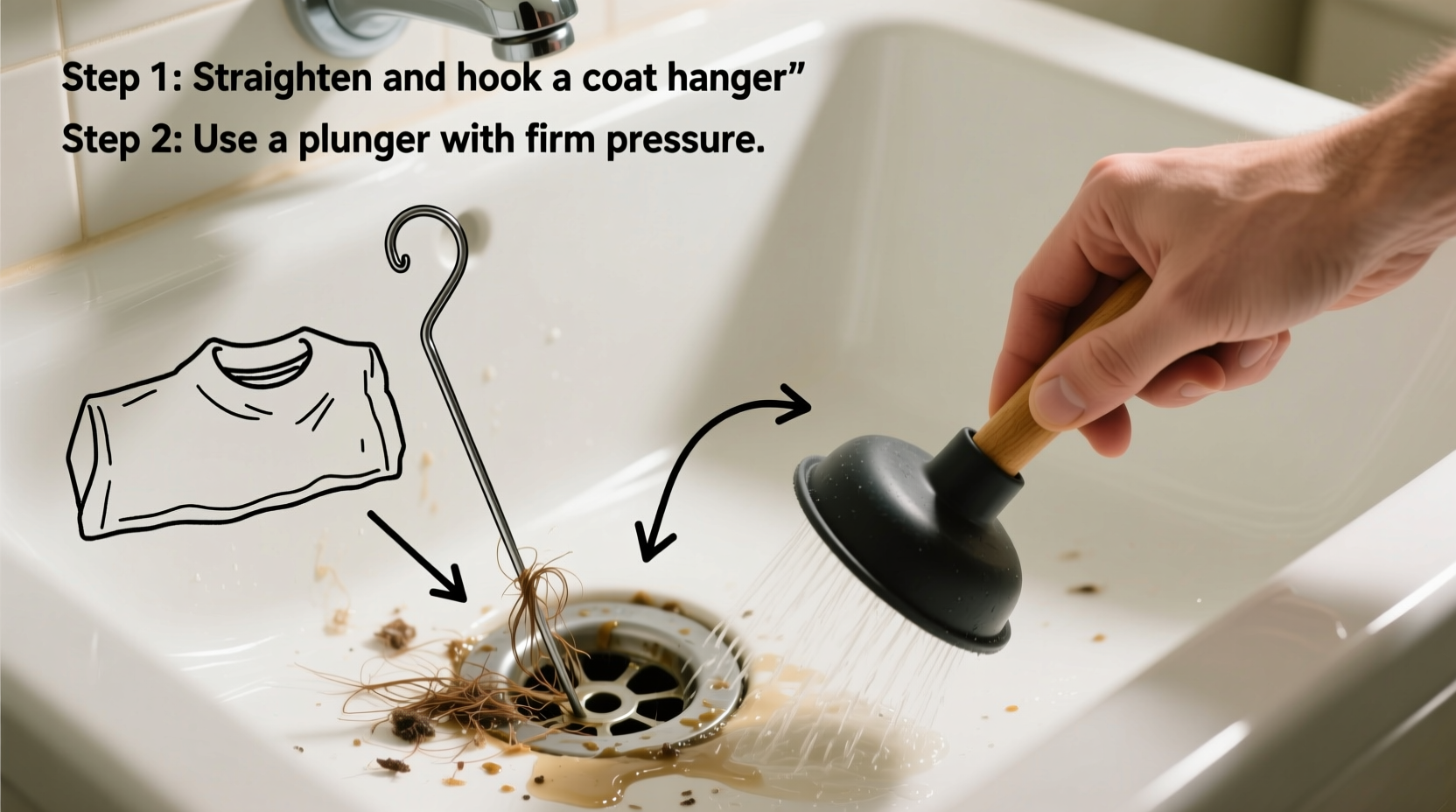
- Plunge the drain: Ensure there’s enough standing water to cover the rubber cup of the plunger. Place the plunger firmly over the drain and pump up and down vigorously for 20–30 seconds. Repeat 3–4 times. Check if water begins to drain faster.
- Retrieve the clog manually: Straighten a metal coat hanger and bend a small hook at one end. Insert it into the drain and fish for hair masses. Twist and pull gently to avoid pushing the clog deeper. Continue until no more material comes out.
- Flush and test: Run hot water for 1–2 minutes to clear residual particles. If flow improves significantly, the job is done. If not, repeat steps or consider disassembling the P-trap.
When to Disassemble the P-Trap
If all above steps fail, the clog may be located in the curved section of pipe beneath the drain—the P-trap. This U-shaped pipe holds water to prevent sewer gases from entering your home but also catches debris.
To access it:
- Place a bucket under the trap to catch water.
- Use adjustable pliers or a wrench to loosen slip nuts on both ends.
- Remove the trap and empty its contents into the bucket.
- Inspect and clean the interior with a brush or rag.
- Reattach securely and test for leaks once reassembled.
This method is highly effective for stubborn clogs and requires no special tools beyond basic wrenches.
Do’s and Don’ts of Natural Drain Maintenance
| Do | Don't |
|---|---|
| Remove hair from the drain after each shower | Ignore slow drainage signs |
| Flush monthly with hot water and vinegar | Use chemical drain cleaners regularly |
| Install a mesh drain screen | Force tools too deep and scratch pipes |
| Use a plunger weekly as preventive maintenance | Disassemble pipes without turning off water |
| Check for leaks after reassembly | Leave standing water in the tub overnight |
Real Example: Clearing a Chronic Clog in a Shared Bathroom
In a household of four, including two teenagers with long hair, the master bathroom shower began draining slowly every few weeks. Over-the-counter gels provided temporary relief but never fixed the root issue. After avoiding chemicals due to concerns about PVC pipe degradation, the homeowner decided to try manual extraction.
They started by removing the chrome drain cover and pulling out a dense wad of tangled hair by hand. Next, they used a bent wire hanger to probe deeper, retrieving another compacted mass about six inches down. After plunging and flushing with boiling water, the drain emptied instantly. To prevent recurrence, they installed a fine-mesh stainless steel screen that catches hair before it enters the pipe. Eight months later, no further clogs have occurred, and maintenance now takes less than two minutes per week.
This case illustrates how consistent, low-effort prevention combined with targeted intervention can eliminate recurring problems without resorting to hazardous substances.
Expert Insight on Chemical-Free Drain Care
“Chemical drain cleaners can create more problems than they solve—especially in older homes with corroded pipes. Mechanical removal is safer, more effective for organic clogs, and gives homeowners control over the process.” — Daniel Reyes, Master Plumber & Plumbing Instructor
“Hair is the number one culprit in shower clogs. A simple tool like a zip strip or even a straightened hanger removes 90% of these blockages. Prevention beats correction every time.” — Lisa Tran, Home Efficiency Consultant
Preventive Checklist for Long-Term Drain Health
Maintaining free-flowing drains requires regular attention. Use this checklist monthly or biweekly:
- ✅ Remove and clean the drain cover
- ✅ Pull out trapped hair and debris
- ✅ Flush with boiling water once a week
- ✅ Perform a baking soda-vinegar treatment monthly
- ✅ Inspect for slow drainage during showers
- ✅ Replace worn drain screens or strainers
- ✅ Educate household members on pre-rinse habits
By integrating these actions into routine cleaning, you reduce the likelihood of severe clogs and extend the life of your plumbing system.
Frequently Asked Questions
Can I use a plunger on a shower drain?
Yes, but only if you create a tight seal. Most showers lack standing water, so fill the basin with 1–2 inches of water before plunging. Use a cup plunger with a flanged base for better suction. Seal the overflow drain (if present) with a wet rag to maximize pressure.
Is it safe to pour boiling water down PVC pipes?
No. Boiling water can soften or warp PVC, especially in older installations. Only use boiling water if your pipes are made of metal (cast iron or copper). For PVC, stick to very hot tap water instead—just below boiling—and use mechanical methods primarily.
What if none of these methods work?
If the clog persists despite plunging, snaking, and trap removal, the blockage may be deeper in the line—possibly in the main sewer stack. At that point, professional hydro-jetting or camera inspection may be necessary. However, such cases are rare in single-clog scenarios and often indicate systemic issues like tree root intrusion or collapsed piping.
Final Thoughts: Take Control of Your Drain Health
Dealing with a clogged shower doesn’t require toxic solutions or costly service calls. With a few basic tools and a bit of elbow grease, you can resolve most obstructions naturally and safely. The key is acting early—before minor slowdowns turn into full backups—and adopting habits that prevent buildup in the first place.
From fishing out hair with a repurposed wire hanger to maintaining flow with periodic hot water flushes, everyday actions make a lasting difference. You’re not just fixing a problem; you’re building a smarter, more sustainable approach to home maintenance.




 浙公网安备
33010002000092号
浙公网安备
33010002000092号 浙B2-20120091-4
Comments
No comments yet. Why don't you start the discussion?