
A slow-draining or fully clogged shower is a common household frustration. Many people reach for chemical drain cleaners, but these often contain corrosive ingredients that can damage pipes, harm the environment, and pose health risks. The good news? You likely already have everything you need to fix the problem in your kitchen pantry. Using simple, non-toxic ingredients like baking soda, vinegar, salt, and dish soap, you can clear most minor to moderate clogs safely and effectively. This guide walks through proven methods, explains why they work, and provides practical tips to keep your drains flowing freely—without ever touching a chemical cleaner.
Why Avoid Chemical Drain Cleaners?
Chemical drain openers typically rely on strong alkalis (like lye) or acids to dissolve organic matter. While they may seem fast-acting, they come with serious drawbacks:
- Pipe Damage: Repeated use can corrode metal pipes and degrade PVC over time.
- Environmental Harm: Toxic residues enter waterways, harming aquatic life.
- Health Risks: Fumes can irritate lungs; splashes cause skin or eye burns.
- Ineffectiveness on Solid Clogs: They often fail on hair or debris blockages, which are common in showers.
By contrast, pantry-based solutions are gentle on plumbing, safe for septic systems, and environmentally responsible. They work by loosening organic buildup, breaking down grease, and dislodging debris through natural reactions—primarily the fizzing action of baking soda and vinegar.
“Household staples like baking soda and vinegar offer a safer, sustainable alternative to chemical drain treatments. They’re effective for most minor clogs and won’t compromise your plumbing.” — Dr. Linda Chen, Environmental Health Scientist
The Science Behind Baking Soda and Vinegar
The combination of baking soda (sodium bicarbonate) and vinegar (acetic acid) creates a chemical reaction that produces carbon dioxide gas. This bubbling action helps lift and break apart trapped debris in the drain. While it doesn’t “dissolve” clogs like lye-based products, it mechanically agitates the blockage, making it easier to flush away.
Baking soda also acts as a mild abrasive, helping scrub pipe walls when flushed with hot water. Vinegar’s acidity cuts through soap scum and grease, two major contributors to shower drain buildup. When used together, they form a surprisingly powerful cleaning duo.
Step-by-Step Method: Baking Soda, Vinegar, and Hot Water
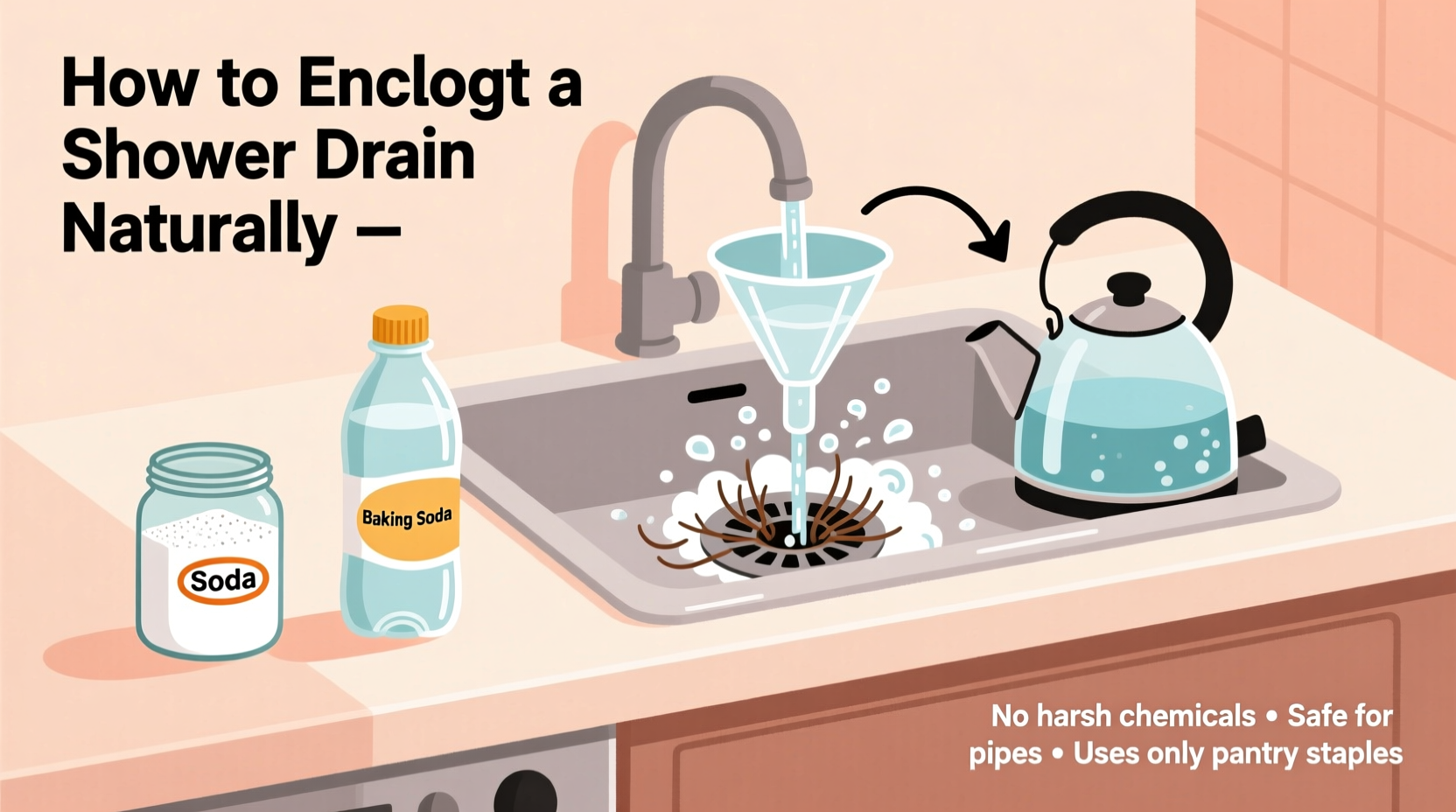
This is the most reliable and widely effective method for clearing light to moderate shower drain clogs using only pantry items. Follow these steps carefully for best results:
- Remove standing water: If water is pooled in the shower base, scoop it out with a cup or use a wet-dry vacuum. A dry drain ensures the baking soda reaches the clog.
- Pour ½ cup of baking soda: Slowly add it directly into the drain. Use a spoon if needed to guide it down.
- Add 1 cup of white vinegar: Immediately pour vinegar over the baking soda. It will begin to fizz and bubble—this is the reaction at work.
- Cover the drain: Place a damp cloth or stopper over the drain to contain the fizzing below the surface. Let it sit for 30 minutes to an hour.
- Flush with hot (not boiling) water: After the waiting period, slowly pour 3–4 cups of hot water (around 140°F) down the drain to rinse away loosened debris.
If the drain remains slow, repeat the process once more. For stubborn clogs, combine this method with a plunger afterward.
Enhanced Method: Adding Salt and Dish Soap
For greasy or soap-scum-heavy clogs, enhance the basic method with two additional pantry items: salt and liquid dish soap.
Salt acts as a coarse scrubber, helping to scour the inside of the pipe. Dish soap breaks down oils and lubricates the clog, making it easier to dislodge.
Procedure:
- Pour ½ cup of coarse salt (like kosher or sea salt) followed by ½ cup of baking soda into the drain.
- Add ¼ cup of liquid dish soap. This helps penetrate oily residue.
- Wait 5–10 minutes to allow the soap to coat the clog.
- Pour 1 cup of white vinegar down the drain and cover immediately.
- Let the mixture sit for 30–60 minutes.
- Flush with hot water.
This variation is particularly effective in households where heavy conditioner, body wash, or bar soap use contributes to buildup.
When to Use a Plunger (and How to Do It Right)
If the baking soda and vinegar method doesn’t fully clear the drain, follow up with a plunger. Contrary to popular belief, plungers can be effective on shower drains—even without a perfect seal.
Proper Plunging Technique:
- Fill the shower base with enough water to cover the rubber cup of the plunger (about 1–2 inches).
- Ensure the plunger forms a tight seal over the drain. Use a standard cup-style plunger.
- Push down gently at first to expel air, then apply firm, rapid up-and-down strokes for 20–30 seconds.
- Lift the plunger quickly to create suction. Repeat 3–4 times.
- Run water to test drainage. Repeat if necessary.
For multi-hole shower drains, cover adjacent holes with wet rags to improve suction.
“Many homeowners give up too soon on natural methods. Combining a chemical-free solution with mechanical action from a plunger resolves over 80% of routine clogs.” — Mark Reynolds, Master Plumber
Prevention: Keeping Your Drain Clear Long-Term
Clearing a clog is helpful, but preventing one is better. Shower drains accumulate hair, soap residue, and dead skin cells over time. A few simple habits can significantly reduce future blockages.
Daily and Weekly Habits
- Use a hair catcher or drain strainer to trap debris before it enters the pipe.
- Rinse the drain weekly with hot water after your last shower of the day.
- Once a week, perform a maintenance flush: ¼ cup baking soda + 1 cup vinegar, left for 15 minutes, then rinsed with hot water.
- Avoid pouring oily products (like coconut oil or hair serums) down the drain.
Real Example: Sarah’s Stubborn Shower Clog
Sarah, a homeowner in Portland, noticed her shower was draining slower each week. After two weeks, water began pooling around her feet. She tried a commercial gel drain opener, but it barely helped and left a harsh smell. Remembering a tip from a friend, she decided to try baking soda and vinegar.
She started with the basic method: ½ cup baking soda, 1 cup vinegar, covered for 45 minutes, then flushed with hot water. The drain improved slightly but still backed up. The next day, she used the enhanced method—adding salt and dish soap—and plunged afterward. The clog cleared completely. Since then, she uses a hair strainer and performs a weekly vinegar flush. Six months later, she hasn’t had another issue.
Sarah’s experience reflects a common scenario: a gradual buildup of hair and soap scum that responds well to mechanical agitation combined with natural cleaning agents.
Do’s and Don’ts of Natural Drain Care
| Do | Don't |
|---|---|
| Use baking soda and vinegar monthly for maintenance | Use chemical drain cleaners regularly |
| Install a mesh drain cover | Ignore slow drainage—act early |
| Flush with hot water weekly | Pour grease or oil down the drain |
| Combine natural methods with plunging | Use metal hooks frequently—they can scratch pipes |
| Dispose of hair in the trash, not the drain | Assume all clogs require professional help |
Frequently Asked Questions
Can baking soda and vinegar damage my pipes?
No. The reaction is mild and non-corrosive. Unlike chemical cleaners, this method is safe for both metal and plastic plumbing. It does not generate heat or pressure that could harm pipes when used correctly.
What if the clog doesn’t clear after trying these methods?
If multiple attempts fail, the blockage may be deep or caused by a structural issue like a collapsed pipe or tree root intrusion (in homes with older plumbing). In such cases, consider using a plumber’s snake or calling a licensed plumber. Persistent clogs in multiple fixtures may indicate a main sewer line issue.
Is it safe to use these methods with a septic system?
Yes. Baking soda and vinegar are septic-safe and do not disrupt the bacterial balance in your tank. In fact, they are preferable to chemical cleaners, which can kill beneficial microbes essential for septic function.
Checklist: Unclog Your Shower Drain Naturally
Follow this step-by-step checklist the next time your shower drain slows down:
- ☐ Remove standing water from the shower floor
- ☐ Pour ½ cup baking soda into the drain
- ☐ Add 1 cup white vinegar and cover the drain
- ☐ Wait 30–60 minutes
- ☐ Flush with 3–4 cups of hot water
- ☐ If needed, repeat with salt and dish soap addition
- ☐ Use a plunger to dislodge remaining blockage
- ☐ Install a hair catcher to prevent recurrence
- ☐ Schedule weekly hot water flushes for maintenance
Conclusion: Take Control of Your Home’s Plumbing Naturally
You don’t need toxic chemicals to maintain a healthy, functional shower drain. With everyday items from your pantry, a little patience, and consistent prevention, you can resolve most clogs safely and effectively. These methods protect your pipes, your family’s health, and the environment—all while saving money on expensive products or service calls. Start today by clearing that slow drain and setting up a simple weekly routine. Over time, you’ll spend less time worrying about backups and more time enjoying a smooth-running bathroom.




 浙公网安备
33010002000092号
浙公网安备
33010002000092号 浙B2-20120091-4
Comments
No comments yet. Why don't you start the discussion?