
A slow-draining or fully clogged shower is more than an inconvenience—it can disrupt your morning routine, create standing water, and even lead to mold growth if left unattended. Many people reach for chemical drain cleaners, but these products often contain harsh substances like lye, sulfuric acid, or bleach that can damage pipes, harm the environment, and pose health risks. Fortunately, there are safer, effective alternatives that rely on common household items and mechanical techniques.
This guide explores proven, non-toxic methods to clear a clogged shower drain. From natural ingredient combinations to physical tools and preventive habits, you’ll learn how to maintain a free-flowing drain without exposing yourself or your plumbing to dangerous chemicals.
Understanding Common Causes of Shower Drain Clogs
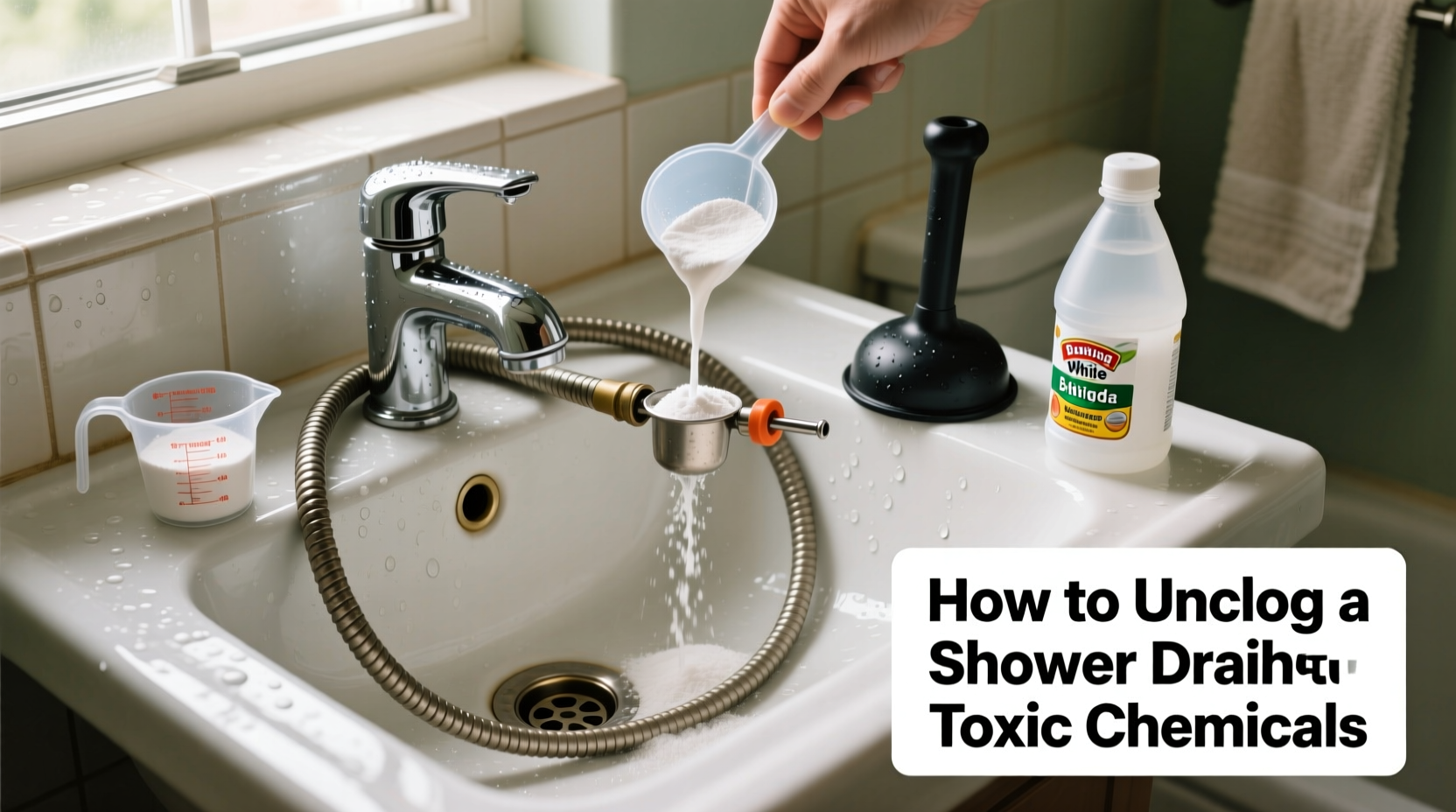
Before attempting any unclogging method, it helps to understand what’s likely causing the blockage. In most cases, shower clogs are not due to a single large object but rather a gradual buildup of organic material inside the pipe.
- Hair: The number one culprit. Strands tangle around the drain stopper and trap other debris.
- Soap scum: Bar soaps leave behind residue that combines with minerals in hard water, forming a sticky film.
- Body oils and skin cells: These accumulate over time, especially in low-flow drains.
- Sediment from hard water: Calcium and magnesium deposits can narrow the pipe diameter over time.
Because these materials are primarily organic, they respond well to mechanical removal and natural cleaning agents—no caustic chemicals required.
Step-by-Step Guide: Natural Unclogging Methods That Work
The following sequence outlines a progressive approach—starting with the simplest, least invasive technique and moving toward more involved solutions if needed. Most clogs can be resolved within one or two attempts using these steps.
- Remove visible debris
Use gloves and tweezers or needle-nose pliers to pull out hair and gunk caught in the drain cover. This alone may restore partial flow. - Flush with boiling water
Pour 3–4 cups of boiling water directly into the drain. This softens soap scum and loosens light buildup. Do this before any other method for better results. - Baking soda and vinegar reaction
- Pour ½ cup of baking soda down the drain.
- Follow with 1 cup of white vinegar.
- Cover the drain with a plug or cloth to contain the fizzing action.
- Wait 30 minutes, then flush with hot water.
- Salt and baking soda scrub (for persistent buildup)
Mix ¼ cup salt and ¼ cup baking soda. Pour into the drain, let sit for 15 minutes, then flush with boiling water. Salt acts as a mild abrasive and helps cut through grease. - Plunger method (with modification)
- Seal overflow openings on the tub wall with a wet rag.
- Fill the tub with enough water to cover the rubber cup of the plunger.
- Create a tight seal over the drain and pump firmly 15–20 times.
“Natural unclogging methods are not only safer for homes with children and pets, but they also preserve the integrity of older plumbing systems.” — Dr. Lena Patel, Environmental Health Specialist
Using Mechanical Tools Without Damaging Pipes
If natural solutions don’t fully resolve the clog, mechanical tools offer a powerful next step—without introducing toxins. The key is using them correctly to avoid scratching PVC pipes or dislodging fittings.
Manual Drain Snake (Hand Auger)
A hand-cranked drain snake is ideal for showers. It’s flexible enough to navigate curves in P-traps but strong enough to hook onto hair masses.
- Insert the end of the snake into the drain opening.
- Turn the handle clockwise while gently pushing forward.
- When you feel resistance, rotate slowly to catch hair in the auger tip.
- Pull back carefully to remove the tangled debris.
- Repeat until no more material comes out.
- Flush with hot water to clear remaining residue.
Wet/Dry Vacuum Method
If you own a wet/dry vacuum, set it to “liquid” mode and create a tight seal over the drain with the hose attachment. Turn it on for 30–60 seconds. The suction can pull out deep-seated clogs that plunging misses.
| Tool/Method | Best For | Effectiveness | Pipe Safety |
|---|---|---|---|
| Baking Soda + Vinegar | Light soap scum and minor buildup | ★★★☆☆ | ★★★★★ |
| Boiling Water | Fresh soap residue | ★★☆☆☆ | ★★★★☆ (Avoid on PVC if water is excessively hot) |
| Plunger | Air-pressure-dependent clogs | ★★★★☆ | ★★★★★ |
| Manual Drain Snake | Hair and deep blockages | ★★★★★ | ★★★★☆ (Use gently on old pipes) |
| Wet/Dry Vacuum | Stubborn organic clogs | ★★★★☆ | ★★★★★ |
Preventive Maintenance Checklist
Prevention is the most effective long-term strategy. Incorporate these habits into your routine to reduce the frequency of clogs:
- ✅ Install a fine-mesh hair catcher or strainer
- ✅ Remove visible hair from the drain weekly
- ✅ Once a month, flush with boiling water followed by ½ cup baking soda and 1 cup vinegar
- ✅ Avoid pouring oils, lotions, or thick exfoliants down the drain
- ✅ Run hot water for 30 seconds after each shower to rinse away residue
- ✅ Schedule a deep clean every 2–3 months, even if no issues appear
Real Example: Resolving a Chronic Clog Naturally
Sarah, a homeowner in Portland, Oregon, had battled a slow-moving shower drain for over a year. She initially used chemical cleaners twice, which provided temporary relief but eventually corroded her chrome drain cover. Frustrated and concerned about fumes, she decided to try natural methods.
She began by removing the visible hair tangled around the stopper—pulling out a dense wad nearly 6 inches wide. She then poured boiling water down the drain, followed by the baking soda and vinegar treatment. After letting it sit for 45 minutes, she plunged the drain using a rag to seal the overflow. The water drained noticeably faster.
Two days later, when flow slowed again, she used a $12 manual drain snake from a hardware store. On the third pass, she extracted another clump of hair wrapped around soap residue. Since then, she’s maintained the drain with monthly vinegar flushes and a silicone hair strainer. Over eight months later, she hasn’t had a recurrence.
Her experience reflects a common truth: many “stubborn” clogs are simply layered obstructions best removed in stages—mechanically first, then chemically (naturally) second.
What Not to Do: Common Mistakes That Make Clogs Worse
Even with good intentions, some actions can worsen the problem or damage your plumbing:
- Using chemical drain openers after trying vinegar: Mixing acids (vinegar) with strong alkalis (lye-based cleaners) can produce hazardous fumes.
- Over-tightening metal drain parts: This can crack PVC fittings or strip threads.
- Ignoring early warning signs: A slightly slow drain today can become a full blockage tomorrow.
- Using a power auger in a shower: Electric snakes are too aggressive for small-diameter bathroom pipes and risk puncturing them.
- Flushing bleach regularly: Bleach doesn’t dissolve hair or soap scum effectively and harms septic systems and aquatic life.
“The safest way to maintain drains is consistency. A minute of prevention beats an hour of crisis.” — Mark Tran, Master Plumber with 22 years of residential experience
FAQ: Safe Drain Care Questions Answered
Can I use apple cider vinegar instead of white vinegar?
Yes, but white vinegar is more effective due to its higher acetic acid concentration (typically 5–7%). Apple cider vinegar works in a pinch but may leave a slight odor and is costlier.
Is it safe to pour boiling water into PVC pipes?
Generally, yes—but with caution. Modern PVC can withstand temperatures up to 140°F (60°C), but boiling water is 212°F (100°C). To minimize risk, run hot tap water for 30 seconds first, then add boiling water gradually. Avoid repeated daily use.
How do I know if the clog is past the P-trap?
If multiple methods fail and water backs up into the tub when flushing the toilet or using the sink, the blockage may be in the main line. In such cases, consider calling a plumber with a camera inspection tool rather than escalating DIY efforts.
Conclusion: Sustainable Solutions for Safer Homes
Unclogging a shower drain doesn’t require dangerous chemicals or expensive services in most cases. With a few basic tools and natural ingredients already in your pantry, you can tackle blockages safely and effectively. The real win lies in shifting from reactive fixes to proactive care—regular cleaning, hair management, and mindful usage habits can keep your drains flowing freely for years.
By choosing non-toxic methods, you protect your family’s health, extend the life of your plumbing, and reduce environmental pollution. Every time you opt for baking soda over lye, you make a small but meaningful choice for a safer home.




 浙公网安备
33010002000092号
浙公网安备
33010002000092号 浙B2-20120091-4
Comments
No comments yet. Why don't you start the discussion?