
A slow or completely clogged sink is a common household issue that often leads people straight to chemical drain cleaners. While these products promise quick fixes, they come with serious drawbacks: they can corrode pipes, harm septic systems, release toxic fumes, and damage the environment. Fortunately, nature offers powerful alternatives that are just as effective—and far safer. Using simple kitchen staples like baking soda, vinegar, salt, and hot water, you can clear most clogs without risking your health or plumbing. This guide walks through proven natural methods, preventive habits, and real-world applications to keep your drains flowing smoothly.
Why Avoid Chemical Drain Cleaners?
Before diving into solutions, it's important to understand why avoiding commercial drain cleaners is not just preferable—it’s often necessary for long-term home maintenance. Most liquid drain openers contain sodium hydroxide (lye), sulfuric acid, or bleach-based compounds. These substances generate heat to dissolve organic matter but can also:
- Erode metal and PVC pipes over time
- Damage septic tanks by killing beneficial bacteria
- Create dangerous fumes when mixed with other cleaners
- Pose health risks if splashed on skin or inhaled
- Contaminate waterways when flushed
“Chemical drain cleaners may offer fast results, but at what cost? Repeated use weakens pipe joints and increases the likelihood of leaks.” — Marcus Tran, Master Plumber & Home Systems Consultant
Natural methods, by contrast, rely on physical action, mild acidity, and thermal expansion—processes gentle enough for daily use yet capable of breaking down grease, hair, soap scum, and food debris.
Step-by-Step Guide to Unclogging Drains Naturally
The following method combines mechanical force, chemical reaction, and heat to dislodge and dissolve blockages. It works best on partial clogs caused by organic buildup rather than complete obstructions from foreign objects.
- Remove standing water: If your sink is full, bail out excess water with a cup so the treatment can reach the clog directly.
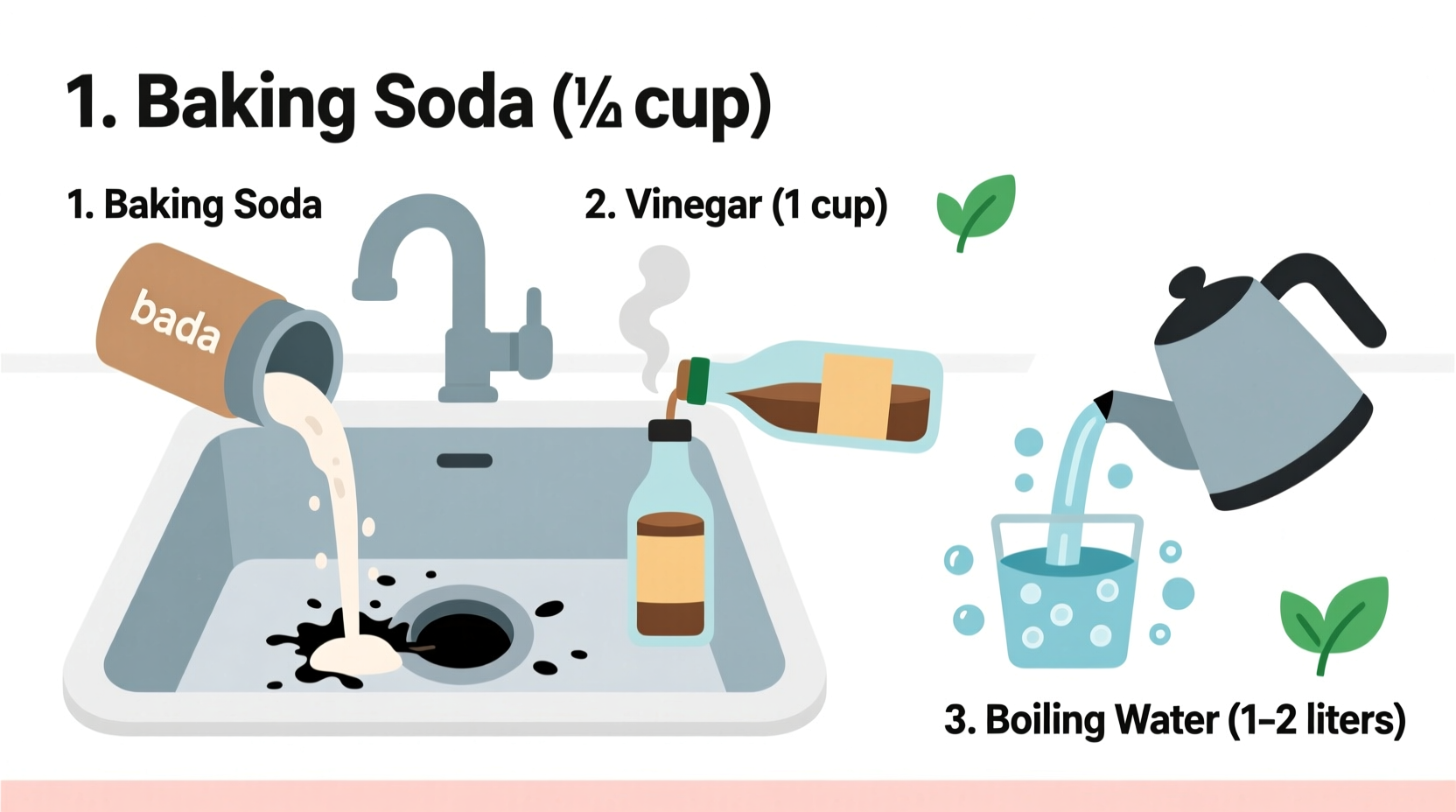
- Pour half a cup of baking soda: Sprinkle it slowly down the drain to ensure even distribution along the pipe walls.
- Add one cup of white vinegar: Immediately follow the baking soda with vinegar. The mixture will fizz and bubble—a sign the reaction is breaking down residue.
- Cover the drain: Plug it with a wet cloth or stopper to contain pressure and extend contact time.
- Wait 30 minutes to an hour: Let the solution work deep into the clog. For tougher blockages, leave it overnight.
- Flush with boiling water: Slowly pour two quarts of hot (not steaming) water to rinse away loosened material.
- Repeat if needed: Stubborn clogs may require a second round.
Alternative Natural Methods for Different Clog Types
Not all clogs are the same. Grease, hair, coffee grounds, and mineral buildup respond differently to various treatments. Below are targeted approaches based on the likely cause.
For Grease Buildup: Hot Water + Dish Soap Flush
Fats and oils solidify inside pipes, especially in kitchen sinks. Instead of relying solely on chemical reactions, use heat and surfactants:
- Boil a kettle of water.
- Pour a generous squirt of dish soap (like Dawn) into the drain.
- Slowly add boiling water in two stages, allowing each pour to penetrate.
The soap emulsifies grease while the heat liquefies it, flushing it downstream.
For Hair and Debris: Manual Removal with a Wire Hanger
Bathroom sink clogs are often caused by clumps of hair wrapped around the stopper mechanism. A bent wire coat hanger can extract this manually:
- Unscrew or lift the stopper.
- Shape a wire hanger into a hook.
- Gently fish out tangled hair and gunk.
- Rinse the pipe afterward with warm water.
For Mineral Deposits: Citric Acid Soak
In areas with hard water, limescale accumulates over time, narrowing the pipe diameter. Citric acid dissolves calcium carbonate safely:
- Mix 2 tablespoons of citric acid powder with 1 cup of warm water.
- Pour into the drain and let sit for 30–60 minutes.
- Flush thoroughly with hot water.
Preventive Maintenance Checklist
Regular care prevents 80% of clogs before they start. Follow this monthly routine to maintain free-flowing drains:
- ✅ Pour ½ cup baking soda followed by 1 cup vinegar down each drain once per week
- ✅ Rinse weekly with a pot of near-boiling water (avoid if pipes are PVC and sensitive to heat)
- ✅ Install mesh strainers in all sink drains to catch solids
- ✅ Avoid pouring cooking oil, coffee grounds, or eggshells down the kitchen sink
- ✅ Clean pop-up stoppers and overflow plates monthly to remove trapped grime
- ✅ Run cold water for 15 seconds after using the garbage disposal
Do’s and Don’ts of Natural Drain Maintenance
| Do | Don't |
|---|---|
| Use baking soda and vinegar regularly for prevention | Mix vinegar with bleach or ammonia (toxic gas risk) |
| Flush drains weekly with hot water | Use chemical cleaners even occasionally—they degrade seals |
| Clean sink strainers weekly | Ignore slow drainage; act early |
| Use a plunger for stubborn clogs after natural treatment | Force excessive pressure with tools that could crack porcelain |
| Dispose of grease in a sealed container, not the sink | Assume all natural ingredients are safe—undiluted essential oils can damage rubber gaskets |
Real Example: Reviving a Kitchen Sink After Years of Neglect
Sarah, a homeowner in Portland, noticed her kitchen sink drained slower every month. She avoided chemical cleaners due to her septic system. After six months of worsening flow, she decided to intervene. Following the baking soda-vinegar method, she poured the mixture nightly for three days, then flushed with boiling water. On day four, she used a hand-cranked auger (drain snake) to pull out a dense mass of potato peels and grease. Since then, she maintains her drains weekly with a vinegar flush and uses a sink strainer. Her sink now drains faster than it has in years, and she estimates saving over $200 in plumber visits and chemical purchases annually.
“Natural doesn’t mean weak. Consistency turns simple ingredients into powerful maintenance tools.” — Lena Patel, Sustainable Home Advocate
When Natural Methods Aren’t Enough
While natural remedies resolve most minor to moderate clogs, some situations require mechanical intervention:
- If water backs up into another fixture (e.g., bathroom sink rises when washing machine runs), there may be a main line blockage.
- Repeated clogs in multiple drains suggest deeper system issues.
- No improvement after three rounds of natural treatment indicates a solid obstruction.
In such cases, consider using a manual drain snake or call a licensed plumber. Never combine mechanical tools with recent chemical cleaner use—residue can splash and cause injury.
Frequently Asked Questions
Can I use lemon juice instead of vinegar?
Lemon juice contains citric acid and can help break down mild buildup, but it’s less acidic than white vinegar (pH ~2 vs. ~2.5). It’s acceptable for light cleaning but not as effective for clogs. Also, pulp can contribute to future blockages if not strained.
Is it safe to use baking soda and vinegar on PVC pipes?
Yes. The reaction produces carbon dioxide gas and water—neither damages PVC. However, avoid pouring boiling water immediately after, as extreme heat can warp plastic. Use very hot (not boiling) water instead, or wait several minutes before flushing.
How often should I perform natural drain maintenance?
Weekly maintenance prevents buildup. High-use sinks (like kitchens) benefit from a vinegar-baking soda treatment every 7–10 days. Low-use bathrooms can go biweekly. Adjust frequency based on observed flow rate and water hardness.
Conclusion: Take Control of Your Drain Health Naturally
Unclogging a sink doesn’t require hazardous chemicals or expensive services. With everyday items already in your pantry, you can restore flow, protect your plumbing, and reduce environmental impact—all while saving money. The key is consistency: treating your drains like any other part of home maintenance ensures long-term performance. Start tonight with a simple baking soda and vinegar flush. Monitor the difference. Over time, build a habit that keeps clogs at bay. Your pipes, your wallet, and the planet will thank you.




 浙公网安备
33010002000092号
浙公网安备
33010002000092号 浙B2-20120091-4
Comments
No comments yet. Why don't you start the discussion?