
Peering into the future has always captivated human imagination. From ancient oracles to modern AI forecasts, we’ve long sought ways to predict what lies ahead. But true foresight isn’t about seeing the future—it’s about preparing for it intelligently. Predictions are often flawed, limited by data, bias, or unforeseen variables. What matters more is cultivating practical insight: the ability to interpret signals, make sound decisions, and adapt with resilience. This article explores how to move beyond prediction and build a future you can shape—not just foresee.
The Limits of Prediction
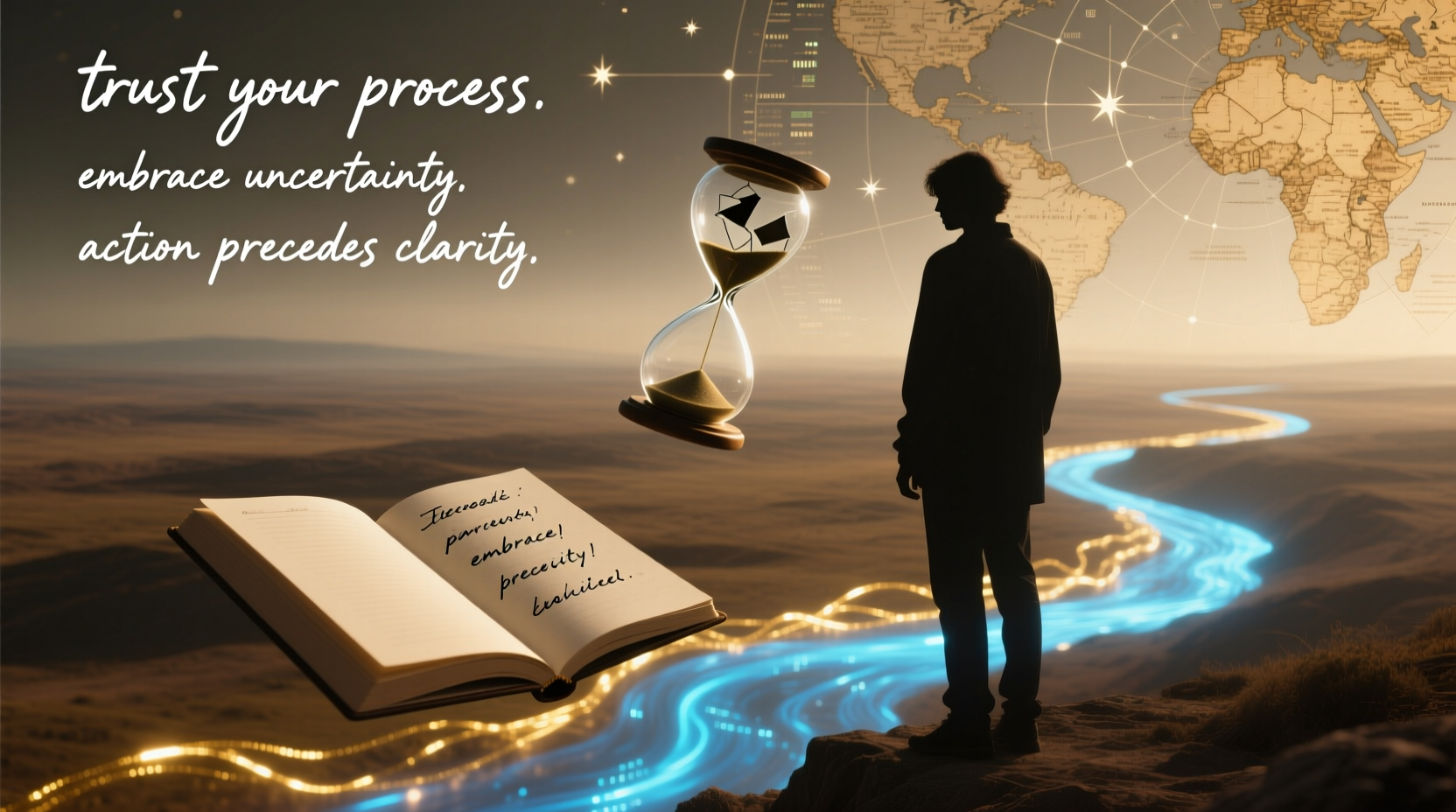
Predictions—whether in finance, career planning, or personal development—are inherently uncertain. They rely on patterns from the past, but life rarely repeats itself exactly. Markets shift, relationships evolve, and global events disrupt even the most well-laid plans. Relying solely on forecasts can create false confidence or unnecessary anxiety.
Instead of asking “What will happen?”, a more empowering question is: “What can I prepare for?” This subtle shift moves you from passive anticipation to active navigation. Practical insight emerges not from knowing the outcome, but from understanding the terrain, recognizing early signs, and building flexibility into your decisions.
“Foresight is not fortune-telling. It’s the disciplined practice of detecting weak signals and preparing multiple pathways.” — Dr. Anika Patel, Strategic Foresight Researcher
Developing Practical Insight: 5 Foundational Skills
Practical insight is a skill, not a gift. It grows through deliberate practice and reflection. Here are five core competencies that help you navigate uncertainty with clarity:
- Sense-making: The ability to gather fragmented information—from news, personal experiences, or social trends—and identify meaningful patterns.
- Scenario thinking: Imagining multiple plausible futures instead of fixating on one outcome.
- Critical questioning: Challenging assumptions behind common predictions (e.g., “Will remote work last?” vs. “What conditions would make it sustainable?”).
- Feedback loops: Regularly reviewing past decisions to refine judgment and improve future choices.
- Emotional regulation: Managing fear and excitement so they don’t distort perception during times of change.
Building Your Navigation Framework
Navigating the future isn’t about creating a fixed roadmap. It’s about designing a flexible compass—a set of principles and practices that guide you when the path isn’t clear. Consider this step-by-step approach:
Step 1: Map Your Current Position
Take stock of your values, skills, resources, and constraints. Clarity about the present enables better projection into the future. Ask: What do I control? What am I committed to? What drains my energy?
Step 2: Identify Key Drivers of Change
These could be technological shifts (e.g., AI), economic trends, health considerations, or relationship dynamics. Focus on forces likely to impact your life in the next 3–7 years.
Step 3: Envision Plausible Scenarios
Create 3–4 realistic future scenarios based on different combinations of drivers. For example:
- Accelerated automation changes your industry.
- A personal health event requires lifestyle adjustments.
- New opportunities emerge from unexpected connections.
Step 4: Stress-Test Your Plans
Ask: “If this scenario unfolds, what would I need to survive? To thrive?” Build contingency actions for each case.
Step 5: Set Directional Goals, Not Fixed Targets
Instead of “I will become CEO by 40,” try “I will grow my leadership capacity over the next five years.” This allows adaptation without losing momentum.
Do’s and Don’ts of Future Navigation
| Do | Don’t |
|---|---|
| Regularly reassess your priorities as circumstances change | Stick rigidly to a plan that no longer fits reality |
| Seek diverse perspectives to challenge your assumptions | Only consult people who agree with you |
| Build small experiments to test ideas before full commitment | Bet everything on a single unproven assumption |
| Invest in transferable skills (communication, problem-solving) | Focus only on narrow, short-term job requirements |
| Accept uncertainty as part of growth | Demand absolute certainty before acting |
Real Example: Navigating Career Transition
Sophie worked in print journalism for over a decade. By 2020, she noticed declining revenue, shrinking staff, and rising digital competition. Instead of waiting for a layoff or hoping the industry would rebound, she began applying practical insight.
She mapped her strengths—storytelling, research, interviewing—and identified growing demand in podcast production and content strategy. She didn’t predict which platform would dominate, but she tested possibilities: volunteering on indie podcasts, taking online courses, and networking in adjacent fields.
Within a year, she transitioned into a hybrid role at a media startup, combining editorial oversight with audience engagement. Her success wasn’t due to predicting the future of media—it was her willingness to observe, experiment, and pivot.
Action Checklist: Strengthen Your Future Navigation
- ☐ Audit your current life domains (career, health, relationships) for vulnerabilities and strengths
- ☐ List 3 major external trends affecting your world and assess their potential impact
- ☐ Write down 3 alternative future scenarios relevant to your life
- ☐ Identify one small action you can take in the next two weeks to prepare for each scenario
- ☐ Schedule a quarterly review to update your insights and adjust course
- ☐ Share your thoughts with a trusted friend or mentor for feedback
Frequently Asked Questions
Isn’t planning pointless if the future is unpredictable?
No—planning is still essential, but the goal shifts from predicting outcomes to building readiness. A good plan includes options, not just one path. Think of it like packing for a trip: you can’t know the weather perfectly, but you can bring layers.
How do I avoid analysis paralysis when facing so many possibilities?
Limit your focus to 2–3 key decision points at a time. Use time-boxing: spend one hour mapping scenarios, then commit to one small action. Movement builds clarity more than endless deliberation.
Can practical insight be learned, or is it intuitive?
It’s largely learnable. While some people naturally notice patterns, anyone can develop these skills through journaling, scenario exercises, and reflective conversations. Like financial literacy, future literacy improves with practice.
Conclusion: Navigate with Purpose, Not Just Prediction
The future cannot be predicted, but it can be shaped. Practical insight gives you the tools to move forward with confidence, even when the path isn’t visible. It replaces fear of the unknown with curiosity, preparation, and agency. Rather than chasing certainty, you learn to travel wisely—with awareness, agility, and intention.
You don’t need a crystal ball. You need clarity of values, openness to change, and the courage to act despite uncertainty. Start today: reflect on one area of your life where you’ve been waiting for “signs.” Instead of waiting, take one small step to explore, test, or prepare. That’s how meaningful futures begin—not with prediction, but with purposeful movement.




 浙公网安备
33010002000092号
浙公网安备
33010002000092号 浙B2-20120091-4
Comments
No comments yet. Why don't you start the discussion?