
Wool sweaters are timeless staples in any wardrobe—warm, breathable, and naturally moisture-wicking. But one misstep in the laundry process can lead to disaster: shrinkage. Whether it was accidentally tossed into a hot wash or dried on high heat, a once-perfect sweater can quickly become too small to wear. The good news? You don’t need special equipment or expensive treatments to fix it. With a simple household item—hair conditioner—you can gently relax the wool fibers and restore your sweater to its original shape.
This method works because wool is a protein-based fiber, much like human hair. Conditioners are formulated to soften, hydrate, and loosen strands by penetrating the cuticle layer. When applied to a shrunken wool garment, the same conditioning agents help relax the tightened fibers, allowing them to be carefully stretched back into place. Done correctly, this technique can recover most, if not all, of the lost size and drape.
The Science Behind Wool Shrinkage
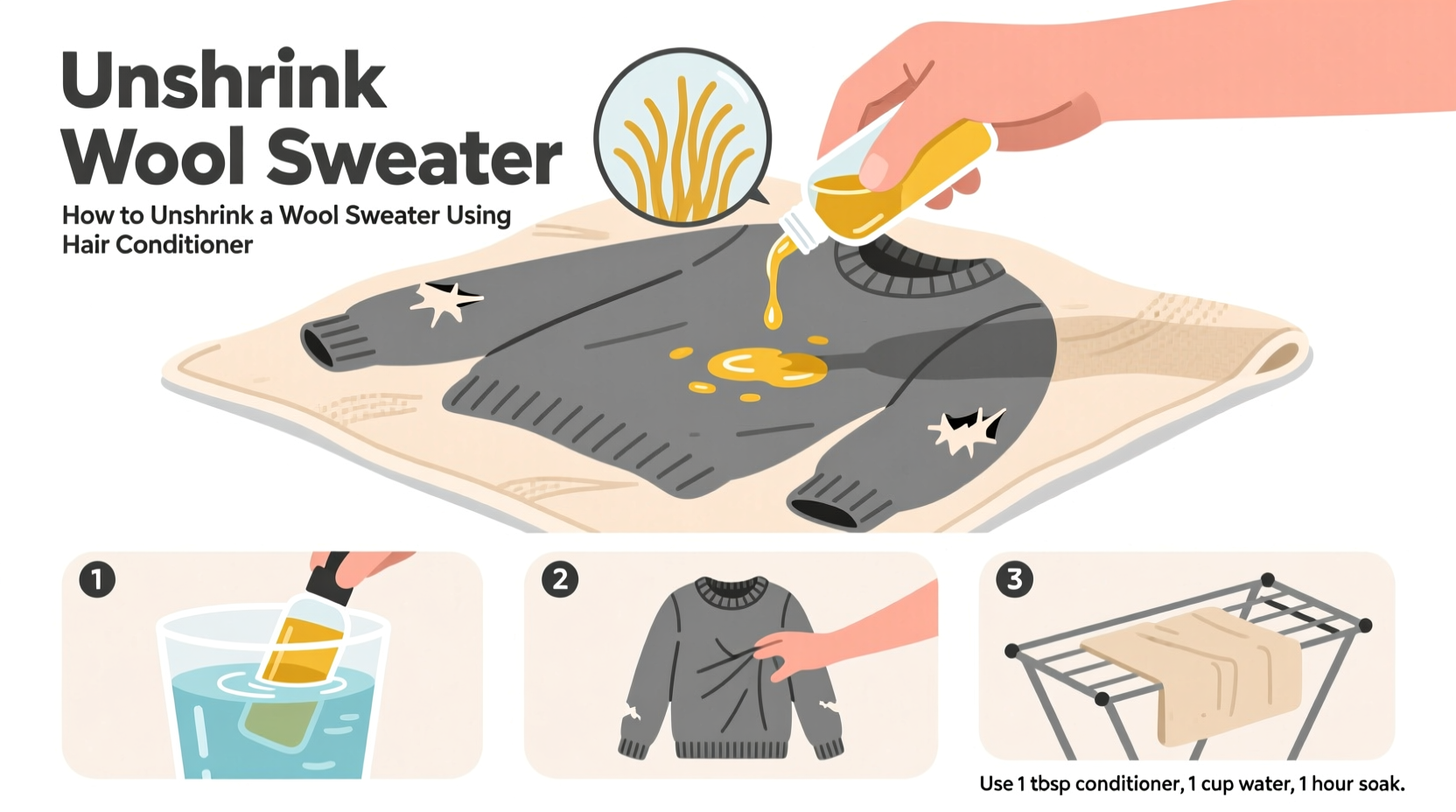
Understanding why wool shrinks is key to reversing the damage. Wool fibers have a scaly outer layer called the cuticle. When exposed to heat, moisture, and agitation (like in a washing machine), these scales interlock and migrate in one direction—a process known as felting. This causes the fabric to tighten, thicken, and reduce in size permanently unless intervention occurs.
Felting is not reversible through normal washing, but it *is* possible to temporarily break down the hydrogen bonds within the keratin structure of wool. Warm water and conditioning agents disrupt these bonds, making the fibers pliable. Once relaxed, the sweater can be reshaped and allowed to dry under tension, effectively \"resetting\" its dimensions.
“Conditioner doesn’t just smooth hair—it lubricates protein fibers, reducing friction and enabling realignment. That’s why it’s so effective for rescuing felted wool.” — Dr. Lydia Chen, Textile Scientist, Royal Melbourne Institute of Technology
Step-by-Step Guide to Unshrinking a Wool Sweater
Follow this detailed process to maximize your chances of success. Patience and precision matter—rushing can damage the fibers further.
- Assess the Damage: Examine the sweater closely. Is it uniformly shrunken, or only in certain areas (like sleeves or waistband)? Note where stretching will be needed.
- Gather Supplies: You’ll need lukewarm water, a mild hair conditioner (preferably without sulfates or silicones), a clean towel, a sink or basin, and measuring tape.
- Fill Basin with Lukewarm Water: Use about 4–6 liters of water at approximately 30–35°C (86–95°F). Avoid hot water, which could cause further shrinkage.
- Add Hair Conditioner: Mix in 2–3 tablespoons of conditioner per liter of water. Stir gently to distribute evenly.
- Soak the Sweater: Submerge the shrunken garment completely. Let it soak for 20–30 minutes, gently pressing down to ensure full saturation.
- Drain and Gently Press Out Water: Do not wring or twist. Instead, lift the sweater and let excess water drip off. Then press between clean hands to remove more moisture.
- Lay Flat on Towel: Spread a large, dry towel on a flat surface. Place the sweater on top, smoothing out wrinkles.
- Roll Towel to Remove Moisture: Roll the towel with the sweater inside like a jelly roll. Press lightly to absorb additional water.
- Reshape on Dry Towel: Lay another dry towel on a flat, non-slip surface. Unroll the sweater and begin reshaping.
- Stretch Gradually: Using your hands, gently pull the cuffs, hem, and shoulders outward. Measure against an identical, properly fitting sweater or original measurements. Pin edges with rust-proof T-pins if available.
- Air Dry Completely: Allow the sweater to dry for 24–48 hours away from direct sunlight or heat sources. Check periodically and re-stretch slightly if areas begin to contract.
Choosing the Right Hair Conditioner
Not all conditioners are created equal when it comes to wool care. Some contain ingredients that may leave residue or even degrade fibers over time. Here’s what to look for—and what to avoid.
| Recommended Ingredients | Ingredients to Avoid |
|---|---|
| Shea butter, coconut oil, argan oil – deeply moisturizing and safe for wool | Silicones (e.g., dimethicone) – create coating that repels water and traps odors |
| Aloe vera, glycerin – humectants that retain moisture without buildup | Sulfates (e.g., SLS) – harsh cleansers that strip natural oils |
| Keratin, hydrolyzed proteins – reinforce fiber strength | Alcohol (especially denatured alcohol) – drying, increases brittleness |
| Fragrance-free or essential oil-based formulas – minimize chemical exposure | Parabens and synthetic dyes – potential irritants and staining agents |
Opt for a deep-conditioning treatment or leave-in formula rather than a rinse-out version with lighter consistency. Brands like Pantene Pro-V Daily Moisture, Garnier Fructis Sleek & Shine, or OGX Renewing Argan Oil are commonly used and effective, provided they align with the above criteria.
Common Mistakes That Can Worsen the Problem
Even with the right materials, improper handling can ruin a recovery attempt. These pitfalls should be avoided at all costs:
- Using hot water: Triggers further felting; always stick to lukewarm.
- Aggressive wringing or scrubbing: Causes mechanical stress and permanent distortion.
- Hanging to dry: Gravity stretches the wet wool unevenly, leading to sagging.
- Rushing the drying process: Using a fan, heater, or radiator accelerates drying but risks re-shrinkage.
- Skipping the reshaping phase: Without proper tension during drying, fibers reset in their shrunken state.
Real Example: Restoring a Heirloom Sweater
Sophie, a graphic designer from Portland, inherited a hand-knit Icelandic wool sweater from her grandmother. It had been stored folded in a cedar chest for years and was pristine—until she washed it in warm water and dried it on medium heat. The result: a sweater that fit her 10-year-old nephew.
Determined not to lose the family keepsake, Sophie researched wool restoration methods and settled on the conditioner technique. She used a sulfate-free argan oil conditioner and soaked the garment for 25 minutes. After careful pressing and rolling in towels, she laid it on her dining table, measuring each dimension against old photos of her grandmother wearing it.
Over two days, she adjusted the pins slightly as the wool dried, maintaining consistent tension. The final result? A nearly full recovery. While the neckline retained slight tightness, the body and sleeves returned to their original proportions. “It wasn’t perfect,” Sophie said, “but seeing it fit again brought me to tears. It felt like getting part of her back.”
When This Method Won’t Work
While highly effective, the conditioner method isn’t foolproof. Success depends on several factors:
- Severity of shrinkage: Garments reduced by more than 30% may not fully recover.
- Type of wool: Superwash-treated wool responds better than raw, coarse varieties.
- Prior damage: Sweaters already weakened by pilling, moth holes, or repeated shrinking may not withstand manipulation.
- Blended fabrics: Wool-polyester mixes respond less predictably due to synthetic fiber resistance.
If the sweater remains stiff or brittle after soaking, stop stretching immediately. Overhandling can lead to tearing or irreversible deformation.
Prevention: How to Care for Wool Long-Term
Once restored, protect your sweater with proper maintenance. Prevention is far easier than repair.
“The best wool care routine is gentle, infrequent, and intentional. Wash only when necessary, always cold, and lay flat to dry.” — Miriam Hale, Sustainable Fashion Consultant📋 **Wool Care Checklist**
- ✔ Hand-wash in cold water with wool-safe detergent
- ✔ Use conditioner soak every 3–4 washes for softness
- ✔ Never tumble dry or use wringing motions
- ✔ Store folded on a shelf, not hung on hangers
- ✔ Refresh between wears with steam or airing out
- ✔ Treat stains immediately with spot cleaning
Frequently Asked Questions
Can I use baby shampoo instead of conditioner?
Yes. Baby shampoo is mild and often recommended for delicate wool care. However, it lacks the emollients found in conditioner that aid fiber relaxation. For unshrinking, conditioner is superior. Baby shampoo works well for regular washing but not for structural recovery.
How many times can I repeat the process?
Generally, no more than two attempts should be made. Repeated soaking and stretching fatigue the fibers, increasing the risk of thinning or holes. If the first try doesn’t fully restore the sweater, focus on incremental improvement rather than forcing results.
Will the sweater feel different afterward?
Initially, it may feel softer or slightly heavier due to residual conditioner. Rinse lightly with cool water after the final stretch if desired, but avoid full rewashing until necessary. Over time, normal wear will normalize the texture.
Conclusion: Give Your Sweater a Second Life
A shrunken wool sweater doesn’t have to end up in the donation bin or relegated to dusting duty. With a bottle of hair conditioner and a few hours of careful attention, you can reverse common laundry mistakes and reclaim a beloved garment. The process taps into the natural chemistry of wool, using accessible tools to achieve professional-level results.
Beyond saving money and reducing textile waste, restoring a sweater carries emotional value—especially when it’s tied to memories, heritage, or personal style. By mastering this technique, you gain more than a wearable piece of clothing; you gain confidence in caring for natural fibers and extending their lifespan.




 浙公网安备
33010002000092号
浙公网安备
33010002000092号 浙B2-20120091-4
Comments
No comments yet. Why don't you start the discussion?