
As holiday decorations grow more elaborate, rooftop Christmas lights have become a centerpiece of seasonal displays. But once the strands are hung high above, verifying their operation can be frustrating—and dangerous. Climbing ladders in winter conditions increases risk, and from ground level, it's often impossible to see which bulbs are out or where connections fail. Fortunately, modern technology offers a smarter solution: drones. With a consumer-grade drone equipped with a camera, homeowners can inspect rooftop lighting systems quickly, safely, and in detail—without leaving the driveway.
Using a drone for this task isn’t just for tech enthusiasts. It’s practical, efficient, and increasingly accessible. Whether you're troubleshooting flickering lights, confirming full coverage before a neighborhood tour, or preparing for a timed light show, a drone provides an aerial perspective that no ladder ever could. This guide walks through everything you need to know—from selecting the right drone to executing a safe inspection and interpreting what you see.
Why Drones Are Ideal for Holiday Light Inspections
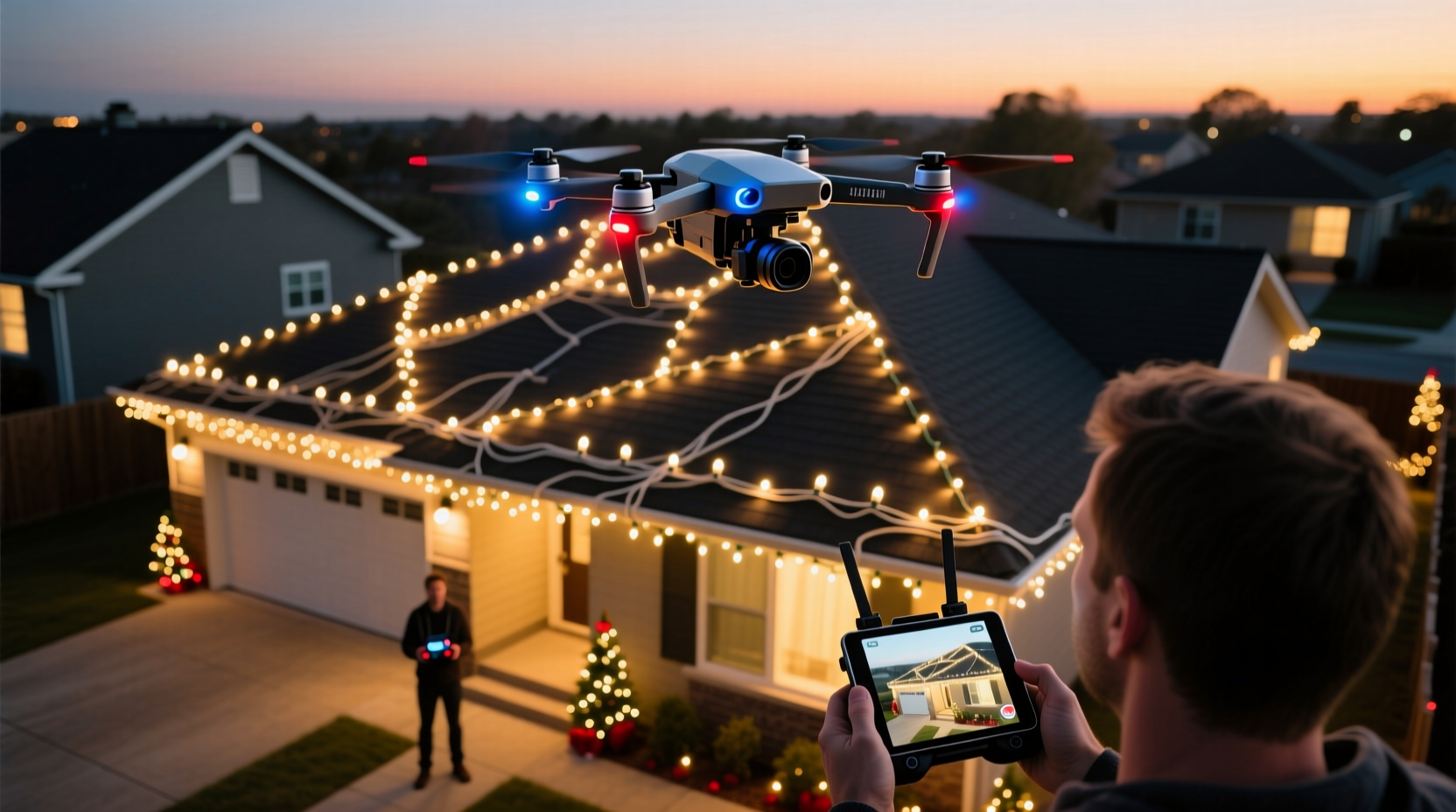
Traditional methods of checking rooftop lights involve either squinting upward from the yard (often ineffective at night) or ascending a ladder with a flashlight. Both approaches come with limitations. Ground-level views distort angles and miss subtle issues like individual dead bulbs or loose connectors. Ladders introduce physical risks—especially on icy or uneven surfaces—and offer only brief, unstable access.
Drones eliminate these problems by providing:
- Elevated visibility: A bird’s-eye view reveals the entire layout, making it easy to spot gaps or malfunctions.
- Safety: No climbing required. You remain grounded while the drone does the work.
- Real-time feedback: Live video feed allows immediate identification of issues.
- Recording capability: Save footage for later review or to compare year-over-year setups.
- Time efficiency: A full roof scan takes under ten minutes once you’re practiced.
Even basic drones today come with HD cameras and stable flight controls, making them suitable for close-range architectural inspections. When used responsibly, they transform a potentially hazardous chore into a simple, repeatable process.
Step-by-Step Guide to Inspecting Christmas Lights with a Drone
Successfully using a drone for light inspection requires preparation, controlled flight, and attention to detail. Follow this sequence to ensure a smooth and effective check.
- Prepare the Lights and Power Source
Turn on all rooftop light strings and confirm power at the outlet. Check timers or smart controllers to ensure they’re set to “on” during your inspection window. If some sections aren’t illuminating, note their expected location for targeted drone focus. - Inspect and Charge Your Drone
Verify battery levels, propeller integrity, and firmware updates. Ensure the camera lens is clean. Cold weather reduces battery performance, so keep spare batteries warm indoors until use. - Review Local Flight Regulations
Confirm you’re flying legally. In the U.S., FAA Part 107 rules apply, though recreational flyers must follow the TRUST guidelines. Avoid restricted zones, maintain line-of-sight, and fly below 400 feet. - Choose the Right Time
Optimal conditions include calm winds, no precipitation, and low foot traffic. Dusk is ideal—lights are visible, but natural light helps avoid disorientation. - Launch and Ascend Safely
Start at least 10 feet from people and obstacles. Use takeoff assist if available. Ascend vertically to clear gutters and trees before moving toward the roofline. - Approach the Roof Methodically
Move slowly along the eaves, keeping the drone parallel to the house. Maintain a distance of 5–8 feet to avoid prop wash disturbing wires while ensuring clear visuals. - Scan Each Section
Focus on one segment at a time. Look for dark spots, intermittent flashing, or loose strands. Use zoom features sparingly—digital zoom degrades image quality. - Record Video for Review
Enable recording throughout the flight. Later playback allows frame-by-frame analysis of problem areas. - Land and Analyze Footage
Once landed, transfer and watch the video. Mark locations of faulty lights on a sketch or note them verbally for repair planning.
Repeat the process after repairs to verify fixes. Over time, this becomes a standard part of your holiday prep—like testing smoke detectors or winterizing pipes.
Choosing the Right Drone for the Job
Not all drones are equally suited for rooftop inspections. While toy models lack stability and camera quality, professional-grade units may be overkill. The sweet spot lies in mid-tier consumer drones offering reliability, clarity, and ease of use.
| Drone Feature | Recommended | Avoid |
|---|---|---|
| Camera Resolution | 1080p minimum; 4K preferred | 720p or lower |
| Stabilization | Gimbal or electronic image stabilization | No stabilization |
| Battery Life | 20+ minutes per charge | Under 10 minutes |
| Obstacle Sensors | Front and side sensors | None |
| Wind Resistance | Level 5 (up to 22 mph) | Level 3 or lower |
| Live Feed Quality | HD transmission (e.g., OcuSync) | Laggy or grainy display |
Popular models like the DJI Mini 3 Pro, Autel Evo Nano+, or Skydio 2+ excel in this role due to compact size, strong cameras, and intelligent flight modes. Even older models like the Mavic Air 2 perform well when maintained.
“Drones are becoming essential tools for home maintenance. We’ve seen homeowners detect not just lighting faults, but also damaged shingles and clogged gutters during holiday flights.” — Carlos Mendez, Residential Drone Inspector & Founder of SkyCheck Home Surveys
Common Mistakes and How to Avoid Them
Flying near a house introduces unique challenges. Awareness of frequent errors improves both safety and results.
- Flying too close: Prop wash can snag lightweight wires or knock loose decorations. Maintain a buffer zone.
- Ignoring wind: Gusts increase near rooftops due to turbulence. If the drone drifts noticeably, land immediately.
- Overlooking battery life: Cold temperatures reduce capacity by up to 30%. Always carry spares and warm them before flight.
- Poor lighting contrast: Flying in full darkness makes depth perception difficult. Use dusk or supplement with temporary yard lighting.
- Skipping pre-flight checks: A loose propeller or cracked arm can lead to crashes. Perform a full visual and system test each time.
Mini Case Study: Resolving a Persistent Lighting Issue
Mark T., a homeowner in Minneapolis, spent three Decembers replacing entire light strings because half his rooftop display would go dark. He assumed the issue was defective sets. After investing in a drone, he flew a quick inspection and discovered something unexpected: one particular section drooped slightly over the edge of the roof, exposing a connector to snowmelt. Corrosion had formed at the junction, breaking the circuit after a few days of moisture exposure.
With the footage as evidence, Mark repositioned the strand, added a waterproof cover, and sealed the connection with silicone tape. The fix lasted the entire season. More importantly, he avoided unnecessary replacements and saved over $120 in materials. “I couldn’t believe I’d missed it from the ground,” he said. “The drone showed me exactly where the wire dipped. It took two minutes to spot what I’d been guessing at for years.”
Essential Checklist Before Every Flight
Follow this checklist to ensure every inspection is safe and productive:
- ✅ Confirm rooftop lights are powered on and operational from visible vantage points
- ✅ Fully charge drone and remote controller batteries
- ✅ Install fresh microSD card or confirm storage space
- ✅ Clean camera lens and inspect propellers for damage
- ✅ Check local weather—avoid rain, snow, or winds above 15 mph
- ✅ Review airspace restrictions via app (e.g., B4UFLY or DJI Fly)
- ✅ Clear launch zone of pets, children, and obstacles
- ✅ Calibrate compass if prompted or after long storage
- ✅ Set video resolution and enable grid lines on screen
- ✅ Brief household members about the flight schedule
This routine takes less than ten minutes but prevents most common failures. Treat it like a pilot’s pre-flight checklist—non-negotiable for consistent success.
Frequently Asked Questions
Can I use any drone for checking Christmas lights?
You can use most drones with a functional camera, but models with HD video, stable hover, and obstacle avoidance yield better results. Very small or indoor-only drones often lack the precision needed for outdoor structural inspections.
Is it legal to fly a drone near my house for this purpose?
Yes, in most countries, recreational drone use around your own property is permitted as long as you follow aviation guidelines—maintain visual line-of-sight, fly below regulated altitude limits (usually 400 feet), and avoid airports or crowds. In the U.S., register drones over 0.55 lbs with the FAA.
What if my drone loses signal near the roof?
Signal interference can occur near large metal structures or dense wiring. To minimize risk, stay within 100 meters, avoid flying directly behind chimneys or satellite dishes, and ensure your drone has Return-to-Home (RTH) enabled. Most modern drones automatically trigger RTH if signal drops.
Final Thoughts: Make Safety and Clarity Your Priority
Checking rooftop Christmas lights doesn’t have to mean risking a fall or guessing from afar. A drone brings precision, convenience, and peace of mind to holiday decorating. Beyond identifying burnt-out bulbs, it can uncover wear on cords, insecure mounts, or even early signs of roof damage exacerbated by installation.
The initial investment in a capable drone pays off in reduced maintenance costs, improved display quality, and—most importantly—personal safety. As drone technology continues to evolve, integrating it into seasonal home care routines will become standard practice, much like using a smartphone instead of a paper map.
Start small. Test your equipment early in December. Build confidence with short flights. Use the footage to plan repairs efficiently. And remember: the goal isn’t just a perfect light display—it’s enjoying the holidays without preventable accidents or frustration.




 浙公网安备
33010002000092号
浙公网安备
33010002000092号 浙B2-20120091-4
Comments
No comments yet. Why don't you start the discussion?