
In high-pressure work environments, maintaining focus during long or repetitive meetings can be a challenge. For some, fidget tools like spinners provide subtle sensory stimulation that enhances concentration and reduces anxiety. However, using a fidget spinner openly in a professional setting risks appearing unprofessional or distracting to others. The key lies not in whether you use one, but in how you use it—discreetly, respectfully, and effectively.
When used with intention and subtlety, a fidget spinner can become an asset rather than a liability. It can help regulate nervous energy, improve mental clarity, and support sustained attention—all without anyone noticing. This guide explores practical strategies for integrating a fidget spinner into your meeting routine while preserving decorum and professionalism.
Selecting the Right Spinner for Professional Settings
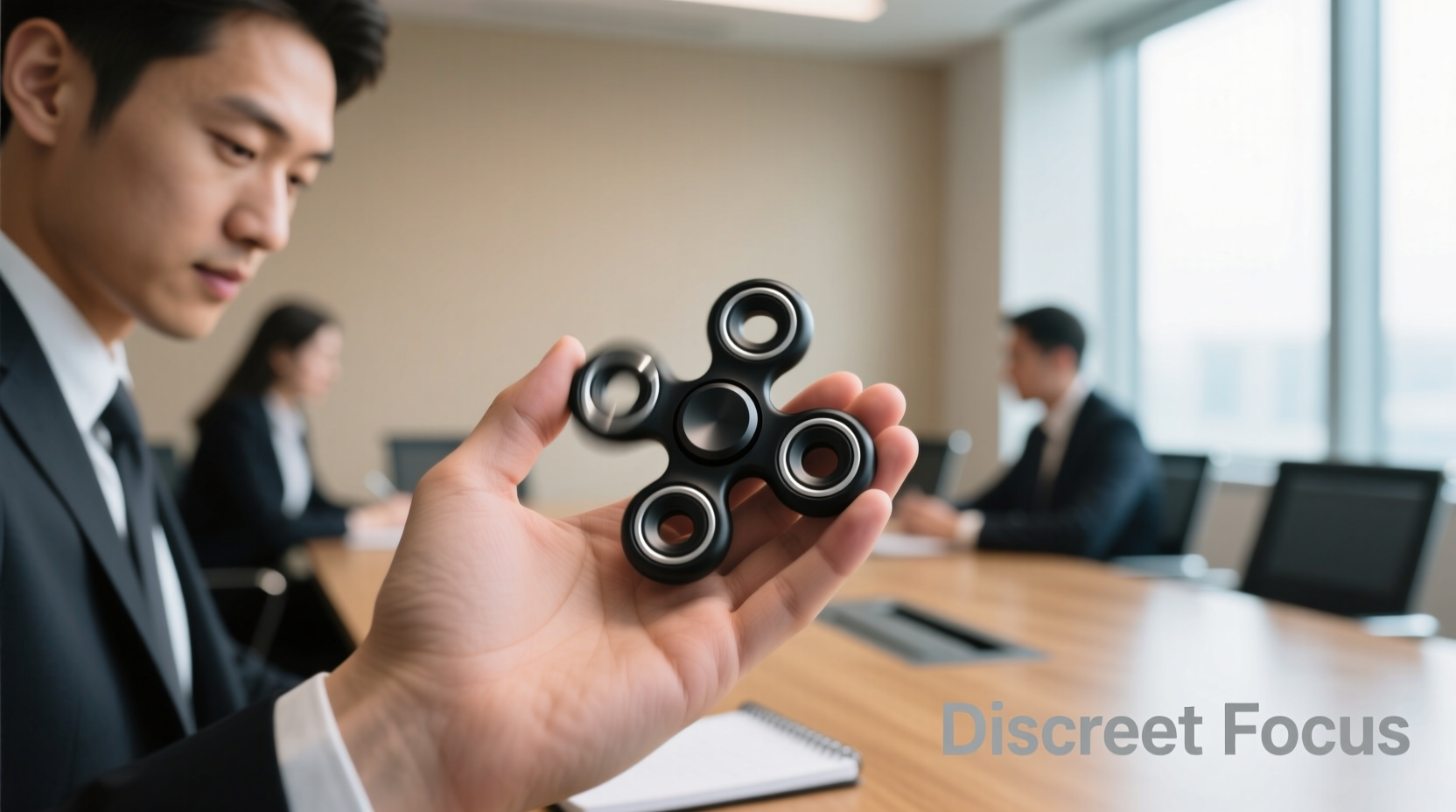
Not all fidget spinners are suitable for quiet office environments. Many models produce audible whirring or clicking sounds that draw unwanted attention. Choosing the right device is the first step toward seamless integration.
Look for spinners designed with silent bearings—typically ceramic or hybrid ball bearings—which minimize noise while maximizing spin duration. Smaller models (under 2 inches in diameter) fit more easily within the palm and are less likely to catch peripheral vision. Materials also matter: metal spinners may feel more substantial and balanced, but plastic or matte-finish versions reduce glare under fluorescent lighting.
| Feature | Ideal for Meetings | Best Avoided |
|---|---|---|
| Noise Level | Silent or near-silent spin | Audible hum or rattle |
| Size | 1.5–2 inches in diameter | Over 2.5 inches |
| Material | Matt black plastic, brushed metal | Glossy, reflective finishes |
| Weight | Light to moderate (30–50g) | Heavy or unbalanced |
Mastering the Palm-Cup Hold Technique
The most effective way to conceal spinner use is mastering the palm-cup hold. This technique keeps the device hidden from view while allowing smooth rotation through minimal finger movement.
- Rest your forearm on the table or armrest, hand relaxed and slightly curved as if holding a small ball.
- Place the spinner in the center of your palm, aligning the central bearing with your middle finger.
- Curl your fingers gently over the top, enclosing the spinner completely.
- Use your thumb and middle finger to initiate the spin with a quick flick, then maintain motion with slight adjustments.
When executed correctly, the spinner remains invisible beneath your hand. Only subtle fingertip movements are visible, resembling natural hand gestures or note-taking motions. Practice this at home until activation and maintenance require no visual confirmation.
Behavioral Integration: Blending In Without Standing Out
Even a silent spinner becomes noticeable if your behavior shifts dramatically. The goal is behavioral continuity—using the spinner without altering your body language in ways that signal distraction or restlessness.
Avoid sudden hand movements, repeated glances at your palm, or excessive spinning duration. Instead, synchronize spinner use with natural meeting rhythms: engage it during listening phases, pause when speaking or making eye contact, and limit continuous spins to 30–45 seconds before letting it stop naturally.
Position matters. Sit at a slight angle to the table so your hand rests inward, shielded by your torso. If seated at a glass-top conference table, keep your hand flat and avoid lifting it unnecessarily, as reflections can expose motion underneath.
“Discretion isn’t just about silence—it’s about alignment with social context. A tool used mindfully supports focus; used poorly, it undermines credibility.” — Dr. Lena Torres, Organizational Psychologist
Mini Case Study: Sarah, Project Manager in Tech
Sarah leads weekly cross-functional team meetings lasting up to two hours. She noticed her attention drifting during status updates, especially after back-to-back virtual calls. After experimenting with stress balls and pen-clicking (both deemed disruptive), she tried a fidget spinner.
Initially, she spun it openly on the table, drawing confused looks. Then, she adopted the palm-cup method, using a matte-black 1.8-inch spinner with ceramic bearings. She practiced during low-stakes internal syncs, timing spins to coincide with data-heavy presentations.
Within three weeks, colleagues commented on her improved engagement—asking fewer clarifying questions because she retained more information. No one noticed the spinner. Her secret? “I treat it like checking my watch—brief, purposeful, and never prolonged,” she says.
Do’s and Don’ts of Meeting Spinner Use
| Do | Don't |
|---|---|
| Spin only during listening segments | Use it while presenting or leading discussion |
| Keep spins short (under 1 minute) | Let it run continuously throughout the meeting |
| Choose neutral-colored, compact models | Use flashy LED or oversized spinners |
| Practice at home first | Test new techniques in high-stakes meetings |
| Pause when making eye contact | Fidget while someone is addressing you directly |
Alternative Fidget Options for Maximum Discretion
If even subtle spinner use feels risky, consider lower-profile alternatives that offer similar sensory feedback:
- Fidget rings: Wearable bands with rotating or sliding elements, indistinguishable from regular jewelry.
- Tactile desk pads: Small rubber or silicone mats with textured surfaces for fingertip stimulation.
- Pen modding: Modify a standard pen with a weighted tip or knurled grip for tactile engagement.
- Anxiety stones or worry beads: Smooth, silent touch objects kept in a pocket and rubbed between fingers.
These options eliminate mechanical motion entirely, reducing risk while still supporting focus. Some professionals rotate between tools depending on meeting type—spinner for internal strategy sessions, ring for client-facing calls.
Step-by-Step Guide to Implementing Discreet Spinner Use
Adopting this practice successfully requires preparation and gradual implementation. Follow this timeline to integrate it naturally:
- Week 1: Select & Test – Choose a quiet, compact spinner. Test noise levels and grip comfort at home.
- Week 2: Practice Concealment – Master the palm-cup hold. Practice starting, spinning, and stopping without looking.
- Week 3: Simulate Conditions – Use the spinner during solo work or low-pressure video calls to build muscle memory.
- Week 4: Trial Run – Introduce it in a routine team check-in where stakes are low and attention is distributed.
- Week 5+: Refine & Adapt – Adjust based on comfort and perceived reactions. Replace or modify tools if necessary.
Monitor your own focus improvements and observe any nonverbal cues from colleagues. If someone glances repeatedly at your hand or comments on movement, scale back or switch methods.
Frequently Asked Questions
Is it ever appropriate to use a fidget spinner in a formal meeting?
Yes, provided it’s used silently and out of sight. In formal settings, discretion is paramount. If you’re unsure, opt for a non-mechanical alternative like a textured ring or stress stone. The goal is self-regulation without disruption.
What if my boss sees me using it? Won’t it look unprofessional?
Context matters. If you’re attentive, contributing, and maintaining eye contact, a concealed spinner is unlikely to register. If questioned, frame it as a personal focus aid—similar to chewing gum or doodling. Many neurodivergent professionals rely on such tools ethically and effectively.
Can I request accommodations for fidget tool use?
Under disability accommodations (e.g., ADHD, anxiety disorders), yes. You may formally request permission to use sensory tools as part of workplace inclusion policies. Documentation from a healthcare provider strengthens such requests.
Final Thoughts: Focusing on Function Over Form
The stigma around fidget tools often stems from misuse—not from their inherent value. When leveraged with awareness and restraint, a fidget spinner can be a legitimate cognitive aid, helping individuals stay present, calm, and productive in demanding environments.
Professionalism isn’t defined by stillness, but by contribution, respect, and presence. If a small, silent motion beneath your hand enables deeper listening and sharper thinking, it earns its place at the table—so long as it remains unseen and unheard.




 浙公网安备
33010002000092号
浙公网安备
33010002000092号 浙B2-20120091-4
Comments
No comments yet. Why don't you start the discussion?