
Gua sha, an ancient Chinese healing technique, has transitioned from traditional medicine into modern skincare routines for its ability to sculpt facial contours, reduce puffiness, and improve circulation. When used properly, the ritual can be soothing and beneficial—especially for those with sensitive or delicate skin. However, improper technique, excessive pressure, or unsuitable tools can lead to redness, micro-tears, or irritation. Understanding how to apply this practice gently yet effectively is essential for reaping benefits without compromising your skin’s integrity.
The key lies not just in the strokes but in preparation, product pairing, and consistency. Whether you're new to facial gua sha or refining your routine, mastering the balance between efficacy and gentleness ensures long-term results without inflammation or discomfort.
Understanding Gua Sha and Delicate Skin
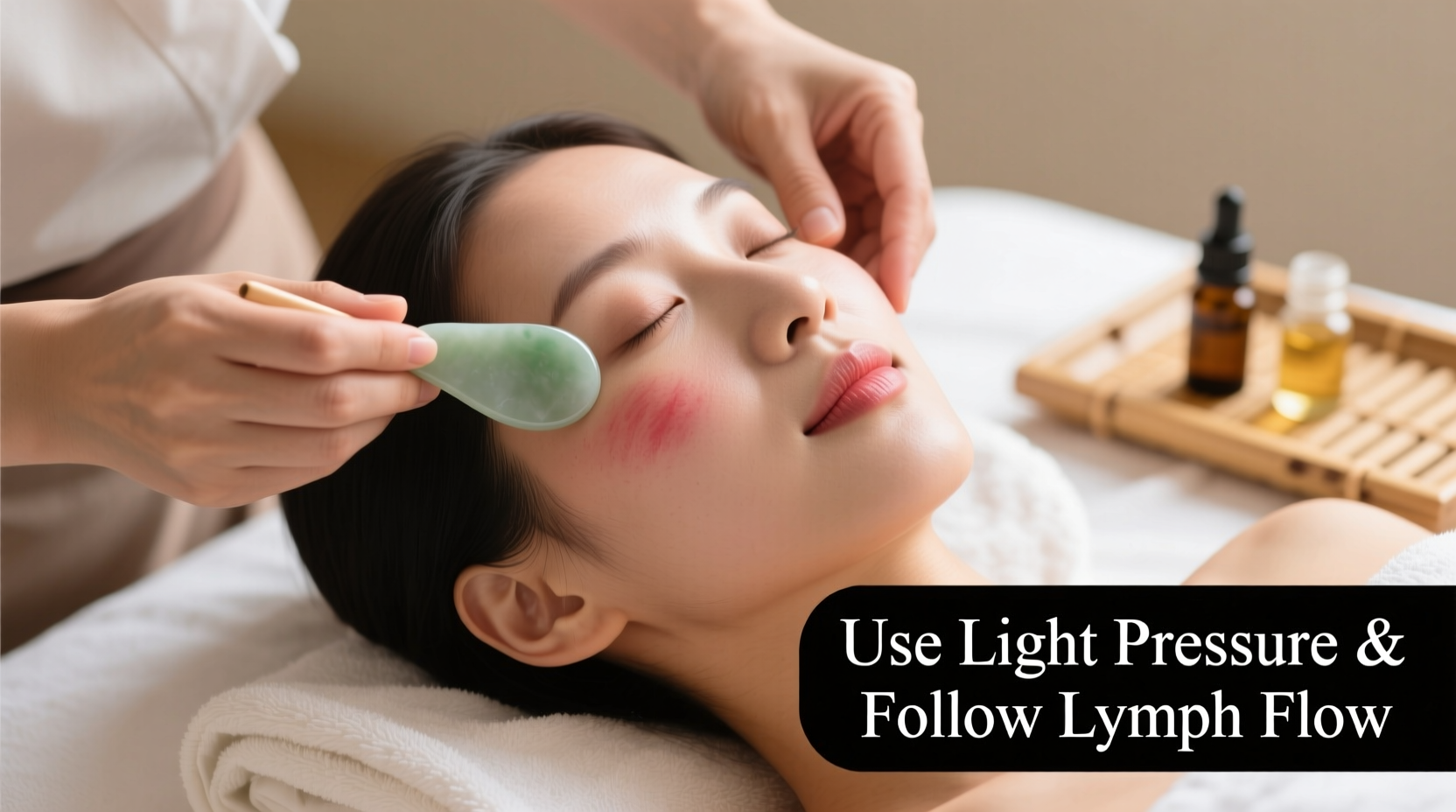
Gua sha involves using a smooth, flat stone—typically jade, rose quartz, or bian stone—to gently scrape the skin's surface. This action increases blood flow, helps drain lymphatic fluid, and may support collagen production over time. While the term \"scraping\" sounds harsh, the correct application is feather-light and gliding, never abrasive.
Delicate skin—often thin, reactive, or prone to redness—requires special attention. Conditions like rosacea, eczema, or post-procedure sensitivity (such as after chemical peels) increase vulnerability to friction-related damage. Even healthy skin can become irritated if pressure is too firm or if the skin isn’t properly lubricated.
According to Dr. Mei Ling, a board-certified dermatologist specializing in integrative skincare:
“Gua sha should never cause pain or visible redness beyond mild flushing. For sensitive skin types, the goal is stimulation, not trauma. Think of it as encouraging movement rather than forcing change.”
This philosophy underscores the importance of mindfulness during use. The ritual should feel calming, almost meditative—not aggressive or hurried.
Step-by-Step Guide: Safe Gua Sha for Sensitive Skin
Follow this detailed sequence to ensure safe and effective use of your gua sha tool. Performing these steps consistently 3–5 times per week can yield noticeable improvements in tone and texture without irritation.
- Cleanse thoroughly. Begin with a gentle cleanser to remove dirt, oil, and makeup. Residue on the skin increases friction and reduces glide, which may prompt you to press harder than necessary.
- Apply ample facial oil or serum. Use a non-comedogenic facial oil or water-based serum with slip. Oils rich in fatty acids—like squalane, jojoba, or rosehip—provide ideal glide while nourishing sensitive skin. Avoid watery essences that evaporate quickly.
- Warm the tool. Hold the gua sha under lukewarm water for 10–15 seconds. A slightly warm stone enhances relaxation and improves circulation without shocking the skin.
- Start with light pressure. Place the curved edge of the tool flat against the skin. Never drag or pull taut. Let the weight of the tool do most of the work—your hand guides, not pushes.
- Follow upward and outward motions. Always move toward lymph nodes (jawline, ears, collarbones). Repeat each stroke 3–5 times slowly. Never go back and forth; one-directional strokes prevent tugging.
- Focus on major zones:
- Neck and jawline: Start at the base of the neck, sweeping upward along the sides to behind the ears.
- Under the eyes: Use the small curve of the tool beneath the orbital bone, moving from inner to outer corners.
- Cheeks and midface: Begin at the nose, sweep diagonally up and out along the cheekbone.
- Forehead: Glide horizontally from the center outward, then vertically from brows to hairline.
- Finish with drainage. End at the lymph nodes below the ears and along the collarbone. Gentle pressing here helps flush built-up fluid.
- Wipe and store. Clean the tool with a soft cloth and mild soap after each use. Store in a dry place away from direct sunlight.
Choosing the Right Tool and Products
Not all gua sha tools are created equal—shape, material, and edge smoothness matter greatly when working with fragile skin.
Look for stones with rounded edges and ergonomic curves that fit facial contours. Avoid sharp or jagged tools marketed for “deep sculpting,” as they increase risk of micro-abrasions.
| Material | Pros | Cons | Best For |
|---|---|---|---|
| Jade | Cooling, lightweight, traditionally believed to balance energy | Can be brittle; less durable over time | Daily use, oily or acne-prone skin |
| Rose Quartz | Smooth finish, retains cool temperature, associated with calming energy | Heavier; may require more control | Sensitive or stressed skin |
| Bian Stone | Naturally porous, believed to emit far-infrared rays | Rare; often expensive | Therapeutic use, deeper circulation support |
Pair your tool with products that enhance glide and soothe. Avoid formulations containing alcohol, fragrance, or exfoliants (like AHAs or retinol) immediately before gua sha—they compromise the skin barrier and heighten sensitivity.
“Using a hydrating facial oil creates a protective buffer between the stone and epidermis. It’s not optional—it’s foundational.” — Lila Chen, Holistic Skincare Practitioner
Common Mistakes That Irritate Delicate Skin
Even with good intentions, many users inadvertently cause irritation. Recognizing these errors helps refine your technique.
- Applying too much pressure: Pressing hard doesn’t increase effectiveness. It strains capillaries and may lead to telangiectasia (visible broken capillaries).
- Skipping lubrication: Dry scraping damages the lipid barrier, leading to transepidermal water loss and inflammation.
- Using the tool on compromised skin: Active breakouts, sunburns, or open wounds should be avoided entirely. Wait until skin is fully healed.
- Incorrect stroke direction: Moving downward or backward contradicts lymphatic flow and can contribute to sagging appearance over time.
- Overuse: Daily sessions may overwhelm sensitive skin. Limit to 3–5 times weekly unless advised otherwise by a professional.
Mini Case Study: Recovering from Overuse
Amy, a 34-year-old with combination-sensitive skin, began using her rose quartz gua sha daily after seeing influencers promote “intense morning routines.” She applied firm pressure along her jawline and cheeks, believing stronger strokes would yield faster results. Within two weeks, she noticed persistent redness, stinging sensations, and increased reactivity to her usual moisturizer.
After consulting a dermatologist, Amy learned she had developed a mild form of irritant contact dermatitis due to repeated micro-trauma. She paused gua sha for three weeks, focused on barrier repair with ceramide-rich creams, and reintroduced the tool with lighter pressure and pre-application of squalane oil. Now, she uses it only three times a week and reports improved contour definition without irritation.
Essential Checklist for Safe Gua Sha Practice
Before every session, run through this checklist to protect your skin and maximize benefits:
- ✅ Skin is clean and free of debris
- ✅ Facial oil or serum is applied generously
- ✅ Gua sha tool is clean and warmed slightly
- ✅ Nails are trimmed to avoid accidental scratching
- ✅ No active breakouts, rashes, or sunburn present
- ✅ Hands are relaxed; no gripping or tensing
- ✅ Strokes are slow, smooth, and unidirectional
- ✅ Session ends with lymphatic drainage motions
Frequently Asked Questions
Can I use gua sha if I have rosacea?
Yes, but with caution. Avoid areas with active flushing or visible blood vessels. Use the lightest possible pressure and skip the tool during flare-ups. Consult your dermatologist if unsure.
How do I clean my gua sha tool?
After each use, rinse under lukewarm water and wipe with a soft cloth. Once weekly, wash with mild soap or diluted alcohol-free cleanser. Do not soak for prolonged periods, especially porous stones like bian.
Why does my face turn red after gua sha?
Mild pinkness is normal due to increased circulation and should fade within 10–15 minutes. Persistent or painful redness indicates excessive pressure or unsuitable skin condition. Reduce intensity and monitor response.
Conclusion: Gentle Consistency Over Force
Using a gua sha tool correctly isn’t about speed, strength, or frequency—it’s about intention, care, and respect for your skin’s limits. Delicate skin responds best to consistent, mindful practice rather than aggressive manipulation. With the right tool, proper lubrication, and a calm hand, gua sha becomes not just a skincare step, but a restorative ritual that supports both health and harmony.
Begin with shorter sessions, observe how your skin reacts, and adjust accordingly. Over time, you’ll develop a rhythm that enhances radiance without compromise. The beauty of gua sha lies not in dramatic transformations overnight, but in the quiet, cumulative effect of daily kindness to your complexion.




 浙公网安备
33010002000092号
浙公网安备
33010002000092号 浙B2-20120091-4
Comments
No comments yet. Why don't you start the discussion?