
Every holiday season, homes across neighborhoods light up with festive rooftop Christmas displays. From glowing reindeer to cascading icicle lights, these decorations bring joy—but they also come with risk. One of the most dangerous parts of installation is using a ladder on uneven ground, often in cold or wet conditions, while handling bulky materials. Falls from ladders account for thousands of emergency room visits each year, many during holiday decorating. The good news: with proper planning, equipment, and technique, you can install your rooftop display safely and confidently.
Understand the Risks of Ladder Use During Holiday Decorations
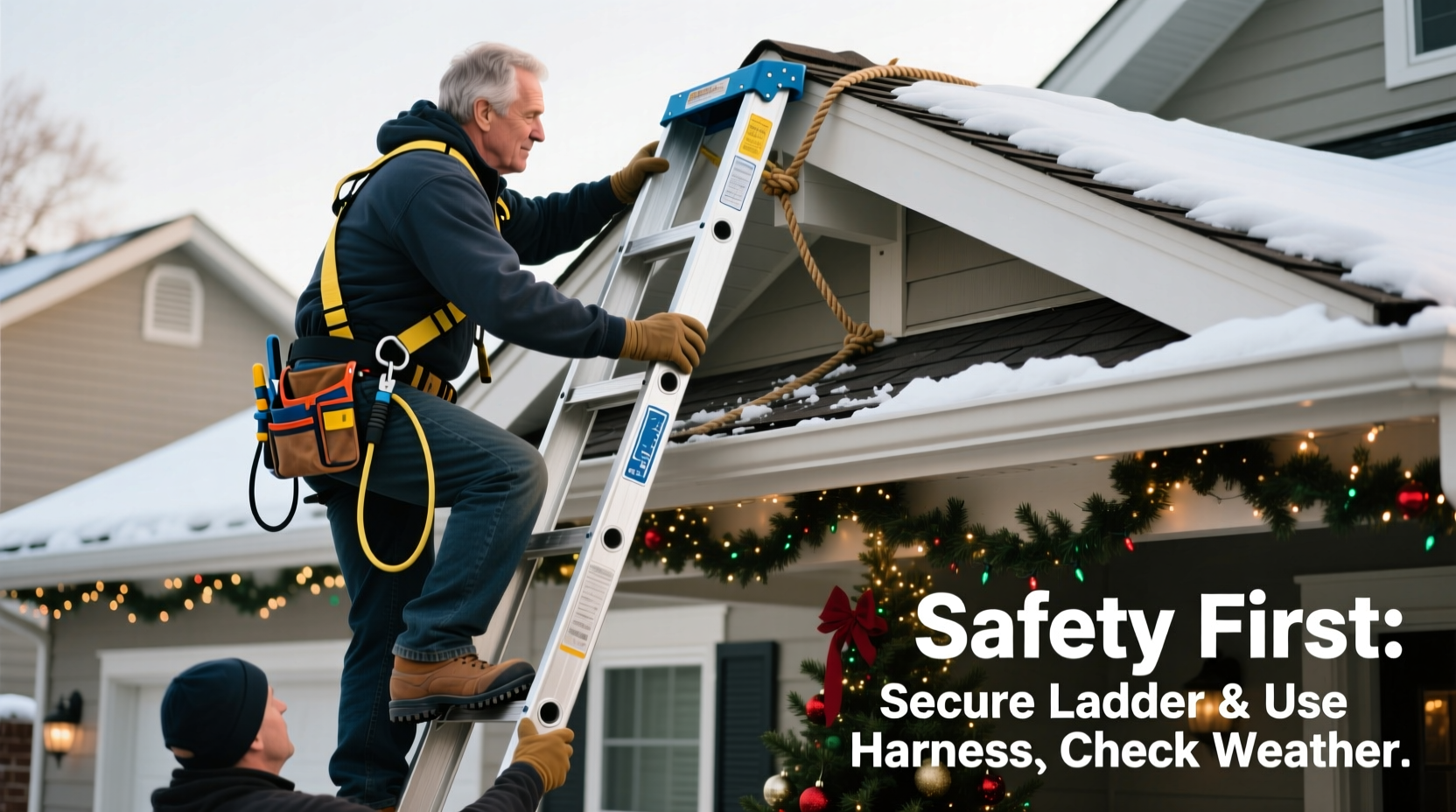
Roofline decorating often requires extended reach, which means relying on extension ladders that can be unstable if not used correctly. According to the U.S. Consumer Product Safety Commission (CPSC), over 500,000 people are treated annually for ladder-related injuries, with December seeing a spike due to holiday setup. Common hazards include:
- Ladder slippage on icy or damp surfaces
- Overreaching while carrying decorations
- Improper angle leading to backward tipping
- Electrical contact with power lines when adjusting lights
- Fatigue from working at height in cold weather
The combination of winter conditions, bulky gear, and distraction from festive tasks increases the likelihood of missteps. Recognizing these risks is the first step toward prevention.
“More than 70% of fall incidents during holiday decorating involve improper ladder placement or lack of a spotter.” — National Safety Council Report, 2023
Selecting the Right Ladder for Rooftop Work
Not all ladders are suitable for reaching roof edges. Using the wrong type increases instability and reduces control. Here’s what to consider when choosing a ladder for rooftop Christmas installations:
Material Type
Most household ladders are made from aluminum, fiberglass, or composite materials. For electrical safety—especially when stringing lights—fiberglass is preferred because it doesn’t conduct electricity. Aluminum is lighter but poses a risk near overhead wires.
Load Capacity
Check the duty rating. If you're climbing with a bag of lights, clips, and tools, you need a Type IA (300-pound capacity) or Type IAA (375 pounds) ladder. Standard household ladders (Type II) support only 225 pounds and may buckle under added weight.
Height and Extension
Your ladder should extend at least 3 feet above the roofline to provide secure handholds when mounting decorations. A common mistake is using a ladder that’s too short, forcing users to stand on the top cap or overreach dangerously.
| Risk Factor | Safe Alternative |
|---|---|
| Using a 16-foot ladder for a two-story roof | Use a 28-foot extension ladder with 3+ feet above roof edge |
| Standing on the top two rungs | Always keep three points of contact; never exceed safe climbing zone |
| Placing ladder on snow-covered ground | Clear area and use ladder levelers or stabilizer feet |
| Working alone with heavy loads | Have a spotter assist with tools and balance |
Step-by-Step Guide: Safe Ladder Setup and Use
Proper setup is non-negotiable. Follow this sequence every time you deploy a ladder for rooftop work, regardless of how routine it seems.
- Inspect the ladder before use. Check for cracked rungs, loose hinges, damaged locking mechanisms, or bent rails. Even minor defects can compromise stability under load.
- Choose a stable base surface. Avoid soft soil, ice, snow, or gravel. If necessary, use plywood sheets or leveling pads to create a firm foundation.
- Set the correct angle. Use the “1 in 4” rule: for every 4 feet of height, the base should be 1 foot away from the wall. For example, if the ladder touches the house at 16 feet, the base should be 4 feet out. This prevents backward tipping.
- Secure the base. Have a spotter stand with feet braced against the ladder feet, or use sandbags or stake anchors if available. Do not rely solely on friction.
- Stabilize the top. Rest the ladder on a solid part of the gutter or roof edge. Use standoff stabilizers if possible to avoid leaning directly on gutters, which can collapse.
- Climb with care. Maintain three points of contact (two hands and one foot, or two feet and one hand) at all times. Carry tools in a shoulder bag or hoist them up after climbing.
- Work within the safe zone. Never lean more than 12 inches beyond either side of the ladder. Reposition the ladder instead of stretching.
- Descend carefully. After finishing a section, climb down completely before moving the ladder. Do not shift it while standing on it.
When to Stop and Reassess
If wind exceeds 15 mph, temperatures are below freezing, or visibility drops due to fog or darkness, pause the job. Cold muscles react slower, increasing fall risk. Wet or icy rungs drastically reduce grip. It’s better to wait than risk injury.
“The safest decoration is one installed without incident. Delaying a day beats a trip to the ER.” — Dr. Alan Reyes, Occupational Health Specialist
Essential Safety Checklist for Rooftop Decoration Projects
Before you even bring the ladder out of storage, run through this checklist to ensure preparedness.
- ✅ Ladder inspected for damage
- ✅ Ground cleared and leveled
- ✅ Weather conditions safe (no wind, rain, ice)
- ✅ Proper ladder angle confirmed (1:4 ratio)
- ✅ Base secured or spotter present
- ✅ Top of ladder stabilized against roof or standoff used
- ✅ Tools and lights pre-staged at ground level
- ✅ Non-slip footwear worn
- ✅ Communication established with helper (hand signals or verbal cues)
- ✅ Emergency plan in place (who calls 911 if needed?)
Print this list and keep it in your holiday storage bin. Review it aloud with your assistant before starting. This ritual builds awareness and accountability.
Real Example: A Close Call That Changed One Family’s Approach
The Peterson family in Minnesota had decorated their home for 18 years without incident—until last December. Tom, an experienced DIYer, decided to install new LED snowflakes along the peak of his roof using a borrowed aluminum ladder. The ground was partially frozen, but he assumed it was stable. He placed the ladder at a steeper angle than recommended to avoid hitting bushes, climbed with a string of lights in hand, and leaned slightly to the left to reach the far end of the eave.
The ladder shifted suddenly. With no spotter, Tom fell backward, landing on his shoulder. He fractured his clavicle and spent two weeks recovering before Christmas. Later inspection showed the ladder feet had settled into thawed soil beneath a thin crust of ice.
Afterward, the Petersons invested in a fiberglass extension ladder with stabilizer legs, committed to always having a second person present, and now schedule decoration days only when weather forecasts are clear. “We learned the hard way,” Tom said. “The display isn’t worth a broken body.”
Expert Tips for Managing Load and Balance
Carrying decorations while climbing is one of the top causes of imbalance. Here’s how professionals handle materials safely:
- Use a haul line. Tie a rope to a bucket or tool pouch and pull it up after you’ve climbed and stabilized yourself.
- Pre-assemble lightweight pieces. Connect small light sections on the ground so fewer trips are needed.
- Wear a tool belt. Keep clips, zip ties, and voltage testers within easy reach without needing both hands.
- Limit carry weight. Never climb with more than 10–15 pounds of gear. Make multiple trips if needed.
Frequently Asked Questions
Can I lean a ladder against gutters?
It’s not recommended. Most gutters aren’t designed to support lateral pressure. Leaning a ladder against them can cause detachment, water damage, or collapse. Use standoff accessories that bridge over the gutter and rest the ladder against the roof framing instead.
How high can I safely go on a ladder?
You should never stand on the top two rungs of any ladder. The highest safe standing level is typically four rungs from the top on an extension ladder. Always maintain three points of contact and avoid overreaching.
Is it safe to use a ladder with ice or frost on it?
No. Any moisture, frost, or ice on ladder rungs creates an extreme slip hazard. Wipe down the rails and rungs thoroughly before use. Consider waiting until midday when sun exposure has melted morning frost.
Alternative Solutions to Reduce Risk
If you have mobility concerns, a steep roof, or simply want to minimize risk, consider safer alternatives:
- Telescoping pole kits: These allow you to hang lights from the ground using extendable rods with clip attachments. Ideal for single-story homes.
- Professional installation: Many lighting companies offer seasonal setup and takedown services for a flat fee. Worth considering if you’re over 50 or have a complex roofline.
- Ground-based displays: Redirect focus to yard trees, walkways, or window displays. You can still achieve a dramatic effect without climbing.
- Scaffolding or lifts (for commercial-grade setups): Though costly, temporary scaffolding provides a stable platform for large-scale residential displays.
Technology is also evolving—some companies now sell magnetic light mounts for metal roofs or drone-assisted hanging systems, though these remain niche.
Final Thoughts: Safety Is Part of the Celebration
A joyful holiday display shouldn’t come at the cost of health or safety. Every year, emergency rooms treat otherwise healthy adults who took one risky step on a ladder while chasing the perfect photo-worthy roofline. The traditions we build mean nothing if we’re injured in the process.
Taking time to inspect equipment, set up correctly, and work with a partner isn’t an obstacle—it’s respect for yourself and your family. When you prioritize ladder safety, you’re not just protecting bones and skin; you’re ensuring you’ll be around to enjoy many more Christmases to come.




 浙公网安备
33010002000092号
浙公网安备
33010002000092号 浙B2-20120091-4
Comments
No comments yet. Why don't you start the discussion?