
Forming a Limited Liability Company (LLC) is one of the most strategic moves a small business owner can make. More than just a legal formality, an LLC serves as a powerful tool for shielding personal assets and unlocking flexible tax treatment. Yet, many entrepreneurs stop at registration without fully leveraging its potential. When used correctly, an LLC doesn’t just offer liability protection—it becomes a cornerstone of financial efficiency and long-term business resilience.
Understanding the Dual Advantages of an LLC
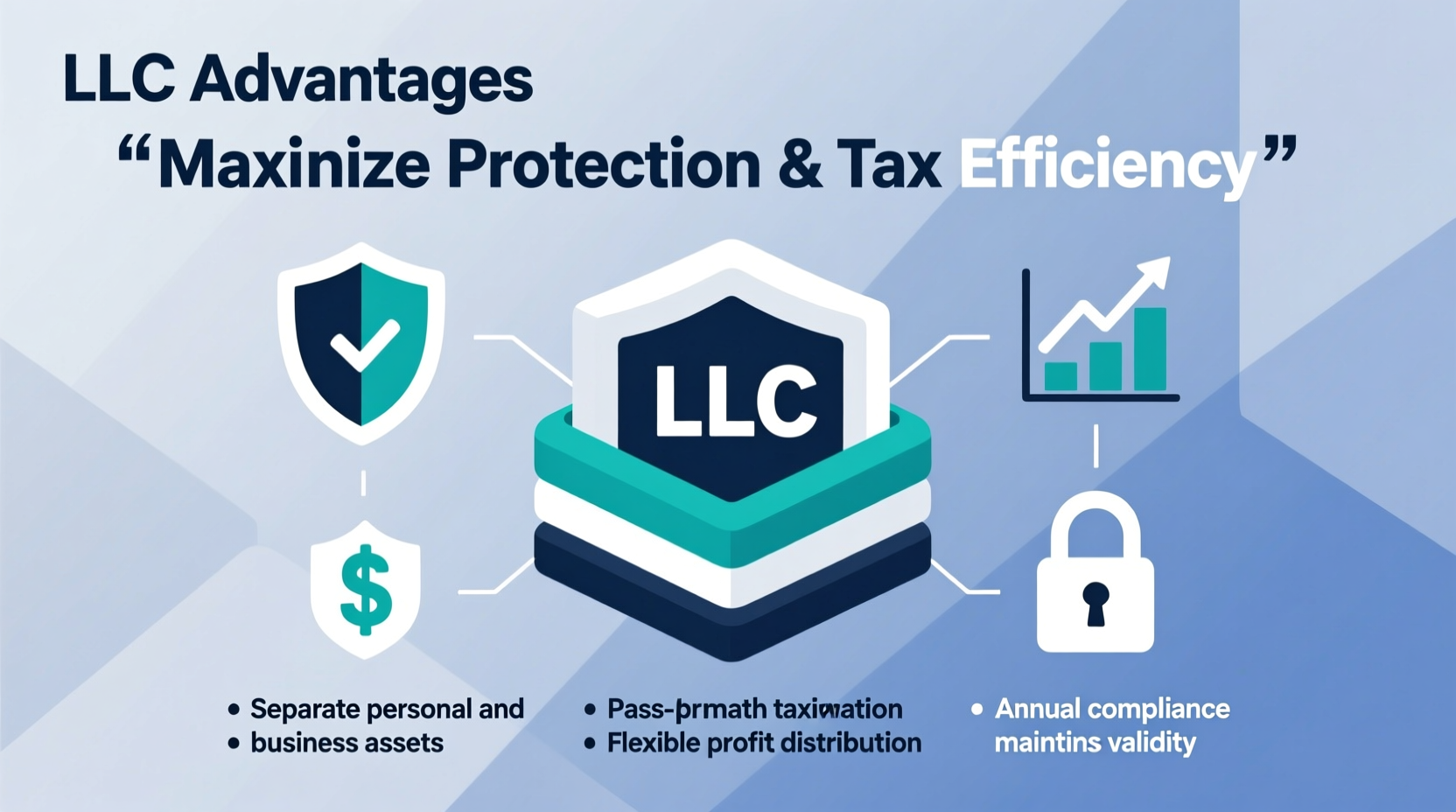
An LLC combines the liability protection of a corporation with the tax simplicity of a sole proprietorship or partnership. This hybrid structure allows owners—called members—to separate personal and business finances while avoiding double taxation. The key lies in understanding both sides: asset protection and tax optimization.
From a legal standpoint, an LLC creates a distinct entity. If your business is sued or incurs debt, your home, car, and personal savings are generally protected. On the tax side, the IRS treats single-member LLCs as “disregarded entities” by default, meaning profits pass through to your personal return. Multi-member LLCs are taxed as partnerships unless they elect otherwise.
Maximizing Asset Protection Through Proper Structure
Liability protection isn't automatic. It depends on maintaining the LLC’s legal integrity. Courts can \"pierce the corporate veil\" if you fail to treat the LLC as a separate entity, exposing personal assets.
To strengthen protection:
- Maintain accurate records of meetings and major decisions, even if you're the sole member.
- Use formal contracts between your LLC and any other businesses or individuals.
- Obtain adequate business insurance—general liability, professional liability, or umbrella policies—as an added layer of defense.
- Follow state requirements for annual reports and franchise taxes to keep your LLC in good standing.
In states like Wyoming, Nevada, and Delaware, additional privacy and creditor protection laws enhance the strength of an LLC. For example, charging order protection prevents creditors from seizing ownership interests in multi-member LLCs—they can only receive distributions, if any.
“An LLC is only as strong as the practices behind it. Discipline in bookkeeping, separation of assets, and consistent compliance turn a paper entity into a real shield.” — Laura Simmons, Business Law Attorney
Leveraging Tax Flexibility for Maximum Savings
One of the most underutilized aspects of an LLC is its tax flexibility. By default, LLCs enjoy pass-through taxation, but they can also elect to be taxed as an S-Corporation or C-Corporation depending on income levels and growth goals.
For high-earning businesses, electing S-Corp status can reduce self-employment taxes. Here's how: Instead of paying Social Security and Medicare taxes on all profits, you pay yourself a reasonable salary (subject to payroll taxes) and distribute the rest as dividends (not subject to self-employment tax).
Consider this scenario:
| Structure | Net Profit | Self-Employment Tax (15.3%) | Potential S-Corp Savings |
|---|---|---|---|
| Default LLC (Pass-Through) | $150,000 | $22,950 | N/A |
| LLC Electing S-Corp | $150,000 | Salary: $80,000 → $12,240 Distributions: $70,000 → $0 |
$10,710 saved |
Savings depend on your industry, location, and net income. Always consult a CPA before making an election.
Step-by-Step Guide to Optimizing Your LLC’s Tax Status
- Assess profitability: If your LLC earns over $70,000 annually after expenses, S-Corp election may be worth exploring.
- Determine reasonable compensation: Research industry standards for your role to justify salary levels to the IRS.
- File Form 2553: Submit this election with the IRS within 75 days of the start of the tax year you want it to apply.
- Set up payroll: Pay yourself regularly through a payroll service to maintain compliance.
- Maintain documentation: Keep records of salary decisions, profit distributions, and tax filings.
Real-World Example: A Freelancer’s Smart Upgrade
Jamal, a freelance web developer in Austin, earned $140,000 in his third year of operation. Initially operating as a sole proprietor, he paid nearly $21,000 in self-employment taxes. After forming an LLC and electing S-Corp status, he began paying himself a $75,000 salary and taking $65,000 in distributions.
By doing so, Jamal reduced his self-employment tax to $11,475—a savings of $9,525 in one year. He reinvested those savings into marketing and a retirement plan, accelerating business growth. His LLC also protected his personal savings when a client sued over a delayed project—an issue resolved without personal financial loss.
Avoiding Common Pitfalls
Even well-intentioned business owners make mistakes that undermine their LLC’s effectiveness. These include:
- Commingling funds: Using business revenue for personal expenses without proper accounting.
- Neglecting operating agreements: Especially in multi-member LLCs, failing to define roles, profit splits, and exit strategies leads to disputes.
- Missing deadlines: Late annual reports or tax filings can result in penalties or administrative dissolution.
- Overlooking state-specific rules: Some states impose flat fees or income-based taxes on LLCs regardless of profit.
LLC Do’s and Don’ts
| Do | Don't |
|---|---|
| Open a separate business bank account | Use your LLC card for groceries or vacations |
| Keep detailed financial records | Throw away receipts or skip bookkeeping |
| Reinvest profits strategically | Assume all profits are personally spendable |
| Review tax strategy annually | Stick with one structure without reassessment |
Frequently Asked Questions
Can I change my LLC’s tax classification later?
Yes. You can file Form 8832 (Entity Classification Election) or Form 2553 (S-Corp election) with the IRS to change how your LLC is taxed. However, timing and eligibility rules apply, so consult a tax professional before switching.
Do I need an LLC to get tax benefits?
No. Sole proprietors and partnerships can claim many deductions (home office, mileage, supplies). But an LLC adds legal protection and access to S-Corp election, which can significantly reduce tax liability at higher income levels.
What happens if I don’t pay myself a “reasonable salary” as an S-Corp?
The IRS may reclassify distributions as wages, triggering back taxes, penalties, and interest. Always document your salary decision based on industry benchmarks and job responsibilities.
Final Checklist: Getting the Most From Your LLC
- ✅ Register your LLC with your state and obtain an EIN from the IRS.
- ✅ Open a dedicated business bank account and credit card.
- ✅ Draft an operating agreement (even if you’re the only member).
- ✅ Track all income and expenses using accounting software.
- ✅ Consult a CPA to evaluate S-Corp election based on your income.
- ✅ File required annual reports and stay compliant with state rules.
- ✅ Review your structure yearly as your business grows.
Take Control of Your Business Future
An LLC is more than a registration number—it's a strategic framework for protecting your life’s work and optimizing your financial outcomes. Too many entrepreneurs miss out on its full value by treating it as a one-time formality. By maintaining clean records, separating finances, and proactively managing tax elections, you transform your LLC into a powerful engine for security and growth.




 浙公网安备
33010002000092号
浙公网安备
33010002000092号 浙B2-20120091-4
Comments
No comments yet. Why don't you start the discussion?