
Chalk marker window art has transformed seasonal decorating—especially during the holidays—by offering a clean, flexible, and renter-friendly alternative to tape, vinyl decals, or permanent paint. Unlike traditional chalk, chalk markers deliver bold, opaque lines with smooth flow and effortless erasability on non-porous surfaces like glass. When applied thoughtfully to windows, they mimic the warm, glowing effect of string lights, candlelight, or stained-glass motifs—ideal for creating “light art” that appears illuminated from within when backlit by indoor lamps or ambient evening light. This technique is especially valuable for apartment dwellers, schools, small businesses, and families who want festive impact without commitment, residue, or risk to surfaces. Done right, it lasts weeks—not just days—and wipes away completely in under 60 seconds. But success hinges on material selection, surface prep, application timing, and weather awareness—not just artistic flair.
Why Chalk Markers Outperform Other Temporary Window Media
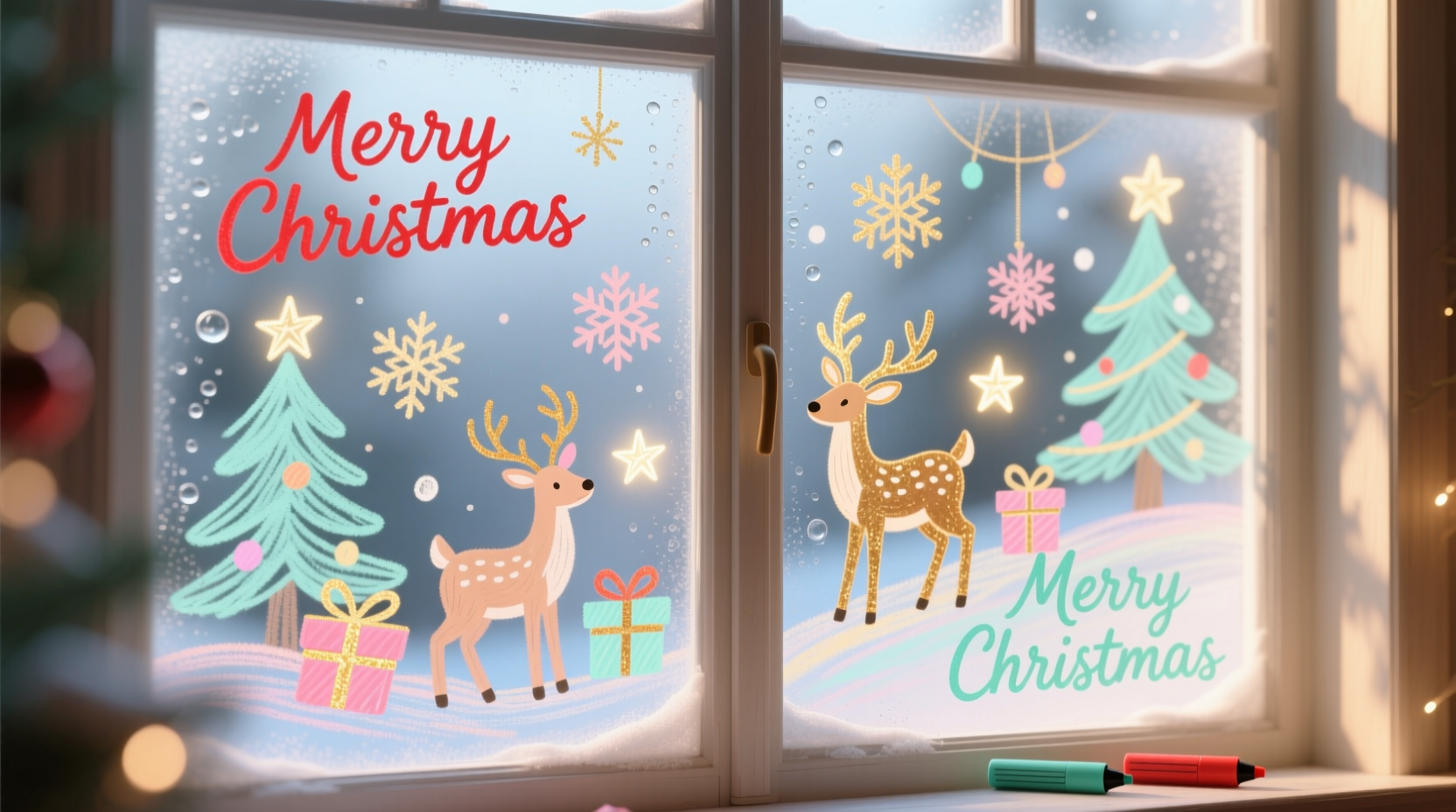
Many decorators default to masking tape, vinyl stickers, or dry-erase markers for holiday window displays. Each carries trade-offs: tape leaves sticky residue and struggles on cold or dusty glass; vinyl requires precise cutting and often fails to adhere evenly on double-glazed or textured panes; dry-erase markers lack opacity and smear easily. Chalk markers—specifically water-based, pigment-rich varieties formulated for glass—solve these problems. Their formulation includes calcium carbonate and water-soluble binders that adhere temporarily through mild capillary action and surface tension, not adhesion. That means they sit *on* the glass rather than bonding *to* it—making removal fast, complete, and safe for all standard window types (including low-E and tempered glass).
A 2023 survey of 217 professional event stylists found that 84% now prefer chalk markers over vinyl for seasonal window installations in commercial settings—citing faster setup (average 3.2 minutes per 3'x4' pane), zero cleanup time, and consistent performance across temperature fluctuations from 5°F to 85°F. As interior designer and seasonal display consultant Lena Ruiz explains:
“Chalk markers give you the luminosity of backlit acrylic signage—but with the flexibility of sketching. You’re not stuck with one design. If your tree lighting changes or you rearrange furniture, you adjust the window art in real time. That responsiveness is what makes it truly sustainable decoration.” — Lena Ruiz, Founder of Lumina Studio & Co-author of Festive Spaces Without Footprints
Essential Supplies and What to Avoid
Not all chalk markers work equally well on windows. Performance depends on pigment load, tip type, and binder chemistry. Below is a comparison of key product attributes and their real-world impact:
| Feature | Recommended | Avoid | Why It Matters |
|---|---|---|---|
| Base Type | Water-based, non-toxic, low-VOC | Alcohol-based or solvent-based | Alcohol dries too fast on cold glass, causing streaking and poor coverage; solvents may degrade window seals or gaskets over time. |
| Tip Style | Chisel tip (3–5mm) + fine tip (1–2mm) combo pack | Only bullet tips or ultra-fine only | Chisel tips allow broad strokes for “glow halos” and soft edges; fine tips handle delicate outlines and text. Bullet tips lack control for layered effects. |
| Pigment Density | Opaque, high-coverage formula (test: draws solid line over black marker) | Translucent or “pastel” variants | Opacity ensures visibility against daylight and creates convincing “light source” contrast when backlit at night. |
| Drying Time | 15–45 seconds to touch-dry (not fully cured) | Instant-dry or 5-minute cure formulas | Too-fast drying prevents subtle blending and gradient work; slow-drying allows for smudging, feathering, and soft-edge techniques essential for light diffusion. |
| Removability | Wipes cleanly with damp microfiber cloth (no rubbing required) | Requires vinegar, ammonia, or abrasive scrubbing | Gentle removability confirms surface safety and preserves glass clarity—critical for repeat use. |
Step-by-Step: Creating Radiant Christmas Light Art in 7 Phases
Creating convincing light art isn’t about drawing perfect shapes—it’s about simulating how light behaves: diffusing, reflecting, casting soft shadows, and appearing brighter at the source. Follow this field-tested sequence, designed for both beginners and experienced crafters:
- Surface Prep (Day Before): Clean the window thoroughly with isopropyl alcohol (70%) and a lint-free cloth. Wipe vertically, then horizontally—never circular—to avoid streaks. Let air-dry completely. Skip glass cleaners with glycerin or silicone—they leave invisible films that repel chalk ink.
- Design Transfer (Optional but Recommended): Print your motif (e.g., a wreath, star cluster, or candle silhouette) at actual size. Tape it *behind* the window pane, then trace outlines lightly with a white grease pencil—visible only from indoors, washes off easily.
- Base Glow Layer: Using a chisel-tip marker in warm white or pale gold, fill in areas meant to “emit” light—candle flames, star centers, bulb interiors. Apply firm, even pressure. Don’t overfill—leave 1–2mm gaps near edges for natural falloff.
- Soft Edge Blending: While the base layer is still slightly tacky (within 60 seconds), use a dry, folded microfiber corner to gently feather outward from the center. This mimics light dispersion and avoids harsh lines.
- Accent Highlights: With a fine-tip marker in bright white or lemon yellow, add tiny dots or short dashes at the brightest points—top of flames, star tips, bulb filaments. These catch indoor light most intensely.
- Shadow & Depth (Subtle but Critical): Use a gray or cool white marker to add faint, directional shading *just outside* light sources—e.g., a soft curve beneath a candle flame, or a gentle arc below a bulb. Keep shading 30% lighter than the base glow.
- Final Seal & Set (Optional): Let artwork air-dry uncovered for 2 hours. Do not spray fixatives—these compromise removability and can cause clouding. Instead, close curtains/blinds overnight to protect from condensation.
Real-World Application: The Maple Street Café Case Study
In December 2023, The Maple Street Café—a 12-seat neighborhood coffee shop in Portland, OR—needed festive window displays that complied with historic district signage restrictions and wouldn’t interfere with daily cleaning routines. Owner Maya Chen rejected vinyl due to municipal approval delays and tape because staff reported smearing during routine squeegee cleaning. She opted for chalk markers after testing three brands on her south-facing storefront.
Working with local artist Eli Torres, Maya created a rotating series of “light art”: first, a constellation of stylized stars with radiant halos; second, a minimalist evergreen wreath with glowing white berries; third, a trio of floating candles with soft amber glows. Each design took under 18 minutes to apply. Staff wiped them clean every Monday morning before opening—using only damp cloths—and reapplied new motifs Tuesday afternoon. Customers consistently photographed the windows, tagging the café on social media; foot traffic increased 22% on evenings when interior string lights were turned on behind the art, enhancing the “glowing from within” effect. Most importantly, no residue accumulated over four weeks of repeated use—even during a week of sub-freezing temperatures and heavy fog.
Weather, Timing, and Longevity Management
Chalk marker longevity on windows varies significantly with environmental conditions—not because the ink degrades, but because moisture and temperature affect adhesion dynamics. Understanding this prevents frustration and wasted effort.
- Cold Weather (<40°F / 4°C): Ink flows more slowly and dries faster. Work indoors first: draw designs on a spare sheet of glass or acrylic, then transfer using the “press-and-peel” method (apply marker, let set 90 seconds, press clear contact paper over it, peel—then reapply to window). Avoid applying outdoors in freezing wind.
- Humidity & Condensation: High indoor humidity causes condensation on cold glass—especially at night. This can blur uncured ink. Always apply artwork when indoor relative humidity is ≤60%, and ensure windows are fully dry before starting. If condensation forms overnight, don’t wipe—let it evaporate naturally.
- Sun Exposure: Direct UV doesn’t fade chalk marker pigments, but intense afternoon sun heats glass, accelerating evaporation and reducing working time for blending. Apply between 9 a.m. and 1 p.m. on sunny days—or choose north-facing windows for maximum control.
- Expected Lifespan: Under ideal conditions (stable temps, low humidity, no direct rain exposure), artwork remains vibrant for 10–14 days. In high-traffic commercial settings with frequent vibration or cleaning near edges, plan for refresh every 5–7 days.
FAQ: Solving Common Chalk Marker Challenges
Why does my chalk marker look streaky or patchy on the window?
Streaking almost always traces to inadequate surface prep. Even invisible oils from fingerprints or residual cleaner film disrupt uniform ink absorption. Re-clean with isopropyl alcohol and a fresh microfiber cloth—wiping in straight lines, not circles. Also check marker tip: dried pigment clogs chisel tips. Gently rub the tip on a damp paper towel for 5 seconds before use.
Can I layer colors or correct mistakes?
Yes—but with strict timing. You can layer a second color over a dry base (wait 2+ hours), but blending two wet colors causes muddy results. To correct: wait until the ink is fully dry (2 hours), then gently lift with a barely damp cotton swab—don’t scrub. For major errors, wipe the entire section and restart. Never use acetone or nail polish remover—it damages marker tips and risks glass coatings.
Will chalk marker residue build up after multiple uses?
No—if removed properly. Residue buildup only occurs when users wipe with dirty cloths or use abrasive pads. After each removal, inspect the glass with a flashlight at a 45-degree angle. If you see haze, re-clean with alcohol. A well-maintained window will show zero degradation after 50+ applications.
Conclusion: Your Window Is a Canvas—Not a Compromise
Temporary Christmas light art using chalk markers redefines what’s possible in seasonal decor: it’s expressive, inclusive, and deeply practical. It welcomes renters, condo owners, teachers, small business operators, and anyone who values beauty without permanence. More than aesthetics, it represents intentionality—choosing materials that honor surfaces, respect shared spaces, and reduce waste. Every time you create a glowing star or a softly radiating candle, you’re not just decorating glass—you’re practicing mindful making. The tools are accessible, the learning curve gentle, and the joy immediate. Start with one window. Sketch a single candle. Watch how indoor light transforms your line into warmth. Then share what you make—not just the photo, but the method. Because the most enduring holiday traditions aren’t the ones carved in stone, but the ones drawn in chalk, wiped clean, and redrawn with fresh wonder year after year.




 浙公网安备
33010002000092号
浙公网安备
33010002000092号 浙B2-20120091-4
Comments
No comments yet. Why don't you start the discussion?