
For many college students, dorm life means trading home comforts for communal bathrooms, shared kitchens, and strict housing policies. Yet the desire to personalize space—and especially to bring warmth and joy during the holidays—remains strong. Christmas lights are among the most beloved dorm decorations: they’re affordable, low-effort, and instantly transformative. But campus housing offices rarely treat them as neutral accessories. Overloaded circuits, fire hazards, adhesive damage, and noise complaints can trigger violations, fines, or even removal orders. The good news? With intentional planning and respectful execution, you *can* light up your dorm safely, stylishly, and fully within policy. This guide distills real-world experience from resident advisors, fire safety officers, and hundreds of student reports—not theory, but tested practice.
Understand Your Dorm’s Lighting Policy—Before You Buy a Single Strand
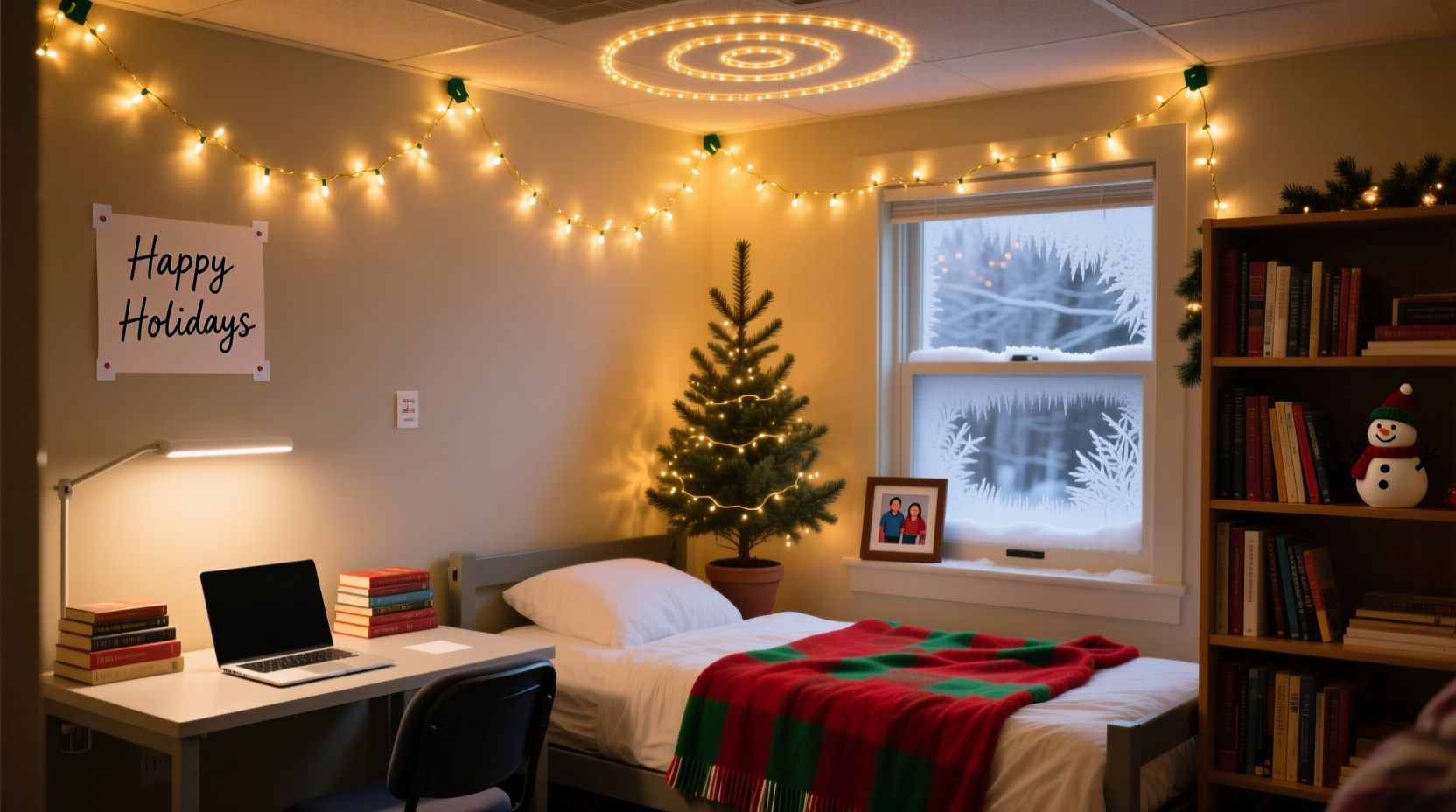
Dorm lighting rules aren’t arbitrary. They stem from three core responsibilities: life safety (fire prevention), facility preservation (wall and surface integrity), and community standards (noise, light bleed, shared-space respect). Policies vary widely—even between buildings on the same campus—so assuming “what worked last year” or “what my friend did” is risky. Start by locating your official housing handbook: search your university’s housing website for “decorating guidelines,” “electrical safety policy,” or “residential living standards.” Pay close attention to language around:
- Electrical load limits: Many dorms cap outlet usage at 600–800 watts per room or prohibit power strips with more than two outlets.
- Adhesive restrictions: “No permanent adhesives” usually bans tape, glue, putty, or command strips rated above 3 lbs—but some campuses explicitly permit certain removable products.
- Lighting placement prohibitions: Common bans include lights on ceiling tiles, near smoke detectors, inside closets, or draped over furniture that blocks vents.
- Fire-rated materials: UL-listed or ETL-certified lights are often mandatory; non-certified “dollar store” strands may be prohibited outright.
If the handbook is vague—or silent—call or email your residence life office directly. Ask: “Are LED mini lights with UL certification permitted in student rooms, and are there specific mounting or wattage restrictions?” Document their response. One RA from University of Michigan reported that 70% of lighting violations stemmed not from malicious intent, but from students misreading “no tape” as “no lights”—when the policy actually allowed adhesive-backed LED tape lights designed for temporary use.
Choose the Right Lights: Safety, Efficiency, and Policy Alignment
Not all Christmas lights are dorm-appropriate. Prioritize safety certifications, energy efficiency, and physical design that aligns with common restrictions. Here’s how to evaluate options:
| Feature | Dorm-Safe Choice | Avoid in Dorms |
|---|---|---|
| Certification | UL 588 or ETL listed (look for mark on plug or packaging) | Unmarked strands, “for outdoor use only” labels, or lights sold without safety certification |
| Type | LED mini lights (2.5–5V low-voltage) or battery-operated fairy lights | Incandescent bulbs (high heat), C7/C9 bulbs (bulky, high wattage), or rope lights with exposed wiring |
| Power Source | Battery-powered (AA/AAA or USB-rechargeable) or USB-powered via laptop/portable charger | Strands requiring multiple wall outlets or daisy-chained extensions |
| Mounting Method | Clip-on hooks, magnetic strips (for metal frames), or removable adhesive rated ≤3 lbs (e.g., 3M Command Small Hooks) | Duct tape, masking tape, hot glue, thumbtacks, or heavy-duty mounting putty |
| Heat Output | LEDs emitting <35°C surface temperature (cool to touch after 30+ mins) | Any strand warm enough to feel hot—especially near bedding, curtains, or paper decorations |
One critical nuance: “battery-operated” doesn’t automatically mean safe. Cheap lithium-ion battery packs without overcharge protection pose fire risk. Opt for reputable brands (like Twinkly, Fairy Lights Co., or GE LED) with built-in thermal cutoffs. And never leave battery-powered lights unattended overnight—set a timer or use models with auto-shutoff (e.g., 6-hour cycle).
A Real-World Example: How Maya Avoided a $125 Violation Fee
Maya, a sophomore at SUNY Buffalo, loved string lights—but her first-year attempt ended with a warning notice taped to her door. She’d used 50-foot incandescent lights plugged into a 6-outlet power strip, taped to her ceiling with duct tape, and draped over her lofted bed frame. The violation cited three infractions: circuit overload (her strip drew 950W), prohibited adhesive, and obstruction of the smoke detector’s airflow.
For her second year, Maya rethought everything. She purchased two 20-foot UL-listed LED mini light strands (each drawing just 4.8W), powered them via a single USB wall adapter (plugged into her existing outlet), and mounted them using 3M Command Clear Mini Hooks—rated for 0.5 lbs and explicitly approved in her housing handbook. She routed lights along the top edge of her bulletin board and under her desk shelf, keeping them 12 inches clear of the ceiling-mounted smoke detector. Her RA inspected the setup during floor check-in and gave verbal approval. Maya kept the lights on only from 5 p.m. to midnight—aligning with quiet hours—and turned them off during daytime classes. Result? Festive ambiance, zero violations, and her roommate asked for help installing hers.
“Students assume ‘if it’s LED, it’s fine.’ But dorm safety isn’t just about heat—it’s about electrical load, mounting integrity, and respecting shared infrastructure. A 5W LED strand is safe. Ten of them, each on its own adapter, tripping a GFCI outlet? That’s a violation waiting to happen.” — Javier Ruiz, Fire Safety Coordinator, National Association of College and University Housing Officers (NACUHO)
Step-by-Step: Installing Lights Without Triggering Policy Flags
Follow this sequence to ensure every decision is deliberate, documented, and compliant:
- Review & Record: Pull your dorm’s official decorating policy. Highlight all lighting-related clauses. Email housing with any ambiguities—and save the reply.
- Calculate Load: Add up wattage of all devices on your outlet circuit (laptop charger: ~65W, LED lights: ~4–8W/strand, fan: ~30W). Stay under 80% of your circuit’s rating (usually 600–800W total).
- Select Mounting Points: Identify surfaces that won’t be damaged: painted drywall (with approved hooks), metal bed frames, wooden desk edges, or fabric-covered bulletin boards. Avoid ceiling tiles, HVAC vents, door frames, and smoke detector zones (minimum 36-inch clearance).
- Install Anchors First: Apply Command Hooks or clips *before* unwinding lights. Press firmly for 30 seconds. Wait 1 hour before hanging lights to let adhesive bond.
- Route & Secure: Run lights along natural edges—desk perimeter, bookshelf top, mirror frame—not across open walls. Use twist ties (not tape) to bundle excess cord. Tuck plugs behind furniture where accessible but unseen.
- Test & Trim: Turn lights on for 15 minutes. Check for warmth, flickering, or outlet warmth. If anything feels hot, unplug immediately and reassess load or connections.
- Document Setup: Take dated photos of your installed lights—showing clearances, mounting method, and power source. Store in cloud backup.
Smart Alternatives When Lights Are Fully Restricted
Some dorms—particularly older buildings or those with recent fire incidents—ban *all* decorative lighting. Don’t assume defeat. These alternatives deliver holiday spirit while honoring policy:
- Fabric & Texture Layers: Hang red-and-green plaid scarves over desk chairs, drape faux-fur throws on beds, or pin holiday-themed fabric squares to bulletin boards. Textiles add warmth without electricity.
- Natural Elements: Pinecones, cinnamon sticks, dried orange slices, or eucalyptus stems in mason jars provide scent, texture, and seasonal color—zero power required.
- Projection Lighters: Compact, battery-powered projectors (like the LumiPets Mini Starlight) cast gentle star patterns on ceilings or walls. Most draw <2W and attach magnetically—bypassing adhesive rules entirely.
- USB-Powered Decor: If outlets are allowed but lights aren’t, try USB-powered snow globes, rotating nutcrackers, or illuminated holiday cards—often exempt from “lighting” policies because they’re categorized as “electronics,” not “decorative lighting.”
- Community-Centric Celebrations: Propose a hall-wide “light-free” event: cookie decorating, caroling in the lounge (with permission), or a holiday movie night using the building’s common-area projector. Shared joy reduces pressure to personalize your room alone.
FAQ: Dorm Lighting Questions—Answered Directly
Can I use a smart plug to control my lights remotely?
Only if your dorm permits smart devices *and* the plug itself meets UL certification. Many universities ban Wi-Fi-connected devices due to network security policies. Even if allowed, avoid scheduling lights to turn on/off during quiet hours (typically 10 p.m.–7 a.m.)—the audible “click” of relays can violate noise policies. Manual switches or simple timers are safer choices.
What if my roommate hates lights—but I want them?
Your roommate’s comfort is part of your shared agreement. Never install lights without explicit consent. Offer compromises: limit strands to your side of the room, use warm-white (not cool-white) LEDs to reduce glare, or choose dimmable options. If disagreement persists, revisit your housing contract’s “shared space” clause—it likely requires mutual agreement on decor changes.
Do battery-powered lights need to be unplugged when I’m not in the room?
Yes—unless the batteries are lithium-ion with certified thermal management *and* the lights are labeled “safe for unattended use.” Most consumer-grade battery lights lack this certification. Treat them like candles: turn off when sleeping, attending class, or leaving campus. A $15 strand isn’t worth risking evacuation or fire alarm activation.
Conclusion: Light Responsibly, Celebrate Authentically
Using Christmas lights in a dorm isn’t about bending rules—it’s about understanding them deeply enough to work within them creatively and respectfully. It’s recognizing that your RA isn’t trying to kill your holiday spirit; they’re safeguarding 200 other students who sleep down the hall. It’s choosing the 4-watt LED strand over the flashy 50-watt one—not out of limitation, but out of care. And it’s realizing that the coziest, most meaningful dorm decor often has less to do with brightness and more to do with intention: the handwritten card taped beside your mirror, the photo string connecting memories, the cinnamon-scented candle (if permitted), or the quiet pride in knowing your space is both joyful *and* responsible.
You don’t need permission to create warmth. You just need clarity, preparation, and respect—for the space, the people, and the policies that keep everyone safe. So pull out your housing handbook tonight. Read it cover to cover. Then go buy those UL-listed LEDs, measure your outlet load, and mount your lights with care. Your festive, rule-abiding, genuinely joyful dorm room is already within reach.




 浙公网安备
33010002000092号
浙公网安备
33010002000092号 浙B2-20120091-4
Comments
No comments yet. Why don't you start the discussion?