
Backlighting a mantle mirror with Christmas lights is one of the most effective ways to elevate your holiday decor. The soft, diffused glow reflects beautifully across the room, creating depth, warmth, and a sense of enchantment. Unlike traditional garlands or standalone light strings, this technique integrates illumination directly into your existing fireplace setup, transforming an ordinary mirror into a radiant centerpiece. When done thoughtfully, the result is not just decorative—it’s atmospheric.
The key lies in precision: placement, bulb type, wiring management, and safety. This guide walks you through every step, from selecting the right lights to final adjustments, ensuring your display looks professionally styled without requiring professional tools.
Why Backlighting Works for Mantle Mirrors
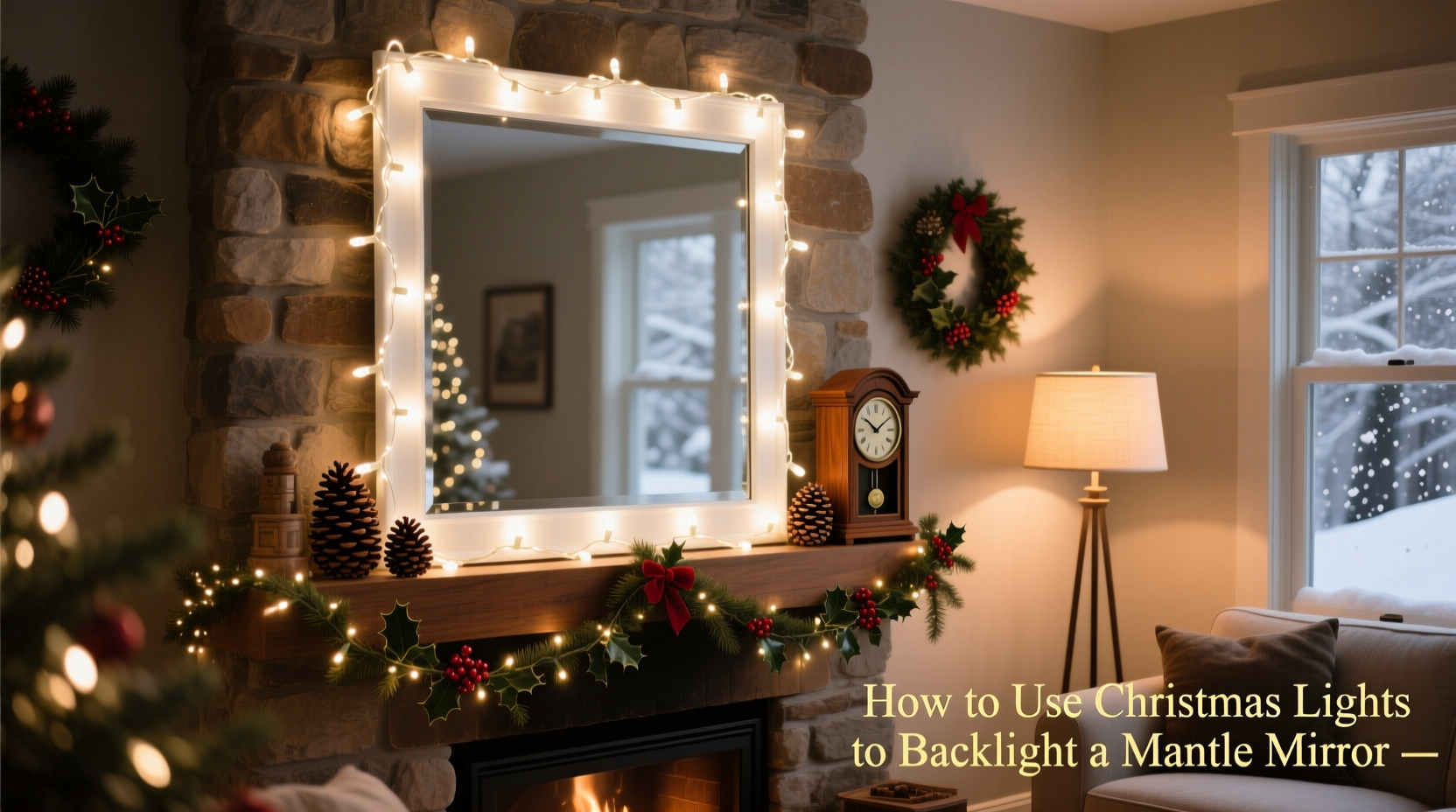
A mantle mirror already serves as a focal point in many living rooms. During the holidays, it becomes a natural anchor for seasonal styling. By adding backlighting, you amplify its visual impact. Light behind the mirror creates a halo effect—especially effective in low-light evenings—drawing attention while subtly illuminating surrounding decor like stockings, candles, or wreaths.
Unlike front-facing lighting, which can cast harsh shadows or glare, backlighting produces ambient radiance. It mimics the effect of candlelight but with greater control and consistency. The reflection doubles the perceived brightness, making even small spaces feel cozier and more inviting.
“Strategic lighting transforms static decor into dynamic atmosphere. Backlighting a mirror during the holidays is one of the simplest high-impact moves you can make.” — Daniel Reeves, Interior Lighting Designer
Selecting the Right Christmas Lights
Not all Christmas lights are suited for backlighting. The goal is even, warm illumination—not blinking patterns or overpowering brightness. Consider these factors when choosing your string:
- Bulb Type: Opt for mini incandescent or warm-white LEDs. Incandescents offer a softer, more organic glow; LEDs provide energy efficiency and lower heat output.
- Color Temperature: Choose lights rated between 2700K and 3000K. This range delivers a golden-white hue similar to candlelight, avoiding the clinical feel of cool white (5000K+).
- Length & Density: Measure your mirror’s perimeter. A good rule is to have at least 1.5 times the linear footage of the frame to allow gentle looping and coverage gaps. For example, a 4-foot wide by 3-foot tall mirror has a perimeter of 14 feet—aim for a 20–25 foot strand.
- Plug Style: Select a cord with an end plug (not side-entry) to minimize visible bulk when routed behind the frame.
- Dimmability: If possible, use dimmable lights. This allows adjustment based on time of day or desired mood.
Step-by-Step Installation Guide
Proper installation ensures both aesthetic success and long-term safety. Follow this sequence for reliable results:
- Clear and Clean the Area
Remove all items from the mantle and wipe down the mirror frame and wall surface. Dust and debris can interfere with adhesive mounts or trap heat. - Measure and Plan Layout
Hold the light strand along the top and sides of the mirror to visualize coverage. Most designs focus on the upper three sides (top, left, right), leaving the bottom open for visibility and airflow. - Secure the Lights Behind the Frame
Use clear plastic clip mounts or adhesive-backed hooks designed for lightweight cords. Place one every 6–8 inches along the back edge of the mirror frame. Avoid metal fasteners that could damage wires. - Route the String Evenly
Weave the lights in a consistent pattern—either straight across the top and down each side, or in gentle S-curves for fuller coverage. Keep spacing uniform to prevent bright spots. - Conceal the Cord Run
Guide the power cord down the wall behind the mirror or along the baseboard using cord covers or painter’s tape (for temporary setups). Never run cords under rugs or across walkways. - Test Before Finalizing
Plug in the lights to confirm full functionality and check for hotspots or uneven brightness. Adjust positioning if needed. - Style the Mantle
Once lights are secure and tested, rebuild your mantle display. Place decor items so they don’t block reflected light or cover the cord path.
Do’s and Don’ts: Best Practices Table
| Do | Don’t |
|---|---|
| Use warm-white lights (2700K–3000K) | Use multicolor or cool-white LEDs for subtle backlighting |
| Space clips evenly to prevent sagging | Allow cords to dangle loosely or stretch tightly |
| Check manufacturer ratings for indoor/outdoor use | Install outdoor-rated lights indoors without ventilation |
| Turn off lights when unattended or sleeping | Leave strings on 24/7 for extended periods |
| Combine with battery-powered tea lights on the mantle | Place flammable decor (e.g., dried pinecones) directly against lit wires |
Real Example: A Cozy Urban Living Room Transformation
In a 650-square-foot Brooklyn apartment, interior stylist Maya Tran faced a challenge: her narrow living room felt cramped during the holidays. The mantle mirror was large, but surrounded by cluttered decor, it drew little attention. She decided to try backlighting with a single strand of 25-foot warm-white LED mini lights.
Using adhesive clips, she secured the lights along the top and sides of the mirror, routing the cord behind the frame and down the wall into a power strip hidden beside the sofa. After testing, she removed two overly bright bulbs near the center and replaced them with dimmer spares from an old strand.
The result? “It changed everything,” she said. “The mirror suddenly looked like it had its own aura. Even with just a few stockings and a simple evergreen garland, the whole space felt elevated. People kept asking if I’d hired a decorator.”
She now uses the same setup annually, adjusting only the mantle styling while keeping the lighting foundation intact.
Safety First: Electrical and Fire Prevention Tips
While Christmas lights are generally safe, improper use increases fire risk. The U.S. Fire Administration reports that decorations cause an estimated 7,000 home fires each year, many related to electrical issues. Mitigate risks with these precautions:
- Inspect Cords Regularly: Look for fraying, kinks, or cracked insulation. Replace damaged strands immediately.
- Avoid Daisy-Chaining: Connecting more than three standard light strands end-to-end can overload circuits. Use extension cords rated for multiple loads instead.
- Don’t Mount Near Heat Sources: Keep lights away from fireplaces (if in use), space heaters, or vents that emit hot air.
- Use Timers: Plug lights into an automatic timer set to turn off after 8–10 hours. This reduces wear and eliminates forgetfulness.
- Keep Away from Children and Pets: Ensure cords are inaccessible to curious hands or paws that might pull or chew.
“Overheating is the biggest silent threat. Even low-wattage LEDs can become hotspots if trapped under fabric or pressed against wood. Always leave breathing room behind the mirror.” — Lila Nguyen, Home Safety Inspector
Enhancing the Effect: Styling Around the Glow
The backlight does the heavy lifting, but complementary styling amplifies the magic. Consider these enhancements:
- Add Reflective Elements: Place silver candle holders, mercury glass vases, or frosted ornaments on the mantle. These catch and scatter the hidden glow.
- Layer Greenery: Drape a garland across the mantle so its tips rise slightly behind the mirror. The lights will silhouette the foliage beautifully.
- Use Matte Frames: If your mirror has a dark or textured frame, the contrast makes the backlight more dramatic. Glossy frames may reflect the bulbs themselves, breaking the illusion.
- Incorporate Mirrored Trays: Position a small mirrored tray on the mantle to double the light effect and create depth.
For a minimalist look, skip bulky decor entirely. Let the illuminated mirror stand alone—its glow becomes the statement.
Checklist: Preparing Your Backlit Display
Follow this checklist before turning on your lights:
- ☐ Measured mirror perimeter and purchased adequate light length
- ☐ Selected warm-white, non-blinking lights (preferably dimmable)
- ☐ Acquired adhesive clips or mounting hooks
- ☐ Cleared mantle and cleaned mirror/frame
- ☐ Tested lights for defects
- ☐ Planned cord route to nearest outlet
- ☐ Secured lights evenly behind the frame
- ☐ Concealed power cord safely
- ☐ Verified no flammable materials touch wires
- ☐ Installed timer or surge protector
Frequently Asked Questions
Can I use battery-powered lights for this?
Yes, but with limitations. Battery-operated string lights work well for smaller mirrors or temporary setups. However, they require frequent battery changes, may dim over time, and often lack the density needed for full backlighting. For permanent or larger displays, plug-in options are more reliable.
Will the lights damage my mirror or wall?
Not if installed correctly. Adhesive mounts should be rated for the surface (e.g., paint-safe for walls, non-corrosive for wood). Avoid strong adhesives like duct tape or hot glue, which can stain or peel finishes. Remove mounts carefully after the season using gentle heat (a hairdryer on low) to loosen residue.
How do I clean the mirror without removing the lights?
Use a dry or slightly damp microfiber cloth and work carefully around the frame. Avoid spraying cleaner directly onto the mirror—mist can seep behind and reach wiring. For deeper cleaning, consider removing the mirror temporarily if it’s lightweight and securely mounted.
Conclusion: Illuminate With Intention
Backlighting a mantle mirror with Christmas lights isn’t just decoration—it’s intentional ambiance design. With careful planning, the right materials, and attention to detail, you create a luminous centerpiece that feels both festive and timeless. The technique proves that sometimes, the most powerful effects come not from what you see directly, but from what it reveals in reflection.
This holiday season, go beyond tinsel and tacks. Rethink your mirror not as a passive object, but as a canvas for light. Install your strands with care, style with restraint, and let the glow do the talking. The warmth it adds isn’t just visual—it’s emotional.




 浙公网安备
33010002000092号
浙公网安备
33010002000092号 浙B2-20120091-4
Comments
No comments yet. Why don't you start the discussion?