
Reading isn’t just about words on a page—it’s about atmosphere. The right environment lowers cortisol, slows respiration, and signals the nervous system that it’s safe to pause. A well-designed reading nook achieves this not through expensive furniture or architectural renovation, but through intentional, human-centered lighting. Christmas lights—often dismissed as seasonal decor—are uniquely suited for this purpose: they emit low-intensity, diffused light with minimal glare, wide dispersion angles, and controllable warmth. When applied with intention—not festivity—they become precision tools for ambient psychology. This guide details how to repurpose them ethically, safely, and aesthetically to build a reading nook that feels like a held breath: quiet, warm, and deeply restorative.
Why Christmas Lights Work Better Than Standard Lamps for Reading Ambiance
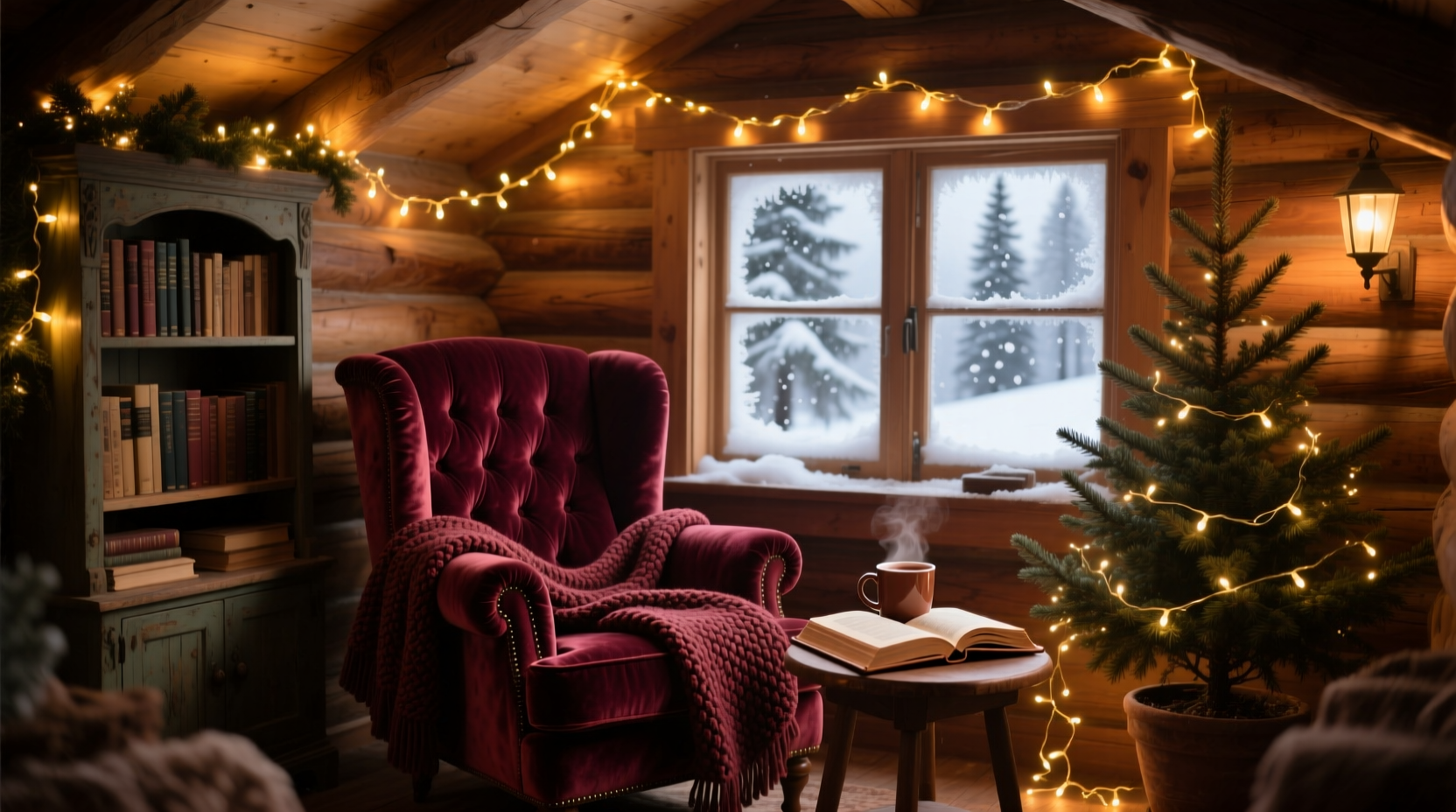
Most dedicated reading lamps prioritize task illumination: focused, high-lux beams that reduce eye strain during prolonged text engagement. But a *nook* serves a different function—it supports immersion, reflection, and emotional safety. Here, light must recede, not command attention. Christmas lights excel here because of three inherent qualities:
- Low luminance density: Individual LED bulbs emit 0.5–2 lumens—orders of magnitude softer than even a 40W incandescent (450 lm). This prevents pupil constriction and preserves melatonin production, critical for evening reading without disrupting circadian rhythm.
- Natural diffusion: Miniature bulbs spaced along flexible wires scatter light omnidirectionally. Unlike directional LEDs or halogen spots, they cast gentle gradients—no harsh shadows, no hotspots, no visual “edges” that compete with the page.
- Color temperature flexibility: Modern warm-white LEDs (2200K–2700K) mimic candlelight or sunset glow—the same spectrum shown in peer-reviewed studies to lower heart rate variability and increase parasympathetic activity (Journal of Environmental Psychology, 2022).
This isn’t about nostalgia or decoration. It’s about leveraging accessible, low-risk lighting technology to shape neurophysiological comfort. As lighting designer Lena Torres explains:
“The most calming light isn’t the brightest—it’s the most forgiving. Christmas lights forgive imperfect placement, uneven spacing, and variable surfaces. That forgiveness translates directly to psychological ease.” — Lena Torres, Director of Human-Centered Lighting Research, Illumination Institute
Step-by-Step Setup: Building Your Light-Infused Nook in Six Logical Phases
Effective implementation requires sequencing—not improvisation. Follow this timeline to avoid common pitfalls like tangled wires, overheating, or flat, unlayered illumination.
- Assess & Clear the Zone (15 minutes): Identify a corner with natural boundaries—bookshelves flanking one side, a wall behind, and floor space for seating. Remove all non-essential items. Measure the perimeter: height from floor to ceiling, width between adjacent walls or furniture, and depth of the seating zone.
- Select & Test Lights (20 minutes): Choose only UL-listed, indoor-rated, low-voltage (≤24V) LED string lights. Avoid older incandescent strands—they generate excess heat and consume 8× more energy. Test brightness and color temperature using your phone’s camera: point it at the lit strand—if white balance appears yellow/orange (not blue), it’s within the ideal 2200K–2700K range.
- Anchor Primary Layer (30 minutes): Install the foundational glow: drape lights vertically behind bookshelves (tucked into rear grooves), loop them gently around the top rail of a headboard or wall-mounted shelf, or weave them loosely through a tall potted plant’s branches. This creates a soft backlight—your “halo” layer.
- Add Mid-Level Glow (25 minutes): Introduce warmth at eye level. Wrap lights around the base of a floor lamp (not the bulb itself), coil them inside a woven basket placed beside the chair, or secure them with removable adhesive clips along the underside of a floating shelf above your reading seat.
- Integrate Seating Glow (15 minutes): Embed subtle light where the body makes contact. Tuck battery-operated micro-string lights beneath cushion edges (ensure fabric is breathable and wires are fully insulated), or place a small, covered LED puck light inside a hollow ottoman.
- Final Calibration & Dimming (10 minutes): Power on all layers. Sit in your chair. Observe reflections on pages, glare on device screens, and whether light pools unnaturally. Adjust spacing—widen gaps between bulbs if brightness feels intrusive; cluster slightly where warmth feels thin. Connect all strands to a single dimmer switch or smart plug with adjustable brightness (not just on/off).
Essential Safety & Technical Considerations
Christmas lights are safe when used intentionally—but misuse introduces real risk. Overheating, electrical overload, and fire hazards rise sharply when strands are modified, overloaded, or installed near combustibles. Respect these non-negotiables:
| Do | Don’t |
|---|---|
| Use only LED strings labeled “indoor use only” with UL/ETL certification | Repurpose outdoor-rated lights indoors—they’re built for weather resistance, not thermal management in enclosed spaces |
| Secure wires with fabric-covered clips or reusable adhesive hooks (no nails, staples, or tape) | Run cords under rugs, carpets, or furniture legs—trapped heat cannot dissipate |
| Plug into a GFCI-protected outlet or power strip with built-in surge protection | Use extension cords as permanent solutions—voltage drop increases resistance and heat buildup |
| Replace any strand with broken sockets, exposed copper, or discolored plugs immediately | Leave lights on unattended overnight—even LEDs can fail catastrophically if damaged or poorly manufactured |
Real-World Case Study: The Apartment 3B Nook Transformation
Maria, a clinical social worker in Portland, shared her experience transforming a 4’x5’ closet-turned-nook in her 1920s walk-up. With no overhead fixture and only one outlet 6 feet away, she’d tried floor lamps, clip-ons, and battery sconces—all created glare, shadowed her lap, or died mid-chapter. Her solution: three 24-foot, 2200K warm-white LED micro-string lights (battery-powered, 6-hour runtime), installed over four evenings.
She anchored the primary layer by weaving lights vertically behind a leaning bookshelf—using its existing slats as natural guides. For mid-level glow, she coiled a second strand inside a vintage wicker laundry basket beside her armchair, covering it with a linen slipcover. The third strand was embedded beneath the front edge of her wool-blend reading cushion, secured with fabric-safe double-sided tape. She added a $12 smart dimmer switch to control all three via her phone.
“Before, I’d read for 20 minutes and feel tense,” Maria wrote. “Now I lose track of time. My patients notice I’m calmer in sessions—I think it’s because my nervous system finally gets true rest. The light doesn’t shout. It just… holds space.” Her total cost: $48. Total time invested: 3.5 hours over one weekend.
Optimizing Light Quality: Color Temperature, Spacing, and Material Interaction
Glow isn’t just about brightness—it’s about spectral quality and physical interaction. Two strands may look identical in packaging but produce vastly different moods based on engineering choices.
- Color temperature matters more than wattage: 2200K mimics candlelight (ideal for pre-sleep reading); 2700K resembles incandescent bulbs (better for afternoon focus). Avoid anything above 3000K—it triggers alertness, not relaxation.
- Bulb spacing dictates diffusion: Strands with ≤3 inches between bulbs create seamless washes; those with >6 inches produce distinct points of light that disrupt ambient continuity. For nooks, choose 2–4 inch spacing.
- Material amplifies or absorbs: White-painted walls reflect 80% of warm light; deep charcoal absorbs 95%. Drape lights behind sheer linen curtains for soft diffusion, or wrap them around matte ceramic vases to scatter light multidirectionally. Avoid glossy surfaces—they create specular highlights that compete with text.
FAQ: Practical Questions from Real Readers
Can I use Christmas lights with books printed on glossy paper?
Yes—with caution. Glossy paper reflects directional light, causing glare. Position primary light sources behind or beside the reading plane—not in front or above. Use backlit layers (behind shelves) and under-cushion glow to illuminate pages indirectly. Avoid placing strands on a table directly in front of you.
How do I hide wires without damaging rental walls?
Use removable, paint-safe adhesive hooks (like Command™ Clear Small Hooks) spaced every 12–18 inches. Route wires along baseboards or crown molding—areas rarely inspected by landlords. For vertical runs, apply hooks to the wall and drape lights in loose S-curves (not taut lines) to minimize visible tension. Never use thumbtacks or tape directly on painted surfaces.
Will warm-white LEDs interfere with my sleep if I read late?
Not if used correctly. Warm-white LEDs (2200K–2700K) emit negligible blue light—the spectrum most disruptive to melatonin. However, intensity matters: keep overall output below 50 lux at seated eye level (use a free lux meter app to verify). Dim to 30% brightness after 9 p.m., and avoid looking directly at bulbs. Pair with amber-tinted reading glasses if sensitive.
The Quiet Power of Intentional Light
A reading nook isn’t defined by square footage, budget, or furniture pedigree. It’s defined by the quality of attention it invites—and light is the first language of that invitation. Christmas lights, when stripped of seasonal expectation and wielded with technical respect and aesthetic clarity, become something rare in modern interiors: tools of tenderness. They ask nothing of the reader except presence. They don’t illuminate the room—they soften its edges. They don’t highlight content—they deepen the container for it.
You don’t need rewiring permits or designer consultations. You need measured strands, mindful placement, and the willingness to treat light as architecture for the nervous system. Start tonight: unbox one string, drape it behind your favorite chair, dim the overheads, and open a book. Notice where your shoulders settle. Where your breath slows. That’s not coincidence—that’s design, working quietly, warmly, exactly as intended.




 浙公网安备
33010002000092号
浙公网安备
33010002000092号 浙B2-20120091-4
Comments
No comments yet. Why don't you start the discussion?