
In modern homes, open floor plans offer spaciousness and fluid movement between living, dining, and kitchen areas. However, this seamless design can sometimes blur functional boundaries, making spaces feel chaotic or undefined. One elegant, cost-effective solution is often overlooked: Christmas lights. Beyond holiday decoration, these versatile strings of light serve as subtle yet powerful visual cues that can carve out distinct zones without walls or furniture. When used thoughtfully, Christmas lights add warmth, ambiance, and architectural definition—transforming a single expansive area into a collection of purposeful spaces.
Why Lighting Matters in Open Floor Plans
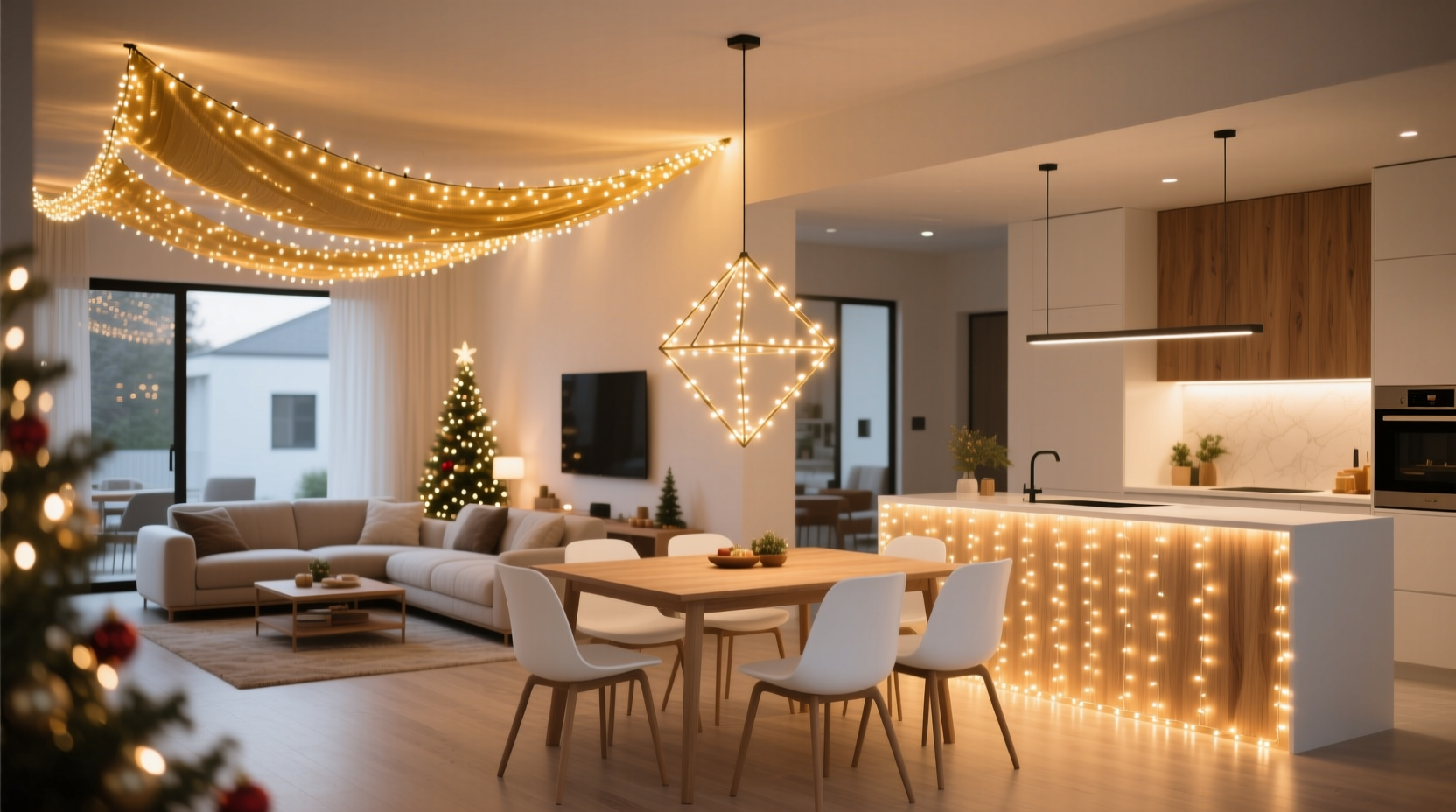
Lighting plays a critical role in shaping perception. In open-concept interiors, overhead fixtures often cast uniform illumination, which flattens spatial identity. Without variation in brightness, color temperature, or fixture placement, it becomes difficult to distinguish where one zone ends and another begins. This is where ambient lighting tools like Christmas lights shine—literally and figuratively.
Unlike harsh ceiling lights, Christmas lights emit soft, diffused glow that draws the eye and creates focal points. Their repetitive pattern suggests rhythm and boundary, subtly guiding how people move through space. For example, a curtain of fairy lights hung between a living room and dining area signals transition without blocking sightlines or airflow. The human brain interprets changes in light density as spatial dividers, even when no physical barrier exists.
“Light defines space more than we realize. A well-placed string of warm-toned LEDs can create intimacy in an otherwise cavernous room.” — Lena Torres, Interior Lighting Designer
Creative Ways to Use Christmas Lights as Zone Definers
The key to using Christmas lights effectively lies not just in placement but in intention. Each zone—be it a reading nook, workspace, or entertaining area—should have its own lighting personality. Below are several proven techniques to delineate space with minimal effort and maximum impact.
1. Ceiling Canopies for Dining Areas
Suspend multiple parallel strands of globe or Edison-style bulbs across the ceiling above your dining table. Align them so they hover about 6–8 inches above head height when seated. This forms an invisible canopy that frames meals and conversation, separating the dining experience from adjacent kitchen prep or lounge zones.
2. Wall-Mounted Light Borders Around Functional Zones
Outline the perimeter of a home office desk setup or entertainment center with micro LED strips. Attach them along baseboards, shelves, or picture rails to form glowing rectangles that \"contain\" the activity within. Warm white lights work best for cozy zones; cool white suits task-oriented areas like workstations.
3. Vertical Curtains Between Spaces
Create translucent partitions by hanging long strings of icicle or net lights vertically from ceiling tracks or tension rods. Position them between a living area and entryway, or beside a bedroom tucked into an open loft. These shimmering screens allow light and sound to pass while visually segmenting space. Choose battery-powered options for easy installation without visible cords.
4. Under-Shelf and Furniture Lighting
Install flexible wire-free LED string lights beneath floating shelves, kitchen islands, or low bookcases. The upward or downward glow highlights horizontal planes, reinforcing the idea of separate functional layers. For instance, under-cabinet lighting marks the kitchen zone, while shelf-mounted strings emphasize a library corner.
5. Accent Lighting for Nooks and Reading Corners
Wrap delicate fairy lights around the legs of a chair, within a macramé plant hanger, or behind a sheer curtain to spotlight a quiet retreat. Even a small change in luminosity helps isolate intimate areas from high-traffic zones, encouraging relaxation and focus.
Step-by-Step Guide: Installing Zone-Defining Christmas Lights
Follow this five-step process to integrate Christmas lights into your open floor plan with professional results.
- Assess Your Layout: Walk through your space and identify natural activity hubs—where people cook, eat, relax, or work. Note any existing architectural features (columns, beams, half-walls) that could anchor lighting.
- Choose the Right Type of Lights: Opt for energy-efficient, low-heat LED strings in warm white (2700K–3000K) for living areas. Consider color-changing RGB options if you want flexibility across seasons.
- Map Out Placement: Sketch a rough diagram or use painter’s tape on walls/ceilings to visualize where lights will go. Ensure cords can reach outlets safely or plan for battery packs.
- Install Securely: Use adhesive clips, clear zip ties, or magnetic mounts instead of nails. Avoid stretching wires taut—allow slight sag for a natural drape effect.
- Test and Adjust: Turn on the lights at night to evaluate coverage and mood. Reposition clusters that are too bright or sparse. Add diffusers (like fabric sleeves) if glare is an issue.
Do’s and Don’ts: Best Practices Table
| Do | Don't |
|---|---|
| Use dimmers to control intensity based on time of day or function | Overload circuits with multiple non-LED strands |
| Match bulb style to décor—vintage bulbs for rustic spaces, mini LEDs for modern | Run cords across walkways without securing them |
| Layer lights with other sources (lamps, sconces) for depth | Use only one type of light—creates monotony |
| Label transformers or power sources for seasonal removal | Leave lights plugged in unattended for days |
| Store coiled neatly in labeled containers after use | Pull on tangled wires—can damage internal filaments |
Real Example: Transforming a Studio Apartment with Fairy Lights
Jamie, a freelance designer in Seattle, lives in a 550-square-foot studio with no interior walls. Her bed, kitchen, and workstation all shared the same footprint, leading to mental fatigue and poor sleep hygiene. After consulting a lighting specialist, she installed three distinct lighting systems using Christmas lights.
She strung copper-wire fairy lights inside a large wooden hoop mounted above her bed, creating a dreamy sleeping alcove. Along the kitchen counter backsplash, she adhered warm-white LED strip lights under upper cabinets, clearly marking the cooking zone. Finally, she draped vintage filament bulbs across a narrow shelf behind her desk, signaling “work mode” with focused, brighter illumination.
The result? Jamie reported improved concentration during work hours and better rest at night. Guests noticed the defined areas immediately, commenting on the apartment’s surprising sense of privacy and flow. Most importantly, she achieved this transformation for under $120 and reused the same lights throughout the year by adjusting brightness and timing.
Year-Round Versatility Beyond the Holidays
Many assume Christmas lights are strictly seasonal. But their adaptability makes them ideal for permanent ambient enhancements. With smart plugs or timers, lights can be programmed to turn on only during evening hours, conserving energy while maintaining atmosphere. Some homeowners even paint the wires black or weave them into plants and artwork so they blend seamlessly into daily décor.
In warmer months, swap out traditional white lights for colored or UV-reactive strings to evoke tropical evenings or garden parties. During fall, pair amber-hued LEDs with dried botanicals for harvest-themed accents. The emotional resonance of soft lighting transcends calendar dates—it supports well-being, enhances aesthetics, and improves functionality regardless of season.
FAQ: Common Questions About Using Christmas Lights for Space Division
Can I leave Christmas lights up all year?
Yes, especially if they’re LED and energy-efficient. Many designers recommend integrating them as permanent ambient fixtures, provided they complement the overall décor. Just ensure proper maintenance and avoid leaving them on continuously.
Are Christmas lights safe for everyday use?
Modern LED Christmas lights generate minimal heat and consume little power, making them safer than older incandescent versions. Always check for certification labels (UL, ETL), avoid frayed wires, and never daisy-chain more than three sets unless designed for it.
How do I hide cords and power sources?
Use cord covers, route wires behind baseboards, or tuck them under rugs (non-flammable types). Battery-operated lights eliminate cords entirely. For wall-to-outlet runs, consider installing a discreet floor outlet or using a slim power strip painted to match the wall.
Checklist: Zone-Defining Lighting Project
- ☐ Identify primary functional zones in your open floor plan
- ☐ Select appropriate light types (warm vs. cool, fixed vs. color-changing)
- ☐ Measure distances from power sources or choose battery-powered options
- ☐ Purchase necessary hardware (clips, hooks, dimmers, timers)
- ☐ Install lights according to planned layout
- ☐ Test operation and adjust positioning for optimal effect
- ☐ Set schedule via timer or smart plug for convenience
- ☐ Label components for future storage or adjustments
Conclusion: Illuminate with Intention
Open floor plans thrive on openness—but not at the expense of identity. Every zone deserves recognition, whether it's where coffee is brewed, ideas are sketched, or stories are shared. Christmas lights, often dismissed as temporary decor, offer a surprisingly sophisticated tool for crafting those identities. They require no construction, preserve sightlines, and adapt effortlessly to changing needs.
With careful planning and a bit of creativity, a simple string of lights becomes more than decoration—it becomes architecture made of light. Whether you're redefining a studio apartment, enhancing a loft, or bringing clarity to a sprawling great room, start small, experiment boldly, and let illumination guide the way.




 浙公网安备
33010002000092号
浙公网安备
33010002000092号 浙B2-20120091-4
Comments
No comments yet. Why don't you start the discussion?