
For decades, the go-to method for holiday home lighting has been simple: outline the windows, wrap the roofline, and call it a night. But while this approach delivers familiarity, it often lacks creativity and fails to showcase what makes your home unique. Today’s LED technology, flexible wiring, and innovative design thinking offer far more expressive possibilities. Instead of treating your house like a coloring book, consider using Christmas lights as a tool for architectural storytelling—drawing attention to craftsmanship, symmetry, texture, and form. When done thoughtfully, lighting can elevate your home’s presence in the neighborhood, create visual drama, and even influence curb appeal during the winter months.
Why Move Beyond Window Outlines?
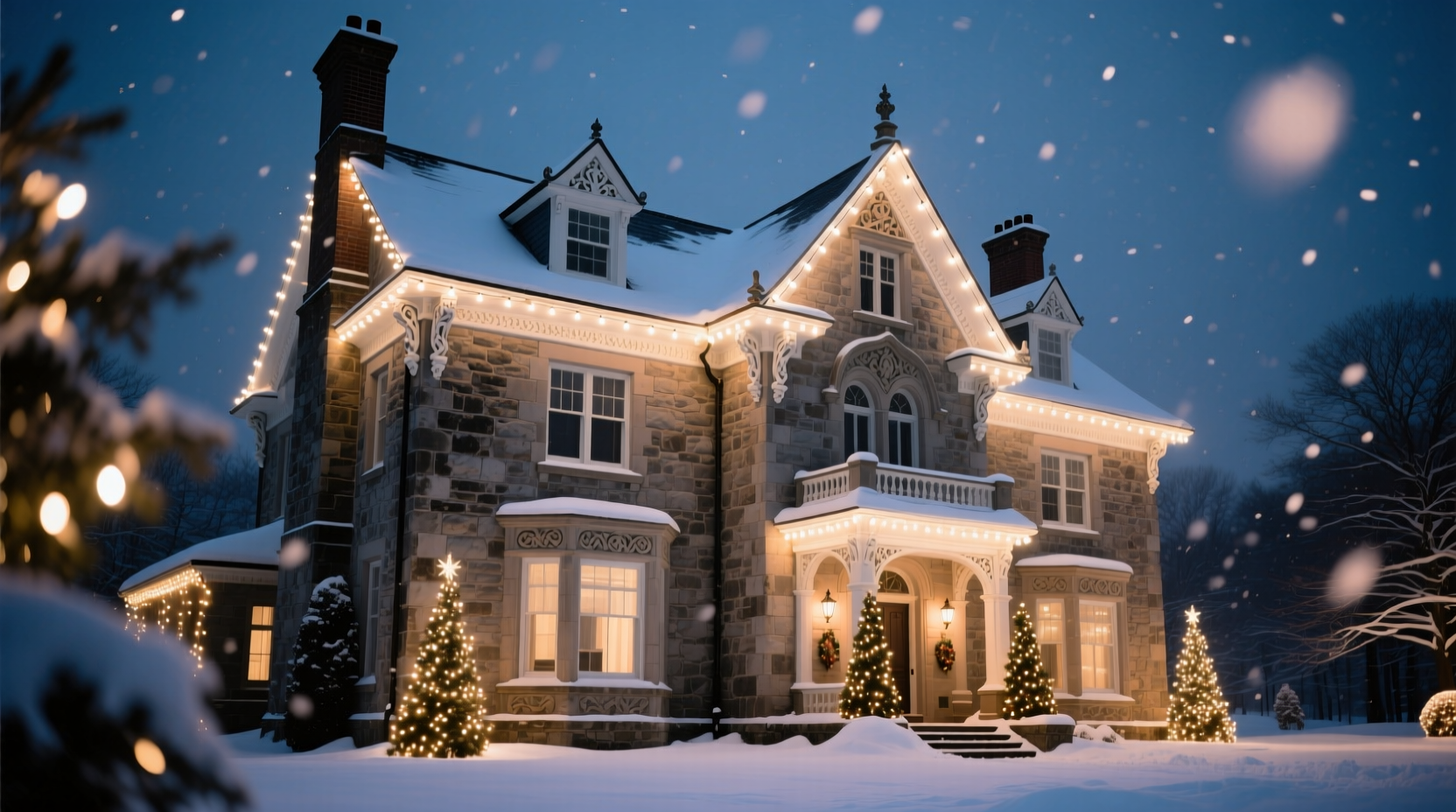
Outlining windows is predictable. It’s functional, but rarely memorable. More importantly, it treats every home the same way, regardless of style or character. A Victorian cottage, a mid-century modern bungalow, and a colonial revival all end up looking like they’ve been traced with the same glowing pen. By shifting focus from perimeter outlines to feature-based illumination, you emphasize what sets your home apart—whether that’s a dramatic gable, ornate columns, exposed beams, or stone masonry.
Architectural lighting isn’t just about decoration; it’s about perception. Light shapes how we see volume, depth, and detail. The right placement can make a flat façade appear three-dimensional, turn a modest porch into a grand entrance, or reveal textures invisible during daylight.
“Holiday lighting should enhance architecture, not mask it. Think like a stage designer—what do you want the audience to notice first?” — Daniel Reeves, Lighting Designer & Architectural Consultant
Key Architectural Features Worth Highlighting
Every home has standout elements, even if they’re subtle. Identifying them is the first step toward intentional lighting. Below are common architectural features that respond beautifully to strategic illumination:
- Gables and Roof Peaks: Triangular or steeply pitched roofs create natural focal points. Use vertical runs of lights along rafter tails or accent the peak with a soft crown of mini-lights.
- Porch Columns and Pillars: Wrap or spiral lights around columns to add height and elegance, especially on homes with covered entries or porticos.
- Shutters and Trim Work: Rather than outlining the entire window, place small clusters of warm-white LEDs along decorative shutters or intricate wood trim to draw attention to craftsmanship.
- Stone or Brick Accents: Wall-mounted string lights or net lights laid gently over textured surfaces can bring out the grain and shadow patterns in masonry.
- Entryways and Doors: Frame the front door vertically with flanking light lines or install upward-facing path lights to wash the area in ambient glow.
- Eaves and Overhangs: Install recessed or clipped mini-lights under eaves to create a floating effect, making the roof appear lifted.
Step-by-Step Guide: Illuminating Your Home’s Best Features
Transforming your home’s appearance with feature-focused lighting requires planning, precision, and patience. Follow this sequence to achieve professional-level results without hiring a contractor.
- Walk Around Your Home at Dusk
Analyze sight lines from the street and sidewalk. Note which features catch your eye and which disappear in shadow. Bring a notebook and sketch rough ideas. - Choose the Right Lights
Select based on flexibility and purpose:- Mini string lights – ideal for wrapping columns, tracing trim, or tucking into crevices.
- C7 or C9 bulbs – better for bold statements like gable accents or stair rail highlights.
- Net lights or curtain lights – excellent for covering broad textured walls or hedges beneath architectural details.
- Projector lights – useful for casting patterns onto large blank surfaces like garage doors.
- Map the Circuit Paths
Determine where outlets are located and plan cord routes accordingly. Avoid crossing walkways or driveways unless protected by conduit. Consider using extension cords rated for outdoor use and keep connections elevated off the ground. - Install with Reusable Clips
Use plastic gutter clips, shingle tabs, or adhesive mounting brackets to secure lights without damaging siding or paint. Never use nails or staples. - Test Before Finalizing
Plug in each section before securing all clips. Check for dark spots, flickering, or uneven spacing. Adjust as needed. - Add Dimmers or Timers
Connect lights to smart plugs or outdoor-rated timers to control brightness and schedule on/off times automatically.
Do’s and Don’ts of Architectural Holiday Lighting
| Do | Don’t |
|---|---|
| Highlight one or two primary features to avoid visual clutter | Try to light every surface—this creates chaos, not charm |
| Use consistent bulb color and size within a single zone | Mix warm and cool whites on the same façade |
| Layer lighting: combine accent, ambient, and task-style illumination | Rely solely on one type of light (e.g., only string lights) |
| Secure wires neatly with twist ties or hook-and-loop straps | Leave loose cords dangling or exposed to foot traffic |
| Inspect lights annually for frayed wires or broken sockets | Reuse damaged strands—this poses fire and safety risks |
Real Example: Transforming a Craftsman Bungalow
Consider a 1920s Craftsman-style home in Portland, Oregon. The owner initially used standard red-and-white lights to outline every window and door frame. While festive, the result was overwhelming and did nothing to emphasize the home’s signature elements: exposed rafters, tapered porch columns, and stone foundation.
After consulting a local landscape lighting specialist, the homeowner redesigned the display. They removed all window outlines and instead:
- Wrapped warm-white mini-lights around each of the four main porch columns in a tight spiral pattern.
- Installed short runs of C9 bulbs along the underside of the roof overhang, following the rafter tails.
- Placed net lights over the lower stone foundation on both sides of the steps, creating a grounded, glowing base.
- Added a single strand above the front door, shaped into an arch, replacing the former boxy rectangle.
The new design reduced total bulb count by 40% yet increased perceived impact. Neighbors commented that the house “finally looked like itself again.” The lighting budget also dropped due to fewer strands and lower energy consumption from efficient LEDs.
Advanced Techniques for Maximum Impact
Once you’ve mastered basic accenting, explore these advanced methods to refine your display:
Silhouetting Gables
Instead of outlining the edges of a front-facing gable, place a single vertical line of lights down the center ridge. This draws the eye upward and emphasizes verticality. For added drama, insert a star or orb at the peak.
Shadow Play on Textured Walls
Mount string lights slightly away from stucco, brick, or board-and-batten walls using standoff clips. The small gap casts delicate shadows, amplifying texture and adding depth when viewed at night.
Underlighting Balconies and Decks
Attach lights underneath balcony railings or deck overhangs, pointing downward. This creates a floating effect and safely illuminates entry paths below.
Accentuating Staircases
Line the sides of exterior stairs with low-voltage path lights or embed small spotlights into risers. Alternatively, clip mini-lights along handrails in a continuous run.
Using Color Strategically
While white remains timeless, subtle colored accents can enhance certain styles. For example:
- Soft blue on a coastal cottage evokes seaside calm.
- Amber on a log cabin enhances warmth and rusticity.
- Green-and-gold on a historic Tudor adds regal flair.
Checklist: Preparing Your Architectural Lighting Display
Before installation, ensure you’re fully prepared. Use this checklist to stay organized and efficient.
- ☐ Walk the property and identify 2–3 key architectural features to highlight
- ☐ Take measurements of target areas (height of columns, width of gables, etc.)
- ☐ Choose light types and color temperatures based on home style
- ☐ Purchase enough clips, connectors, and outdoor-rated extension cords
- ☐ Test all light strands for functionality before installation
- ☐ Plan power source locations and circuit loads to avoid overloading
- ☐ Install timers or smart controls for automatic operation
- ☐ Schedule a post-installation walkthrough at night to fine-tune placement
Frequently Asked Questions
Can I use solar-powered lights for architectural accents?
Solar-powered lights have improved significantly, but they’re best suited for low-light applications like pathway markers or garden accents. For prominent architectural features, hardwired or plug-in LED systems provide more consistent brightness and reliability, especially during shorter winter days with limited sunlight.
How do I prevent my lights from tangling next season?
Wrap lights around sturdy cardboard cut to size, or use a plastic spool reel designed for cord storage. Label each strand by location (e.g., “Porch Columns” or “Gable Ridge”) and store in a dry, temperature-stable space. Avoid stuffing multiple strands into a single bin.
Are smart lights worth the investment for holiday displays?
Yes—for homeowners who value convenience and customization. Smart lights allow remote on/off control, scheduling, dimming, and even color changes via smartphone apps. While the upfront cost is higher, the ability to adjust displays instantly—and reduce energy waste—makes them a smart long-term choice.
Conclusion: Let Your Home Shine With Purpose
Holiday lighting doesn’t have to follow tradition blindly. By rethinking your approach—from outlining to highlighting—you unlock a more artistic, expressive way to celebrate the season. Your home’s architecture tells a story. Whether it’s百年历史的工艺之美 or the clean lines of contemporary design, let your lights serve as punctuation, emphasis, and invitation.
Start small. Pick one feature—a column, a gable, a doorway—and light it with intention. Observe how it changes the nighttime presence of your home. Then build from there. With thoughtful placement, quality materials, and a bit of creative courage, you can craft a display that doesn’t just glow—but speaks.




 浙公网安备
33010002000092号
浙公网安备
33010002000092号 浙B2-20120091-4
Comments
No comments yet. Why don't you start the discussion?