
Every year, millions of homes across the world transform into glowing winter wonderlands with strings of Christmas lights. Yet, despite the best intentions, many displays end up looking chaotic—too bright, too clashing, or visually overwhelming. The secret to a truly captivating setup isn’t just in the number of bulbs you hang, but in how you combine them. By applying principles of color theory, homeowners can create Christmas light displays that are not only festive but also balanced, cohesive, and emotionally resonant.
Color theory—the study of how colors interact, complement, and influence perception—is commonly used in art, fashion, and interior design. But it’s equally powerful when applied to outdoor lighting. When used thoughtfully, it turns a simple decoration into a curated experience that delights neighbors and passersby alike.
Understanding the Basics of Color Theory
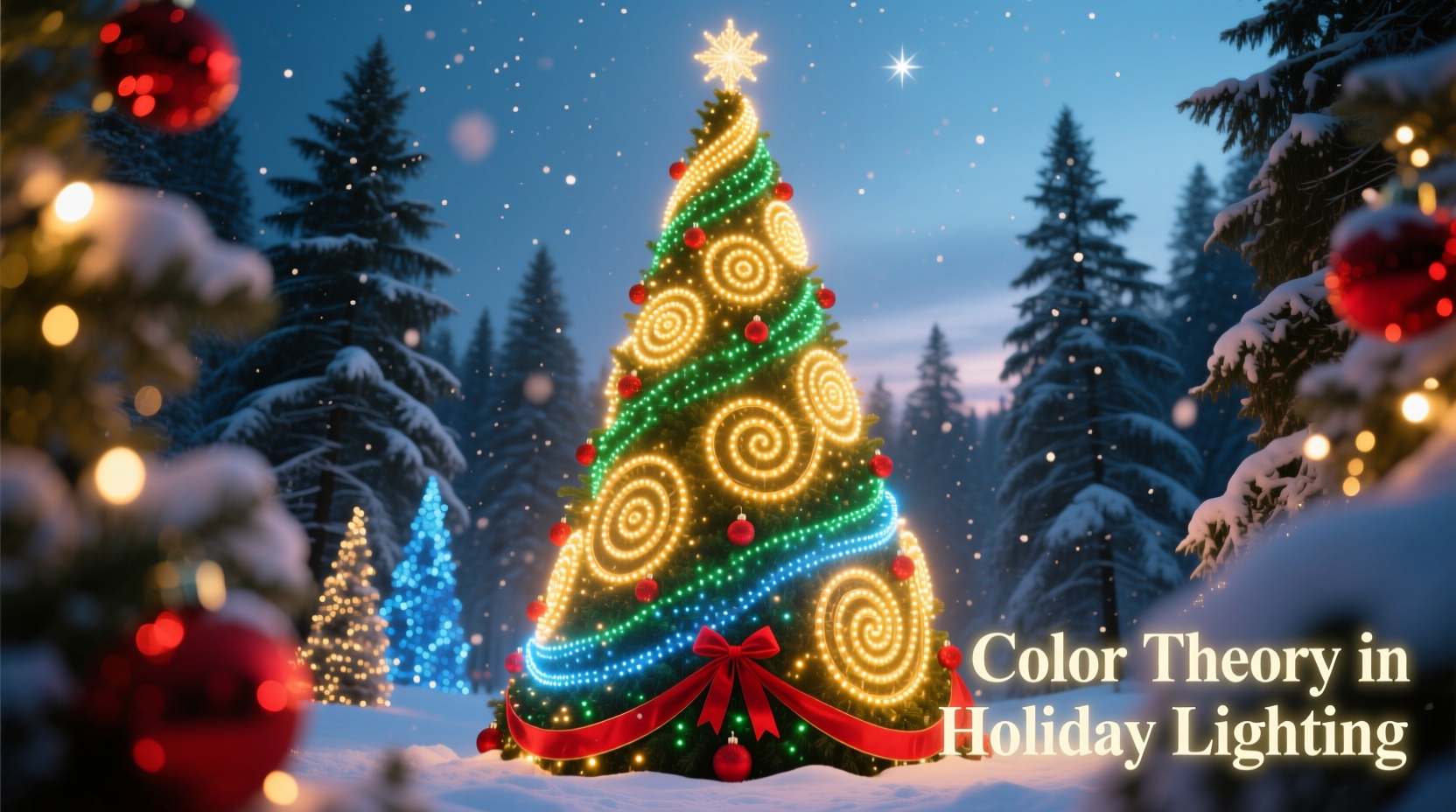
Before hanging a single strand, it’s essential to understand the foundational concepts of color theory. At its core is the color wheel, a circular diagram that organizes hues based on their relationships.
The primary colors—red, blue, and yellow—form the basis of all other colors. Secondary colors (green, orange, purple) result from mixing two primaries. Tertiary colors (like red-orange or blue-green) come from combining a primary with an adjacent secondary.
More importantly for Christmas lighting, we use these relationships to determine harmony:
- Analogous colors sit next to each other on the wheel (e.g., red, red-orange, orange). They create a smooth, unified look.
- Complementary colors are opposite each other (e.g., red and green, blue and orange). They generate high contrast and vibrancy.
- Triadic schemes use three evenly spaced colors (e.g., red, yellow, blue), offering bold variety while maintaining balance.
- Mono-chromatic schemes rely on variations in brightness and saturation of a single hue, producing elegance and calm.
Each scheme evokes a different mood. Analogous palettes feel warm and inviting; complementary ones are energetic and traditional; triadic combinations are playful and dynamic. Choosing the right one depends on your home’s architecture, surrounding landscape, and the atmosphere you want to create.
Selecting the Right Color Palette for Your Display
While red and green dominate holiday imagery, they aren’t the only—or even always the best—choices for every home. A brick house with warm undertones may clash with cool blues, while a modern gray facade might benefit from soft white and gold accents instead of bold primary colors.
Consider these common approaches:
- Classic Complementary (Red & Green): Timeless and traditional, this pairing draws immediate attention. To avoid a jarring effect, balance the intensity by using cooler greens (like forest or pine) with deep reds rather than neon versions.
- Cool-Tone Elegance (Blue, Silver, White): Ideal for contemporary homes or snowy climates, this palette mimics moonlight and frost. It feels serene and sophisticated, especially when layered in varying shades.
- Warm Glow (Gold, Amber, Red): Creates a cozy, nostalgic ambiance. Perfect for older homes or neighborhoods aiming for a vintage charm.
- Festive Triad (Red, Green, Blue or Gold, Silver, Red): Offers visual excitement without chaos when properly proportioned. Use one color as dominant (e.g., 60%), another as secondary (30%), and the third as accent (10%).
- Monochromatic White: Elegant and modern, all-white displays emphasize shape and structure. Variations in bulb type (warm, cool, twinkle) add depth without introducing new colors.
A growing trend is the use of “warm white” vs. “cool white” LEDs. Warm white (2700K–3000K) emits a soft, candle-like glow, while cool white (5000K–6500K) appears brighter and bluer. Mixing them unintentionally can create an uneven look—so decide on one temperature and stick to it unless layering intentionally.
Step-by-Step Guide to Designing Your Light Layout
Applying color theory effectively requires planning beyond aesthetics. Follow this step-by-step process to ensure a professional-quality outcome.
- Assess Your Space: Walk around your property. Note architectural features like rooflines, windows, trees, and walkways. Identify focal points you want to highlight (e.g., front door, gables).
- Choose Your Color Scheme: Based on your home’s color and style, select one of the palettes above. Sketch a rough idea or use a digital tool to visualize combinations.
- Map Out Zones: Divide your home into zones (roof, eaves, porch, landscaping). Assign a primary color to each zone or maintain consistency across zones for unity.
- Test Before Committing: Hang a small section using your chosen colors. View it at night under real conditions. Adjust if colors appear too harsh, dull, or unbalanced.
- Install with Intention: Begin with structural outlines (roofline, windows) using your dominant color. Add secondary and accent colors sparingly—for example, outlining the front door in a complementary hue.
- Incorporate Depth and Layering: Use different bulb sizes or effects (steady vs. twinkling) to create dimension. For instance, steady warm white on eaves with twinkling gold in tree branches adds movement.
- Evaluate the Whole Display: Step back frequently. Turn off ambient lights to see how your display reads from the street. Make adjustments until the composition feels balanced.
Common Mistakes and How to Avoid Them
Even well-intentioned displays can go wrong. Here are frequent pitfalls and how to correct them:
| Mistake | Why It’s a Problem | Solution |
|---|---|---|
| Mixing too many colors | Creates visual noise and distracts from design elements | Limited to 2–3 main colors; use one as dominant |
| Using only cool white and colored lights together | White appears harsh next to warm reds/golds | Pair colored lights with warm white for cohesion |
| Over-lighting the roofline | Drowns out other features and overwhelms viewers | Use subtle outlining; reserve drama for entryways |
| Ignoring the background | Neighbors’ bright displays or streetlights compete | Position key features where they won’t be overshadowed |
| Forgetting about off-season storage | Color degradation from heat/moisture affects future use | Store in labeled, airtight containers away from sunlight |
“Most people focus on quantity, but the magic is in harmony. A few well-placed lights in a thoughtful color scheme can have more impact than thousands of random bulbs.” — Daniel Reyes, Landscape Lighting Designer and Holiday Display Consultant
Real Example: Transforming a Suburban Home with Color Theory
Consider the case of the Miller family in Portland, Oregon. Their beige two-story home had always featured a haphazard mix of red, green, blue, and multicolored lights. While cheerful, the display felt dated and overwhelming. After consulting a local lighting guide, they decided to try a new approach.
They began by choosing a cool-toned analogous palette: icy blue, silver, and soft white. These colors complemented their gray roof and stone foundation. They outlined the roof and windows in steady cool white, added shimmering silver icicle lights along the eaves, and wrapped their front yard arbor with gently twinkling blue LEDs.
The transformation was immediate. Neighbors commented on the “calm yet festive” vibe. Local news even featured their home as part of a “best of the season” segment. Most importantly, the Millers found the process more enjoyable—they weren’t just adding lights, they were designing an experience.
This wasn’t luck. It was color theory in action: limited palette, intentional placement, and emotional alignment with the environment.
Checklist: Preparing Your Harmonious Christmas Light Display
Use this checklist to ensure your display follows sound color principles:
- ☐ Evaluate your home’s exterior color and style
- ☐ Choose a primary color scheme (analogous, complementary, etc.)
- ☐ Limit your palette to 2–3 main colors plus one accent
- ☐ Decide on white light temperature (warm or cool)
- ☐ Sketch a layout or take photos to plan zones
- ☐ Test a small section at night before full installation
- ☐ Install lights with a hierarchy: dominant, secondary, accent
- ☐ Step back frequently to assess balance and flow
- ☐ Use timers or smart controls for consistent viewing hours
- ☐ Store lights properly after the season to preserve color integrity
FAQ
Can I mix colored lights with white lights?
Yes, but do so intentionally. Pair colored lights with warm white for a cohesive look. Avoid mixing cool white with warm-colored bulbs like red or gold, as the contrast can appear disjointed.
What if my house already has strong colors?
Work with them. If your front door is red, consider making that your accent color and build a complementary or analogous scheme around it. Alternatively, use monochromatic whites to let the architecture shine.
Are there any universally flattering color combinations?
Warm white with gold or deep red is widely appealing and works across most home styles. All-white displays are also consistently elegant and easy to coordinate. Ultimately, the best combination reflects your personal taste while respecting visual harmony.
Conclusion: Illuminate with Intention
A Christmas light display should be more than a collection of bulbs—it should tell a story, evoke emotion, and bring joy through beauty. By applying the timeless principles of color theory, you elevate your decorations from seasonal clutter to meaningful design.
Whether you prefer the crisp clarity of blue and silver or the cozy warmth of gold and crimson, the key is intentionality. Plan your palette, respect proportions, and prioritize harmony over excess. The result will be a display that doesn’t just catch the eye, but holds attention—and becomes a cherished part of your neighborhood’s holiday tradition.




 浙公网安备
33010002000092号
浙公网安备
33010002000092号 浙B2-20120091-4
Comments
No comments yet. Why don't you start the discussion?