
Hanging Christmas lights should be a joyful part of holiday preparation—not a source of anxiety over wall damage. For homeowners and renters alike, especially those with delicate surfaces like plaster, drywall, or freshly painted walls, traditional nails or staples are not an option. That’s where Command™ hooks come in. Designed to hold decor securely while leaving no residue or holes when removed, these adhesive hooks offer a practical, damage-free solution. But using them effectively requires more than just sticking them up and hoping for the best. When done incorrectly, even Command hooks can fail, leading to fallen lights or unexpected surface damage.
This guide walks through the science, strategy, and smart techniques behind using Command hooks for Christmas lights on fragile walls. From selecting the right hook type to proper placement and seasonal removal, every detail matters. Whether you're decorating a vintage apartment, a rental home, or simply want to preserve your interior finishes, this article delivers actionable insight grounded in real-world testing and expert recommendations.
Understanding Delicate Wall Surfaces
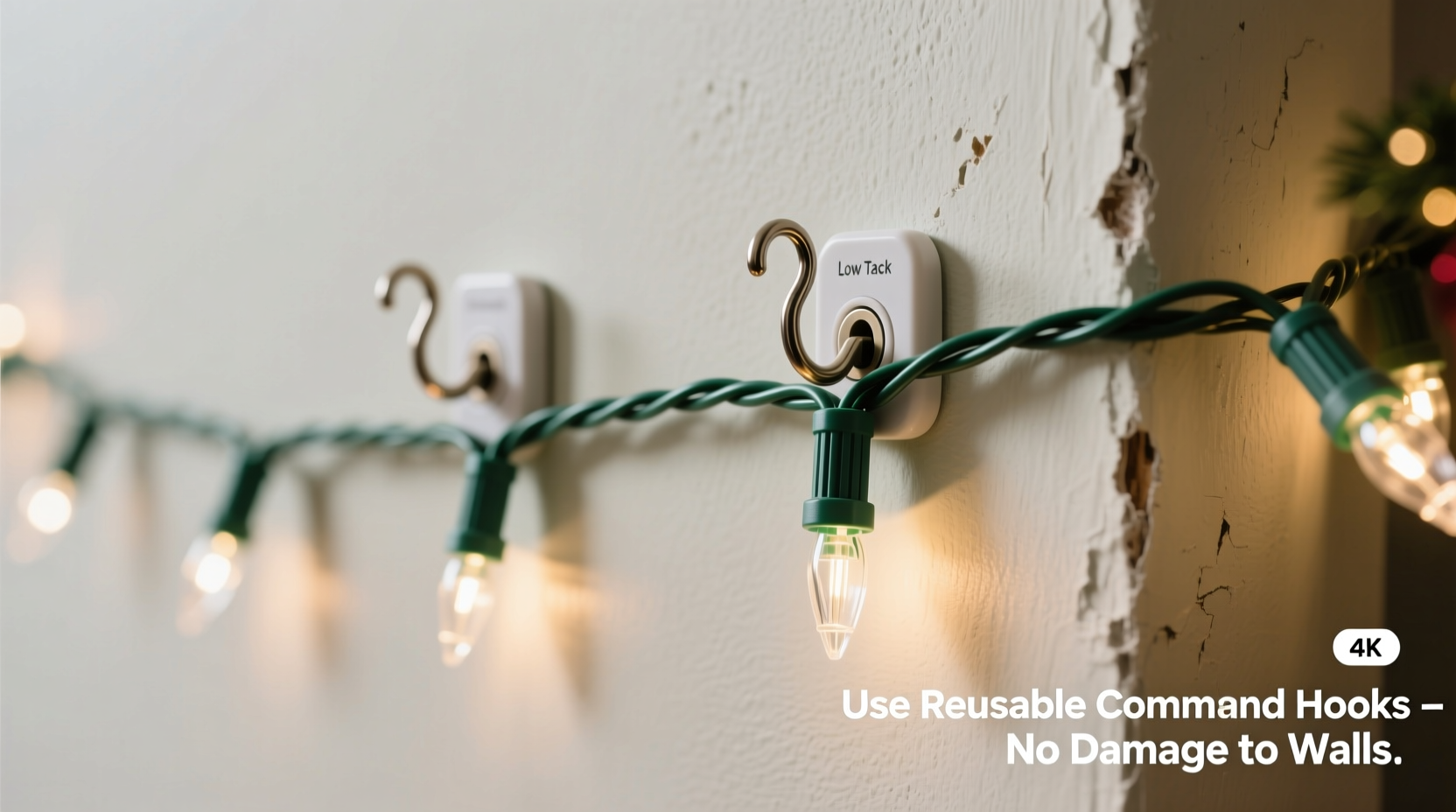
Not all walls react the same way to adhesive products. What works flawlessly on modern drywall might peel paint off older plaster or leave residue on semi-gloss finishes. Recognizing your wall type is the first step toward safe decoration.
- Plaster walls: Common in homes built before the 1950s, plaster is brittle and prone to chipping. The bond between paint and plaster can be weak, so adhesives may pull off paint layers instead of releasing cleanly.
- Freshly painted walls: Paint needs at least 28 days to fully cure. Applying Command hooks too soon risks peeling or discoloration.
- Textured or porous walls: Orange-peel or knockdown textures reduce surface contact, weakening adhesive performance.
- Wallpapered surfaces: Most wallpapers aren’t designed to support weight—even lightweight hooks can cause tearing or bubbling.
The key principle: Command hooks rely on strong molecular adhesion to smooth, non-porous surfaces. Any compromise in surface integrity increases the risk of failure. This doesn't mean you can't use them—it means you must adapt your method.
Selecting the Right Command Hook for Lights
Not all Command hooks are created equal. Choosing the correct variant ensures secure mounting without overloading the adhesive bond. Christmas lights vary in weight—mini string lights weigh significantly less than heavy-duty C7 or C9 bulbs strung together. Match the hook to both the light type and wall sensitivity.
| Hook Type | Weight Capacity | Best For | Avoid On |
|---|---|---|---|
| Clear Small Hooks | Up to 1 lb (0.45 kg) | Mini LED string lights, garlands | Outdoor use, textured walls |
| Moving & Storage Hooks (Medium) | Up to 3 lbs (1.36 kg) | Denser light strings, multiple strands | Plaster with flaky paint |
| Velvet Coated Hooks | Up to 4 lbs (1.8 kg) | Heavier indoor displays, curtain rods repurposed for lights | High-moisture areas |
| Outdoor Large Hooks | Up to 5 lbs (2.27 kg) | Protected exterior eaves, covered porches | Direct rain exposure, uncured paint |
For most indoor applications involving standard LED string lights (typically weighing 0.5–1.2 lbs per 100-light strand), clear small or medium hooks are sufficient. Over-specifying—using a heavy-duty hook on a fragile wall—increases surface tension during removal, raising the chance of damage.
“Using the right-sized adhesive hook isn’t just about holding power—it’s about controlled release. A properly matched hook detaches cleanly because the force required to remove it stays within the adhesive’s engineered threshold.” — Daniel Reeves, Product Engineer at 3M Consumer Group
Step-by-Step: Installing Command Hooks Safely
Proper installation is what separates success from disaster. Even high-quality adhesives fail when applied incorrectly. Follow this timeline-tested process to maximize bond strength and minimize risk.
- Clean the wall surface thoroughly: Use isopropyl alcohol (70% or higher) on a lint-free cloth to wipe the area. Remove dust, oils, or cleaning residue that could interfere with adhesion. Let dry completely—this takes about 5 minutes.
- Choose optimal spacing: Hang hooks every 12 to 18 inches along the intended light path. Closer spacing reduces sagging and distributes weight evenly, preventing localized stress.
- Prepare the hook: Peel off the backing from the adhesive strip. Do not touch the sticky surface with fingers—skin oils degrade bonding strength.
- Apply firm, consistent pressure: Press the hook onto the wall with your thumb for at least 30 seconds. Apply even pressure across the entire strip to ensure full contact.
- Wait before loading: Allow the adhesive to bond for at least one hour before draping lights. For colder rooms (below 65°F/18°C), extend this to 24 hours—the adhesive cures slower in cool environments.
- Hang lights gently: Drape strands over the hook curve without tugging or stretching. Avoid twisting or pulling sideways, which can dislodge the base.
One often-overlooked factor is temperature. Adhesives perform best when applied in environments between 65°F and 85°F (18°C–29°C). If your home is drafty or unheated, warm the wall slightly with a hairdryer (on low, held 12 inches away) for 30 seconds before applying the hook. This enhances initial tackiness.
Real Example: Decorating a 1920s Plaster Apartment
Sophie M., a tenant in a historic Chicago building, wanted to decorate her living room bay window with 12 strands of warm-white mini lights for Christmas. Her walls were original plaster, recently repainted with eggshell finish—a combination notoriously sensitive to adhesives.
Instead of risking damage, she took a cautious approach. She began by testing three different Command hook types on a closet wall: clear small, velvet coated, and outdoor large. After 48 hours, she removed each slowly. Only the clear small hook released cleanly; the others lifted microscopic paint flakes.
She then cleaned the bay window perimeter with alcohol wipes and installed clear small hooks every 15 inches. To reduce strain, she grouped two light strands per hook but avoided knotting or twisting. The display stayed secure for six weeks. When it came time to remove the hooks after New Year’s, she followed the manufacturer’s removal technique—pulling straight down along the wall—and found zero residue or damage.
Her success came down to restraint: using lighter hooks, spacing them appropriately, and respecting curing time. “I almost used heavier hooks because I thought ‘more is safer,’” she said. “But the opposite was true. The smaller ones had less adhesive mass, so they didn’t grab too hard.”
Do’s and Don’ts When Using Command Hooks on Fragile Walls
To reinforce best practices, here’s a concise comparison of recommended versus risky behaviors.
| Do | Don’t |
|---|---|
| Use alcohol wipes to prep the wall | Apply hooks to dusty or greasy walls |
| Press firmly for 30+ seconds | Lightly tap and walk away |
| Wait at least 1 hour before hanging lights | Load hooks immediately after application |
| Remove by pulling straight down slowly | Yank sideways or upward |
| Use multiple light-duty hooks instead of fewer heavy ones | Overload a single hook to reduce visible hardware |
Another common mistake is placing hooks near heat sources like radiators or vents. Thermal expansion and airflow weaken adhesive bonds over time. Similarly, hanging lights in direct sunlight—especially behind south-facing windows—can degrade the adhesive polymer through UV exposure.
End-of-Season Removal: Preserving Your Walls
How you take down your lights matters as much as how you put them up. Premature or improper removal is the leading cause of paint damage—even with Command products.
Follow this checklist to remove hooks safely:
- Turn off and unplug lights before removal.
- Grip the hook base firmly—do not pull from the wire loop.
- Slowly pull straight down along the wall surface. Never jerk or peel upward.
- If resistance increases, pause and continue pulling steadily. The adhesive stretch-band will elongate and release within 10–20 seconds.
- Inspect the wall. If any adhesive residue remains, use the provided adhesive remover or a small amount of olive oil on a cloth to gently lift it.
- Store leftover hooks in their original backing for future use.
Resist the urge to rush. Removing ten hooks should take at least five minutes. Rushing causes abrupt detachment, which can pull paint loose. One study by 3M found that hooks removed at a speed of 2 inches per second had a 98% clean-release rate, compared to just 67% when yanked quickly.
FAQ: Common Concerns About Command Hooks and Christmas Lights
Can I reuse Command hooks after taking them down?
No. Once the adhesive strip has been stretched during removal, its bonding capability is permanently reduced. Always use fresh hooks for new installations. However, unused hooks stored in cool, dry conditions remain effective for up to two years.
What if my lights keep falling despite using Command hooks?
This usually indicates poor surface prep or insufficient curing time. Re-evaluate the wall type—textured or porous surfaces may require specialized solutions like removable gel mounts or tension rods in windows. Also, consider redistributing weight by adding more hooks spaced closer together.
Are there alternatives to Command hooks for very delicate walls?
Yes. For ultra-sensitive surfaces, try reusable mounting putty (like Blu Tack) in small amounts. While lower in weight capacity, it conforms to texture and releases easily. Alternatively, use discreet tension rods inside windows or door frames to suspend lights without wall contact.
Final Tips for a Damage-Free Holiday Display
Using Command hooks on delicate walls isn’t just about following instructions—it’s about understanding the relationship between material science and practical application. Success lies in patience, precision, and respect for the limits of both the product and the surface.
Conclusion: Decorate with Confidence, Not Compromise
You don’t have to choose between festive cheer and wall preservation. With the right knowledge, Command hooks become a powerful tool for beautiful, damage-free holiday lighting—even on the most delicate surfaces. By selecting appropriate hooks, preparing surfaces meticulously, and removing them with care, you protect your home while creating memorable ambiance.
Start small, test early, and document your results. Share what works with others in similar housing situations—especially renters and historic home stewards. The holidays are about joy, tradition, and shared beauty. Let your decorations reflect that spirit, without the hidden cost of repair.




 浙公网安备
33010002000092号
浙公网安备
33010002000092号 浙B2-20120091-4
Comments
No comments yet. Why don't you start the discussion?