
In today’s digital workplace, communication happens faster and more frequently than ever—often through channels like Slack, email, or internal messaging platforms. As tone can be difficult to convey in text alone, many professionals turn to emojis to add clarity, warmth, or emphasis. But while a well-placed smiley might soften a message, an overused fire emoji could make even the most competent person appear unserious. The key lies not in avoiding emojis altogether, but in using them strategically and appropriately.
Used correctly, emojis can humanize digital conversations, reduce misunderstandings, and strengthen rapport. Used incorrectly, they risk undermining credibility. This guide explores how to integrate emojis into professional communication with confidence and tact—without crossing the line into informality.
Understand the Context: When Emojis Are Appropriate (and When They’re Not)
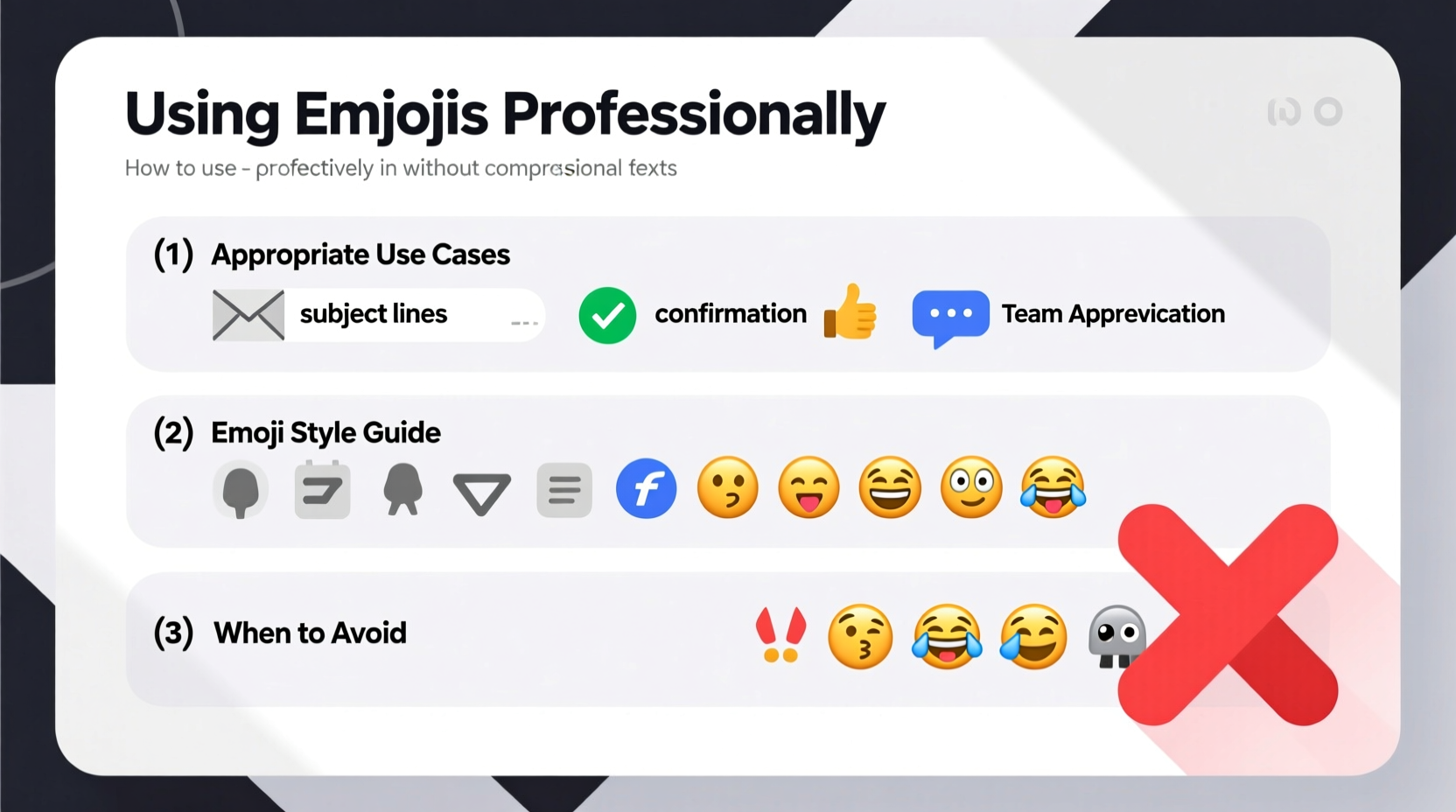
The first rule of emoji use in professional settings is context. Not all workplaces, teams, or messages are created equal. A startup team celebrating a product launch on Slack may welcome celebratory emojis, while a legal department drafting a client contract will likely avoid them entirely.
Consider these factors before including an emoji:
- Company culture: Observe how leadership and colleagues communicate. If your manager ends emails with a thumbs-up, it may signal openness to light visual cues.
- Communication channel: Instant messaging platforms like Teams or Slack allow for more flexibility than formal emails or reports.
- Recipient: A long-time collaborator may appreciate a subtle wink 😉 to acknowledge shared understanding, but a new client or executive might perceive it as unprofessional.
- Message tone: Emojis work best in positive, encouraging, or informal-yet-polite messages—not in disciplinary feedback, serious announcements, or crisis updates.
Choose the Right Emoji: Quality Over Quantity
Not all emojis carry the same weight. Some are universally recognized and neutral; others are ambiguous, culturally loaded, or overly expressive. In professional settings, less is more—both in number and intensity.
Stick to simple, widely understood symbols that enhance rather than distract:
- ✅ Check mark: Acknowledges completion or agreement.
- 👍 Thumbs up: Signals approval or receipt.
- 👏 Clapping hands: Celebrates milestones or thanks someone.
- 🙏 Folded hands: Often used to say “thank you” or “please,” though caution is advised due to cultural and religious associations.
- 💡 Lightbulb: Highlights ideas or suggestions.
- 📅 Calendar: Reinforces scheduling.
Avoid emojis that are:
- Overly emotional (😭, 😍)
- Sarcastic or ambiguous (🙃, 🙄)
- Casual or playful (🎉, 🔥, 💃)
- Potentially offensive (👌, 👌 with certain skin tones, 💩)
“Emojis are punctuation with personality. Use them like you would an exclamation point—one per sentence, and only when it adds value.” — Dr. Naomi Baron, linguist and author of *How We Read Now*
Do’s and Don’ts of Professional Emoji Use
| Do | Don’t |
|---|---|
| Use one emoji to reinforce tone (e.g., “Thanks for the quick turnaround! 👍”) | Use multiple emojis in a single message (e.g., “Great job!!! 🎉👏🔥💯”) |
| Respond to an emoji with a matching one (e.g., replying “Got it!” with ✅) | Initiate emoji-heavy exchanges unless the culture supports it |
| Use emojis in casual team chats to build camaraderie | Include emojis in formal documents, performance reviews, or external client proposals |
| Leverage emojis for visual scanning (e.g., labeling tasks with 🔴🟠🟢) | Use emojis to replace words (“Let’s meet 🗓️⏰🏢”) |
| Test unfamiliar emojis on a trusted colleague first | Assume universal interpretation—some emojis vary by platform and region |
Step-by-Step Guide to Integrating Emojis Thoughtfully
If you're new to using emojis at work or want to refine your approach, follow this five-step process:
- Observe existing patterns. Spend a week reviewing internal messages, emails, and team updates. Note who uses emojis, how often, and in what contexts.
- Start conservatively. Begin with one neutral emoji—like a check mark or thumbs-up—in low-stakes replies (e.g., confirming receipt).
- Match the recipient’s tone. If someone signs off with “Thanks! 😊”, it’s safe to reply with “You’re welcome! 👍”.
- Limit frequency. Aim for no more than one emoji per message, and avoid using them in every message you send.
- Seek feedback. Ask a trusted colleague: “Do I come across clearly in my messages? Is my tone appropriate?” Their insight can help calibrate your style.
Real-World Example: How One Team Improved Communication With Emojis
At a mid-sized tech company, the marketing team struggled with miscommunication in their Slack channels. Feedback often came across as curt, especially in fast-paced project discussions. After a team survey revealed that 70% of members felt messages were “too blunt,” the manager introduced a lightweight emoji guideline.
The team agreed to use:
- ✅ to confirm task completion
- 🔄 to indicate revisions needed
- 👏 to celebrate campaign launches
- 💬 to flag discussion points
Within two months, team satisfaction with internal communication rose by 40%. More importantly, the number of clarifying messages dropped significantly. Team members reported feeling more connected and appreciated—even in asynchronous environments.
The success wasn’t due to emojis themselves, but to their intentional use as tools for clarity and recognition. No one used heart eyes or party poppers in client-facing threads, but a simple thumbs-up after a long presentation slide deck said, “I see your effort,” without needing extra words.
Checklist: Using Emojis Like a Pro
Before sending a message with an emoji, run through this checklist:
- ☑ Is the emoji relevant to the message?
- ☑ Does it clarify tone or intent?
- ☑ Would I feel comfortable seeing this in a forwarded message to my boss?
- ☑ Am I using only one (or at most two) emojis?
- ☑ Have I avoided slang-like or exaggerated emojis (e.g., 💀, 🫡, 🫠)?
- ☑ Is this consistent with my organization’s communication norms?
- ☑ Could removing the emoji make the message feel colder or more ambiguous?
If most answers are “yes,” you’re on the right track.
Frequently Asked Questions
Can I use emojis in professional emails?
Occasionally, yes—but with caution. In external emails, especially to clients or senior executives, avoid emojis unless you have an established rapport. Internal emails to close colleagues may allow a single emoji, such as a thumbs-up in response to a confirmation. Never use emojis in formal correspondence like proposals, contracts, or press releases.
What if my workplace culture is very conservative?
Respect cultural norms. In traditional industries like law, finance, or government, minimalism in communication is often expected. If emojis are rarely used, refrain from introducing them until you’ve built trust and observed subtle shifts in tone. Focus instead on clear, warm language to convey friendliness.
Do emojis look unprofessional on LinkedIn?
In general, avoid emojis in formal posts or connection requests. However, in comments or celebratory updates (e.g., announcing a promotion), one tasteful emoji—like 🎉 or 👏—can add authenticity. Keep usage sparse and aligned with your personal brand.
Final Thoughts: Emojis as Tools, Not Trends
Emojis aren’t inherently unprofessional—they’re tools shaped by how we use them. In a world where digital communication lacks facial cues and vocal inflection, a single symbol can prevent a well-intentioned message from being misread as cold or dismissive.
The most effective professionals don’t ban emojis out of fear, nor do they sprinkle them liberally like confetti. Instead, they treat each emoji as a deliberate choice—one that supports clarity, builds relationships, and reflects emotional intelligence.
Mastering this balance isn’t about following rigid rules, but about developing situational awareness. It’s knowing when a simple 👍 reinforces appreciation without overshadowing substance. It’s understanding that professionalism isn’t the absence of personality, but the presence of judgment.




 浙公网安备
33010002000092号
浙公网安备
33010002000092号 浙B2-20120091-4
Comments
No comments yet. Why don't you start the discussion?