
Christmas scent decor is more than seasonal flair—it’s sensory storytelling. The aroma of pine boughs, spiced cider, or aged cedar evokes memory, calms nervous systems, and anchors celebration in presence. While scented candles and potpourri remain popular, essential oil diffusers offer a cleaner, more controllable, and health-conscious alternative—especially for households with children, pets, or respiratory sensitivities. Unlike wax-based products that release soot and synthetic fragrances, ultrasonic and nebulizing diffusers disperse pure plant compounds into the air without heat or combustion. When thoughtfully integrated into holiday styling—from mantels to entryways—they become functional centerpieces: quiet, elegant, and deeply atmospheric. This approach demands intention—not just dropping oils into water—but understanding botanical synergy, diffusion mechanics, spatial dynamics, and seasonal wellness principles.
Why diffusers belong in your Christmas decor strategy
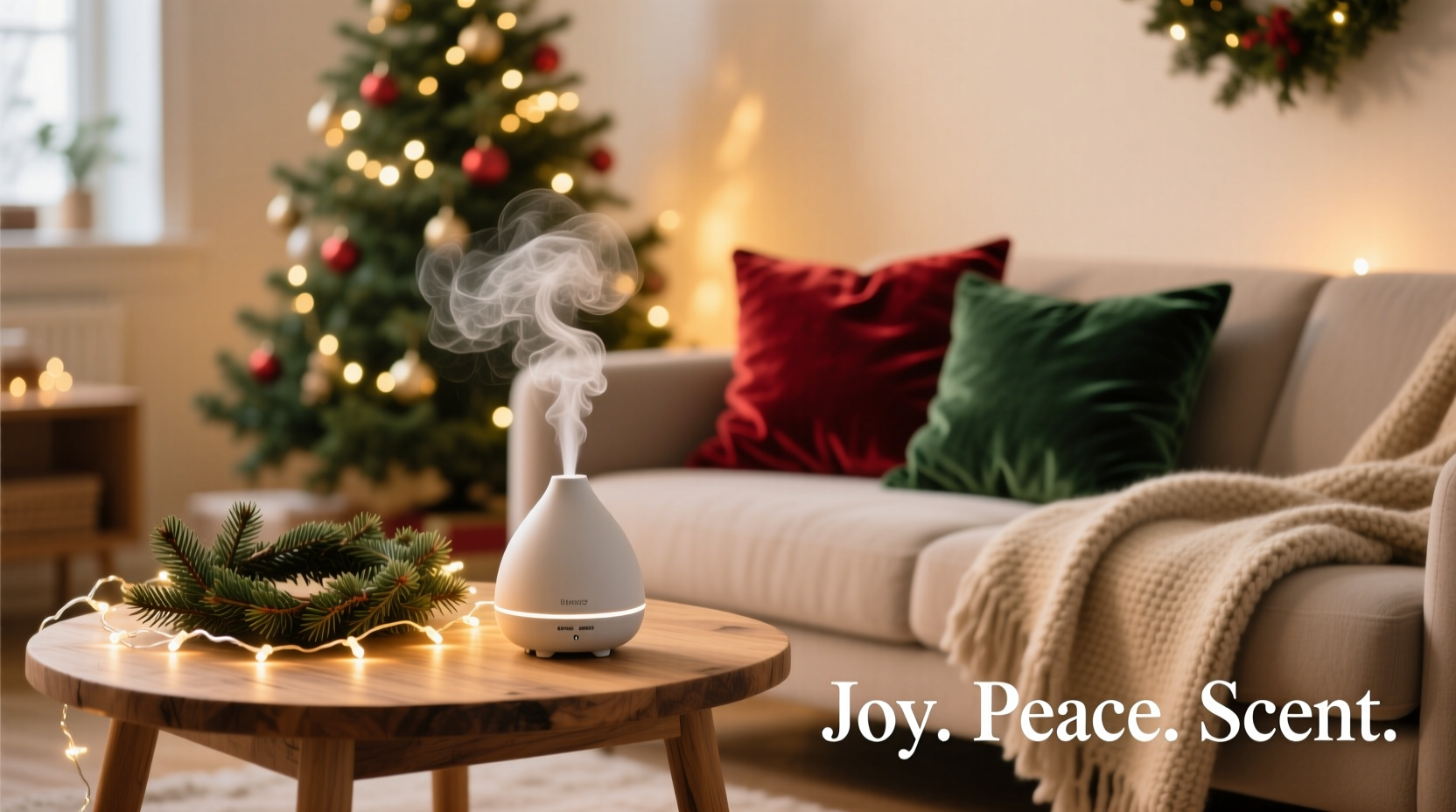
Traditional Christmas scent decor often relies on passive methods: simmer pots left unattended, wax melts with unknown chemical loadings, or synthetic sprays that overwhelm rather than invite. Diffusers shift the paradigm from ambient background noise to curated olfactory architecture. A 2023 study published in the Journal of Environmental Psychology found that participants exposed to natural coniferous scents (like Siberian fir and black spruce) in controlled settings reported a 27% increase in perceived warmth and a 19% reduction in stress biomarkers during December weeks—effects amplified when scent was paired with visual cues like greenery and soft lighting. Diffusers deliver this benefit precisely: no open flame, no volatile organic compounds (VOCs), and full control over concentration, duration, and timing. They also align with modern design sensibilities—minimalist ceramic units nestle seamlessly beside vintage ornaments; matte-finish bamboo models complement Scandinavian wood tones; sleek glass vessels echo mercury-glass baubles. Most importantly, they support circadian rhythm awareness: many users program diffusers to emit grounding scents like frankincense at dusk and uplifting citrus blends at morning gatherings—turning fragrance into ritual rather than decoration.
Choosing the right diffuser for holiday spaces
Not all diffusers perform equally in festive environments. High-ceilinged living rooms, drafty entries, or small powder rooms each demand distinct technical specifications. Ultrasonic models (which use water and vibration) excel in medium-sized, climate-controlled areas like dining nooks or family rooms—especially when you want gentle humidity added to dry winter air. Nebulizing diffusers (which atomize oil without water) deliver stronger, purer aroma projection—ideal for open-plan spaces or when layering complex blends—but require more frequent cleaning and careful oil selection (citrus oils can corrode internal components). Heat-based diffusers are discouraged for Christmas use: they degrade delicate terpenes in conifer oils and risk overheating near tinsel, paper garlands, or dried orange slices.
Placement matters as much as type. Avoid mounting diffusers directly above wooden surfaces (condensation can warp finishes), near electronics (fine mist may infiltrate vents), or inside enclosed cabinets (restricted airflow reduces dispersion). Instead, position them at breathing height—between 3 and 5 feet off the floor—on stable, non-porous surfaces like stone, glazed ceramic, or sealed wood. In multi-level homes, consider zoning: a calming frankincense-cedarwood blend in the bedroom hallway, an invigorating orange-cinnamon in the kitchen, and a crisp balsam-fir in the main living area.
Curating authentic, safe Christmas essential oil blends
Authenticity begins with botanical fidelity—not “Christmas scent” synthetics, but true distillations that mirror regional holiday traditions. Balsam fir (Abies balsamea) captures the sharp, resinous greenness of New England forests. Siberian fir (Abies sibirica) offers a softer, sweeter needle note common in European markets. Sweet orange (Citrus sinensis) reflects the historic practice of gifting citrus during winter scarcity. And frankincense (Boswellia carterii) carries millennia of ceremonial weight—its warm, balsamic depth grounds brighter top notes.
Below is a practical comparison of foundational Christmas oils, including sourcing notes, safety thresholds, and blending logic:
| Oil | Botanical Origin | Max Safe Dilution (Diffuser) | Best Blending Partners | Caution Notes |
|---|---|---|---|---|
| Balsam Fir | Eastern North America | 3–5 drops per 100mL water | Sweet orange, cedarwood, clove bud | May cause skin sensitivity in rare cases; avoid if pregnant |
| Sweet Orange | Brazil, USA | 6–8 drops per 100mL water | Cinnamon leaf (not bark), vanilla CO2, vetiver | Phototoxic—irrelevant for diffusion, but handle bottles away from sunlight |
| Frankincense | Somalia, Oman | 2–4 drops per 100mL water | Myrrh, sandalwood, black spruce | Highly viscous—dilute with fractionated coconut oil first if using nebulizer |
| Clove Bud | Madagascar, Indonesia | 1–2 drops per 100mL water | Orange, cinnamon leaf, ginger CO2 | Potent skin irritant; never exceed 2 drops in home diffusion |
| Cedarwood Atlas | Morocco | 3–5 drops per 100mL water | Fir needle, bergamot, patchouli | Generally safe; preferred over Texas cedarwood for lower phenol content |
Always source oils from suppliers who publish GC/MS (gas chromatography/mass spectrometry) reports verifying purity and species identification. “Fir needle” labeled without botanical name (Abies spp.) may be adulterated with cheaper synthetics or misidentified spruce.
A step-by-step guide to setting up your Christmas diffuser display
Integrating diffusers into decor requires both aesthetic cohesion and operational reliability. Follow this sequence to ensure seamless, beautiful, and safe performance throughout the season:
- Select your anchor diffuser: Choose one primary unit for high-traffic zones (e.g., living room). Prioritize quiet operation (<40 dB), programmable timers, and auto-shutoff.
- Choose a thematic blend: Match the space’s function. For gathering areas: 4 drops sweet orange + 2 drops cinnamon leaf + 1 drop clove bud. For restful zones: 3 drops frankincense + 2 drops cedarwood + 1 drop lavender (optional, for balance).
- Prep the vessel: Clean thoroughly with white vinegar and cotton swabs—residue from prior blends alters scent profiles and clogs ultrasonic plates.
- Style the base: Place the diffuser on a natural material tray—slab of reclaimed pine, slate tile, or woven seagrass mat. Tuck in complementary elements: dried orange wheels (not placed *in* the diffuser), pinecones dusted with edible gold mica, or fresh rosemary sprigs laid beside (not over) the unit.
- Set the rhythm: Program cycles aligned with daily rhythms: 45 minutes on / 45 minutes off from 4–8 p.m. for evening gatherings; 30 minutes on at 7 a.m. to welcome guests with citrus brightness.
- Maintain weekly: Empty residual water, wipe interior with alcohol-dampened cloth, inspect mist output, and refresh blend every 5–7 days—even if oil remains—to prevent bacterial growth in stagnant water.
Real-world example: A Portland home’s zero-waste Christmas scent system
In December 2023, Sarah Lin, a sustainable lifestyle educator in Portland, Oregon, replaced all synthetic air fresheners and paraffin candles with a three-diffuser Christmas scent system across her 1,400-square-foot Craftsman home. She used a large ultrasonic diffuser in the living room (balsam fir + sweet orange), a compact nebulizer in the entryway (frankincense + cedarwood), and a portable USB model in the guest bathroom (bergamot + petitgrain). Crucially, she sourced oils from a local apothecary that uses solar-powered distillation and refills glass bottles via return program. She embedded each unit within foraged decor: the living room diffuser sat atop a moss-lined cedar box flanked by Douglas fir boughs; the entryway unit nestled into a vintage brass tray beside pinecones gathered from neighborhood walks. Guests consistently remarked on the “cozy clarity” of the air—neither cloying nor medicinal. Most significantly, Sarah’s daughter, who has asthma, experienced zero exacerbations that December—the first in five years—prompting her pediatric pulmonologist to note, “Controlled, low-concentration essential oil diffusion appears to support airway resilience better than volatile candle emissions.”
“True holiday ambiance isn’t about masking winter’s dryness or stress—it’s about honoring the body’s innate response to botanical rhythms. Conifer oils contain alpha-pinene, a compound shown to support healthy respiratory mucosa. When diffused at appropriate concentrations, they don’t just smell like Christmas—they help us *breathe* it.” — Dr. Lena Torres, Clinical Aromatherapist & Author of Botanical Rhythms: Seasonal Wellness Through Scent
Essential Christmas diffuser checklist
- ✅ Verified GC/MS reports for all oils (no “fragrance oil” or “aroma oil” labels)
- ✅ Diffuser cleaned before first seasonal use
- ✅ Water level marked clearly—never overfill past max line
- ✅ Blend tested for 15 minutes in empty room before full deployment
- ✅ Placement confirmed away from direct drafts, heating vents, and flammable decor
- ✅ Timer programmed for intermittent cycling (not continuous)
- ✅ Emergency shutoff location noted (unplug point or smart plug switch)
- ✅ Pet-safe oils confirmed (no tea tree, eucalyptus, or ylang-ylang near birds or cats)
FAQ
Can I use dried botanicals like cinnamon sticks or orange peel in my diffuser?
No. Whole botanicals clog ultrasonic plates, disrupt water flow, promote mold growth, and may damage internal mechanisms. Only use 100% pure essential oils formulated for diffusion. For visual texture, place dried elements *around*—not inside—the unit.
My diffuser leaves a white mineral residue. How do I prevent this?
This is caused by hard water minerals. Always use distilled or filtered water—not tap water—in ultrasonic diffusers. If residue appears, soak the water tank in equal parts white vinegar and warm water for 15 minutes, then scrub gently with a soft toothbrush.
Is it safe to diffuse around infants or young children?
Yes—with strict parameters. Use only gentle, well-researched oils (sweet orange, lavender, frankincense) at half the adult dose (2–3 drops per 100mL), diffuse only in common areas (not nurseries), and maintain at least 6 feet of distance from sleeping infants. Consult a pediatric aromatherapist before use if the child has respiratory conditions.
Conclusion: Scent as sacred stewardship
Christmas scent decor, when approached through the lens of essential oil diffusion, becomes an act of conscious hospitality. It’s the difference between filling a room with generic “holiday” and inviting guests into a layered, breathable, botanically honest experience—one that honors forest ecology, supports respiratory wellness, and deepens presence during hurried days. This isn’t about adding another decorative object to your mantel. It’s about choosing how air moves through your home, what molecules linger in shared breath, and how scent quietly shapes mood, memory, and meaning. Start small: choose one diffuser, one regionally resonant oil, one intentional placement. Observe how light shifts across its surface at dusk. Notice when conversation slows, shoulders soften, or someone pauses mid-sentence to inhale deeply. That pause—that grounded, unhurried breath—is the heart of the season. Your home doesn’t need more ornamentation. It needs resonance. Begin tonight. Fill your diffuser not with expectation, but with attention. Then press start—and let the air remember what matters.




 浙公网安备
33010002000092号
浙公网安备
33010002000092号 浙B2-20120091-4
Comments
No comments yet. Why don't you start the discussion?